India–Philippines Bilateral Trade Reaches US$3.9 Billion in FY26, Opening New Opportunities for Economic Cooperation

India and the Philippines are strengthening their economic partnership as bilateral trade reached US$3.9 billion (₹34,466 crore) in FY2025-26. The milestone reflects the growing commercial relationship between the two countries and highlights increasing opportunities for trade, investment, and sectoral collaboration.
The progress was reviewed during the 14th India-Philippines Joint Working Group on Trade and Investment (JWGTI) meeting held in Manila, where both sides discussed strategies to expand economic engagement, improve market access, and unlock new growth opportunities for businesses and investors.

Bilateral Trade Continues to Show Strong Growth

India and the Philippines have witnessed steady growth in trade and investment relations in recent years. During the JWGTI meeting, officials reviewed trade trends, investment flows, and priority sectors that could further strengthen economic cooperation.
The discussions highlighted the importance of expanding trade partnerships and creating a more favorable environment for businesses operating in both markets.

Emerging Sectors Offer New Growth Opportunities

Both countries identified several high-potential sectors for future collaboration, including energy, construction and infrastructure, Information and Communication Technology (ICT), Information Technology-Business Process Management (IT-BPM), Artificial Intelligence (AI), pharmaceuticals, and the film industry.
These sectors are expected to drive the next phase of economic cooperation by encouraging innovation, investment, technology exchange, and business expansion.
The growing digital economy and increasing demand for advanced technologies provide significant opportunities for Indian and Philippine companies to establish stronger partnerships.

Focus on Trade Facilitation and Market Access

The two countries also explored measures to improve trade facilitation and strengthen business connectivity. Discussions included enhanced customs cooperation, agricultural collaboration, and initiatives to improve market access for selected products.
Efforts to simplify trade procedures and reduce barriers are expected to support greater participation by businesses and improve bilateral trade volumes in the coming years.

Key Highlights:

Growing  Defence Partnership Makes America Top Export Market

India’s defence exports achieved a record-breaking performance in FY 2025-26, surging 62.66% year-on-year to reach ₹38,424 crore. The unprecedented growth reflects the country’s expanding role in the global defence manufacturing ecosystem and the success of initiatives aimed at boosting indigenous production and exports.
The United States emerged as the largest destination for India’s defence exports, driven by increasing integration of Indian manufacturers into global aerospace and defence supply chains.

US Demand Fuels Growth in Defence Manufacturing

Leading global defence and aerospace companies are increasingly sourcing critical components from India, strengthening bilateral defence-industrial cooperation.
Major international manufacturers, including Boeing and Lockheed Martin, have expanded their engagement with Indian suppliers for the production of high-value aerospace structures and subsystems.

Key components manufactured in India include:

The growing participation of Indian companies in global defence supply chains has positioned the United States as India’s most important defence export market.

Defence Public Sector Undertakings Lead Export Surge

The remarkable growth in defence exports was largely driven by Defence Public Sector Undertakings (DPSUs), which recorded an impressive 151% increase in export performance during FY26.
Private-sector defence manufacturers also continued to maintain steady export growth, contributing to India’s expanding international defence footprint.
The combined efforts of public and private enterprises have significantly strengthened India’s position as a reliable supplier of defence equipment and components.

Domestic Reforms Boost Export Competitiveness

India’s defence export success has been supported by a series of policy reforms aimed at encouraging domestic manufacturing, technology development, and international collaboration.

Key Highlights:

These measures have improved the competitiveness of Indian defence products in international markets.

India Expands Defence Export Presence Across Global Markets

Beyond the United States, India’s defence exports now reach more than 80 countries worldwide.
The country’s growing export portfolio includes:
The diversification of export destinations highlights India’s emergence as an increasingly important player in the global defence industry.

India Achieves Historic Milestone as Seafood Exports Reach New Highs in FY26

India’s seafood exports reached an all-time high during FY 2025-26, with export volumes touching 19,72,018 metric tonnes (MT) and total export earnings rising to ₹73,890.46 crore (USD 8.46 billion). The record performance highlights the strength and resilience of India’s marine products sector despite challenging global market conditions.
According to the Marine Products Export Development Authority (MPEDA), the achievement marks the highest-ever seafood export volume and value recorded by the country.

Strong Demand from Global Markets Drives Growth

The United States and China continued to be the largest importers of Indian seafood, while demand remained strong across the European Union, Southeast Asia, Japan, and the Middle East.
India’s diversified export portfolio and strong processing capabilities helped maintain growth momentum across major international markets.

Frozen Shrimp Remains the Leading Export Product

Frozen shrimp continued to dominate India’s seafood export basket and remained the primary contributor to export earnings. Other major export products included:
Exports of chilled seafood products generated ₹622.31 crore (USD 71.27 million), while live seafood exports recorded an impressive 11.46% growth in dollar value, reaching USD 62.43 million.

United States Remains Top Market by Value

The United States retained its position as India’s largest seafood export destination in value terms.
Exports to the United States
Despite remaining the largest market, exports to the US witnessed declines during FY26:

China Emerges as Largest Importer by Volume

China remained the largest destination for Indian seafood exports in terms of quantity imported.
Exports to China
China’s strong demand for marine products continued to support India’s export growth and market diversification efforts.

European Union and Southeast Asia Remain Key Markets

The European Union ranked as the third-largest export destination in value terms.
Exports to the European Union
Exports to Southeast Asia
These regions continue to play a vital role in India’s seafood export strategy.

Japan and Middle East Maintain Strong Demand

Exports to Japan
Exports to the Middle East
Both markets remained important destinations for premium seafood products from India.

Leading Ports Handling Seafood Exports

India’s seafood export logistics network was led by three major ports during FY26:
These ports handled a significant share of the country’s seafood export cargo, supporting efficient global trade connectivity.

Key Highlights:

India Sets New Gherkin Export Record with $307 Million Revenue in FY26

India’s gherkin export industry recorded a historic milestone in FY26, with exports reaching an all-time high of USD 307.61 million. The sector also registered an impressive 8% increase in export volumes, demonstrating strong global demand for Indian-processed pickled cucumbers despite challenging international trade conditions.
The achievement highlights the resilience and competitiveness of India’s agricultural export sector, particularly in value-added food processing.

Strong Global Demand Drives Export Growth

Indian gherkins continue to enjoy strong demand across major international markets due to their consistent quality, competitive pricing, and adherence to stringent food safety standards.
Despite facing restrictive import tariffs in key markets such as the United States, Indian exporters successfully maintained growth momentum by leveraging efficient production systems and robust supply chains.
The performance underscores India’s growing influence in the global processed food and agricultural exports market.

Contract Farming Model Supports Industry Success

A key factor behind the sector’s success is its well-established contract farming ecosystem. Gherkin cultivation is primarily concentrated in Karnataka, Tamil Nadu, and Andhra Pradesh, where farmers work closely with processing companies under structured farming agreements.
This model offers several advantages:
The integrated supply chain enables exporters to meet the demanding standards of overseas buyers while ensuring stable production volumes.

Efficient Supply Chains Strengthen Competitiveness

India’s decentralised processing and sourcing network has helped exporters overcome multiple challenges, including tariff pressures, logistical disruptions, and rising global trade uncertainties.
By maintaining operational efficiency, reliable procurement systems, and cost-effective processing capabilities, Indian companies have continued to strengthen their position in international markets.
The sector’s ability to sustain growth despite external trade barriers reflects the maturity and resilience of India’s agri-processing industry.

India Emerges as a Leading Global Supplier

The record export performance further reinforces India’s status as one of the world’s leading suppliers of processed gherkins. The country’s strong agricultural base, skilled workforce, and export-oriented food processing infrastructure have enabled it to capture a significant share of the global market.
As demand for processed and preserved food products continues to grow worldwide, India’s gherkin industry is well-positioned to expand its global footprint further.

Key Highlights:

India and South Korea Deepen Trade Partnership with Digital Trade and Supply Chain Initiatives

India and Canada have reaffirmed their commitment to expanding bilateral economic ties, with both countries targeting US$50 billion in bilateral trade by 2030 and accelerating negotiations on the proposed Comprehensive Economic Partnership Agreement (CEPA). The discussions took place during a series of engagements in Toronto aimed at enhancing trade, investment, and technology collaboration.

Focus on High-Growth Sectors

Talks focused on strengthening cooperation in sectors such as advanced manufacturing, pharmaceuticals, biotechnology, clean technology, energy, and oil and gas. Both sides highlighted the growing opportunities created by the complementary strengths of the two economies.

The Canada-India Building Bridges event brought together more than 150 representatives from businesses, investor groups, and industry associations. Participants emphasized the need for a predictable business environment and stronger government-industry collaboration to support long-term economic growth.

Trade Mission and Investment Opportunities

A Team Canada Trade Mission to India is scheduled for November 2026, with a focus on exploring opportunities in Artificial Intelligence (AI), critical minerals, semiconductors, renewable energy, clean technology, and digital infrastructure.
The visit also included the Canada-India Investment Roundtable, attended by leading Canadian pension funds, banks, and institutional investors. Discussions highlighted India’s infrastructure development plans, financial sector reforms, and improving ease of doing business, which continue to attract global investors.

Expanding Collaboration Across Key Industries

Both countries identified significant opportunities for collaboration in clean energy, technology, manufacturing, digital infrastructure, and supply chain diversification. India’s strong economic growth outlook, Production Linked Incentive (PLI) schemes, expanding Global Capability Centres (GCCs), and growing network of trade agreements were highlighted as major drivers of investment.
Meetings with Canadian companies from the insurance, food processing, banking, and critical minerals sectors further reinforced confidence in the Indian market.

India and South Korea Deepen Trade Partnership with Digital Trade and Supply Chain Initiatives

India and South Korea have agreed to establish dedicated sub-groups on digital trade, supply chain cooperation, and strategic industrial collaboration as part of ongoing efforts to upgrade the bilateral Comprehensive Economic Partnership Agreement (CEPA). The move marks a significant step toward modernizing the trade pact and strengthening economic ties between the two countries.
The decision was reached during the 12th round of India-Korea CEPA upgrade negotiations, held in New Delhi from May 25 to 27. The expanded scope of discussions reflects both nations’ commitment to enhancing trade, investment, and economic cooperation in line with evolving global business and technology trends.

Focus Areas of the CEPA Upgrade Talks

During the latest negotiation round, officials discussed several key areas aimed at improving bilateral trade and investment flows, including:
The newly formed sub-groups will focus on addressing emerging trade priorities such as digital commerce, resilient supply chains, and industrial cooperation, helping both countries unlock new economic opportunities.

Commitment to a Modern and Balanced Trade Pact

India and South Korea reaffirmed their commitment to concluding the CEPA upgrade negotiations in a time-bound manner. Both sides emphasized the importance of developing a modern, comprehensive, and mutually beneficial agreement that supports balanced trade growth, stronger investment flows, and deeper economic integration.
The upgraded agreement is expected to enhance market access, facilitate business operations, and strengthen collaboration across key sectors.

High-Level Participation in Negotiations

The discussions were co-chaired by Kapil Chaudhary, Joint Secretary in India’s Department of Commerce, and Park Geun-oh, Director General for Trade Agreement Policy at South Korea’s Ministry of Trade, Industry and Energy.
Senior officials from both countries participated in the negotiations, reflecting the strategic importance of the CEPA upgrade for bilateral economic relations.

Addressing India's Trade Deficit with South Korea

A key issue discussed during the negotiations was India’s growing trade deficit with South Korea. Since the implementation of the CEPA in 2010, the trade imbalance has widened significantly.
Both countries acknowledged the concern and agreed to address the issue within the broader framework of the upgraded agreement. Efforts will focus on creating a more balanced trade relationship while promoting sustainable economic growth and increased market opportunities for businesses in both nations.

Strengthening Future Economic Cooperation

The formation of dedicated sub-groups on digital trade, supply chains, and strategic industries highlights the growing importance of technology-driven commerce and resilient trade networks in the global economy. The upgraded CEPA is expected to serve as a key platform for expanding bilateral trade, attracting investment, and strengthening long-term economic cooperation between India and South Korea.

Key Highlights:

India Strengthens Global Gherkin Market Position with US$307 Million Exports in FY26

Record Export Performance in FY26

India’s gherkin exports reached an all-time high of US$307 million in FY26, reflecting strong global demand for the processed vegetable despite tariff-related challenges in the United States market. The milestone highlights the resilience and growing competitiveness of India’s agricultural export sector.

Strong Demand from Global Markets

According to industry sources, robust shipments to Europe, North America, and other international markets played a key role in driving export growth. Exporters credited the sector’s success to consistent product quality, competitive pricing, and reliable supply chains that enabled Indian gherkins to remain attractive in global markets.

India Maintains Leadership in Gherkin Exports

India continues to be one of the world’s leading suppliers of gherkins, exporting the product primarily in pickled form for use across food processing, retail, and foodservice industries. The country’s strong export ecosystem has helped it maintain a dominant position in the global gherkin trade.

Key Production Hubs Drive Growth

Major gherkin cultivation and processing activities are concentrated in Karnataka, Tamil Nadu, Andhra Pradesh, and Telangana. The industry relies heavily on contract farming models, which support large-scale production, ensure quality control, and provide a stable supply of raw materials for export-oriented processing units.

Market Diversification Supports Export Momentum

Industry stakeholders noted that expanding into new export destinations helped offset the impact of higher tariffs and trade-related pressures in certain markets. At the same time, steady demand from long-standing buyers contributed to sustained export growth throughout FY26.

Rising Demand for Processed and Convenience Foods

Growing consumer preference for processed foods, convenience foods, and ready-to-eat products across global markets has further boosted demand for pickled gherkins. This trend has created new opportunities for Indian exporters to expand their presence in international markets.

Positive Outlook for FY27

The gherkin industry remains optimistic about growth prospects in FY27. Exporters expect demand to remain strong, supported by increasing food processing exports, improved agricultural productivity, and continued expansion into emerging markets.

Focus on Quality and Trade Partnerships

Industry experts emphasized the importance of maintaining high-quality standards, enhancing supply chain efficiency, and strengthening international trade relationships. These factors will be critical in sustaining export growth and reinforcing India’s position as a leading global gherkin exporter.

Key Highlights:

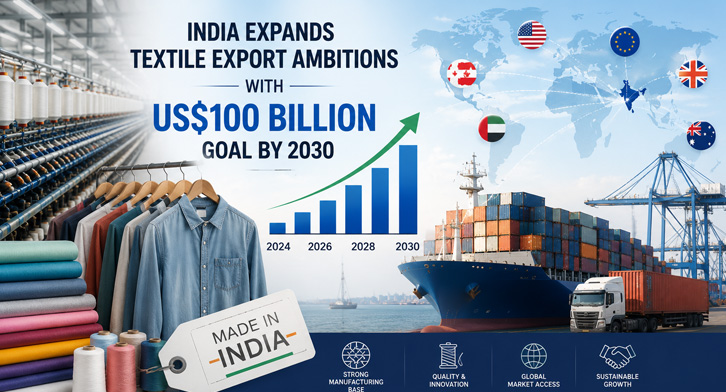
India Strengthens Textile Sector with Vision for US$100 Billion in Exports

Union Finance Minister Ms. Nirmala Sitharaman has called for strengthening India’s textile value chain—from farm to fibre, factory, fashion, and foreign markets—to build a globally competitive textile industry. Speaking at the TEXPROCIL Export Awards ceremony in Mumbai, she highlighted the sector’s critical role in driving economic growth and achieving India’s long-term development goals.
The government has set an ambitious target of achieving Rs. 9.67 lakh crore (US$100 billion) in textile exports and Rs. 24.17 lakh crore (US$250 billion) in textile production by 2030. The textile industry is expected to play a pivotal role in realizing the vision of Viksit Bharat by 2047.
Organized by the Cotton Textiles Export Promotion Council (TEXPROCIL), the awards ceremony recognized outstanding exporters for excellence in exports, innovation, employment generation, ESG initiatives, and e-commerce performance. During the event, TEXPROCIL also launched the Advanced Certificate Programme in International Trade (ACPIT) to strengthen India’s export ecosystem and enhance global competitiveness.
Highlighting India’s rich textile legacy dating back to the Sindhu-Saraswati Civilization, the Finance Minister noted that India is currently the world’s sixth-largest textile exporter. The textile sector contributes approximately 2.3% to India’s GDP and nearly 12% of the country’s total export earnings while supporting around six crore livelihoods directly and indirectly.

India’s Business Environment Drives Foreign Company Registrations to Nine-Year High in FY26

India recorded a sharp increase in foreign company registrations during FY26, reflecting rising global confidence in the country’s economic growth and investment climate. According to data from the Ministry of Corporate Affairs (MCA), 101 foreign companies registered operations in India during FY26, the highest level in nine years, compared with 57 registrations in FY25.
Singapore led the list of new foreign entrants with 13 registrations, followed by the United States (10) and the United Kingdom (9). South Korea and Germany also recorded strong growth, while Japan remained among the major contributors. The rise in registrations highlights India’s growing attractiveness as a consumer market, manufacturing hub, and investment destination.
The data also showed increasing diversification, with companies from South Africa, Ghana, and Uzbekistan registering operations in India for the first time during FY26.

Key Highlights:

India’s Chemical Sector Poised for Industrial Expansion and 10 Million New Jobs by 2040

India’s chemical industry is emerging as a major pillar of industrial growth, manufacturing expansion, and employment generation, with the potential to create nearly 10 million jobs by 2040. According to DCPC Secretary Ms. Nivedita Shukla Verma, rising domestic demand, increasing exports, global supply-chain diversification, and strong policy support are positioning India as a preferred manufacturing destination for the global chemical sector.

Chemical Sector Driving Industrial Expansion

India’s chemical industry plays a critical role in supporting key sectors and strengthening the country’s manufacturing ecosystem.

Key Highlights:

Key Industries Supported by Chemicals

The chemical sector contributes significantly to several downstream industries:

Future Growth Areas

India’s chemical industry is witnessing growing investments and technology adoption across emerging segments.
cargonet-logo-icon
Cargonet Cargo Software Logo

Feedback & Reward program

Submit the Feedback and avail the Rewards.

1. Your satisfaction & reliability on CargoNet ?

2. Your Rating on Support & co-ordination team?

3. Satisfaction on the look and feel of CargoNet ?

4. Please specify any 2 best features that you feel more helpful in CargoNet?

5. Please specify any 2 best reports that you are taking on regular basis?

6. Are you using Copy Job option in CargoNet Software?

7. Are you using Automatic DSR (Daily Status Report) Option? It automatically sends reports to customer about the shipment status

8. Are you using Automatic Outstanding Reports option? Period Auto outstanding reminders to customer

9. Any other thoughts to improve in CargoNet? Please share.

* Join our Reward Program by recommending CargoNet (Cash Rewards Awaiting)

“Thanks for your feedback. Our goal is to create the best possible product, support & service, and your thoughts, ideas & suggestions play a major role in helping us identify opportunities to improve.”

Cut AI cost ,
not performance

discover how top Freight Forwarding companies  reduce AI-related expense and speed up operation with CargoNet AI, we will show it how

Share your information for instant access :

Get a Demo Now