Gujarat Special Economic Zone Exports Cross Historical ₹3 Lakh Crore Milestone

Special Economic Zones (SEZs) based in Gujarat recorded exports worth ₹3,00,793 crore (Rs.3 trillion) in 2025-26, surpassing the ₹3 lakh crore mark for the first time. This is a major increase from 12 years ago, in 2014-15, when SEZs’ exports stood at ₹1,79,808 crore. According to officials, exports from Gujarat’s SEZs have grown by nearly 67% over the past 12 years, and the state now contributes around 21% of the country’s total SEZ exports. Concurrently, overall investments in Gujarat’s SEZs rose to ₹2,28,624 crore in 2025-26, while employment generated rose to more than 2.22 lakh jobs.
Crossing the ₹3 lakh crore milestone highlights Gujarat’s success in building world-class plug-and-play industrial infrastructure. By grouping manufacturing plants, processing facilities, and dedicated logistics hubs into single tax-free zones, these SEZs have significantly reduced operational friction for exporters. The state’s ability to consistently contribute over a fifth of India’s total SEZ exports demonstrates the deep integration between its manufacturing zones and major deep-water ports, allowing raw materials to be processed and exported with minimal transit delays.
To maintain this growth, the state has launched the Viksit Gujarat Industrial Policy 2026, which introduces a flexible “Choose Your Incentive” framework tailored for 21 forward-looking sectors, including green hydrogen, semiconductor packaging, and aerospace engineering. This policy allows businesses to customize their financial support—whether through power subsidies, capital support, or tax relief—based on their specific operational needs. This adaptive framework is drawing a steady stream of foreign direct investment, helping to build highly advanced manufacturing clusters that create skilled jobs and support reliable export growth.

Key Highlights:

India-UK Free Trade Agreement Clears 3.78 Lakh Luxury Vehicles at Slashed Customs Duties

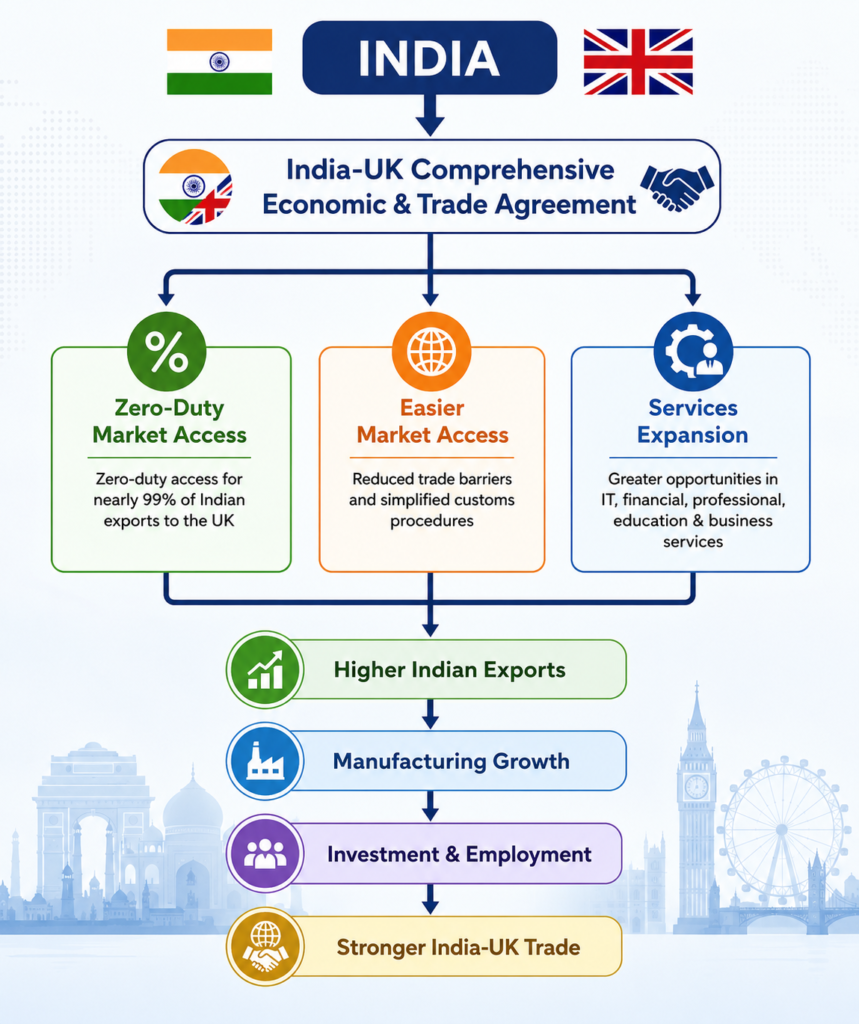
The newly finalized India-UK Free Trade Agreement, taking effect July 15, 2026, includes a major automotive concession: India will permit the import of 3.78 lakh British cars at a significantly reduced Customs duty over a phased 15-year period. The deal establishes a structured tariff-rate quota system designed to grant British luxury automakers smoother access to India’s booming premium market without disrupting local manufacturers. The import quota starts at 10,000 units in the first year, gradually scaling up to 44,000 units by year 15. For vehicles within this quota, India’s steep 70% basic Customs duty will drop dramatically down to 10% or 15%.
The implementation of the Tariff-Rate Quota (TRQ) system represents a carefully balanced approach to bilateral trade. By dropping the high 70% basic customs duty down to 10% or 15% for vehicles within the quota, the agreement allows iconic British luxury brands to competitively price their vehicles for India’s rapidly growing upper-middle class. At the same time, because the import caps scale up gradually over a 15-year period, domestic automotive companies have plenty of time to upgrade their own vehicle platforms, ensuring they remain competitive without facing a sudden flood of imported vehicles.
This long-term tariff visibility will also encourage top British automakers to invest directly in local manufacturing and assembly plants within India. To bypass quota caps over time, premium brands are likely to establish domestic Completely Knocked-Down (CKD) assembly lines, partnering with local suppliers to source components. This shift will help transfer advanced automotive engineering skills to the domestic workforce and open up steady, high-volume ocean freight opportunities for logistics companies handling parts across the busy UK-India trade lane.

Key Highlights:

India Ranks as Sixth-Largest Electronics Exporter with Rising Semiconductor Production

India is rapidly strengthening its position as a global electronics manufacturing hub, driven by expanding production capabilities, rising exports, and strong policy support. Speaking at the inauguration of US-based Jabil’s new manufacturing facility in Pune, Union Minister Mr. Ashwini Vaishnaw said India has become the world’s sixth-largest exporter of electronics. The country aims to become the world’s second-largest electronics exporter in the coming years, supported by continued investments in advanced manufacturing and supply-chain development. To support this ecosystem, the government is accelerating semiconductor development, with multiple semiconductor plants currently under construction.

Moving up to become the world’s sixth-largest electronics exporter highlights the impact of the government’s Production Linked Incentive (PLI) schemes. By offering financial incentives based on production performance, the government has encouraged global electronics giants to set up mega-factories across India. These facilities have moved beyond basic smartphone assembly to producing advanced medical devices, high-end server hardware, and automotive computing units, proving the country’s capacity to handle highly precise, high-tech manufacturing at scale.

To make this electronics ecosystem fully self-reliant, the government is building out a comprehensive domestic semiconductor pipeline. Having multiple silicon fabrication and packaging plants under construction helps reduce the country’s dependence on foreign component imports, making local manufacturers highly resilient against global microchip shortages. Combined with Maharashtra’s dominance in data center capacity and upcoming infrastructure landmarks like the deep-water Wadhvan Port, India is building a complete, high-speed ecosystem that links component fabrication directly to fast global shipping routes.

Key Highlights:

India-France Tech Partnership Accelerates Global Innovation Ecosystems

India-France ties are witnessing renewed momentum across technology, innovation, and strategic sectors under the leadership of Prime Minister Mr. Narendra Modi and French President Mr. Emmanuel Macron. French businesses and investors have been invited to become active participants in India’s growth journey as a global innovation and manufacturing hub. As part of a recent official visit, Union Minister Mr. Piyush Goyal toured Sophia Antipolis, Europe’s largest science and technology hub, to model how research, talent, and enterprise drive innovation-led economic growth. Furthermore, Bharat Innovates 2026 showcased India’s thriving startup ecosystem to over 350 global investors.
This technology partnership bridges France’s advanced industrial design capabilities with India’s massive software and engineering workforce. By linking French research institutes with Indian manufacturing centers, both nations are co-developing next-generation technologies in artificial intelligence, green aerospace, and clean energy storage. This collaborative approach helps move the relationship beyond simple import-export trade, turning it into a deep technical alliance that creates high-value IP and builds robust, secure supply chains for advanced technology.
The Bharat Innovates 2026 summit highlighted the strong global confidence venture capitalists place in Indian tech. Over 120 cutting-edge startups and 20 Institutes of Excellence presented solutions across 13 major technology domains, including deep-tech, fintech, and advanced robotics. By providing French and European investors with direct access to top-tier Indian engineering talent, this platform is accelerating cross-border funding, setting the stage for international joint ventures that will deploy advanced tech solutions at scale.

Key Highlights:

India and Slovakia Record Highest Bilateral Trade Volume of $1.81 Billion

India and Slovakia are strengthening their economic partnership, with bilateral trade reaching a record Rs. 15,305.43 crore ($1.81 billion) in 2025, reflecting growing cooperation across manufacturing, automobiles, engineering, information technology, and infrastructure. Bilateral trade crossed the Rs. 8,456.04 crore ($1 billion) mark for the first time in 2024 before rising by nearly 28% in 2025. India’s exports to Slovakia are driven by automotive components, engineering goods, machinery, mobile phones, pharmaceuticals, and electrical equipment. Investment ties have also strengthened significantly, with major Indian conglomerates expanding their active operational footprints in Slovakia.
The rapid growth in trade shows how both nations are leveraging their unique industrial strengths. Slovakia, positioned at the geographic heart of the European Union, serves as a premier automotive manufacturing base, boasting the world’s highest per-capita car production. Indian auto-component manufacturers have integrated directly into this ecosystem, setting up highly dependable supply lines that deliver critical sub-assemblies to Central European factories. This deep operational link helps cushion both economies against regional demand fluctuations by balancing manufacturing loads across different geographies.
A key pillar of this bilateral economic relationship is the Tata Group’s massive investment in the Jaguar Land Rover (JLR) plant in Nitra, Slovakia. Spanning a modern manufacturing footprint, this facility employs over 4,400 people and serves as a vital production hub for premium vehicles sold worldwide. Concurrently, Slovak engineering and technology firms are increasing their presence in India, bringing advanced expertise in railway signaling, heavy machinery components, and renewable energy technologies to actively support India’s national infrastructure upgrades.

Key Highlights:

India’s May Goods Exports Reach Historic $45.2 Billion High Amid 18% Surge

India’s merchandise exports jumped to a record monthly high of $45.2 billion in May 2026, marking an 18% year-on-year surge—the sharpest growth seen in six months. Outbound shipments were driven by a massive 55% surge in petroleum products ($8.4 billion) and a 24.5% jump in engineering goods ($12.3 billion). On the import front, elevated net energy bills pushed crude and petroleum imports up 53% to $22.6 billion, while gold imports grew 34% to $3.4 billion, widening the overall trade deficit.
The geometric expansion of engineering and petroleum exports indicates a deeper integration into the global midstream and downstream value chains. Indian refining hubs and precision engineering clusters are outperforming regional competitors by ensuring strict compliance with western quality benchmarks and maintaining stable delivery timelines. This manufacturing shift is drawing multi-national supply chain networks to establish permanent purchasing operations within the Indian subcontinent, transforming local manufacturers from regional suppliers into critical global anchors.
Commerce Secretary Mr. Rajesh Agrawal noted that forward momentum should strengthen further following recent regional peace developments and the anticipated full reopening of the Strait of Hormuz. For international ocean shipping lines, the normalization of transit through this critical choke point will immediately reduce war-risk insurance premiums, lower spot bunker costs, and stabilize transit times between India and Western Europe. The resulting operational predictability will help freight forwarders quote fixed multi-month contract rates, cutting out the sudden surcharges that disrupted trade over the last fiscal year.

Key Highlights:

Indian Tractor Exports Breach 10,000-Unit Milestone to Record 13-Month High

India’s tractor manufacturers achieved a major international trade breakthrough in May 2026, with monthly exports up 14% year-on-year to a 13-month high of 10,165 units. This milestone shows how Indian-made farm machinery is expanding globally, adding a strong second engine of growth alongside record-breaking domestic performance. The export surge is heavily driven by top domestic conglomerates—including the Mahindra Group, International Tractors Limited (Sonalika), and Escorts Kubota—who are aggressively scaling their presence in key international markets across Africa, Europe, and the Americas.
The rapid global expansion of Indian tractor brands highlights their successful engineering evolution. Originally designed to handle tough, demanding local farming conditions, these vehicles have proven highly resilient and reliable in international markets. Furthermore, Indian agricultural machinery conglomerates have moved beyond simply exporting standard models. They have established local assembly plants and deep spare-parts distribution networks across Africa and Latin America, providing long-term maintenance support that makes them highly competitive alternatives to traditional western and East Asian brands.

To unlock premium, highly regulated agricultural markets across North America and the European Union, domestic manufacturers have systematically upgraded their engineering frameworks. Heavy investments in research and development have produced high-horsepower engines that strictly comply with stringent international emission standards. Additionally, the integration of advanced digital telematics, GPS-guided precision farming modules, and ergonomic cab designs has enabled Indian heavy machinery to compete directly with premier global brands, changing the perception of Indian manufacturing in western markets.

Key Highlights:

Free Trade Agreements Drive Surge in Electronics, Pharma, and Engineering Exports

India’s export sector is increasingly benefiting from its expanding network of Free Trade Agreements (FTAs), with electronics, pharmaceuticals, and engineering goods emerging as key drivers of export growth. These sectors have recorded strong gains in overseas markets by leveraging preferential market access and reduced trade barriers offered under various trade agreements. Industry stakeholders have highlighted that FTAs are helping Indian exporters improve competitiveness, diversify markets, and strengthen integration with global value chains.
The real value of these modern FTAs lies in their comprehensive Rules of Origin (RoO) and Mutual Recognition Agreements (MRAs). By standardizing compliance verification processes, these provisions allow advanced Indian-made electronics and complex life-saving pharmaceuticals to pass through destination customs gates without facing repetitive testing and inspection bottlenecks. This administrative synchronization accelerates supply chain velocity, helping domestic manufacturing hubs integrate directly into the tight, just-in-time production schedules of global technology and healthcare giants.
This shift reflects a gradual transformation in India’s export basket from traditional commodities towards higher-value manufactured products and technology-intensive goods. Moving away from low-margin raw material exports like iron ore or unprocessed agricultural goods fundamentally alters the country’s macroeconomic positioning. High-value engineering goods, advanced telecommunications hardware, and specialized pharmaceuticals yield significantly higher profit margins, creating a highly resilient industrial ecosystem that supports well-paying engineering and manufacturing jobs nationwide.

Key Highlights:

India’s Engineering Exports Reach Record US$122.43 Billion, Contributing 28% of Merchandise Exports

India’s engineering exports achieved a historic milestone in FY2025-26, reaching an all-time high of US$122.43 billion and further strengthening the country’s position as a global manufacturing and export powerhouse. The record performance reflects the growing competitiveness of India’s engineering sector, supported by policy reforms, industrial expansion, and increasing global demand for high-quality manufactured products.
According to the Department of Commerce, engineering exports have grown significantly from approximately US$70 billion in FY2014-15 to the current record level, highlighting the remarkable transformation of India’s manufacturing ecosystem over the past decade.

Engineering Sector Emerges as India's Largest Export Contributor

Engineering goods have become the single largest contributor to India’s merchandise exports, accounting for nearly 28% of the country’s total export basket. The sector’s share has steadily increased from around 20% a decade ago, demonstrating its growing importance in driving export-led economic growth.
The strong performance underscores India’s ability to compete globally across a wide range of engineering products, including machinery, industrial equipment, automotive components, electrical machinery, and capital goods.

Three Consecutive Years of Record Export Growth

The latest achievement marks the third consecutive year of record-breaking engineering exports. Export earnings increased from US$109.3 billion in FY2023-24 to US$116.67 billion in FY2024-25, before reaching US$122.43 billion in FY2025-26.
This consistent growth reflects strong international demand, improved manufacturing capabilities, and the success of initiatives aimed at enhancing export competitiveness and industrial productivity.

Manufacturing Reforms Strengthen Global Competitiveness

The Commerce Ministry attributes the sector’s growth to structural reforms, infrastructure development, and targeted government initiatives that have strengthened India’s manufacturing ecosystem.
Programs supporting industrial modernization, ease of doing business, logistics improvements, and export promotion have enabled Indian manufacturers to expand their presence in global markets. These efforts have also encouraged greater investment in technology, quality standards, and production capacity.

Key Highlights:

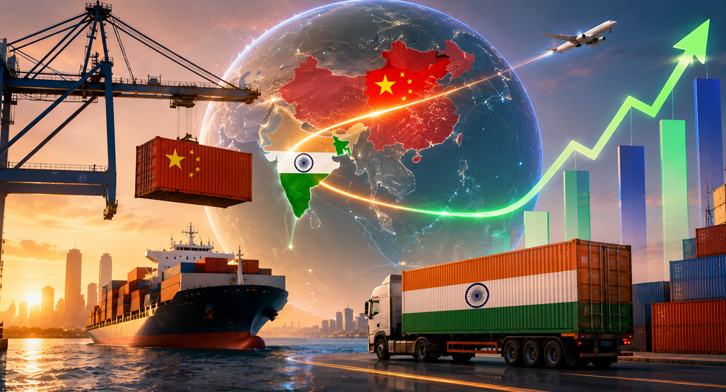
India Exports ₹35,000 Crore Worth of Electronics Components to China, Strengthening Its Position in Global Supply Chains

India’s electronics manufacturing industry is rapidly evolving from an assembly-led ecosystem to a component manufacturing powerhouse, marking a significant step in the country’s journey toward becoming a global electronics hub. The sector’s growing capabilities were highlighted by electronics component exports worth ₹35,000 crore (US$4.2 billion approximately) to China during the previous year, demonstrating the increasing competitiveness of India’s electronics supply chain.
Supported by government initiatives, rising investments, and expanding domestic manufacturing capacity, India is steadily strengthening its role in global electronics production and exports.

Electronics Component Manufacturing Gains Strong Momentum

India’s electronics sector is witnessing unprecedented growth as domestic companies and global manufacturers expand component production capabilities. The export of electronics components to China highlights the country’s growing expertise in producing high-value products for international markets.
To support future growth, 75 electronics component manufacturing facilities are currently under construction across the country. These investments are expected to significantly increase domestic production capacity and reduce reliance on imports.

Major Expansion Planned Across the Electronics Ecosystem

The next phase of growth is expected to be even larger, with approximately 250 additional electronics component factories projected to be established over the next two to three years.
The expansion will help create a stronger domestic supplier network, support local value addition, and improve India’s competitiveness in global electronics supply chains. Increased manufacturing capacity is also expected to create employment opportunities and attract further investments into the sector.

India Moves Beyond Assembly-Led Manufacturing

According to Union Minister for Electronics and Information Technology Mr. Ashwini Vaishnaw, India’s electronics industry has progressed significantly beyond basic assembly operations.
The country initially focused on finished-product manufacturing before advancing to module production. India is now entering the next stage of development by building capabilities in component manufacturing, which generates higher value addition and strengthens the domestic electronics ecosystem.
This transition mirrors the development path followed by leading electronics manufacturing nations such as China, South Korea, Taiwan, and Vietnam.

Government Support Accelerates Industry Growth

The Electronics Component Manufacturing Scheme (ECMS) continues to play a crucial role in attracting investments and supporting industry expansion.
In March 2026, the government approved 29 new proposals under the scheme involving projected investments of ₹7,104 crore and estimated production worth ₹84,515 crore. These projects are expected to generate 14,246 direct jobs.
The approvals follow an earlier round in which 46 applications with projected investments of ₹54,567 crore received clearance, reflecting strong industry interest and confidence in India’s electronics manufacturing sector.

Key Highlights:

cargonet-logo-icon
Cargonet Cargo Software Logo

Feedback & Reward program

Submit the Feedback and avail the Rewards.

1. Your satisfaction & reliability on CargoNet ?

2. Your Rating on Support & co-ordination team?

3. Satisfaction on the look and feel of CargoNet ?

4. Please specify any 2 best features that you feel more helpful in CargoNet?

5. Please specify any 2 best reports that you are taking on regular basis?

6. Are you using Copy Job option in CargoNet Software?

7. Are you using Automatic DSR (Daily Status Report) Option? It automatically sends reports to customer about the shipment status

8. Are you using Automatic Outstanding Reports option? Period Auto outstanding reminders to customer

9. Any other thoughts to improve in CargoNet? Please share.

* Join our Reward Program by recommending CargoNet (Cash Rewards Awaiting)

“Thanks for your feedback. Our goal is to create the best possible product, support & service, and your thoughts, ideas & suggestions play a major role in helping us identify opportunities to improve.”

Cut AI cost ,
not performance

discover how top Freight Forwarding companies  reduce AI-related expense and speed up operation with CargoNet AI, we will show it how

Share your information for instant access :

Get a Demo Now