

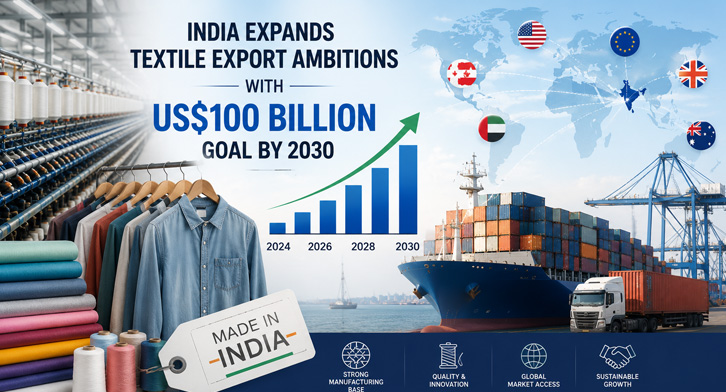
India’s textile sector is aiming to achieve US$100 billion in exports by 2030, supported by sustainable manufacturing, improved production capabilities, and expanding global market access through new Free Trade Agreements (FTAs). The ambitious export target reflects India’s strategy to strengthen its position as a leading global supplier of textiles and apparel.
The industry is focusing on increasing value-added exports while meeting the growing global demand for high-quality and sustainably produced textile products.
Sustainable Manufacturing to Drive Export Growth
Sustainability has become a key priority for India’s textile industry as international buyers increasingly prefer environmentally responsible suppliers.
Manufacturers are adopting:
- Energy-efficient production processes
- Sustainable raw materials
- Waste reduction initiatives
- Cleaner manufacturing technologies
These efforts are expected to improve India’s competitiveness in global markets while aligning with international environmental standards.
FTAs to Expand Global Market Access
New Free Trade Agreements (FTAs) are expected to create fresh export opportunities for Indian textile manufacturers by improving access to key international markets.
The government and industry are working together to enhance export competitiveness through:
- Better trade access
- Infrastructure development
- Technology adoption
- Workforce skill enhancement
- Supply chain modernization
These initiatives will help Indian exporters strengthen their presence across global textile and apparel markets.
India Strengthens Its Global Textile Leadership
The textile sector remains one of India’s largest manufacturing industries and a significant contributor to exports and employment.
With increasing investments in innovation, sustainability, and value-added manufacturing, India is well-positioned to expand its global market share and achieve its US$100 billion textile export target by 2030.
Key Highlights:
- India aims to achieve US$100 billion in textile exports by 2030.
- The strategy focuses on expanding India's global textile and apparel market share.
- Sustainable manufacturing has become a key driver of export growth.
- Industry is adopting energy-efficient production, sustainable materials, and waste reduction practices.
- New Free Trade Agreements (FTAs) are expected to improve global market access.
- Government and industry are investing in technology, infrastructure, and workforce skills.
- Greater emphasis is being placed on value-added textile exports.
- The sector aims to meet rising global demand for sustainably produced textiles.
- India's textile industry is strengthening its position as a leading global manufacturing and export hub.