India and Oman Explore New Opportunities in Maritime Trade and Logistics

India and Oman are deepening bilateral maritime cooperation through high-level discussions focused on strengthening partnerships in shipping, logistics, warehousing and port infrastructure development. The strategic meeting was chaired by Venkatesapathy S., Joint Secretary at the Ministry of Ports, Shipping and Waterways, along with an Omani delegation and key Indian maritime industry stakeholders.
The meeting served as an important platform to explore new opportunities for collaboration in maritime connectivity, multimodal logistics infrastructure, supply chain integration and port-led economic development between the two nations.

Key Highlights of India-Oman Maritime Discussions

Focus on Port Development and Logistics Connectivity

During the discussions, both countries emphasised the need to strengthen port-led infrastructure and improve coastal and container shipping connectivity to support growing trade volumes across the Indian Ocean region.
The stakeholders also explored opportunities for:
These initiatives are expected to improve regional trade efficiency and support economic growth between India and Oman.

Smart and Sustainable Maritime Initiatives

The meeting also focused on promoting sustainable and technology-driven maritime solutions. Both sides discussed increasing collaboration in:
Industry experts believe such initiatives can help create more resilient and future-ready maritime ecosystems.

Growing India-Oman Strategic Partnership

The Omani delegation expressed strong interest in expanding partnerships with Indian ports, logistics companies and infrastructure developers. Indian stakeholders highlighted the growing potential for increased trade, investment flows and regional connectivity through stronger maritime engagement.
The discussions concluded with a shared commitment to continue bilateral dialogue, knowledge exchange and collaborative projects aimed at strengthening maritime connectivity, supply chain resilience and long-term economic cooperation between India and Oman.

India Targets Middle Eastern and Asian Nations to Diversify Steel Exports

India is accelerating its push to diversify steel export destinations, turning its focus toward fast-growing markets in the Middle East and Asia as global trade dynamics continue to shift.

With demand softening and protectionist policies tightening in traditional markets such as Europe and North America, India is strategically repositioning its steel exports to tap into regions driven by infrastructure growth, urbanisation, and industrial expansion.

A Strategic Shift in Global Steel Trade

Indian steelmakers are increasingly eyeing the Gulf Cooperation Council (GCC) and emerging Asian economies to sustain export volumes and strengthen long-term market presence.
In the Middle East, massive investments in infrastructure and energy transition projects are driving strong demand for:
Countries such as United Arab Emirates, Saudi Arabia, and Qatar are rolling out mega projects that present fresh opportunities for Indian exporters.

Asia Opens New Trade Corridors

Across Asia, rapid construction activity and manufacturing growth are reshaping steel demand. Markets including Vietnam, Thailand, Indonesia, and Malaysia are emerging as key focus areas.
Indian mills are also targeting specialised and higher-margin segments such as:
This approach helps differentiate Indian exports from regional competitors.

Policy Support and Competitive Advantage

Government-backed trade negotiations and diplomatic engagement are reinforcing this export push by:

Industry estimates continue to rank India among the world’s top steel producers, with expanding capacity making export diversification critical—especially during periods of subdued domestic demand.
Outlook: Opportunities Amid Volatility
Despite ongoing volatility caused by geopolitical tensions and raw material price fluctuations, analysts believe India’s:

Key Takeaways

With targeted marketing and strategic partnerships, Indian steelmakers aim to secure long-term contracts and strengthen trade ties—reinforcing India’s role in the evolving global steel landscape.

India’s Agri Exports to the US Set for Major Boost as 75% of Products Get Zero Tariff: SBI Report

India’s agricultural exports to the United States are poised for a significant upswing, as nearly 75% of Indian agri-export items now enjoy zero-tariff access, according to a recent report by the State Bank of India (SBI).
This major tariff relaxation marks a positive shift in India–US trade relations, making Indian agricultural products far more competitive in one of the world’s largest consumer markets.

Why This Matters

Lower tariff barriers mean reduced costs for exporters, better pricing power, and improved access to high-demand US markets. As a result, India’s agri-export ecosystem—from farmers to logistics providers—is expected to see tangible gains.

Key Export Categories Likely to Benefit

The SBI report highlights increased shipment potential for:
With improved price competitiveness, Indian exporters are better positioned to compete with global suppliers across these categories.

Logistics & Quality Will Be the Game Changers

SBI notes that export growth could exceed earlier projections, provided:
This opens opportunities for logistics players, cold-chain operators, and agri-export-focused freight forwarders.
Broader Economic Impact
According to the report, the zero-tariff advantage could lead to:

The Bigger Picture

With feeder networks becoming more central to regional trade, platforms like CargoNet help logistics providers coordinate feeder and mainline connections, manage port operations, automate documentation, and track cargo movement end-to-end, ensuring visibility and control across short-sea and transshipment routes.

India–Seychelles Deepen Strategic Ties with $175 Million Development & Maritime Security Package

India and Seychelles have taken a major step forward in strengthening their strategic partnership across the Indian Ocean region. On February 9, 2026, Narendra Modi and Seychelles President Patrick Herminie signed a $175 million special economic package, alongside multiple Memorandums of Understanding (MoUs), aimed at driving development, sustainability, and maritime security.

The agreements were signed at Hyderabad House, underscoring the growing importance of India–Seychelles cooperation in the Indo-Oceanic region.

What the $175 Million Package Covers

The funding focuses on high-impact, on-ground projects across social, economic, and security domains, jointly implemented by both governments.

Key focus areas include:

Affordable housing projects targeting vulnerable and low-income communities.
Development of electric vehicle infrastructure and supporting services to promote clean mobility.
Programs aimed at empowering youth with industry-relevant skills.
Capacity building in medical services, training, and healthcare infrastructure.
Enhanced defence cooperation, including joint exercises and capability development.
Strengthened surveillance, search and rescue operations, and anti-piracy measures in the Indian Ocean.

Why This Partnership Matters

Both leaders emphasized the deep-rooted historical, cultural, and economic ties between India and Seychelles, especially in trade, maritime cooperation, and people-to-people connections.

Big Picture Takeaway

This $175 million package signals more than financial cooperation—it reflects a shared vision for sustainable development, regional security, and resilient maritime networks, reinforcing India’s role as a key partner for island nations in the Indian Ocean.

How CargoNet Fits into This Evolving Maritime Landscape

As maritime cooperation, regional trade, and port-linked infrastructure expand between India and Seychelles, digital logistics platforms like CargoNet can play a crucial enabling role—supporting cargo visibility, port operations, documentation, and cross-border trade coordination.
By helping logistics providers manage sea freight operations, compliance, financial tracking, and real-time cargo movement, CargoNet strengthens the digital backbone required for secure, efficient, and scalable maritime trade across the Indian Ocean corridor.

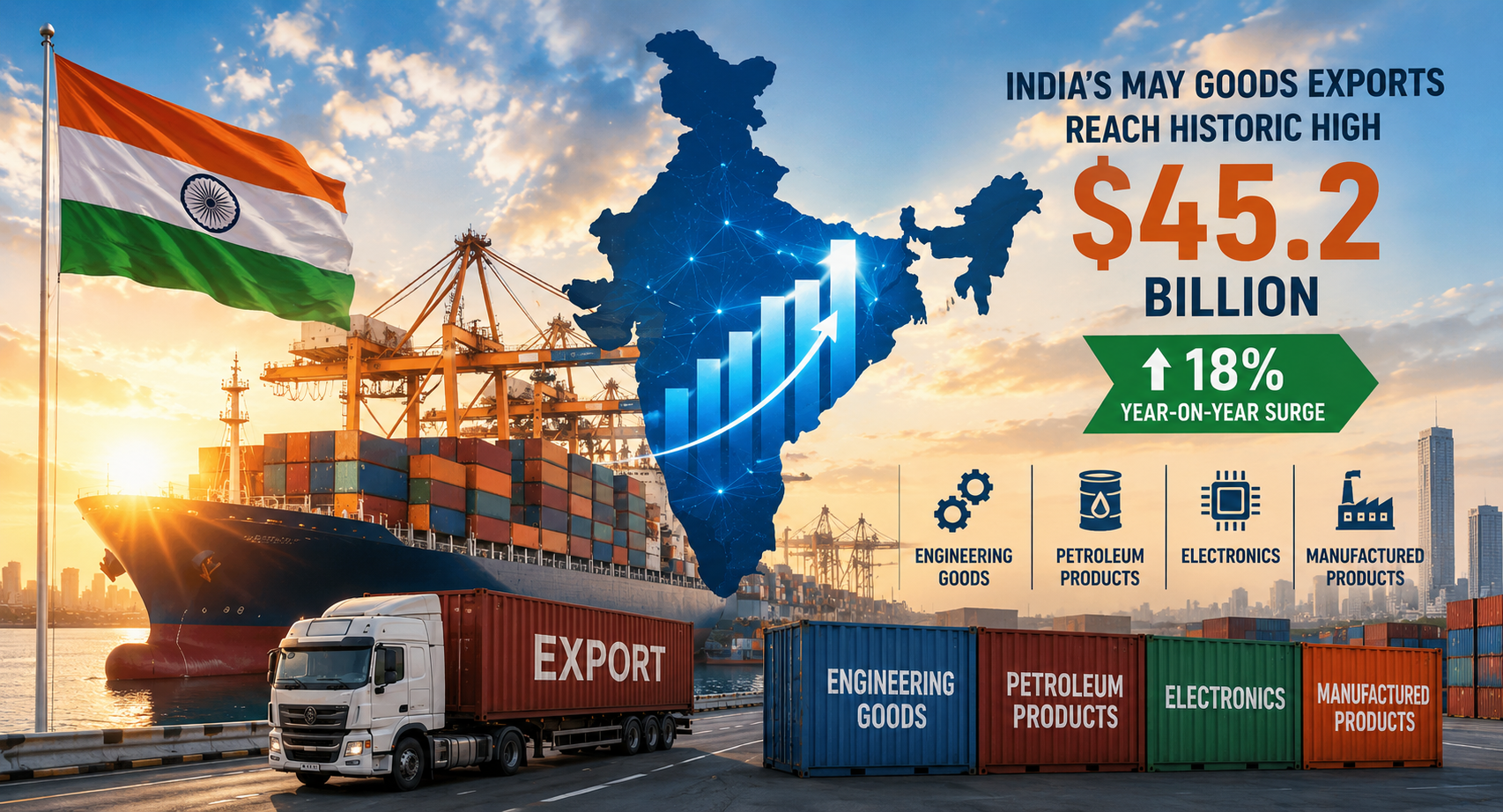
Core Merchandise Exports Rise 7.2% in Q1 FY26: Signs of Resilience in India’s Trade Performance

India’s trade momentum is showing encouraging signs of resilience despite ongoing global uncertainties. According to the Monthly Economic Review by the Department of Economic Affairs (DEA), India’s total exports (goods and services) rose 5.9% year-on-year in the first quarter of FY26 (April–June 2025). More significantly, core merchandise exports — which exclude petroleum and gems & jewellery — saw a stronger 7.2% YoY growth.
This growth highlights the sustained strength of India’s external sector amid shifting global trade dynamics.

Key Highlights:

Global Trade Context:

The broader global trade environment remains cautious but stable. While the first half of 2025 saw a USD 300 billion increase in trade value, growth was uneven — with developed nations leading and developing countries showing weaker performance.

Nations are actively countering trade volatility by:

India’s steady export growth, stable currency, and strong forex reserves position it favorably amid an increasingly fragmented world economy. The coming quarters will be crucial in determining whether this resilience translates into sustained momentum for FY26.

Infrastructure & Construction Drive India’s Steel Demand — Government Projects, EV Shift Add Momentum

India’s steel consumption is witnessing robust growth, with infrastructure and construction sectors accounting for nearly 65% of the total domestic steel usage, according to industry experts.
Speaking on this trend, Mr. Sanjay Singh, Director – Strategy and External Relations at Jindal Steel & Power, revealed that 25–30% of this demand stems directly from government-led infrastructure projects, including roads, bridges, and urban development schemes. This surge underlines the government’s continued push to upgrade national infrastructure as a pillar of economic growth.
Adding to this, Ms. Swati Agrawal, CEO & President – Advisory at CARE Analytics, highlighted the booming real estate market and evolving automotive landscape as secondary yet significant contributors to steel demand. The transition to electric vehicles (EVs) and investments in EV charging infrastructure are emerging as new demand drivers for steel, especially in urban corridors.

Policy Moves to Shield Domestic Steelmakers

To curb the influx of cheap imports and support local production, the Central Government enforced a 12% safeguard duty on steel imports in April 2025. The measure is mainly aimed at Chinese imports, with minimum import prices now fixed between Rs. 58,398 (US$ 675) and Rs. 83,378 (US$ 964) per tonne for key steel categories.
Mr. Singh acknowledged the safeguard duty’s impact, saying it has “insulated Indian producers from low-cost steel flooding the market,” thereby strengthening the competitiveness of domestic manufacturers.

Key Highlights:

India Eyes Expansion of Fruit Exports to Kuwait Beyond Mangoes

After the overwhelming success of the Indian Mango Festival at The Avenues Mall, India is now setting its sights on widening its fruit export basket to Kuwait.
Speaking to Kuwait Times, Indian Ambassador Dr. Adarsh Swaika revealed that discussions are in progress to introduce a new range of Indian-grown fruits such as dragon fruit, blueberries, and blackberries into the Kuwaiti market.
“These fruits are now being cultivated in India, and there is potential for them to enter the Kuwaiti market soon,” said Dr. Swaika.
This strategic move builds on the momentum created by the successful launch of six new late-season mango varieties in Kuwait, now available at Lulu Hypermarket and soon at other major retailers.

Key Highlights:

Why This Matters

India’s move to expand fruit exports is a key example of agri-logistics innovation and international market diversification. For logistics players and exporters, this signals growing demand in the GCC region for high-quality Indian horticultural products and the need to scale cold-chain infrastructure to meet rising expectations.

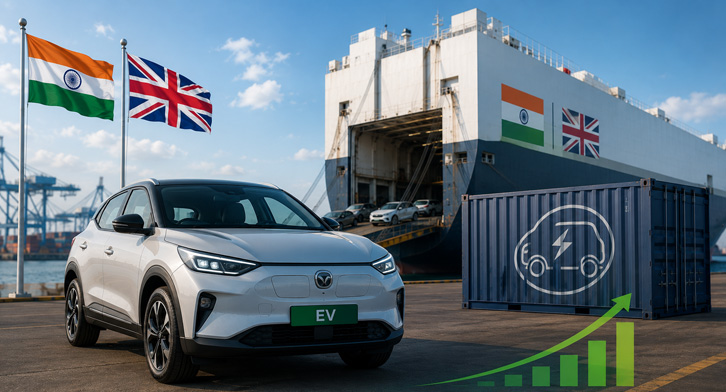
India-UK Sign Landmark CETA Deal to Boost Trade and Logistics Synergy

In a major step toward strengthening bilateral economic ties, India and the United Kingdom have signed the Comprehensive Economic and Trade Agreement (CETA)—a breakthrough pact poised to reshape trade dynamics between the two nations.
The agreement was signed by India’s Union Minister of Commerce & Industry, Mr. Piyush Goyal, and the UK’s Secretary of State for Business and Trade, Mr. Jonathan Reynolds, under the visionary leadership of Prime Minister Narendra Modi.
Currently valued at ₹4.83 lakh crore (US$56 billion), bilateral trade is set to double by 2030, backed by the sweeping benefits of this agreement.

Key Highlights of the India-UK CETA

This landmark agreement not only opens new doors for export growth and job creation but also places India on a stronger footing in the evolving global supply chain landscape.
Stay tuned for more updates on how CETA impacts logistics, shipping, and cross-border trade operations.

Pharma Exports Surge 9.3% to $30.5 Billion in FY25

India’s pharmaceutical exports climbed to $30.5 billion in FY2025, reflecting a 9.3% year-on-year growth, according to a new report by Rubix Data Sciences. The momentum is expected to continue, with projections indicating pharma exports could double to $65 billion by 2030.
This surge comes despite mounting global headwinds, notably potential US tariffs and supply chain dependencies on China. Indian companies are pushing ahead with complex generics, strategic global acquisitions, and regulatory fortification to stay competitive.

Highlights from the Rubix Report:

“From navigating tariff pressures to strengthening compliance and expanding globally, the sector is showing clear signs of strategic maturity.”
— Mohan Ramaswamy, Co-founder & CEO, Rubix Data Sciences
This performance reflects not just growth, but the strategic recalibration of Indian pharma amid global volatility. The sector’s agility and focus on innovation are paving the way for long-term global leadership.

India’s Sugar Exports Set to Hit 900,000 Tonnes by September

India, the world’s second-largest sugar producer, is poised to export up to 900,000 tonnes of sugar by September 2025, following the government’s green light to export 1 million tonnes earlier this year.
Between January 20 and mid-July, exports have already reached 650,000–700,000 tonnes, with strong demand from countries like Somalia, Afghanistan, Sri Lanka, Djibouti, UAE, Libya, and Tanzania.

Key Highlights:

Domestic Production & Consumption:

Promising 2025–26 Season Ahead:

cargonet-logo-icon
Cargonet Cargo Software Logo

Feedback & Reward program

Submit the Feedback and avail the Rewards.

1. Your satisfaction & reliability on CargoNet ?

2. Your Rating on Support & co-ordination team?

3. Satisfaction on the look and feel of CargoNet ?

4. Please specify any 2 best features that you feel more helpful in CargoNet?

5. Please specify any 2 best reports that you are taking on regular basis?

6. Are you using Copy Job option in CargoNet Software?

7. Are you using Automatic DSR (Daily Status Report) Option? It automatically sends reports to customer about the shipment status

8. Are you using Automatic Outstanding Reports option? Period Auto outstanding reminders to customer

9. Any other thoughts to improve in CargoNet? Please share.

* Join our Reward Program by recommending CargoNet (Cash Rewards Awaiting)

“Thanks for your feedback. Our goal is to create the best possible product, support & service, and your thoughts, ideas & suggestions play a major role in helping us identify opportunities to improve.”

Cut AI cost ,
not performance

discover how top Freight Forwarding companies  reduce AI-related expense and speed up operation with CargoNet AI, we will show it how

Share your information for instant access :

Get a Demo Now