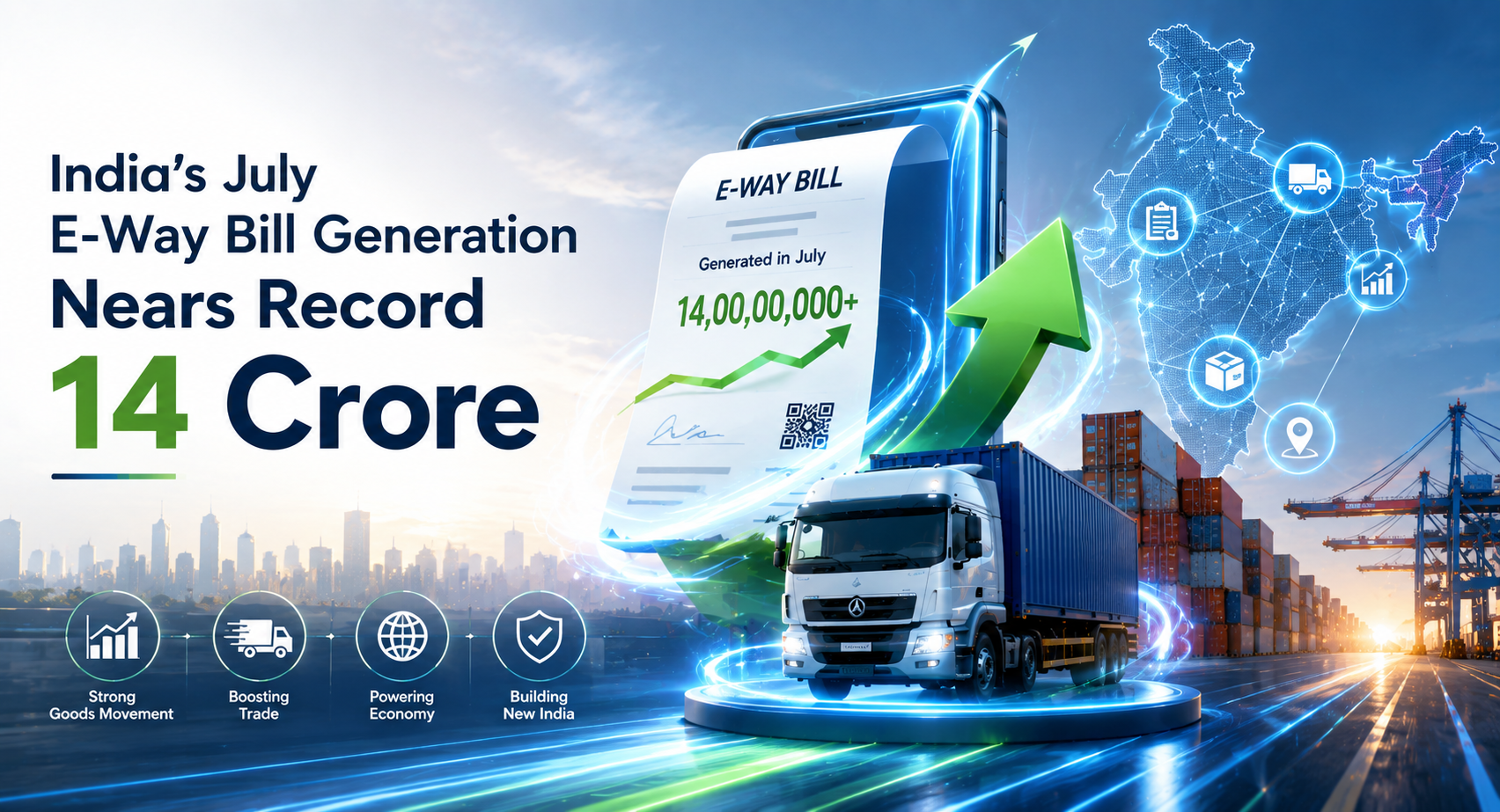
India’s July E-Way Bill Generation Nears Record 14 Crore, Signalling Strong Goods Movement

India’s goods movement showed continued strength in July, with 13.98 crore e-way bills (139.8 million) generated during the month, bringing activity close to record levels, according to data from the Goods and Services Tax Network (GSTN).
The latest figures point to sustained movement of goods across India’s domestic supply chains despite continuing geopolitical and economic uncertainties. For the logistics sector, the increase provides a useful indicator of transportation activity across manufacturing, distribution, wholesale and retail networks.

Key Highlights

Why July’s E-Way Bill Numbers Matter

E-way bills are electronic documents generated on the GST portal to track the movement of goods. They provide an important window into the scale and intensity of goods transportation across the country.
However, e-way bill generation should not be treated as a direct measure of GST collections. GST revenue is influenced by actual consumption, tax rates, compliance, imports and several other factors. In addition, services and certain categories of goods movement fall outside the e-way bill framework.
Even so, sustained growth in e-way bills can serve as an important high-frequency indicator of economic and logistics activity.
According to Saurabh Agarwal, Tax Partner at EY India, the continued increase reflects strong goods movement across supply chains. He also pointed to the combined effect of GST rate rationalisation and stronger compliance enforcement, which could help expand India’s taxable base and support GST revenue during the year.

E-Way Bills and GST Revenue: What Is the Connection?

The relationship between e-way bills and GST collections is indirect but significant.

Indicator

July/FY27 Development

Potential Significance

E-way bills

13.98 crore in July

Indicates strong goods movement

GST revenue growth in FY26

5.60%

Slower than the previous year

GST growth in first four months of FY27

More than 10%

Signals improving revenue momentum

SBI FY27 GST growth projection

8–9%

Indicates potential recovery

The July e-way bill numbers could therefore provide an early indication of continued economic activity ahead of the August GST collection data, scheduled for release on September 1.

GST Revenue Shows Signs of Recovery

The latest e-way bill data comes against a backdrop of improving GST revenue growth.
A State Bank of India (SBI) research report noted that overall GST revenue, including compensation cess, grew by 5.6% in FY26, compared with 9.4% in FY25.
The picture has improved in the early months of FY27, with GST revenue growth exceeding 10% during the first four months.
SBI expects GST collections to recover further, projecting annual growth of approximately 8–9% in FY27.
The report attributed part of the earlier moderation to GST rate rationalisation and described the resulting impact as an expected consequence of the policy changes.

Compensation Cess and State Revenues

The SBI report also questioned concerns about the financial impact on States following the discontinuation of compensation cess.
Rather than an estimated annual loss of ₹15,000–20,000 crore, the report projects that States could potentially receive approximately ₹1.43 lakh crore more in FY27 than in FY26.
This adds another dimension to the broader GST revenue outlook as India moves through the current financial year.

What the Numbers Mean for India’s Logistics Sector

For logistics and supply-chain businesses, the near-record e-way bill activity is particularly significant because the document is closely associated with the movement of goods by road and other transport modes.
Higher goods movement can translate into greater demand for:
For freight forwarders and logistics companies, sustained cargo movement also reinforces the need for real-time shipment visibility, automated documentation, GST compliance and integrated freight management systems.
The Bigger Picture
The July e-way bill numbers tell a broader story about India’s economic and logistics activity.
Strong goods movement → Higher e-way bill generation → Increased supply-chain activity → Greater transaction visibility → Potentially stronger tax compliance
While e-way bills alone cannot determine India’s GST revenue trajectory, the combination of near-record goods movement and improving GST growth suggests that economic activity remains relatively resilient entering FY27.
For India’s logistics industry, the trend is another indication that domestic freight volumes remain an important driver of demand for transportation, warehousing, freight technology and supply-chain services.

What Is an E-Way Bill?

An e-way bill is an electronic document generated through the GST system for the movement of goods. Under Rule 138 of the Central Goods and Services Tax (CGST) Rules, 2017, registered persons generally need to generate an e-way bill when transporting goods with a consignment value exceeding ₹50,000, subject to specified exemptions and applicable rules.
The system is designed to improve visibility of goods movement and strengthen GST compliance.

Rising E-Way Bills Point to Resilient Trade and Supply-Chain Activity

India’s 13.98-crore e-way bill generation in July points to sustained goods movement and resilient domestic supply-chain activity. Combined with improving GST revenue growth in the early months of FY27, the data suggests that India’s tax base and economic activity may be gaining momentum.
For the logistics industry, the trend reinforces the importance of efficient transportation networks, digital compliance, freight visibility and technology-driven supply-chain management as cargo volumes continue to expand.

Frequently Asked Questions

How many e-way bills were generated in July 2026?
India generated approximately 13.98 crore e-way bills, or 139.8 million, in July 2026.
Not directly. E-way bills indicate goods movement, while GST collections depend on several factors including consumption, taxable transactions, tax rates, imports and compliance.
E-way bills provide an electronic record associated with the movement of goods and therefore offer an important indicator of transportation and supply-chain activity.
The near-record generation of e-way bills indicates strong and sustained movement of goods across India’s supply chains, suggesting continued resilience in economic activity.
An SBI research report has projected 8–9% annual GST revenue growth for FY27, while noting that revenue growth during the opening months of the financial year has exceeded 10%.
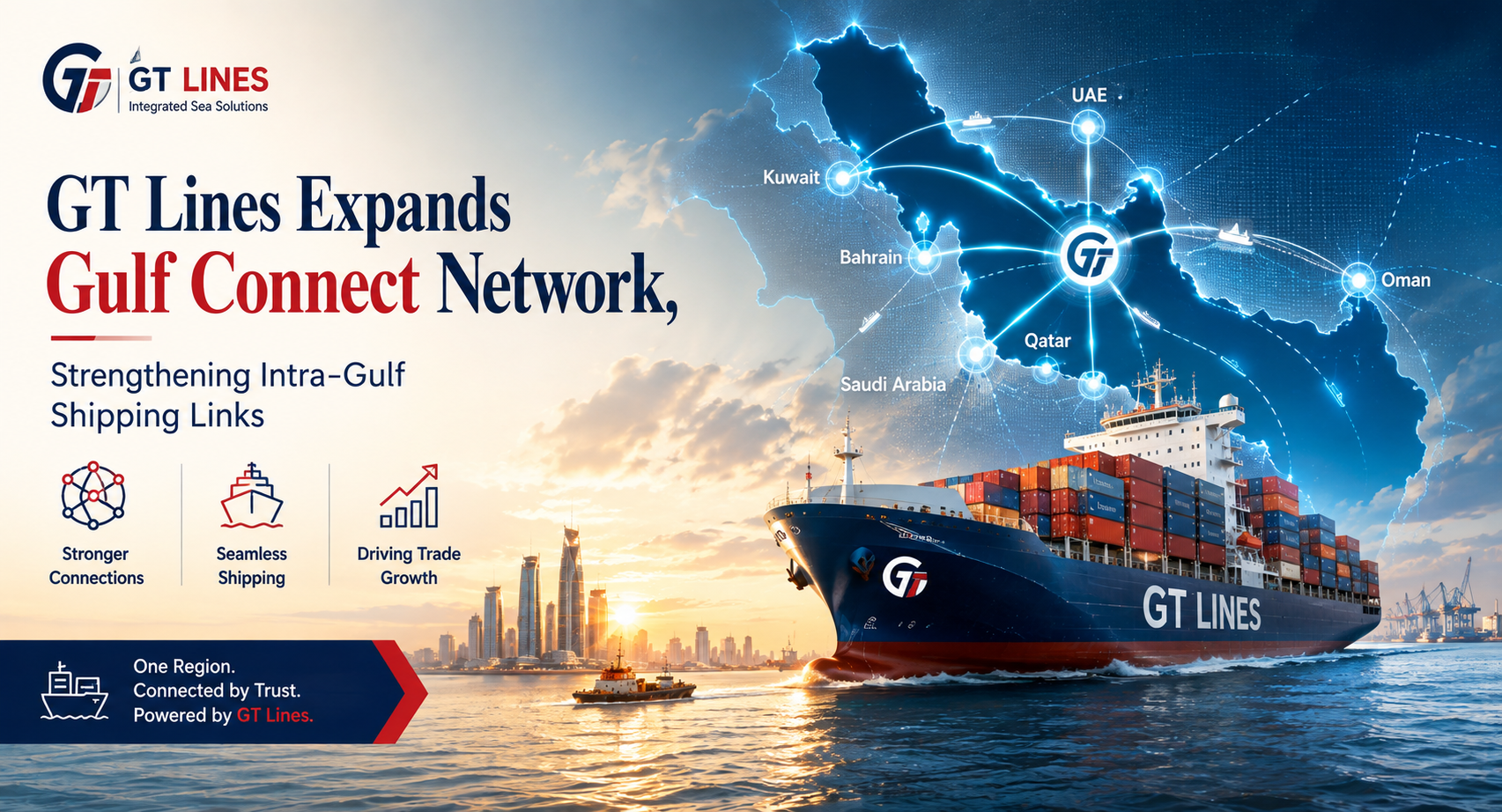
GT Lines Expands Gulf Connect Network, Strengthening Intra-Gulf Shipping Links

GT Lines is expanding its Gulf Connect intra-Gulf shipping network, strengthening direct container connectivity between key Gulf markets, Iraq and the carrier’s wider international service network.
The expanded network connects major markets across the UAE, Iraq, Kuwait, Saudi Arabia, Qatar and Bahrain, while providing links to international trade corridors serving Pakistan, India, China, wider Asia and East Africa.
The development comes as regional trade flows continue to grow and shippers seek faster, more reliable options for moving cargo between Gulf markets and international destinations.

Key Highlights

GT Lines Gulf Connect Service Network

Service

Route

Frequency

Key Market

SIX – Sharjah Iraq Express

Sharjah → Umm Qasr → Shuwaikh → Sharjah

3 departures/week

Iraq & Kuwait

SQX – Sharjah Qatar Express

Sharjah → Hamad → Bahrain → Sharjah

2 departures/week

Qatar & Bahrain

SKX – Sharjah KSA Express

Sharjah → Dammam → Sharjah

Weekly

Saudi Arabia

Beyond a Conventional Feeder Network

GT Lines says Gulf Connect is designed to operate as more than a conventional feeder service.
The carrier’s network strategy combines container shipping, terminal operations, inland transportation and regional distribution to create an integrated logistics platform for cargo moving within the Gulf and onward to international markets.
Sharjah and Khorfakkan play an important role in this model, providing access to regional markets while connecting Gulf cargo with GT Lines’ broader international service corridors.
The network also provides connectivity to Iraq through Gulftainer ICT, supporting container movements between the UAE and the Iraqi market.

Why the Expansion Matters for Gulf Trade

The Gulf has become an increasingly important logistics and distribution hub linking Asia, the Indian subcontinent, Africa and Europe.
For exporters and importers, stronger intra-Gulf shipping connections can provide additional routing options for cargo moving between regional markets. This can be particularly relevant for businesses using the UAE as a logistics or transshipment base.
GT Lines’ expanded Gulf Connect network therefore adds another layer of regional connectivity while linking intra-Gulf cargo with longer-haul services.
For freight forwarders and logistics operators, the expanded network could create additional options when planning shipments between the Gulf, Iraq and major Asian and African trade lanes.

What It Means for Freight Forwarders

The expanded network could be relevant for freight forwarders managing cargo across multiple GCC markets.
Key potential advantages include:

Why It Matters

GT Lines’ Gulf Connect expansion reflects a broader shift toward integrated regional logistics networks, where shipping services are increasingly connected with terminals, inland transportation and distribution infrastructure.
As trade between the Gulf, India, Asia and East Africa continues to develop, regional shipping networks that provide both short-sea connectivity and access to international services could become increasingly important.
For shippers and logistics providers, the expanded Gulf Connect network gives them additional options for moving containers across the GCC and connecting regional cargo with international markets.

GT Lines Strengthens Gulf Shipping Network with Expanded Gulf Connect Services

GT Lines’ expanded Gulf Connect network strengthens intra-Gulf container connectivity by linking the UAE with Iraq, Kuwait, Saudi Arabia, Qatar and Bahrain through three dedicated services.
With six dedicated vessels and connections to wider trade corridors covering India, Pakistan, China, Asia and East Africa, the network positions the UAE as an important regional gateway for cargo moving across the Gulf and beyond.
For freight forwarders, exporters and importers, the expansion means more regional routing options, stronger Gulf connectivity and greater access to international shipping networks.

Frequently Asked Questions

What is GT Lines Gulf Connect?
Gulf Connect is GT Lines’ intra-Gulf container shipping network connecting the UAE with Iraq, Kuwait, Saudi Arabia, Qatar and Bahrain.
The network connects the UAE, Iraq, Kuwait, Saudi Arabia, Qatar and Bahrain, with onward connections to India, Pakistan, China, Asia and East Africa.
GT Lines operates three dedicated intra-Gulf loops: SIX, SQX and SKX.
SIX operates three times weekly, SQX twice weekly and SKX weekly.
Sharjah and Khorfakkan are key locations within GT Lines’ regional logistics network.

Dhamra Port Starts Commercial Operations with New Mechanised Loading System at Berth 4

Dhamra Port in Odisha has strengthened its bulk cargo handling infrastructure with the start of ,commercial operations of a newly commissioned mechanised loading system at Export Terminal Berth 4.
The facility entered commercial service with the successful handling of MV APJ JAOUAD, the first commercial vessel to use the new loading system. The development marks another step in Dhamra Port’s efforts to improve cargo-handling efficiency and expand its capacity to support India’s growing maritime trade.

Key Highlights

What Does the New Mechanised Loading System Mean for Dhamra Port?

The commissioning of the mechanised loading system is important because bulk cargo operations depend heavily on efficient loading processes and vessel turnaround.
Mechanisation can help reduce dependence on manual cargo-handling activities while creating a more streamlined flow between the cargo-handling infrastructure and vessels at the berth.
For Dhamra Port, the new system can support:

Operational area

Expected impact

Cargo loading

More streamlined and efficient loading operations

Vessel turnaround

Potential reduction in time spent at berth

Bulk cargo capacity

Better ability to handle growing cargo volumes

Port productivity

Improved utilisation of terminal infrastructure

Export logistics

More efficient movement of bulk commodities

Trade connectivity

Stronger support for India's eastern maritime trade

First Commercial Vessel Marks Operational Milestone

The successful handling of MV APJ JAOUAD represents the first commercial operation through the newly commissioned mechanised loading system.
The vessel’s handling provides an early operational milestone for the facility and demonstrates that the new infrastructure has moved from the commissioning stage into commercial use.
For cargo owners, exporters and logistics providers, such infrastructure development can translate into more efficient port-side cargo movement as utilisation of the facility increases.

Why This Development Matters for India's Logistics Sector

Dhamra Port is strategically positioned on India’s eastern coast and plays an important role in the movement of bulk commodities.
As India’s trade volumes expand, ports are under increasing pressure to improve cargo-handling speed, berth productivity, vessel turnaround and terminal efficiency.
The addition of mechanised loading infrastructure at Export Terminal Berth 4 supports this broader shift toward technology-enabled port operations.
The development is particularly relevant to logistics stakeholders because port efficiency has a direct effect on the wider supply chain. Faster cargo handling can help reduce delays at the gateway and improve the movement of goods between ports, industrial locations and inland markets.

Role of Adani Ports and SEZ

The commissioning of the facility is part of the continuing investment in port infrastructure by Adani Ports and SEZ.
Modern loading and cargo-handling systems are increasingly becoming an important component of port development as operators seek to improve productivity while accommodating larger and growing cargo flows.
For Dhamra, the new facility adds to its infrastructure base and reinforces its role in India’s eastern maritime logistics network.

What It Means for Exporters and Logistics Companies

The commercial operation of the new system could provide several potential advantages for businesses using Dhamra Port:
For freight forwarders, exporters and supply-chain managers, developments such as these underline the growing importance of selecting ports based not only on location, but also on cargo-handling infrastructure, operational efficiency and connectivity.

Dhamra Port Strengthens Bulk Cargo Operations with Mechanised Loading System

Dhamra Port’s move into commercial operations with its new mechanised loading system at Export Terminal Berth 4 strengthens its bulk cargo-handling capabilities and supports the port’s focus on operational efficiency.
The successful handling of MV APJ JAOUAD marks the first commercial use of the facility. As cargo volumes grow, investments in mechanised infrastructure could help Dhamra improve berth productivity, support vessel turnaround and strengthen its role in India’s eastern logistics network.

Frequently Asked Questions

What has Dhamra Port started operating?
Dhamra Port has commenced commercial operations of a newly commissioned mechanised loading system at Export Terminal Berth 4.
MV APJ JAOUAD was the first commercial vessel handled through the newly operational mechanised loading system.
Dhamra Port is located in Odisha on India’s eastern coast and is an important gateway for bulk cargo and maritime trade.
Mechanised loading systems can improve cargo-handling efficiency, support higher berth productivity and potentially reduce vessel turnaround time.
The facility is expected to strengthen Dhamra Port’s bulk cargo-handling capabilities and support more efficient movement of cargo through the port.

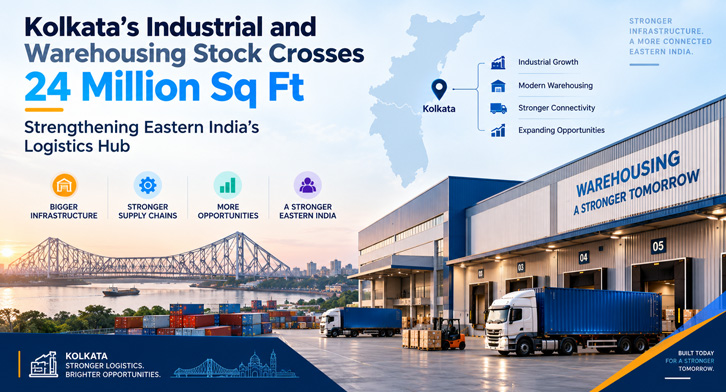
Kolkata’s Industrial and Warehousing Stock Crosses 24 Million Sq Ft, Strengthening Eastern India’s Logistics Hub

Kolkata’s industrial and warehousing stock has surpassed 24 million sq ft, reinforcing the city’s growing position as a major logistics and distribution hub for Eastern and Northeastern India.
The expansion reflects rising demand for modern logistics infrastructure from third-party logistics (3PL) providers, e-commerce companies, manufacturers and other supply-chain-intensive businesses. Growing connectivity with key consumption centres is also encouraging the development of industrial and warehousing facilities around the city.

Key Highlights

Kolkata’s Warehousing Market Gains Momentum

Kolkata’s strategic location gives it an important role in India’s eastern logistics network. The city provides access to major consumption and industrial markets while serving as a gateway for cargo moving toward Northeastern states and neighbouring markets.
The growing presence of 3PL operators and e-commerce businesses is increasing demand for strategically located warehouses capable of supporting faster order fulfilment, inventory consolidation and regional distribution.
Manufacturing and engineering companies are also contributing to demand, creating requirements for industrial facilities that can support production, storage and movement of goods.

Kolkata’s Leasing Activity Signals Strong Demand

According to CBRE, Kolkata recorded approximately 3.8 million sq ft of industrial and logistics leasing during the first nine months of 2025, highlighting the city’s contribution to India’s broader logistics real estate market.

Market Indicator

Volume

Kolkata industrial & warehousing stock

24+ million sq ft

Kolkata industrial & logistics leasing, 9M 2025

3.8 million sq ft

India warehousing absorption, H2 2025

30+ million sq ft

Key demand sectors

3PL, e-commerce, manufacturing & engineering

Why Kolkata Matters for Eastern India’s Supply Chain

Kolkata’s logistics importance extends beyond the city’s immediate market.
Its location makes it a natural distribution point for cargo destined for West Bengal, Odisha, Bihar, Jharkhand and the Northeastern region. As businesses increasingly seek faster delivery and regional inventory networks, demand for strategically positioned warehousing facilities is likely to remain important.
Modern warehouses can also improve supply-chain performance by enabling:

The Bigger Picture

India’s industrial and logistics real estate market continues to benefit from structural changes in supply chains. Companies are increasingly investing in regional distribution centres, fulfilment facilities and modern warehouses to reduce delivery times and improve inventory efficiency.
For Kolkata, the combination of growing industrial and warehousing stock, strong leasing activity and its strategic regional position could further strengthen its role in India’s logistics network.
As more modern facilities come online, the city could attract additional logistics operators, manufacturers, e-commerce businesses and supply-chain investments.

What Does the Growth Mean for Logistics?

For freight forwarders, 3PL companies, manufacturers, e-commerce operators and transport providers, the expansion of Kolkata’s warehousing ecosystem could create new opportunities across storage, distribution and transportation.
A larger and more modern warehouse base can support more efficient cargo flows while enabling businesses to position inventory closer to regional demand centres.
For the logistics industry, this means potential growth in warehousing, road freight, freight forwarding, distribution, inventory management and supply-chain technology.

Frequently Asked Questions

What is the size of Kolkata’s industrial and warehousing stock?
Kolkata’s industrial and warehousing stock has surpassed 24 million sq ft.
Kolkata recorded around 3.8 million sq ft of industrial and logistics leasing during the first nine months of 2025, according to CBRE.
Major demand drivers include 3PL providers, e-commerce companies, manufacturers, engineering companies and other supply-chain-intensive businesses.
Kolkata is strategically positioned as a gateway to Eastern and Northeastern India, providing access to major regional consumption and industrial markets.
Increasing warehousing capacity could support regional distribution, faster cargo movement, inventory optimisation, e-commerce fulfilment and greater demand for transportation and logistics services.

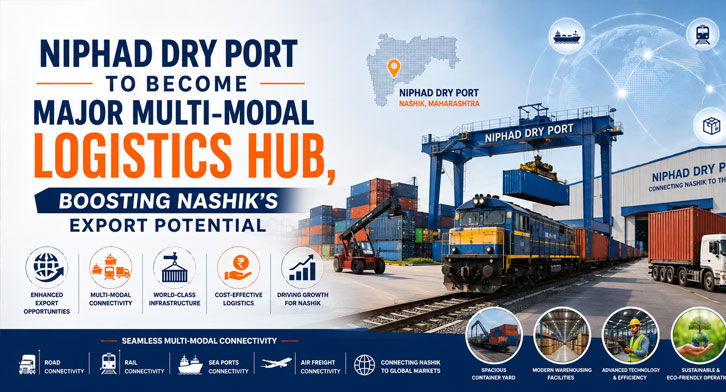
Niphad Dry Port to Become Major Multi-Modal Logistics Hub, Boosting Nashik’s Export Potential

niphad-port

NASHIK: The proposed Niphad Multi-Modal Logistics Park (MMLP) is set to play a significant role in transforming Nashik into a stronger logistics and export hub, with improved connectivity for agricultural producers, manufacturers, exporters and domestic cargo operators.

The development of the proposed Niphad Dry Port was discussed during a meeting between Nashik District Collector Ayush Prasad and JNPT Vice Chairman Ravish Kumar Singh at the Nashik Collector’s Office.

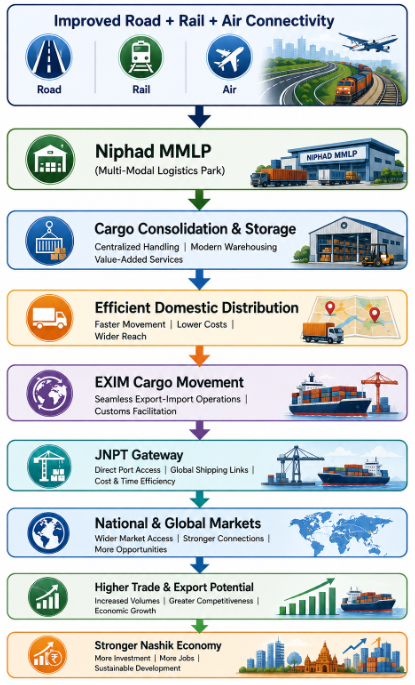
The proposed logistics park is envisioned as more than an Export-Import (EXIM) cargo facility. Authorities are planning an integrated logistics hub capable of handling both domestic and international cargo, supported by road, rail, air and warehousing infrastructure.

Niphad MMLP to Support EXIM and Domestic Cargo

A key focus of the project is to create an integrated logistics ecosystem that can improve cargo movement, storage and distribution across Nashik district.

The proposed dry port is expected to provide exporters and industries with better access to transportation and logistics services while reducing dependence on fragmented logistics operations.

Niphad MMLP to Support EXIM and Domestic Cargo

Why Niphad Is Strategically Important for Nashik Logistics

Niphad’s location gives the proposed logistics park access to multiple transportation corridors.

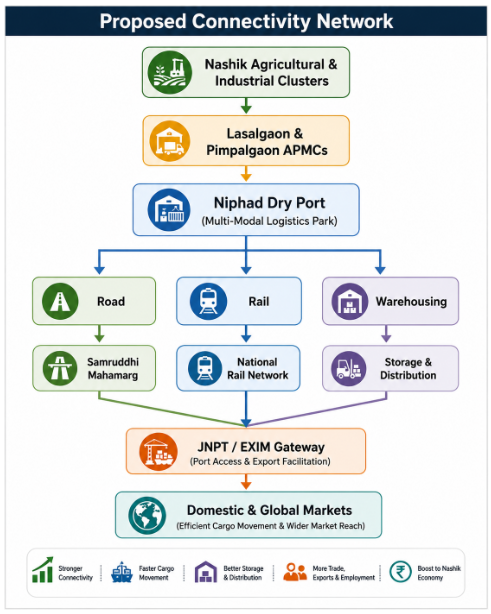
The project is expected to leverage connectivity through the Nashik–Chennai Highway, Nashik Ring Road, Samruddhi Mahamarg, Ozar Airport and the railway network.

This combination could allow cargo to move more efficiently between production centres, logistics facilities, ports and domestic consumption markets.

Connectivity-network

Agricultural Supply Chain Could Be a Major Beneficiary

Agriculture is expected to be one of the major beneficiaries of the proposed logistics infrastructure.

The District Collector has proposed connecting the Lasalgaon and Pimpalgaon Baswant APMCs with the Niphad Dry Port. Other agricultural market committees in Nashik district could potentially be integrated during subsequent phases.

The proposed linkage could create a more organised supply chain between farms, agricultural markets, storage facilities, the dry port and export gateways.

This could be particularly important for agricultural commodities that require efficient transportation, storage and market access.

Potential Agricultural Logistics Flow

Supply Chain Stage

Potential Benefit

Farmers & Producers

Better access to organised logistics

APMCs

Direct connectivity with the dry port

Warehousing

Improved storage and inventory management

Niphad Dry Port

Cargo consolidation and multimodal movement

JNPT

Access to international shipping networks

Export Markets

Improved connectivity and market reach

Grain Storage Integration Could Strengthen the Food Supply Chain

Another proposal discussed during the meeting was linking the Niphad Dry Port with the Centre’s grain storage initiative.

Such integration could help create a stronger connection between agricultural production, storage, transportation and distribution.

For farmers and traders, better storage and logistics infrastructure could help reduce supply-chain inefficiencies and improve access to wider domestic and export markets.

JNPT Steps Up Support for Nashik Exporters

JNPT is also strengthening its engagement with Nashik’s industrial and export ecosystem.

According to the district administration, the Economic Development Cell of Nashik district has been connected with JNPT’s main transport office. The objective is to simplify export-related processes for local industries and exporters.

JNPT will also participate as a key stakeholder in the District Export Promotion Committee meeting scheduled for August 4, 2026.

This collaboration could help local businesses better understand port procedures, export logistics and opportunities to access international markets.

Expected Impact on Nashik's Logistics Ecosystem

The proposed Niphad MMLP could have a broader impact beyond cargo handling.

Area

Expected Impact

Agriculture

Improved movement and export of agricultural commodities

Manufacturing

Better access to logistics and distribution networks

Exports

Easier access to port-based EXIM infrastructure

Warehousing

Increased demand for modern storage facilities

Transportation

Greater requirement for road and rail cargo movement

Employment

New opportunities across logistics and allied sectors

Trade

Wider access to domestic and international markets

Supply Chains

More integrated multimodal cargo movement

What the Niphad Dry Port Could Mean for Logistics in Nashik

niphad-dry-port

What the Niphad Dry Port Could Mean for Nashik’s Future

The proposed Niphad Multi-Modal Logistics Park represents an important step toward building a more integrated logistics ecosystem in Nashik district.

With road and rail connectivity, access to Ozar Airport, proximity to agricultural production centres and collaboration with JNPT, the project could strengthen the movement of both domestic and EXIM cargo.

The proposed integration of APMCs and grain-storage infrastructure could further enhance Nashik’s agricultural supply chain, while improved export facilitation could support local manufacturers and businesses.

If implemented as planned, the Niphad Dry Port could position Nashik as an important multimodal logistics and export hub in Maharashtra, connecting the district’s agricultural and industrial economy with national supply chains and international markets.

Key Takeaways

Frequently Asked Questions

What is the Niphad Dry Port?

The Niphad Dry Port is part of the proposed Multi-Modal Logistics Park (MMLP) in Nashik district, Maharashtra. It is planned as an integrated facility for handling both domestic and EXIM cargo.

The logistics park is expected to improve cargo transportation, warehousing, distribution and export connectivity while supporting agricultural and industrial supply chains.

The proposed logistics hub will benefit from connectivity through the Nashik–Chennai Highway, Nashik Ring Road, Samruddhi Mahamarg, railway network and Ozar Airport.

Proposed connectivity with Lasalgaon and Pimpalgaon Baswant APMCs could improve the movement of agricultural commodities from market yards to storage facilities, the dry port and export gateways.

JNPT is collaborating with the Nashik district administration and has connected the district’s Economic Development Cell with its main transport office to help facilitate export-related processes for local industries and exporters.

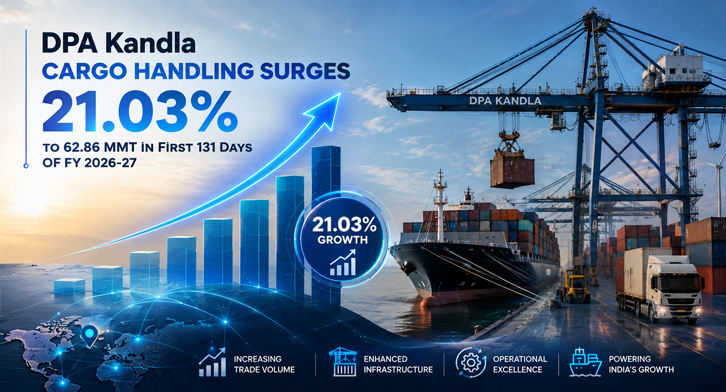
DPA Kandla Cargo Handling Surges 21.03% to 62.86 MMT in First 131 Days of FY 2026-27

Deendayal Port Authority (DPA), Kandla, has started FY 2026-27 on a strong note, recording 21.03% year-on-year growth in cargo handling during the first 131 days of the financial year.
The port handled 62.86 million metric tonnes (MMT) of cargo between April 1 and August 9, 2026, compared with 51.94 MMT during the corresponding period of the previous year. The increase represents an additional 10.92 MMT of cargo, highlighting the continued strength of cargo movement through one of India’s major maritime gateways.
The latest performance comes after DPA Kandla handled a record 160.11 MMT in FY 2025-26, the highest cargo volume recorded in the history of India’s major ports, according to the port’s official release.

Key Highlights

DPA Kandla Cargo Growth at a Glance

Indicator

FY 2025-26 Comparable Period

FY 2026-27

Change

Cargo handled

51.94 MMT

62.86 MMT

+10.92 MMT

Year-on-year growth

—

21.03%

Strong increase

Period covered

April 1–August 9, 2025

April 1–August 9, 2026

131 days

Cargo Handling Growth

51.94 MMT → 62.86 MMT
+10.92 MMT | +21.03% YoY
The increase indicates that DPA Kandla is maintaining a strong cargo throughput trajectory early in the new financial year.

Why the Kandla Numbers Matter

DPA Kandla is strategically positioned on India’s western coast and serves cargo flows connected to important industrial, commercial and consumption centres across the hinterland.
For the logistics industry, higher cargo throughput can translate into increased activity across the wider supply chain, including road transportation, rail evacuation, warehousing, customs clearance, freight forwarding, cargo handling and distribution.
The port’s performance is particularly significant following its record FY 2025-26 result. DPA reported that cargo volumes reached 160.11 MMT, with growth across several important categories, including fertilisers, liquid cargo, containers, iron and steel and clay.

What Is Driving DPA Kandla's Growth?

The latest numbers point to several important factors supporting the port’s cargo momentum:
1. Strong Cargo Throughput
Handling nearly 63 MMT in the first 131 days demonstrates sustained cargo movement through the port and its associated logistics ecosystem.
2. Expanding Multimodal Connectivity
Efficient movement of cargo beyond the port gate is critical to maintaining throughput. Road and rail connectivity with the hinterland enables cargo to move between ports, industrial clusters, warehouses and consumption centres.
3. Growing Container and Other Cargo Segments
DPA’s FY 2025-26 performance showed particularly strong growth in container cargo, which increased by 54%, while fertiliser cargo grew by around 32% and liquid cargo by 23.4%.
4. Operational Efficiency
Higher cargo volumes require coordinated vessel operations, berth management, cargo handling, documentation, customs processes and evacuation. Continued operational efficiency therefore remains critical as throughput increases.

What This Means for the Logistics Industry

The growth at DPA Kandla has implications beyond the port itself.
For freight forwarders and logistics companies, higher cargo volumes can create additional demand for transportation planning, shipment coordination, documentation, customs clearance and cargo visibility.
For exporters and importers, sustained port throughput can support greater routing flexibility and strengthen the role of Kandla as a gateway for western and northern Indian trade.
For transporters and warehouse operators, higher cargo movement can generate additional requirements for first- and last-mile transportation, storage, cargo consolidation and distribution.

What This Means for India’s Logistics Sector

DPA Kandla’s latest performance reinforces a broader trend in India’s maritime sector: major ports are increasingly becoming critical engines of trade and logistics growth rather than simply cargo-handling points.
The port’s previous milestone of 160.11 MMT in FY 2025-26 and its latest 21.03% YoY growth suggest that cargo momentum remains strong.
As India’s EXIM volumes expand, the ability of ports to combine capacity, efficient cargo handling, digital processes and reliable hinterland connectivity will become increasingly important.
For freight forwarders, shipping lines, customs brokers and transport operators, the growth at Kandla represents an expanding logistics opportunity — particularly across western and northern India.

Kandla’s Cargo Growth Signals Stronger Momentum for India’s Logistics Sector

DPA Kandla’s 62.86 MMT cargo handling in the first 131 days of FY 2026-27, representing 21.03% YoY growth, signals strong momentum in India’s port-led logistics activity.
The additional 10.92 MMT handled compared with the previous year highlights rising cargo flows through the gateway. Combined with DPA’s record 160.11 MMT performance in FY 2025-26, the latest figures strengthen Kandla’s position as an important gateway for India’s maritime trade.
For the logistics sector, the growth could support opportunities across ,freight forwarding, transportation, warehousing, customs clearance, cargo handling and supply-chain management.

Frequently Asked Questions

What is the latest cargo volume handled by DPA Kandla?
DPA Kandla handled 62.86 million metric tonnes (MMT) of cargo between April 1 and August 9, 2026.
The port recorded 21.03% year-on-year growth during the period.
DPA handled 10.92 MMT more cargo than during the corresponding period of the previous year.
DPA Kandla handled a record 160.11 MMT during FY 2025-26.
Kandla is an important maritime gateway serving cargo movements connected with western and northern Indian markets. Its cargo growth can influence demand for transportation, warehousing, customs clearance, freight forwarding and other logistics services.

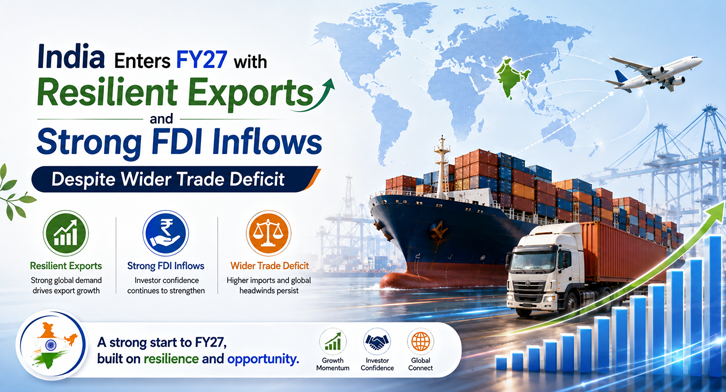
India Enters FY27 With Resilient Exports and Strong FDI Inflows Despite Wider Trade Deficit

India has started FY2026-27 with a resilient external sector, supported by strong merchandise exports, robust services exports and a renewed flow of foreign direct investment (FDI), even as rising imports continue to widen the merchandise trade deficit.
The Reserve Bank of India (RBI) has highlighted the strength of India’s external position amid elevated crude oil prices, strong domestic demand and continuing global trade uncertainties. While higher imports are putting pressure on the trade balance, strong services exports, remittances and foreign capital inflows are providing important support to the economy.

India’s Exports Maintain Momentum in FY27

India’s merchandise exports showed strong momentum during the first quarter of FY2026-27.
According to RBI data, merchandise exports increased to US$129.3 billion in Q1 FY27, compared with US$111.6 billion in the corresponding period of the previous year. This represents a 15.9% year-on-year increase.
The growth was supported by sectors including petroleum products, engineering goods and electronic goods, highlighting the increasing diversification of India’s export base.
This resilience is particularly significant as global trade remains exposed to geopolitical tensions, energy-price volatility and changes in trade policy.

Imports Grow Faster, Widening the Trade Deficit

While exports performed strongly, India’s imports expanded at an even faster pace.

Indicator

Q1 FY26

Q1 FY27

Change

Merchandise Exports

US$111.6 bn

US$129.3 bn

0.159

Merchandise Imports

US$180.3 bn

US$216.2 bn

0.199

Merchandise Trade Deficit

US$68.7 bn

US$86.6 bn

↑ US$17.9 bn

The increase in imports reflects strong domestic demand as well as higher purchases of key commodities and manufactured products. Crude oil, electronic goods and gold were among the important contributors to the wider import bill.
For India’s logistics industry, this combination of rising exports and imports points to continued demand for ocean freight, air cargo, customs clearance, warehousing, transportation and multimodal logistics services.

Services Exports Provide a Critical Cushion

India’s external sector is not dependent on merchandise trade alone.
The country’s growing services economy continues to offset part of the merchandise trade deficit. Software services, business services and Global Capability Centres (GCCs) remain important contributors to India’s services exports.
During April–May 2026, India’s services trade surplus increased to US$34.3 billion, compared with US31.7During April–May 2026, India’s services trade surplus increased to US$34.3 billion.
This combination of services earnings and remittance inflows helps reduce pressure on India’s current account despite the widening merchandise trade gap.

FDI Inflows Signal Continued Investor Confidence

Foreign investment is another major strength in India’s external sector.
Gross FDI inflows increased 14.8% year-on-year during April–June 2026, reaching US$30.7 billion, compared with US$26.7 billion during the same period of the previous year.
More importantly, net FDI inflows increased to US$7.9 billion, up from US$4.8 billion in Q1 FY26.
The recovery in foreign investment indicates that global investors continue to view India as an important destination for manufacturing, technology, infrastructure and services investment.

India’s External Sector: What Is Supporting It?

India’s external resilience can be understood through four major pillars:
At the same time, higher crude oil prices and import demand remain important risks to India’s trade balance.

What Does This Mean for the Logistics Industry?

India’s export and import growth has direct implications for the country’s logistics ecosystem.
1. Higher Container Demand
Growing merchandise exports can increase demand for containerised ocean freight, particularly across engineering, electronics and manufactured goods.
2. Rising Air Cargo Opportunities
High-value and time-sensitive products such as electronics, components and technology products can support continued growth in air freight.
3. Greater Demand for Customs Automation
As trade volumes increase, exporters and importers need faster documentation, customs filing and compliance processes.
4. Expansion of Warehousing
Growing manufacturing and import activity can increase demand for regional distribution centres, bonded warehouses and integrated logistics facilities.
5. Stronger Multimodal Logistics
India’s expanding manufacturing and export base is likely to increase demand for coordinated road, rail, port and shipping connectivity.
6. Greater Need for Digital Freight Management
Higher cargo volumes can make manual freight processes increasingly difficult to manage. Freight forwarders and logistics companies can benefit from automation across quotations, bookings, documentation, tracking, invoicing and financial reconciliation.

Q1 FY27 External Sector Snapshot

Area

Q1 FY27 Performance

Logistics Significance

Merchandise exports

US$129.3 bn

Higher outbound cargo demand

Merchandise imports

US$216.2 bn

Increased inbound cargo movement

Trade deficit

US$86.6 bn

Higher import dependence

Gross FDI

US$30.7 bn

Potential manufacturing & infrastructure investment

Net FDI

US$7.9 bn

Stronger external financing

Services surplus

US$52.2 bn

Supports external-sector stability

Net transfers

US$41.4 bn

Additional external-sector support

The RBI’s latest balance-of-payments data also show that the merchandise trade deficit widened to US$85.7 billion in Q1 FY27, while the services surplus increased to “US$52.2 billion and net transfers rose to US$41.4 billion.

The Bigger Picture for India's Trade and Logistics Sector

India’s external sector is entering FY27 with both opportunities and challenges.
On one side, stronger exports, rising services earnings and increased FDI indicate that India’s trade and investment ecosystem remains resilient. On the other, faster import growth and elevated energy costs could continue to put pressure on the merchandise trade balance.
The RBI expects healthy services exports, inward remittances and trade agreements—including the India-UK trade deal—to help mitigate some of the risks facing India’s current account.
For logistics companies, the message is clear: India’s trade volumes are expanding, but managing that growth efficiently will require greater visibility, automation and digital coordination across the supply chain.

What to Watch in FY27

The following factors will be important for India’s logistics and trade outlook during FY27:

Conclusion

India’s entry into FY27 presents a mixed but fundamentally resilient external-sector picture. Merchandise imports are putting pressure on the trade balance, but strong exports, expanding services earnings, rising remittances and renewed FDI inflows are helping maintain overall stability.
For India’s logistics industry, continued growth in trade and investment could create new opportunities across freight forwarding, container shipping, air cargo, warehousing, customs, transportation and digital supply-chain management.
As global trade becomes more volatile and cargo volumes increase, logistics companies that combine operational efficiency, real-time visibility and automation will be better positioned to capture the next phase of India’s trade growth.

Frequently Asked Questions

Is India's trade deficit increasing in FY27?
Yes. India’s merchandise trade deficit widened in Q1 FY27 as imports grew faster than exports. RBI data put the Q1 merchandise trade deficit at around US$86 billion.
Yes. Merchandise exports increased 15.9% year-on-year to US$129.3 billion in Q1 FY27.
Gross FDI inflows reached US$30.7 billion during April–June 2026, while net FDI inflows increased to US$7.9 billion.
Imports are growing faster than exports. Higher demand for crude oil, electronics, gold and other imported goods has contributed to the increase in India’s merchandise import bill.
Higher exports can increase demand for container shipping, air cargo, trucking, warehousing, customs clearance, freight forwarding and multimodal transportation services.

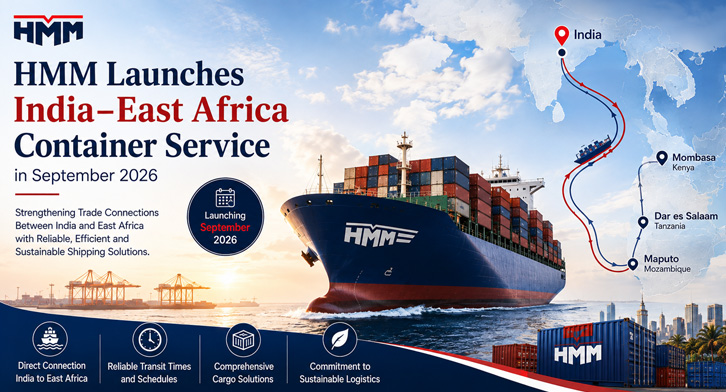
HMM Launches India–East Africa Container Service in September 2026

HMM Strengthens India–East Africa Trade Connectivity With New Container Service

South Korean container carrier HMM is expanding its presence in the India–Africa trade corridor with a new Gulf-India-East Africa (GIEA) container service, scheduled to begin in the fourth week of September 2026.
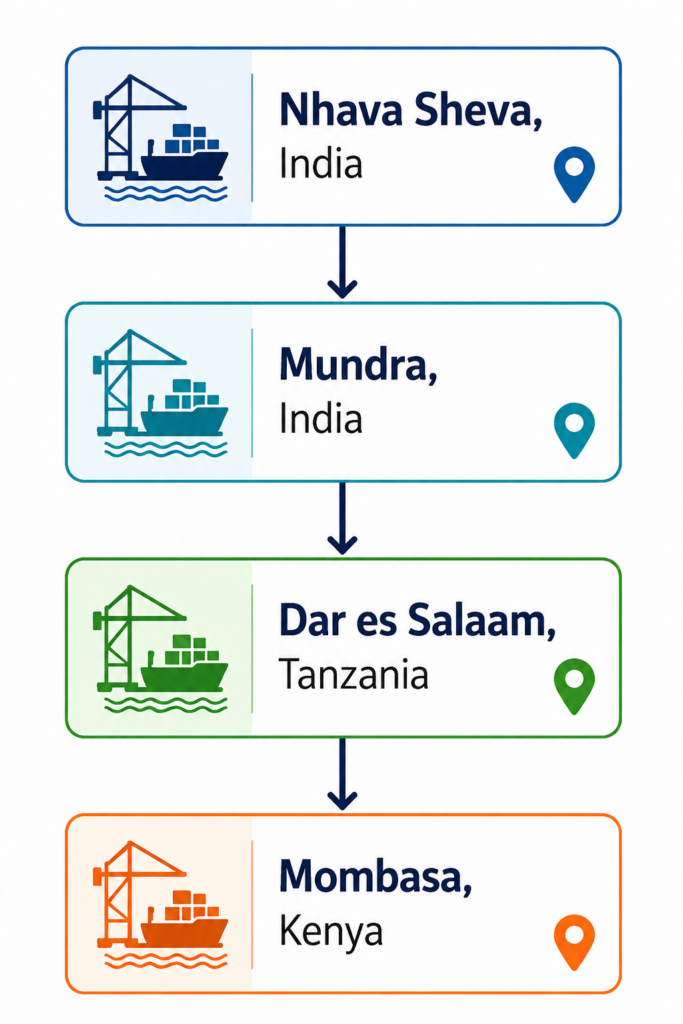
The new weekly service will connect India’s major container gateways Nhava Sheva and Mundra with Dar es Salaam in Tanzania and Mombasa in Kenya, giving exporters and importers a more direct maritime connection between the Indian subcontinent and East Africa.
The launch comes as trade between India and African markets continues to create demand for more reliable shipping schedules, wider port connectivity and efficient regional feeder networks.

Key Highlights

HMM's New India–East Africa Shipping Route

The initial port rotation is designed to link India’s major western container gateways with two important East African maritime hubs.
Trade Route
This network can provide businesses with an additional shipping option for cargo moving between India and East African markets.

Why the GIEA Service Matters for Indian Exporters1

For Indian exporters, the new service could strengthen access to East African markets by providing another scheduled container connection to Kenya and Tanzania.
Potentially important cargo segments include:
The service may also benefit importers sourcing products and raw materials from East Africa for Indian manufacturing and distribution markets.

Kenya and Tanzania Gain Greater Connectivity With India

The inclusion of Mombasa and Dar es Salaam is strategically significant because both ports serve as important gateways for East African trade.
Improving connections between Indian ports and these gateways can support broader logistics networks extending beyond the ports themselves into inland markets.
India Ports → East African Gateway Ports → Inland Distribution Networks
This makes the new service relevant not only to ocean freight operators but also to freight forwarders, customs brokers, transport companies, manufacturers and exporters.

HMM Expands Its Hub-and-Spoke Strategy

The GIEA service forms part of HMM’s broader hub-and-spoke network strategy.
Under this model, large vessels operate on major international trade routes while regional feeder vessels connect smaller or emerging markets to strategic hubs.
HMM plans to deploy five 2,800-TEU vessels on the weekly GIEA service, creating a dedicated regional network between India and East Africa.
The company already operates the MA2 service, which provides connectivity to North and West Africa through Algeciras, Spain.
Together, these services support HMM’s wider objective of developing a stronger presence across African trade lanes.

GIEA Service at a Glance

Parameter

Details

Shipping line

HMM

Service

Gulf-India-East Africa (GIEA)

Launch

Fourth week of September 2026

Frequency

Weekly

Indian gateways

Nhava Sheva, Mundra

African gateways

Dar es Salaam, Mombasa

Vessel deployment

5 vessels

Vessel size

2,800 TEU

Rotation

Nhava Sheva → Mundra → Dar es Salaam → Mombasa

Joint operators

HMM, COSCO Shipping, PIL, Interasia Lines

What the New Service Could Mean for the Logistics Industry

The introduction of another scheduled India–East Africa service comes amid continuing uncertainty across global supply chains.
For shippers, network reliability has become increasingly important as disruptions, changing trade patterns and capacity constraints can affect transit planning and freight costs.
A dedicated weekly service can potentially offer:
However, the actual impact on transit times, freight rates and cargo volumes will depend on vessel schedules, port performance, demand and wider market conditions.

HMM's Fleet Expansion Supports Long-Term Growth

HMM is also pursuing a larger long-term container fleet strategy.
The carrier has announced plans to expand its container fleet to approximately 1.47 million TEU across 166 vessels by 2030.
The planned fleet expansion could provide additional capacity for HMM to develop regional and long-haul services as global trade patterns evolve.

What This Means for Exporters and Importers

For businesses involved in India–East Africa trade, the new GIEA service could create opportunities to review existing shipping strategies.
Companies may want to evaluate:

Outlook

HMM’s new GIEA service signals a growing focus on the India–East Africa maritime trade corridor.
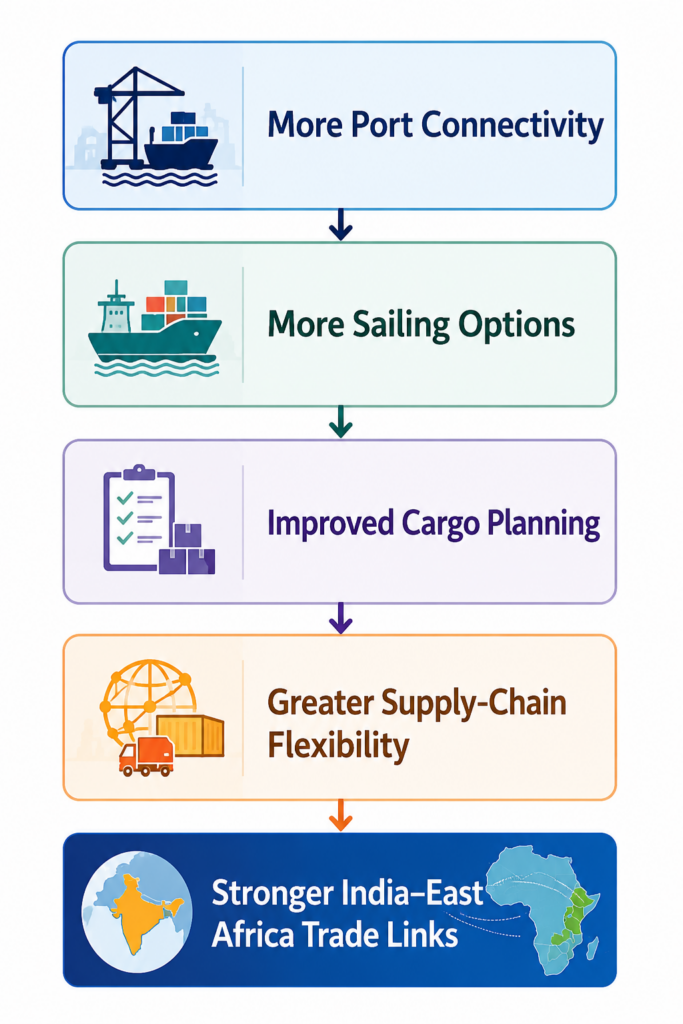
By linking Nhava Sheva and Mundra with Mombasa and Dar es Salaam, the service could provide exporters and importers with an additional scheduled shipping option while strengthening regional feeder connectivity.
The planned expansion also reflects a wider shift in liner shipping toward hub-and-spoke networks, regional connectivity and diversified trade routes.
For India’s logistics sector, the development is particularly relevant as exporters increasingly seek dependable maritime access to emerging African markets.
Bottom line: HMM’s India–East Africa service is more than a new shipping rotation—it represents another step toward deeper maritime integration between India, the Gulf and East Africa.

Frequently Asked Questions

When will HMM's India–East Africa service start?
HMM’s new Gulf-India-East Africa (GIEA) service is scheduled to commence in the fourth week of September 2026.
The service will use Nhava Sheva and Mundra as its Indian ports.
The initial service will connect Dar es Salaam, Tanzania, and Mombasa, Kenya.
The service is planned as a weekly container service.
The service will be jointly operated by HMM, COSCO Shipping, Pacific International Lines (PIL) and Interasia Lines.
HMM plans to deploy five vessels of approximately 2,800 TEU capacity on the service.

India’s Chemicals & Petrochemicals Sector Accelerates Growth, Attracts ₹3.4 Lakh Crore Investment

India’s chemicals and petrochemicals industry has recorded strong expansion over the past 12 years, supported by government policy reforms, new manufacturing infrastructure, investment incentives, research initiatives and skill development.
The sector is increasingly becoming an important pillar of India’s manufacturing, export and supply-chain ecosystem, with major investments flowing into Petroleum, Chemicals and Petrochemicals Investment Regions (PCPIRs).

Key Takeaways

India’s Chemical Manufacturing Sector: What Is Driving the Growth?

India’s chemicals and petrochemicals industry has undergone substantial transformation over the last decade.
Government initiatives focused on manufacturing capacity, infrastructure, investment promotion, technology development and workforce training have helped create a stronger industrial ecosystem.
The growth also supports the broader Viksit Bharat 2047 and Atmanirbhar Bharat objectives by encouraging domestic production and reducing dependence on imported chemical products.

PCPIRs Become Major Industrial Investment Hubs

Three operational PCPIRs are currently playing a significant role in India’s chemical manufacturing landscape:
Together, these regions have attracted approximately ₹3.4 lakh crore in investments, generated employment for nearly 3.7 lakh people, and supported the establishment of more than 2,200 chemical manufacturing units.

PCPIR Development at a Glance

Indicator

Reported figure

Operational PCPIRs

3

Investment attracted

₹3.4 lakh crore

Employment generated

~3.7 lakh

Chemical manufacturing units

2,200+

Key locations

Gujarat, Andhra Pradesh, Odisha

These industrial clusters are important not only for manufacturing but also for logistics, warehousing, transportation, ports, chemical storage and multimodal supply chains.

Chemical Sector FDI Shows Strong Momentum

Foreign investment has also increased significantly.
According to the figures provided, FDI inflows into the sector reached ₹1,04,895 crore between 2014 and 2026, compared with ₹45,240 crore during 2004–2014.

Period

FDI inflow

2004–2014

₹45,240 crore

2014–2026

₹1,04,895 crore

This investment growth indicates increasing confidence in India’s chemical manufacturing capabilities and its potential as a global production and export base.

Government Pushes Quality and Domestic Manufacturing

The Government has introduced 37 Quality Control Orders (QCOs) aimed at improving product quality and addressing the availability of sub-standard imports.
At the same time, 10 Plastic Parks have been approved, with four already having completed infrastructure.
Together, these measures are designed to strengthen domestic manufacturing and improve competitiveness across the chemicals and plastics value chain.

Research, Technology and Skills Gain Importance

India’s chemical-sector growth is also being supported by investments in technology and human capital.
The Central Institute of Petrochemicals Engineering & Technology (CIPET) has expanded its network to 51 centres, including 19 centres established since 2014.
CIPET has reportedly:
The Institute of Pesticide Formulation Technology (IPFT) has also transferred 64 pesticide formulation technologies to industry.
In addition, IPFT received ₹28.69 crore from the Department of Biotechnology to establish a Biofoundry Facility focused on biopesticides and advanced biological formulations.

₹3,030 Crore BHAVYA Rasayan Scheme

One of the major recent initiatives is the BHAVYA Rasayan Scheme, approved by the Union Cabinet with an outlay of ₹3,030 crore.
The scheme is expected to establish three plug-and-play Chemical Parks.

The objective is to:

Why This Matters for Logistics and Supply Chains

The expansion of India’s chemical and petrochemical manufacturing base could create significant opportunities across the logistics sector.
More chemical production means greater demand for:
The concentration of manufacturing activity around PCPIRs and chemical parks can also encourage the development of integrated manufacturing-to-port supply chains.
For logistics companies, this represents an opportunity to build specialized capabilities around the movement and storage of chemical products.

India’s Chemical Industry: Growth Outlook

The combination of manufacturing investments, chemical parks, infrastructure development, quality standards, technology transfer and workforce development is strengthening India’s position in the global chemicals and petrochemicals market.
The next phase of growth is likely to depend on how effectively India connects manufacturing capacity with ports, logistics infrastructure, domestic distribution networks and export markets.
For the logistics industry, the expansion of chemical manufacturing could therefore become an important source of long-term demand for specialized and technology-enabled supply-chain services.

At a Glance

India’s chemical and petrochemical sector is moving toward a more integrated manufacturing ecosystem, supported by investment, infrastructure and policy initiatives. As production capacity expands, the opportunity extends beyond chemical manufacturers to logistics providers, ports, warehouses, technology companies and supply-chain operators.

Frequently Asked Questions

What is driving the growth of India's chemicals and petrochemicals sector?
Policy reforms, infrastructure development, investment promotion, manufacturing capacity expansion, research, skill development and initiatives aimed at reducing import dependence are key growth drivers.
The three operational PCPIRs at Dahej, Visakhapatnam–Kakinada and Paradeep have attracted approximately ₹3.4 lakh crore in investment.
The sector received approximately ₹1,04,895 crore in FDI between 2014 and 2026, according to the figures provided.
More than 2,200 chemical manufacturing units have been established across the three operational PCPIRs.
The BHAVYA Rasayan Scheme is a government initiative with an approved outlay of ₹3,030 crore to establish three plug-and-play Chemical Parks and strengthen domestic chemical manufacturing.
Higher chemical production can increase demand for specialized transportation, bulk logistics, hazardous-material handling, warehousing, port logistics, compliance systems and digital supply-chain management.

Maharashtra Leads India’s Pharma Exports with USD 5.94 Billion in FY2025-26

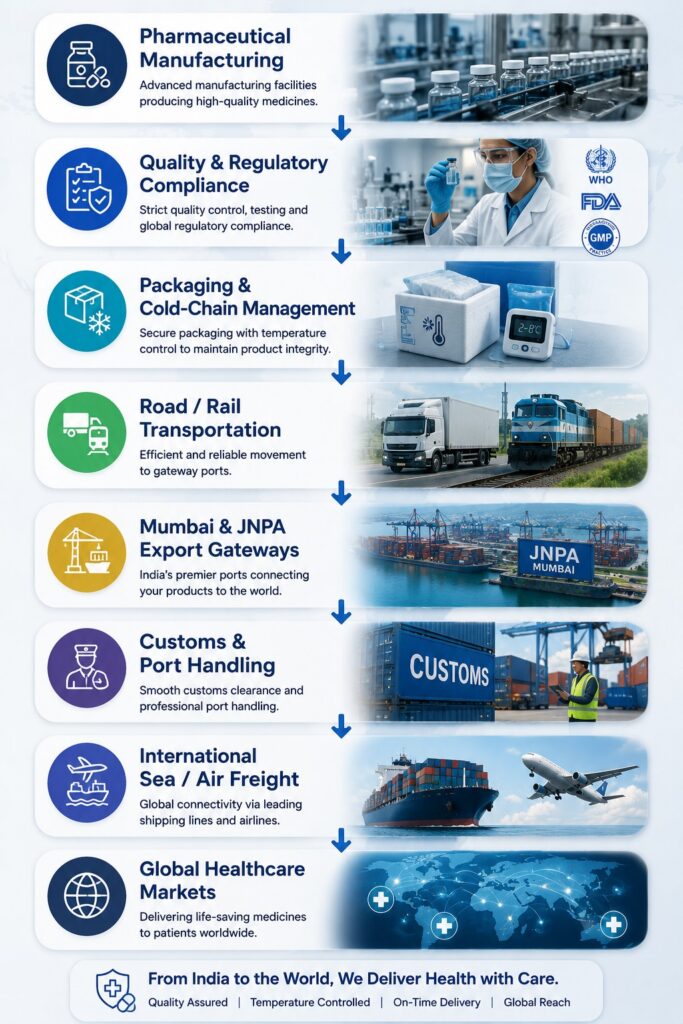
Maharashtra has strengthened its position as India’s leading pharmaceutical export hub, with pharma exports reaching USD 5.94 billion in FY2025-26. The state accounted for approximately 19% of India’s total pharmaceutical exports, highlighting its growing importance to India’s global healthcare supply chain.
The performance reflects Maharashtra’s combination of pharmaceutical manufacturing capacity, research capabilities, skilled talent and multimodal logistics infrastructure. The state has emerged as a critical link between Indian pharmaceutical producers and international healthcare markets.

Key Highlights

Why Maharashtra Is Emerging as a Pharma Export Powerhouse

Maharashtra has developed one of India’s most diversified pharmaceutical ecosystems. The state’s manufacturing base is supported by pharmaceutical companies, research institutions, industrial clusters and a large pool of skilled professionals.
Its production capabilities span several high-value pharmaceutical categories, including:

Pharmaceutical Segment

Export Importance

Generic medicines

Large international demand for affordable medicines

Active Pharmaceutical Ingredients (APIs)

Critical input for global drug manufacturing

Vaccines

Important component of global healthcare supply chains

Biosimilars

Growing demand in international markets

Specialty pharmaceuticals

Higher-value and technology-intensive products

This combination allows Maharashtra to serve multiple international markets while supporting India’s broader ambition to become a global pharmaceutical manufacturing centre.

Logistics Infrastructure Gives Maharashtra an Export Advantage

For pharmaceutical exporters, manufacturing capacity alone is not enough. Temperature-sensitive and time-critical products require reliable transportation, port connectivity, air cargo infrastructure and efficient customs processes.
Maharashtra benefits from an extensive multimodal logistics network connecting manufacturing clusters with international gateways.

Pharma Export Logistics Flow

This connectivity can help pharmaceutical manufacturers move products from production centres to international markets more efficiently.

Maharashtra’s Role in India’s Global Pharmaceutical Supply Chain

The state’s pharmaceutical export strength also contributes to India’s integration into global healthcare supply chains.
Policy support + Manufacturing capacity + R&D + Logistics connectivity = Stronger Pharma Export Competitiveness
Government initiatives such as the Production Linked Incentive (PLI) programme, bulk drug parks and measures aimed at improving the business environment have supported investment and manufacturing expansion across India’s pharmaceutical sector.
For Maharashtra, these initiatives complement an already established industrial ecosystem and logistics network.

Major Export Markets

Maharashtra’s pharmaceutical products reach several important international markets.

Region

Strategic Importance

United States

One of the world's largest pharmaceutical markets

Europe

Major market for medicines and healthcare products

Africa

Strong demand for affordable medicines

Latin America

Expanding pharmaceutical trade opportunities

Asia

Growing healthcare and pharmaceutical demand

The continued demand for affordable and quality medicines creates opportunities for Maharashtra-based manufacturers to expand their international presence.

What Could Drive the Next Phase of Growth?

Maintaining export leadership will depend increasingly on more than manufacturing scale.
Key areas likely to influence Maharashtra’s future pharmaceutical competitiveness include:

Logistics Is Becoming a Strategic Advantage

The Maharashtra pharma story demonstrates an important shift in India’s export economy: manufacturing and logistics are increasingly interconnected.
A pharmaceutical product may be manufactured in an industrial cluster, transported through road or rail networks, processed at a port or air-cargo facility and finally delivered to a healthcare market thousands of kilometres away.
The efficiency of that entire chain can influence export competitiveness.

Conclusion

Maharashtra’s USD 5.94 billion pharmaceutical exports in FY2025-26 underline the state’s importance in India’s global pharmaceutical trade.
Its combination of manufacturing clusters, research capabilities, skilled workforce and multimodal logistics infrastructure provides a strong foundation for continued export growth.
As global demand for medicines and healthcare products increases, Maharashtra is well positioned to remain a key pharmaceutical export gateway for India.

Frequently Asked Questions

How much pharmaceutical did Maharashtra export in FY2025-26?
Maharashtra recorded pharmaceutical exports worth approximately USD 5.94 billion during FY2025-26.
Maharashtra accounted for approximately 19% of India’s total pharmaceutical exports during FY2025-26.
Its importance comes from the combination of pharmaceutical manufacturing, research institutions, skilled talent, industrial clusters and multimodal logistics infrastructure.
Major gateways include Jawaharlal Nehru Port (JNPA) and Mumbai Port, supported by road, rail and air-cargo connectivity.
The state’s pharmaceutical ecosystem includes generic medicines, APIs, vaccines, biosimilars and specialty pharmaceutical products.
cargonet-logo-icon
Cargonet Cargo Software Logo

Feedback & Reward program

Submit the Feedback and avail the Rewards.

1. Your satisfaction & reliability on CargoNet ?

2. Your Rating on Support & co-ordination team?

3. Satisfaction on the look and feel of CargoNet ?

4. Please specify any 2 best features that you feel more helpful in CargoNet?

5. Please specify any 2 best reports that you are taking on regular basis?

6. Are you using Copy Job option in CargoNet Software?

7. Are you using Automatic DSR (Daily Status Report) Option? It automatically sends reports to customer about the shipment status

8. Are you using Automatic Outstanding Reports option? Period Auto outstanding reminders to customer

9. Any other thoughts to improve in CargoNet? Please share.

* Join our Reward Program by recommending CargoNet (Cash Rewards Awaiting)

“Thanks for your feedback. Our goal is to create the best possible product, support & service, and your thoughts, ideas & suggestions play a major role in helping us identify opportunities to improve.”

Cut AI cost,
not performance

discover how top Freight Forwarding companies  reduce AI-related expense and speed up operation with CargoNet AI, we will show it how
Share your information for instant access :