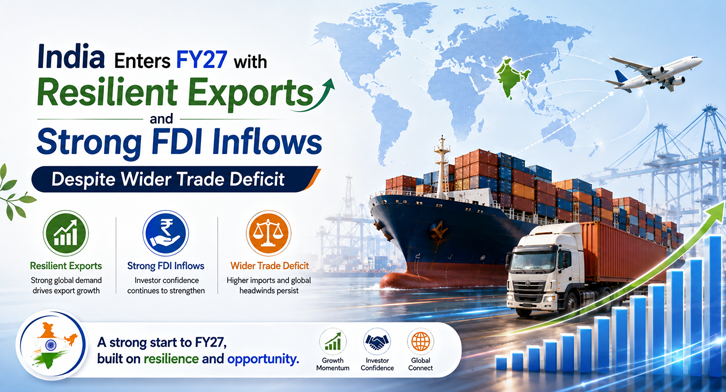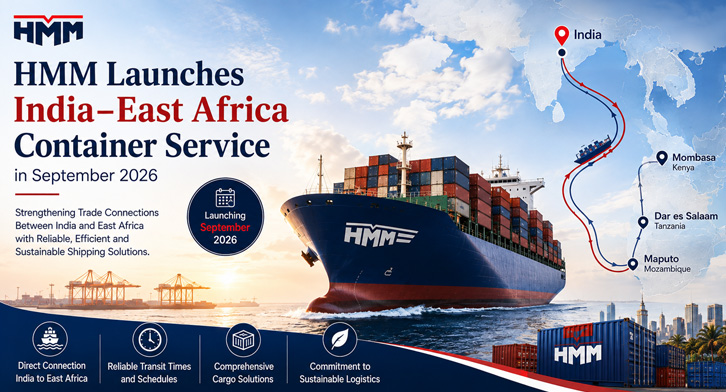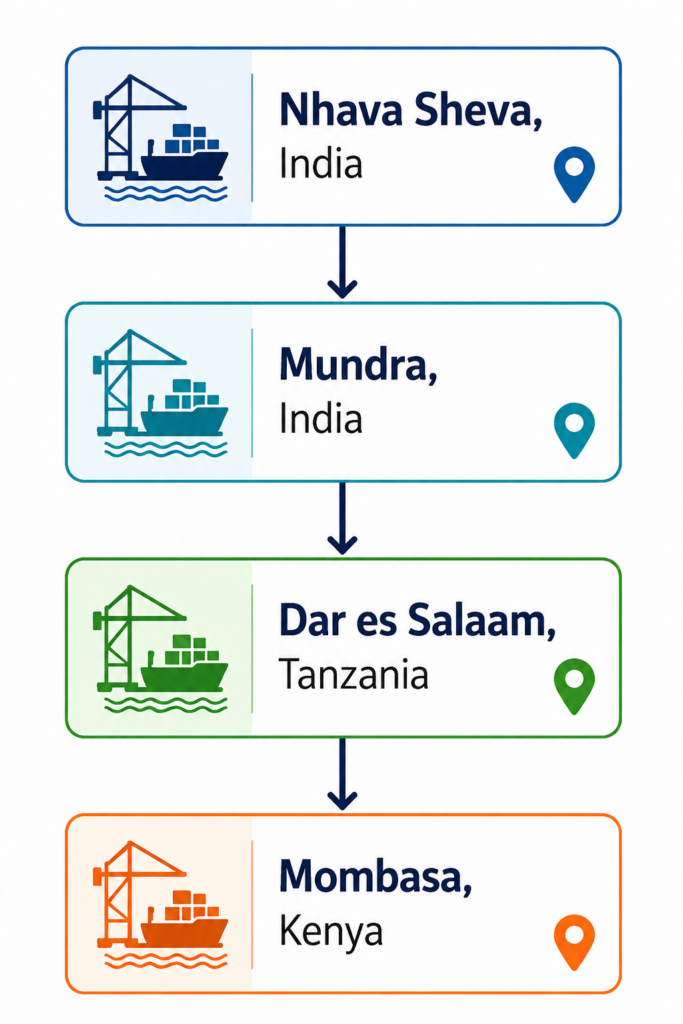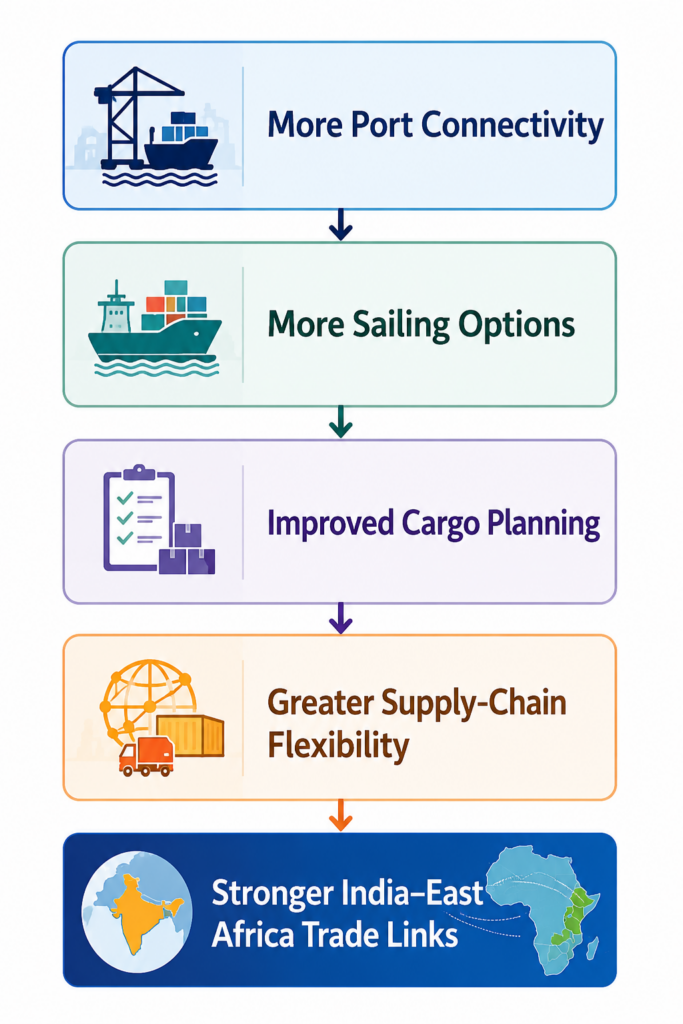
Government Expands FTAs and Export Initiatives to Diversify Global Markets, Boost India’s Global Trade Competitiveness

India Strengthens Global Trade Strategy with New FTAs and ₹25,060 Crore Export Promotion Mission

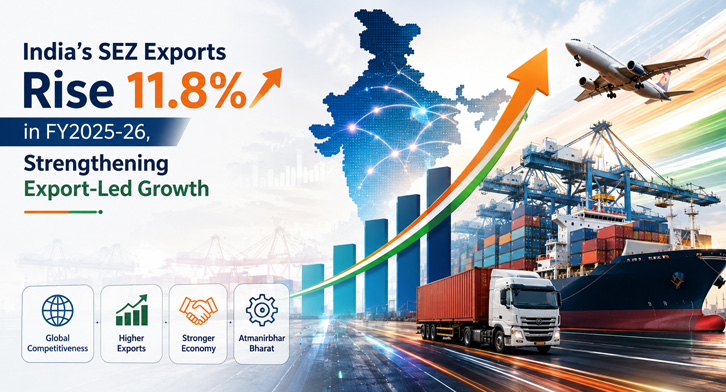
India is accelerating its global trade ambitions by expanding its Free Trade Agreement (FTA) network and launching large-scale export promotion initiatives designed to diversify export markets, improve supply chain efficiency, and enhance the global competitiveness of Indian businesses.
In a written reply in the Lok Sabha, Jitin Prasada said the government is actively negotiating new trade agreements with major economies while implementing multiple export-focused programs to support businesses, particularly MSMEs, startups, and labour-intensive industries.
The strategy combines market access through FTAs with investments in logistics infrastructure, export financing, digital trade, and regulatory reforms to help Indian exporters compete more effectively in global markets.

Key Highlights

Countries Covered Under India's Trade Strategy

Status

Countries

FTAs Signed / Concluded

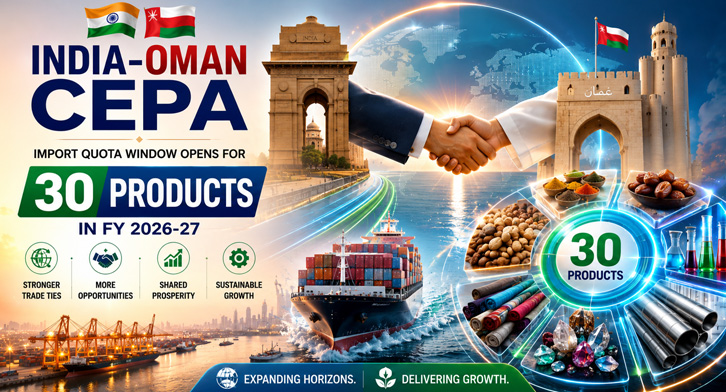
UAE, Australia, Oman, United Kingdom, New Zealand

FTA Negotiations Underway

European Union, Canada, Israel, Peru, Eurasian Economic Union

These agreements aim to:

Export Promotion Mission: ₹25,060 Crore Investment

The Government has allocated ₹25,060 crore (approximately US$2.67 billion) under the Export Promotion Mission for the period FY2026–FY2031.
Major Focus Areas

Initiative

Objective

Trade Finance

Improve exporter access to funding

Export Credit

Increase working capital availability

Quality Compliance

Help businesses meet international standards

Branding Support

Build global recognition for Indian products

Logistics Improvement

Reduce transportation costs

Market Intelligence

Identify new export opportunities

Cross-Border E-commerce Gets Major Boost

Recognizing the rapid growth of global digital trade, the Government is introducing measures to simplify cross-border e-commerce exports.
Key Reforms

These initiatives are expected to significantly benefit:

Logistics Infrastructure Driving Export Growth

Improving logistics efficiency remains a central pillar of India’s export strategy.
Major initiatives include:
These measures are expected to reduce logistics costs, shorten delivery timelines, and improve India’s export competitiveness.

Industries Expected to Benefit

Several export-oriented sectors are likely to gain from expanded market access and lower trade barriers.

Sector

Expected Impact

Textiles

Higher exports through preferential tariffs

Apparel

Improved competitiveness in global markets

Leather

Greater access to developed markets

Engineering Goods

Expanded international demand

Pharmaceuticals

Easier market access

Food Processing

New export opportunities

Handicrafts

Growth through e-commerce exports

MSME Manufacturing

Better global market reach

Market Impact Snapshot

Area

Expected Outcome

Export Markets

Greater diversification

Logistics

Lower export costs

Trade Agreements

Wider market access

MSMEs

Increased export participation

E-commerce

Faster international expansion

Employment

Growth in labour-intensive industries

Global Competitiveness

Stronger position in international trade

Why This Matters for the Logistics Industry

The government’s integrated trade strategy is expected to generate increased demand across the logistics ecosystem.
Key opportunities include:

FAQs

What is India's Export Promotion Mission?
The Export Promotion Mission is a ₹25,060 crore government initiative for FY2026–FY2031 that supports exporters through trade finance, export credit, logistics improvements, branding, quality compliance, and market intelligence.
India has concluded or expanded FTAs with the UAE, Australia, Oman, the United Kingdom, and New Zealand, while negotiations continue with the European Union, Canada, Israel, Peru, and the Eurasian Economic Union.
FTAs help reduce tariffs, improve market access, remove non-tariff barriers, increase investment, and create new export opportunities across multiple industries.
MSMEs will benefit from easier market access, export financing, digital export platforms, e-commerce export hubs, logistics support, and export facilitation centres.
Efficient logistics reduce transportation costs, improve delivery timelines, enhance supply chain reliability, and make Indian exports more competitive in international markets.

Sarjak Container Lines and OGL Partner to Strengthen India–Maldives Shipping Connectivity

The India–Maldives shipping corridor is set to become more efficient as Sarjak Container Lines and OGL announce a strategic partnership to improve container shipping services between the two countries. The collaboration is designed to provide faster, more reliable, and cost-effective logistics solutions while supporting the rising volume of bilateral trade.
The partnership combines Sarjak Container Lines’ regional shipping operations with OGL’s logistics expertise to enhance cargo movement across one of the Indian Ocean’s most important trade lanes. The improved service is expected to benefit exporters, importers, freight forwarders, project cargo operators, and supply chain companies that rely on regular maritime connectivity with the Maldives.
As commercial activity, tourism infrastructure, and construction projects continue to expand across the Maldives, demand for dependable container shipping services has increased significantly. The alliance aims to address this demand by improving sailing schedules, increasing cargo capacity, and delivering seamless end-to-end logistics solutions.

Key Highlights

Why This Partnership Matters

The Maldives depends heavily on maritime transportation for imports, making reliable shipping services essential for economic growth.
The collaboration seeks to deliver:
For Indian exporters, this translates into smoother market access, while Maldivian importers benefit from consistent cargo deliveries.

India–Maldives Shipping Partnership Overview

Feature

Benefit

Strategic Partnership

Stronger regional logistics network

Improved Schedule Reliability

Fewer shipment delays

Higher Cargo Capacity

Handles growing trade demand

End-to-End Logistics

Simplified cargo movement

Better Maritime Connectivity

Faster regional supply chains

Customer Focus

Improved service quality

Cargo Categories Expected to Benefit

Cargo Type

Major Users

Consumer Goods

Retailers

Food Products

Distributors

Construction Materials

Infrastructure Projects

Industrial Supplies

Manufacturing & Utilities

Project Cargo

EPC Contractors

General Containers

Freight Forwarders

Impact on India–Maldives Trade

The partnership arrives at a time when bilateral trade continues to expand, supported by:
Improved shipping services are expected to lower logistics bottlenecks while ensuring businesses receive more dependable maritime transportation.

Industry Outlook

Shipping experts believe partnerships between regional container carriers and integrated logistics providers will play a vital role in strengthening Indian Ocean trade.
Better connectivity can help businesses by:
As regional trade volumes continue to rise, collaborations such as the Sarjak–OGL alliance are expected to become increasingly important for maintaining efficient maritime logistics.

FAQs

What is the Sarjak–OGL partnership?
Sarjak Container Lines has partnered with OGL to enhance container shipping services between India and the Maldives through improved logistics and maritime connectivity.
The partnership offers improved schedule reliability, greater cargo capacity, faster cargo movement, and seamless end-to-end logistics services.
Retail, construction, food distribution, industrial manufacturing, freight forwarding, and project logistics are expected to benefit significantly.
As an island nation, the Maldives relies heavily on sea transport for importing goods, making efficient shipping services essential for economic development.
Indian exporters can expect more reliable sailing schedules, better container availability, reduced logistics delays, and smoother access to Maldivian markets.

Hapag-Lloyd Resumes India Gulf Service 1 (IG1) Bookings, Boosting India–Upper Gulf Container Trade

Hapag-Lloyd has officially resumed bookings for its India Gulf Service 1 (IG1), restoring an important shipping corridor between the Indian Subcontinent and the Upper Gulf. The revamped service strengthens regional supply chains by providing reliable container connectivity between India, Pakistan, the UAE, and Oman, while supporting uninterrupted cargo movement across one of the world’s busiest trade corridors.
The resumption comes as global shipping lines gradually normalize operations following recent geopolitical disruptions in the Gulf region. By restoring the IG1 service, Hapag-Lloyd aims to provide exporters, importers, freight forwarders, and logistics providers with greater schedule reliability and improved regional connectivity.

Key Highlights

What is Hapag-Lloyd's India Gulf Service 1 (IG1)?

The India Gulf Service 1 (IG1) is a regional container shipping service connecting major ports in India with Pakistan, the United Arab Emirates, and Oman. The service plays an important role in facilitating bilateral trade, industrial supply chains, and regional cargo distribution across the Middle East and South Asia.
The renewed service is expected to support industries including:

Updated IG1 Port Rotation

Port

Country

Kandla

India

Nhava Sheva (JNPA)

India

Karachi

Pakistan

Khorfakkan

United Arab Emirates

Sohar

Oman

Return to Kandla

India

Why the Resumption Matters

The reopening of bookings represents more than the return of a shipping service—it signals increasing stability across regional maritime trade.
Benefits for Shippers
As Gulf economies continue investing in logistics infrastructure and manufacturing, dependable feeder and regional services like IG1 become increasingly important for maintaining trade efficiency.

Impact on India–Middle East Trade

The Middle East remains one of India’s largest trading partners for petroleum products, chemicals, food products, engineering goods, textiles, pharmaceuticals, and consumer products.
The resumed IG1 service will help

Stakeholder

Expected Benefit

Exporters

Improved shipping schedules

Importers

Reliable cargo availability

Freight Forwarders

Better routing options

Logistics Companies

Enhanced regional connectivity

Manufacturers

Stable supply chain planning

Retail Sector

Faster replenishment cycles

Regional Trade Outlook

Container trade between India and the Gulf Cooperation Council (GCC) countries continues to expand, driven by:
The restoration of IG1 aligns with these long-term trade trends and provides customers with additional service reliability across the Arabian Gulf.

FAQs

What is Hapag-Lloyd's India Gulf Service 1 (IG1)?
IG1 is a regional container shipping service connecting India with Pakistan, the UAE, and Oman to facilitate trade across South Asia and the Upper Gulf.
The revised rotation includes Kandla, Nhava Sheva, Karachi, Khorfakkan, Sohar, and back to Kandla.
It restores dependable shipping connectivity, improves supply chain resilience, and supports uninterrupted cargo movement between India and Gulf markets.
Exporters, importers, freight forwarders, logistics companies, manufacturers, and regional distributors all benefit from improved connectivity and reliable schedules.
Manufacturing, automotive, chemicals, pharmaceuticals, engineering goods, consumer products, food, and retail sectors are expected to gain from the enhanced regional shipping service.

Inland Waterways Strengthen India’s Green Logistics Vision as 1,668 MT ODC Cargo Moves to Bihar via National Waterway-1 

India’s inland waterways sector has achieved another significant milestone with the successful transportation of a 1,668 metric tonne (MT) Over Dimensional Cargo (ODC) to Bihar through National Waterway-1 (NW-1) on the Ganga River.
The achievement reinforces the growing role of Inland Water Transport (IWT) as a reliable, cost-efficient, and environmentally sustainable alternative for transporting oversized industrial equipment. It also highlights India’s continued investment in multimodal logistics infrastructure aimed at reducing logistics costs while improving supply chain efficiency.
The successful movement demonstrates the increasing operational capability of National Waterway-1, one of India’s most important inland shipping corridors connecting northern and eastern India.

Key Highlights

Why This Milestone Matters

Transporting heavy engineering cargo through inland waterways offers several strategic advantages over conventional road transport.
Lower Logistics Cost
Water transport enables movement of extremely heavy cargo in a single shipment, reducing handling costs, fuel consumption, and road permits.
Greener Transportation
Compared to road transport, inland waterways consume significantly less fuel per tonne-kilometre, helping industries lower their carbon footprint.
Better Supply Chain Efficiency
National Waterway-1 provides dependable connectivity for power plants, manufacturing projects, heavy engineering, steel, cement, and infrastructure sectors.
Reduced Highway Congestion
Moving oversized cargo through waterways minimizes pressure on highways while improving road safety.

National Waterway-1: India's Flagship Inland Water Corridor

National Waterway-1 stretches along the River Ganga and serves as one of India’s most strategically important inland freight corridors.
It is rapidly emerging as a preferred logistics route for:

Cargo Type

Major Industries

Over Dimensional Cargo (ODC)

Power, Engineering, Infrastructure

Steel Products

Manufacturing

Cement

Construction

Fertilizers

Agriculture

Food Grains

FMCG & Public Distribution

Coal

Power Generation

Containers

Domestic Trade

Project Cargo

Heavy Industries

Benefits of Inland Water Transport

Parameter

Inland Waterways

Road Transport

Logistics Cost

Low

High

Carbon Emissions

Very Low

High

Fuel Efficiency

Excellent

Moderate

Heavy Cargo Handling

Excellent

Limited

Road Congestion

None

High

Sustainability

High

Moderate

Impact on India's Logistics Sector

The successful transportation highlights India’s growing emphasis on multimodal logistics integration.
With investments in:
India is steadily moving toward a more resilient and efficient freight transportation network.
The expansion of National Waterway-1 is expected to:

Environmental Benefits

Using waterways instead of roads contributes to:
The milestone aligns with India’s commitment toward sustainable logistics and greener supply chains.

Industry Outlook

As industrial cargo movement on the Ganga continues to increase, National Waterway-1 is expected to become a major logistics backbone for eastern and northern India.
The successful movement of the 1,668 MT ODC cargo serves as another strong indicator that inland waterways are transitioning from an alternative transport option to a mainstream logistics solution for heavy industrial cargo.
Improved river terminals, modern barges, digital cargo tracking, and enhanced multimodal connectivity are expected to further strengthen the competitiveness of inland waterways over traditional transport modes.

Quick Facts

Particular

Details

Cargo Type

Over Dimensional Cargo (ODC)

Cargo Weight

1,668 MT

Route

National Waterway-1 (River Ganga)

Destination

Bihar

Mode

Inland Water Transport

Key Benefit

Lower logistics cost & emissions

Government Focus

Multimodal Logistics & Green Transport

FAQs

What is National Waterway-1 (NW-1)?
National Waterway-1 (NW-1) is India’s longest inland waterway, stretching approximately 1,390 km from Prayagraj to Haldia along the Ganga-Bhagirathi-Hooghly river system. It serves as a major corridor for transporting bulk cargo, containers, and oversized industrial equipment, supporting India’s multimodal logistics network.
The successful transportation of 1,668 MT Over Dimensional Cargo (ODC) via National Waterway-1 demonstrates the capability of India’s inland waterways to handle heavy industrial shipments efficiently. It reduces logistics costs, lowers carbon emissions, and strengthens multimodal connectivity for infrastructure and manufacturing projects.
Inland Water Transport (IWT) offers several advantages, including:
National Waterway-1 supports industries that require the movement of heavy and bulk cargo, including power, steel, cement, infrastructure, engineering, manufacturing, mining, fertilizers, and project logistics. It provides a reliable and cost-effective transportation option for large-scale industrial projects.
National Waterway-1 promotes sustainable freight transportation by shifting cargo from roads to waterways, reducing fuel consumption and greenhouse gas emissions. It aligns with the PM Gati Shakti National Master Plan by improving multimodal connectivity, lowering logistics costs, enhancing supply chain efficiency, and boosting economic growth through integrated transport infrastructure.

Greenfield Shipbuilding Cluster and Major Ship Repair Facility Approved in Gujarat to Boost India’s Maritime Industry

India has taken a major step towards becoming a global maritime manufacturing powerhouse with the approval of two landmark infrastructure projects in Gujarat. The Ministry of Ports, Shipping and Waterways (MoPSW) has granted in-principle approval for a Greenfield Shipbuilding Cluster in Porbandar district and a state-of-the-art ship repair facility at Vadinar in the Gulf of Kutch under the Shipbuilding Development Scheme (SbDS).
The two projects are expected to significantly strengthen India’s shipbuilding and ship repair capabilities, support domestic manufacturing, create large-scale employment opportunities, and reinforce the country’s vision of becoming a globally competitive maritime nation under the Maritime Amrit Kaal Vision 2047

Key Highlights

Project Overview

Project

Greenfield Shipbuilding Cluster

Vadinar Ship Repair Facility

Location

Kuchhadi, Porbandar, Gujarat

Vadinar, Gulf of Kutch, Gujarat

Type

Greenfield Shipbuilding Park

Brownfield Ship Repair Expansion

Investment

Under Shipbuilding Development Scheme

₹1,570 Crore

Developers

National Shipbuilding and Heavy Industries Park-Gujarat (NSHIP-Gujarat)

Cochin Shipyard Ltd & Deendayal Port Authority

Area

Nearly 2,000 Acres

Existing Port Expansion

Annual Capacity

Annual Capacity

Repair of vessels up to 300 metres

Government Support

Shipbuilding Development Scheme

25% Financial Assistance

Gujarat to Host One of India's Largest Shipbuilding Clusters

The Greenfield Shipbuilding Cluster will be established at Kuchhadi in Gujarat’s Porbandar district through the National Shipbuilding and Heavy Industries Park-Gujarat (NSHIP-Gujarat), a Special Purpose Vehicle jointly promoted by the Ministry of Ports, Shipping and Waterways and the Gujarat Maritime Board.
Spanning nearly 2,000 acres, the integrated maritime manufacturing hub will house modern shipyards, ancillary industries, common infrastructure, testing facilities and skill development centres. The project is designed to manufacture large commercial vessels with an annual production capacity of 1.2 to 1.5 million gross tonnage, making it one of India’s largest shipbuilding ecosystems.
The cluster is expected to attract investments across the maritime value chain, encourage domestic production of ship components, and reduce dependence on imported shipbuilding infrastructure.

Vadinar Ship Repair Facility to Expand India's Repair Capacity

The Ministry has also approved a ₹1,570 crore ship repair facility at Vadinar, strategically located along the Gulf of Kutch. The project will be jointly developed by Cochin Shipyard Ltd (CSL) and Deendayal Port Authority (DPA).
Having already received approval from the Cabinet Committee on Economic Affairs (CCEA), the project will now receive in-principle support under the Shipbuilding Development Scheme, including 25% financial assistance on eligible capital infrastructure.
The facility will feature a 650-metre jetty, two large floating dry docks, advanced workshops and supporting marine infrastructure, enabling the repair of commercial vessels measuring up to 300 metres in length.
Its location near major ports such as Mundra Port and Deendayal Port, combined with its natural deep draft and proximity to international shipping routes, positions Vadinar as a future hub for large-scale ship repair operations.

Strengthening India's Maritime Manufacturing Ecosystem

The two projects are expected to play a transformative role in strengthening India’s maritime sector by enhancing domestic shipbuilding capacity, improving ship repair infrastructure and creating a comprehensive manufacturing ecosystem.
Beyond infrastructure development, the initiatives are likely to stimulate demand for steel, heavy engineering, marine equipment, electronics, fabrication, logistics and skilled manpower, generating significant employment opportunities across multiple industries.
The projects are also expected to encourage private sector participation, attract long-term investments and deepen domestic supply chains, helping India compete more effectively in the global shipbuilding market.

Supporting Maritime Amrit Kaal Vision 2047

The approvals form part of the Government of India’s broader strategy to develop a world-class maritime ecosystem under the Maritime Amrit Kaal Vision 2047.
The Shipbuilding Development Scheme is designed to accelerate capacity creation, promote indigenous manufacturing, attract investments and strengthen India’s shipbuilding and ship repair capabilities through targeted financial support.
By expanding both ship construction and maintenance infrastructure, the scheme aims to reduce reliance on overseas facilities while positioning India as a preferred destination for maritime manufacturing and services.

Industry Impact

The projects are expected to deliver multiple long-term benefits for India’s maritime and logistics sectors:

Government of India's Maritime Infrastructure Development Framework

Conclusion

The approval of the Greenfield Shipbuilding Cluster in Porbandar and the advanced ship repair facility at Vadinar marks a significant milestone in India’s maritime infrastructure development. Together, these projects are expected to enhance domestic shipbuilding capabilities, strengthen ship repair services, boost industrial investments and generate substantial employment. As India advances its Maritime Amrit Kaal Vision 2047, these strategic initiatives are set to reinforce the country’s position as an emerging global hub for shipbuilding, maritime manufacturing and international trade.

FAQs

What is the Shipbuilding Development Scheme?
The Shipbuilding Development Scheme is a Government of India initiative that provides financial support to develop modern shipbuilding and ship repair infrastructure while promoting indigenous manufacturing and private sector participation.
The cluster will be developed at Kuchhadi in the Porbandar district of Gujarat across nearly 2,000 acres.
The ship repair facility will be developed with an investment of ₹1,570 crore.
The project will be jointly developed by Cochin Shipyard Ltd (CSL) and Deendayal Port Authority (DPA).
The projects will increase shipbuilding and ship repair capacity, create employment, strengthen domestic supply chains, attract investments and improve India’s competitiveness in the global maritime industry.

Manufacturing Emerges as New Growth Engine for India’s GCC Office Demand in H1 2026

India’s manufacturing sector has emerged as the largest contributor to office leasing by Global Capability Centres (GCCs) during the first half of 2026, highlighting the country’s transformation into a global hub for engineering, research, product development and advanced manufacturing.
According to a recent Vestian report, manufacturing accounted for 29% of total GCC office leasing, overtaking the traditionally dominant IT and business services sectors. The shift reflects increasing investments by multinational companies in high-value engineering, electronics, automotive, industrial technology and semiconductor operations across India.
The growing demand is being supported by government initiatives such as Make in India, the Production Linked Incentive (PLI) Scheme, improved industrial infrastructure and India’s expanding pool of skilled engineering talent.
As global enterprises continue relocating strategic functions closer to innovation ecosystems, India is increasingly becoming a preferred destination for next-generation GCCs focused on product development, digital engineering and supply chain innovation.

Strategic Market Snapshot: H1 2026

Market Metric

Indicator / Value

Strategic Context

Manufacturing Share of GCC Leasing

29%

Leading growth driver across commercial real estate

Previous Sector Leader

IT & Business Services

Replaced by high-value engineering & design GCCs

Preferred Asset Class

Grade A Commercial Space

High demand for ESG-compliant, modern tech parks

Top Performing Cities

Bengaluru, Pune, Chennai, Hyderabad

Concentrated industrial-tech & engineering hubs

Core Operational Focus

Advanced R&D, EV Design, Chipsets

Move from back-office support to core engineering

Manufacturing-Led GCC Office Demand

Indicator

H1 2026

Manufacturing Share of GCC Leasing

29%

Leading Growth Segment

Manufacturing

Office Space Demand

Rising

Key Focus Areas

Engineering, R&D, Product Design

Major Growth Drivers

Manufacturing, Semiconductors, Electronics

Why Manufacturing GCCs Are Expanding Rapidly

Growth Driver

Impact

Make in India

Boosts manufacturing investments

PLI Scheme

Encourages global production expansion

Skilled Engineering Workforce

Supports innovation and product development

Competitive Operating Costs

Reduces operational expenditure

Digital Infrastructure

Enables smart manufacturing and Industry 4.0

Expanding Supply Chains

Strengthens global manufacturing networks

Several structural factors are accelerating manufacturing-led GCC investments in India.

Key Industry Sectors Driving GCC Leasing Growth

Manufacturing-focused GCC investments are concentrated across high-tech, capital-intensive verticals requiring specialized engineering talent and modern workspace infrastructure:

Why This Matters

The rapid expansion of manufacturing GCCs marks a significant shift in India’s economic landscape. Rather than functioning solely as back-office support centres, GCCs are increasingly leading innovation, engineering, product development and strategic decision-making.
This evolution is expected to:

Why Manufacturing GCCs Are Expanding Rapidly in India

Several government policy interventions and structural cost advantages continue to accelerate investments from global enterprises:

Expert Perspective

Manufacturing-led GCC growth signals India’s transition from a cost-efficient outsourcing destination to a global innovation and engineering powerhouse. As investments continue across advanced manufacturing and digital technologies, GCCs are expected to play an increasingly strategic role in global business operations.

FAQs

Why are manufacturing GCCs growing in India?
Manufacturing GCCs are expanding due to government initiatives such as Make in India and the PLI Scheme, along with India’s skilled workforce, competitive costs and improving industrial infrastructure.
Manufacturing accounted for 29% of GCC office leasing in India during the first half of 2026.
Automobiles, electronics, semiconductors, industrial engineering, product development and supply chain technologies are leading manufacturing GCC investments.
They create skilled jobs, increase commercial real estate demand, strengthen innovation capabilities and improve India’s position within global manufacturing value chains.

Sinotrans Launches CIW2 Service to Strengthen China–India Shipping Connectivity and Boost Regional Trade

In a significant move to strengthen maritime trade between China and India, Sinotrans has introduced its new CIW2 container shipping service, enhancing direct connectivity between key ports across the two countries. The new service aims to deliver higher sailing frequency, improved schedule reliability, and faster cargo movement, supporting businesses engaged in one of Asia’s busiest trade corridors.
The launch comes at a time when India-China bilateral trade continues to generate strong container demand, driven by imports of industrial equipment, electronics, chemicals, consumer goods, and manufactured products.
The CIW2 service is expected to provide exporters, importers, freight forwarders, and logistics companies with a more dependable shipping option while strengthening regional supply chain resilience.

Key Highlights

CIW2 Service at a Glance

Feature

Details

Service Name

CIW2

Operator

Sinotrans

Trade Route

China – India

Primary Objective

Improve regional shipping connectivity

Key Benefits

Higher frequency, reliable transit, direct port connections

Cargo Types

Electronics, Machinery, Chemicals, Consumer Goods, Manufactured Products

Target Customers

Exporters, Importers, Freight Forwarders, Logistics Providers

Why the CIW2 Service Matters

Growing trade volumes between India and China have increased demand for consistent, efficient, and predictable container shipping services. Delays, congestion, and schedule disruptions have made supply chain reliability a key priority for businesses.
The CIW2 service addresses these challenges by offering:
These improvements can help businesses optimize inventory planning, reduce shipping uncertainty, and improve customer delivery performance.

Trade Impact on India–China Logistics

The introduction of CIW2 is expected to support several high-volume industries, including:

Industry

Expected Benefit

Electronics

Faster component imports

Manufacturing

Improved raw material supply

Automotive

Better parts availability

Chemicals

Reliable bulk container movement

Consumer Goods

Faster replenishment cycles

Engineering

Improved project cargo logistics

Benefits for Freight Forwarders and Importers

The new service offers several operational advantages:
Freight forwarders can also benefit from expanded service options when planning multimodal logistics across Asia.

Sinotrans' Regional Expansion Strategy

The CIW2 launch forms part of Sinotrans’ broader strategy to strengthen its intra-Asia shipping network. By expanding coverage across key regional trade lanes, the company aims to provide customers with more competitive logistics solutions while supporting the growing demand for cross-border container transportation.
The expanded network also reflects the increasing importance of regional supply chains as manufacturers diversify sourcing strategies and seek reliable transportation links across Asia.

Maritime Outlook: Strengthening Asia's Supply Chains

With India emerging as one of Asia’s fastest-growing import and export markets, demand for dependable container shipping services is expected to remain strong. Enhanced services such as CIW2 are likely to play an important role in improving trade efficiency, reducing logistics bottlenecks, and supporting long-term regional economic growth.
As shipping lines continue investing in direct service networks, businesses can expect greater connectivity, improved service quality, and more resilient supply chains throughout the Asia-Pacific region.

FAQs

What is the Sinotrans CIW2 service?
CIW2 is a new container shipping service launched by Sinotrans to improve maritime connectivity between China and India through reliable and frequent sailings.
The service offers improved sailing frequency, better transit reliability, direct port connectivity, and greater supply chain flexibility for exporters and importers.
The service supports machinery, electronics, chemicals, manufactured goods, consumer products, and other containerized cargo.
It strengthens regional trade, improves logistics efficiency, reduces shipping uncertainty, and supports the growing trade relationship between China and India.
Importers, exporters, freight forwarders, logistics providers, manufacturers, and businesses engaged in India–China trade all benefit from the improved connectivity.

Yamaha Strengthens Chennai Manufacturing Hub to Accelerate Global Exports and EV Production

Japanese two-wheeler manufacturer Yamaha Motor India is strengthening its manufacturing footprint in India with a fresh ₹58 crore investment in its Chennai facility, reinforcing the plant’s role as a strategic global export hub while preparing for the next phase of electric vehicle (EV) production.
The investment follows the company’s ₹180 crore expansion announced last year, highlighting Yamaha’s long-term confidence in India as both a manufacturing and export destination.
Located at Vallam Vadagal near Chennai, the plant has become Yamaha’s largest production facility in India and plays a critical role in supplying motorcycles to domestic and international markets.

Key Highlights

Yamaha Chennai Manufacturing

Parameter

Details

Manufacturing Plant

Vallam Vadagal, Chennai

Operational Since

2015

Latest Investment

₹58 Crore

Previous Expansion

₹180 Crore

Annual Capacity

900,000 Units

Share of Yamaha India's Capacity

60%

Total India Capacity

1.5 Million Units

Domestic Production

350,000+ Units

Annual Exports

250,000+ Units

Employees

Around 7,000

Production Milestone

5 Million Vehicles

2026 Target

1.1 Million Units

Chennai Emerging as Yamaha's Global Export Engine

Yamaha is increasingly positioning Chennai as one of its most important international manufacturing centers.
The city’s excellent access to major seaports, global shipping routes, and export infrastructure provides significant logistical advantages, enabling faster deliveries to overseas markets.
According to Yamaha leadership, exports have always been central to the Chennai plant’s operations, but their strategic importance will continue to grow as international demand expands.
This approach aligns with India’s ambition to become a preferred global manufacturing destination under the “Make in India” initiative.

EV Manufacturing to Shape Yamaha's Next Growth Phase

As the global automotive industry rapidly transitions toward electric mobility, Yamaha is preparing the Chennai facility to support future electric vehicle production alongside its existing internal combustion engine (ICE) motorcycles.
The company believes India will play a significant role in its future EV manufacturing strategy by combining:
The move positions Yamaha to remain competitive in both conventional and electric mobility markets.

Higher Localization to Improve Global Competitiveness

Besides expanding production, Yamaha plans to increase localization of components manufactured in India.
Higher domestic sourcing will help the company:
Localization also reduces dependency on imported components, making production more resilient against global supply chain disruptions.

Strategic Importance for India's Logistics Sector

Yamaha’s investment is expected to generate positive momentum across India’s logistics and export ecosystem.
Logistics Impact

Area

Expected Benefit

Container Exports

Higher two-wheeler shipments

Chennai Port

Increased export volumes

Automotive Logistics

Greater demand for specialized transportation

Warehousing

Expansion of finished vehicle storage

Component Suppliers

Increased manufacturing activity

Shipping Lines

More export bookings

Supply Chain

Improved localization and resilience

Why This Matters

The latest investment demonstrates Yamaha’s long-term commitment to India as a global manufacturing base rather than only a domestic sales market.
For India’s logistics industry, the expansion signals:
As India strengthens its position in global manufacturing, investments like Yamaha’s will continue to drive export-led industrial growth and create new opportunities across shipping, logistics, warehousing, and international trade.

FAQs

Why is Yamaha investing in its Chennai plant?
Yamaha is investing ₹58 crore to expand manufacturing capacity, strengthen exports, prepare for electric vehicle production, and improve localization.
The Chennai plant has an annual production capacity of 900,000 motorcycles, making it Yamaha’s largest manufacturing facility in India.
The facility exports over 250,000 motorcycles annually to international markets.
Chennai offers excellent port connectivity, strong logistics infrastructure, and efficient access to global shipping routes, making it an ideal export hub.
Yes. Yamaha is preparing its Chennai facility to support future electric vehicle manufacturing alongside traditional motorcycles.

India to Grow 6.5–6.8% in FY27 Despite Global Uncertainty, Says Deloitte

Deloitte’s FY27 GDP Growth Outlook: The Macro Picture

Despite persistent global headwinds—including geopolitical tension, volatile commodity prices, and supply chain realignments—India remains on track as one of the world’s fastest-growing major economies. Deloitte forecasts India’s real GDP growth at 6.5%–6.8% for FY27, closely aligning with the Reserve Bank of India’s (RBI) projected baseline of 6.60%.
While global trade conditions remain uncertain, India’s domestic fundamentals—backed by strong consumer demand, capital expenditure in infrastructure, and strategic manufacturing incentives—provide a resilient foundation for long-term supply chain expansion.

Economic Metric

Forecast / Value

Strategic Impact on Logistics & Freight

Deloitte FY27 GDP Forecast

6.5% – 6.8%

Sustained long-term demand across freight corridors

RBI FY27 GDP Target

6.60%

Stable monetary policy supporting fleet expansion

FY26 GDP Baseline

7.70%

Normalization toward sustainable, high-volume growth

Primary Growth Engine

Domestic Consumption

Spikes in retail, e-commerce, and last-mile delivery

Primary Risk Factor

Commodity Inflation

Variable fuel surcharges and rising operating costs

Deloitte's FY27 GDP Growth Outlook

Indicator

Forecast

FY27 GDP Growth

6.5–6.8%

RBI FY27 Forecast

6.60%

FY26 GDP Growth

7.70%

Growth Driver

Domestic Demand

Major Risks

Inflation, Geopolitical Tensions

Key Opportunities

Manufacturing, Infrastructure, FTAs

How GDP Growth Translates Across Specific Logistics Sectors

Economic expansion directly feeds into cargo movement. Based on Deloitte’s growth metrics, here is the projected impact across key transport modes:

Why Deloitte Expects Stronger Growth in the Second Half

According to Deloitte, economic momentum is likely to improve in the latter half of FY27 due to several positive factors:
1. Festive Demand

Higher consumer spending during India’s festive season is expected to boost retail sales, manufacturing output, transportation, and logistics activity.

2. Monetary Easing
Lower borrowing costs can encourage businesses to expand operations while supporting investment across infrastructure, manufacturing, warehousing, and logistics.
3. Improving Global Trade Conditions
Although global trade remains uncertain, gradual stabilization could improve export demand and increase freight volumes.
4. Infrastructure Investments
Continued investments in roads, ports, railways, industrial corridors, and logistics parks are expected to strengthen India’s supply chain efficiency.

Key Risks: Inflation and Supply Chain Pressures

While the macro outlook is optimistic, freight operators must prepare for margin volatility due to several ongoing risks identified in the report:

Free Trade Agreements Could Drive Long-Term Growth

Deloitte identifies India’s expanding network of Free Trade Agreements (FTAs) as a major catalyst for long-term economic growth.
The report notes that trade agreements alone are not enough. To maximize their impact, India must also focus on:
These measures can strengthen India’s position as a global manufacturing and export hub.

Inflation Remains the Biggest Challenge

While growth prospects remain strong, inflation continues to pose risks.
Factors contributing to inflationary pressure include:
Persistent inflation could impact household spending, business costs, and overall economic momentum.

What This Means for the Logistics Industry

India’s stronger economic outlook is expected to generate significant opportunities across the logistics ecosystem.

Sector

Expected Impact

Road Freight

Higher cargo movement

Shipping

Increased export-import volumes

Warehousing

Rising storage demand

Rail Logistics

Improved freight movement

Freight Forwarding

Increased international trade

Ports

Higher container throughput

As manufacturing, exports, and domestic consumption continue to expand, logistics providers may benefit from higher shipment volumes and increased demand for integrated supply chain services.

Economic Outlook Snapshot

Growth Drivers

Potential Risks

Domestic Consumption

Inflation

Manufacturing Expansion

Oil Price Volatility

Infrastructure Investment

Geopolitical Conflicts

Free Trade Agreements

Currency Depreciation

Policy Reforms

Global Trade Disruptions

Supply Chain Improvements

Commodity Price Volatility

CargoNet Analysis: How Freight Forwarders & Shippers Should Prepare

To capitalize on India’s FY27 economic momentum while mitigating cost risks, supply chain managers should focus on three strategic priorities:

FAQs

What is Deloitte’s GDP growth forecast for India in FY27?
Deloitte projects India’s GDP growth to be between 6.5% and 6.8% for FY27, positioning India as one of the fastest-growing major global economies.
Sustained economic growth directly boosts cargo movement, resulting in higher road freight volumes, increased demand for Grade-A warehousing, and greater EXIM container throughput across ports.
Growth in H2 FY27 will be driven by festive season retail demand, anticipated monetary easing (lower interest rates), strategic FTA implementations, and ongoing national infrastructure investments.
Primary supply chain risks include volatile crude oil prices, rising fertilizer and commodity costs, critical mineral price spikes, and potential weather disruptions affecting agricultural freight flows.

Container Traffic to Lead Growth at Indian Ports Through FY28 as Trade and Manufacturing Expand

India’s maritime sector is set for another phase of strong expansion, with container cargo expected to become the fastest-growing segment at Indian ports through FY28, according to the latest report by Motilal Oswal. Rising domestic consumption, expanding manufacturing, growing exports, and improved logistics infrastructure are expected to fuel container traffic growth significantly above other cargo categories.
The report projects that container volumes at Indian ports will grow at a CAGR of 7%–9% between FY26 and FY28, supported by higher containerisation of cargo, government-led infrastructure development, and increasing multimodal connectivity across the country.
As India continues investing in ports, dedicated freight corridors, inland logistics networks, and multimodal transport systems, the maritime industry is expected to strengthen its position as a key pillar of the country’s economic growth and global supply chain competitiveness.

Key Highlights

Indian Port Traffic Forecast (FY26–FY28)

Cargo Segment

Expected CAGR

Growth Outlook

Major Growth Driver

Container Cargo

7–9%

Strong Growth

Manufacturing, exports, containerisation

Iron Ore

5–7%

Positive

Coastal steel demand, imports

Petroleum, Oil & Lubricants (POL)

2–4%

Moderate

Stable fuel demand

Coal

-2% to -4%

Declining

Stable fuel demandHigher domestic coal production, renewable energy

Why Container Traffic Will Drive Indian Port Growth

Container cargo is becoming the backbone of India’s maritime trade due to several structural changes in the economy.
1. Manufacturing Expansion
Government initiatives encouraging domestic manufacturing continue to increase the movement of finished goods through containers.
2. Growing Merchandise Trade
Higher exports and imports are creating sustained demand for container shipping services across major Indian ports.
3. Better Logistics Infrastructure
Expansion of highways, rail freight corridors, logistics parks, and multimodal transport networks is improving cargo movement efficiency.
4. Higher Containerisation
Industries are increasingly shifting from bulk cargo to containerised transportation due to improved safety, lower losses, and greater operational efficiency.

Cargo Segment Outlook

Container Cargo
Container traffic is expected to remain the strongest-performing cargo segment over the next three years, driven by expanding industrial production, retail demand, and international trade.
Coal
Coal cargo volumes are forecast to decline as India reduces import dependence through increased domestic coal production while accelerating renewable energy adoption. However, coastal coal transportation is expected to remain relatively stable.
Petroleum, Oil & Lubricants (POL)
POL cargo is projected to witness moderate growth as fuel demand remains stable. Growth may be partially offset by better fuel efficiency and increasing adoption of cleaner energy sources.
Iron Ore
Iron ore cargo is expected to recover steadily due to stronger coastal movement to domestic steel plants and increased imports resulting from elevated domestic ore prices.

FY2025–26 Performance Strengthens Growth Outlook

India’s major ports recorded robust cargo handling during FY2025-26, laying a strong foundation for future growth.

Performance Indicator

FY2025-26

Total Cargo Handled

915 Million Metric Tonnes

Overall Cargo Growth

7% YoY

Overseas Cargo Growth

6.60%

Coastal Cargo Growth

8%

The continued expansion reflects stronger trade activity, infrastructure improvements, and increasing logistics efficiency across India’s port ecosystem.

Market Outlook

India’s ports sector is entering a period of sustained long-term growth, with container traffic expected to remain the primary driver through FY28. Government investments in multimodal connectivity, port modernization, and logistics infrastructure are improving cargo efficiency while supporting manufacturing and export growth. As containerisation continues to increase across industries, Indian ports are expected to strengthen their role in global supply chains and contribute significantly to India’s ambition of becoming a leading global logistics and maritime hub.

Key Takeaways

FAQs

Why is container traffic growing faster at Indian ports?
Container traffic is increasing due to higher manufacturing output, growing exports, rising domestic consumption, and greater adoption of containerised cargo transportation.
Container cargo is projected to grow at a CAGR of 7–9%, making it the fastest-growing cargo segment at Indian ports.
Coal traffic is expected to decline because of higher domestic coal production, reduced import dependence, and increasing renewable energy generation.
India’s major ports handled approximately 915 million metric tonnes (MMT) of cargo during FY2025-26.
The government is investing in port modernization, multimodal logistics, dedicated freight corridors, coastal shipping, and infrastructure projects aimed at reducing logistics costs and improving trade efficiency.
cargonet-logo-icon
Cargonet Cargo Software Logo

Feedback & Reward program

Submit the Feedback and avail the Rewards.

1. Your satisfaction & reliability on CargoNet ?

2. Your Rating on Support & co-ordination team?

3. Satisfaction on the look and feel of CargoNet ?

4. Please specify any 2 best features that you feel more helpful in CargoNet?

5. Please specify any 2 best reports that you are taking on regular basis?

6. Are you using Copy Job option in CargoNet Software?

7. Are you using Automatic DSR (Daily Status Report) Option? It automatically sends reports to customer about the shipment status

8. Are you using Automatic Outstanding Reports option? Period Auto outstanding reminders to customer

9. Any other thoughts to improve in CargoNet? Please share.

* Join our Reward Program by recommending CargoNet (Cash Rewards Awaiting)

“Thanks for your feedback. Our goal is to create the best possible product, support & service, and your thoughts, ideas & suggestions play a major role in helping us identify opportunities to improve.”

Cut AI cost ,
not performance

discover how top Freight Forwarding companies  reduce AI-related expense and speed up operation with CargoNet AI, we will show it how
Share your information for instant access :

Get a Demo Now