Merchandise & Services Exports Hit US$ 80.80 Billion in April 2026

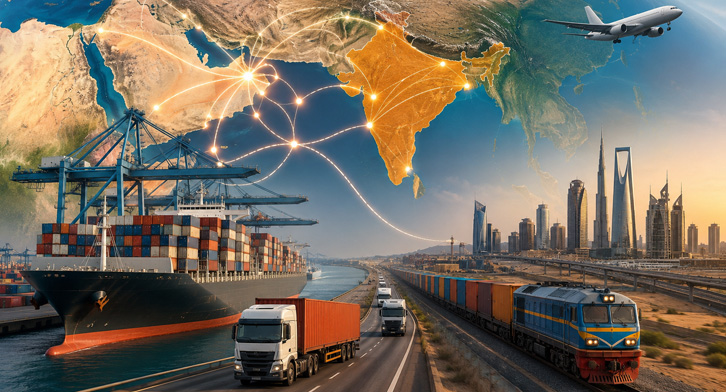
India’s export sector recorded strong growth in April 2026, showcasing continued momentum in international trade and global business expansion. Total exports, including merchandise and services, reached Rs. 7.49 lakh crore (US$ 80.80 billion), reflecting a 13.59% year-on-year growth compared to April 2025. Merchandise exports rose to US$ 43.56 billion, while services exports climbed to US$ 37.24 billion, highlighting strong demand for Indian products and services across global markets.
India’s total imports during April 2026 were estimated at US$ 88.61 billion, while the country’s overall trade deficit narrowed significantly to US$ 7.81 billion from US$ 11.16 billion in the previous year. Non-petroleum exports also recorded healthy growth of 9.01%, demonstrating diversification and resilience in India’s export economy.
Key sectors driving export growth included petroleum products, electronic goods, engineering goods, pharmaceuticals, meat, dairy & poultry products. Petroleum exports surged by 34.66%, while electronic goods exports recorded an impressive 40.31% growth, reflecting India’s expanding manufacturing and technology capabilities. Engineering goods exports also increased steadily by 8.76%, supported by rising international demand.
Additional sectors such as marine products, iron ore, coffee, chemicals, and handicrafts also posted positive growth, reinforcing India’s position as a leading global trade and export hub.

Key Highlights

SA Mumbai Enhances Maritime Operations Through Crane Capacity Expansion

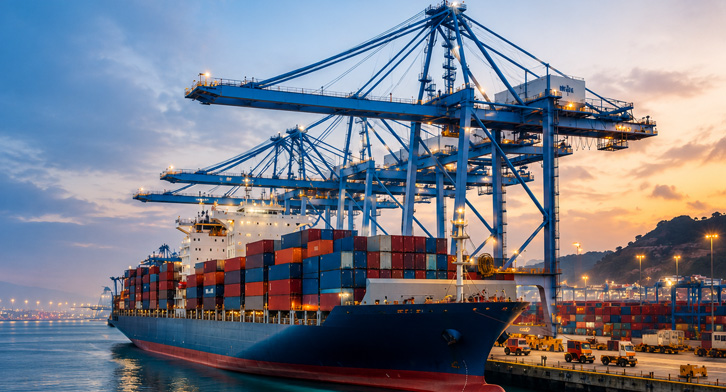
PSA Mumbai, India’s largest container terminal at Jawaharlal Nehru Port Authority (JNPA), has strengthened its cargo handling capabilities with the inauguration of new Super Panamax Quay Cranes (QCs).
The new cranes were inaugurated by Gaurav Dayal, Chairperson of JNPA, along with Ravish Kumar Singh, Deputy Chairperson of JNPA, Vincent Ng, CEO of MESAAT, PSA, and Ashwin Arvind, CEO of PSA Mumbai.

Key Highlights

Officials stated that the addition of advanced quay cranes will improve terminal productivity, enable efficient handling of larger container vessels and support increasing cargo volumes at JNPA. The infrastructure expansion further reinforces PSA Mumbai’s role in delivering world-class port operations and strengthening India’s position in global maritime trade and logistics connectivity.

Bharat Maritime Insurance Pool of USD 1.5 billion now operational

India has taken a major step towards becoming a global shipbuilding hub with the signing of a tripartite MoU to develop the country’s first Mega Greenfield Shipyard at Thoothukudi in partnership with HD Korea Shipbuilding & Offshore Engineering Co., Ltd..
The project will be developed jointly by NSHIP-TN, SIPCOT Tamil Nadu and Sagarmala Finance Corporation under the Ministry of Ports, Shipping and Waterways.

Key Highlights

The shipyard is expected to significantly boost India’s shipbuilding capacity, attract global investments and support the country’s goal of becoming one of the world’s top five shipbuilding nations by 2047. The initiative will also strengthen maritime infrastructure, industrial growth and employment generation in the region.

PM Modi’s UAE Visit Highlights Growing India-UAE Economic Partnership

Narendra Modi’s visit to Abu Dhabi is expected to further strengthen cooperation between India and the United Arab Emirates across energy security, trade, strategic investments and emerging technologies. The visit highlights the growing importance of the UAE as one of India’s key economic and geopolitical partners in the Gulf region.
India and the UAE have significantly expanded collaboration in crude oil supply, liquefied petroleum gas (LPG), renewable energy and strategic petroleum reserves, reinforcing the UAE’s critical role in India’s long-term energy security strategy.

Key Highlights of India-UAE Cooperation

Energy Security Remains Key Focus

Officials indicated that discussions during the visit are likely to focus on enhancing cooperation in:
The growing energy partnership is expected to strengthen India’s energy supply security while supporting broader economic cooperation between the two countries.

CEPA Driving Trade and Economic Growth

The implementation of the Comprehensive Economic Partnership Agreement (CEPA) has significantly boosted bilateral trade and economic integration.
India and the UAE are also expanding collaboration across sectors such as:
Industry experts believe these partnerships can accelerate innovation, trade connectivity and investment opportunities.

India-UAE Partnership Gains Strategic Importance

The continued strengthening of India-UAE relations reflects growing strategic alignment in economic development, regional connectivity and geopolitical cooperation.
Experts noted that deeper engagement between the two countries could help:
PM Modi’s Abu Dhabi visit is expected to build upon recent high-level diplomatic engagements and further reinforce India-UAE ties as a major pillar of India’s economic and strategic engagement in West Asia.

What Should Logistics Industries Do During a Global Lockdown Caused by a Gulf War?

A global lockdown during a Gulf war can create major disruptions in transportation, fuel supply, international trade, and supply chain operations. The logistics industry must act quickly, strategically, and responsibly to continue operations and reduce business losses.
Countries in the Gulf region such as Saudi Arabia, United Arab Emirates, Qatar, and Iran are important for global oil transportation and shipping routes. If conflict increases and worldwide lockdowns happen, logistics companies must be prepared with emergency plans and alternative solutions.

Important Actions Logistics Industries Should Take During Lockdown

1. Create Emergency Logistics Plans
Every logistics company should prepare a crisis management plan that includes:
Quick decision-making becomes critical during global emergencies.
2. Use Alternative Shipping Routes
War zones and restricted regions may become unsafe for transportation.
Companies should:
This helps reduce delays and maintain cargo movement.
3. Increase Warehouse Storage Capacity
During lockdown situations, transportation delays are common. Companies should store additional inventory for:
Maintaining safety stock helps businesses continue operations during supply chain interruptions.
4. Focus on Local Supply Chains
Global trade disruptions can affect imported goods. Logistics companies should support:
Strong local supply chains reduce dependence on international shipping during crises.
5. Invest in Technology and Automation
Digital logistics systems become extremely important during emergencies.
Companies should use:
Technology improves visibility, reduces delays, and increases operational efficiency.
6. Protect Employees and Drivers
Employee safety must be a top priority during lockdown conditions
Companies should:
A protected workforce helps maintain stable logistics operations.
7. Manage Fuel Consumption Efficiently
Fuel prices may increase sharply during a Gulf war. Logistics companies should:
Efficient fuel management helps reduce operating costs.
8. Strengthen Communication With Customers
During crises, customers need regular updates about shipment status and delivery timelines.
Logistics companies should:
Good communication builds trust during uncertain situations.
9. Improve Financial Planning
Lockdowns and global disruptions can increase operational expenses.
Businesses should:
Strong financial planning helps companies survive longer disruptions.
10. Work Closely With Governments and Authorities
Logistics companies should coordinate with:
This helps businesses receive updated regulations, movement permissions, and operational support during lockdown periods

Conclusion

A global lockdown during a Gulf war can seriously affect the logistics industry through fuel price increases, transportation disruptions, shipping delays, and supply chain shortages. However, companies that prepare in advance can reduce risks and maintain smoother operations.
By focusing on emergency planning, technology, employee safety, local supply chains, and flexible transportation strategies, logistics industries can continue supporting global trade even during difficult times. Strong preparation and smart decision-making are the keys to surviving global logistics crises.

Gulf Country War 2026: How It Could Affect the Global Logistics Industry

Introduction

The growing tensions and military conflicts in the Gulf region during 2026 have created serious concerns for the global logistics and supply chain industry. The Gulf region is one of the world’s most important trade and energy corridors, connecting Asia, Europe, and Africa through critical shipping routes and oil export channels.
The biggest concern centers around the Strait of Hormuz, one of the world’s most important maritime chokepoints. Nearly 20% of global oil trade passes through this narrow route, making it essential for global transportation, shipping, and energy markets.

As military tensions continue in 2026, logistics companies, freight forwarders, shipping lines, and import-export businesses are already experiencing disruptions in fuel supply, freight movement, insurance costs, and delivery schedules.

Why the Gulf Region Is Important for Global Logistics

The Gulf countries — including Saudi Arabia, United Arab Emirates, Qatar, Kuwait, and Oman — play a major role in global trade and energy transportation.
The region is important because of:
Ports such as Port of Jebel Ali are critical for international cargo movement and re-export operations.
Any disruption in this region immediately affects the worldwide logistics network.

2026 Gulf War and Strait of Hormuz Crisis

In 2026, rising military conflicts involving regional and international powers have increased risks across Gulf shipping routes. Reports indicate severe disruptions in maritime traffic, rising insurance costs, and declining vessel movement through the Strait of Hormuz.
According to recent reports, tanker traffic and container vessel movement through the strait have sharply reduced because of military threats, attacks on vessels, and operational risks.
Shipping companies are now rerouting cargo, delaying shipments, and increasing freight rates globally.

Major Effects on the Global Logistics Industry

1. Rising Fuel Prices Worldwide
The Gulf region supplies a major share of the world’s oil and LNG exports. Disruptions in the Strait of Hormuz could severely reduce oil supply, causing fuel prices to rise globally.
Higher fuel prices affect:
Shipping companies may increase freight charges, leading to higher transportation costs for businesses and consumers.
2. Shipping Route Disruptions
The 2026 conflict has already caused vessels to avoid certain Gulf shipping lanes because of security risks and military activity. Some shipping companies are rerouting cargo around alternative routes, increasing transit time and operational costs.
Possible impacts include:
Global supply chains become slower and more expensive during such disruptions.
3. Increased Insurance and Freight Costs
War-risk insurance premiums for ships entering Gulf waters have risen significantly during the crisis.
This creates several financial challenges:
Ultimately, businesses may pass these increased costs on to customers through higher product prices.
4. Air Cargo and Aviation Challenges
Military conflicts often result in restricted airspace and flight diversions. Airlines and cargo carriers may avoid certain Gulf air routes for safety reasons.
This can lead to:
Air cargo costs between Asia, Europe, and the Middle East may continue increasing if tensions escalate further.
5. Supply Chain Interruptions Across Industries
Many industries rely heavily on Gulf trade routes for energy supplies, raw materials, and international shipments.
Industries likely to face major disruption include:
Factories may face raw material shortages, while retailers could experience inventory delays and product shortages.
6. Port Congestion and Container Delays
When Gulf ports reduce operations or vessels avoid the region, cargo is redirected to alternative ports. This can create congestion across international logistics hubs.
Consequences include:
Supply chains become less efficient and more unpredictable.

Impact on India and Asian Markets

Asian countries are highly dependent on Gulf oil and trade routes. Countries like India, China, Japan, and South Korea depend heavily on energy shipments passing through the Strait of Hormuz.
For India, the crisis could lead to:
Indian exporters and importers may also face challenges in sea freight scheduling and shipping availability.

How Logistics Companies Can Prepare

To reduce operational risks during geopolitical crises, logistics companies should adopt proactive strategies

Diversify Shipping Routes

Businesses should reduce dependence on a single trade corridor and explore alternative logistics routes.

Strengthen Inventory Planning

Maintaining buffer stock can help companies handle supply disruptions more effectively.

Invest in Digital Logistics
Real-time cargo tracking, AI-based forecasting, and smart logistics planning can improve supply chain visibility.
Improve Risk Management
Companies should create contingency plans for fuel price volatility, shipping disruptions, and port delays.
Build Flexible Supplier Networks

Working with multiple suppliers across different regions reduces dependency on conflict-affected areas.

Long-Term Global Economic Impact

The 2026 Gulf conflict could create long-term economic uncertainty if disruptions continue. Prolonged instability may result in:
The logistics industry may need years to fully stabilize if maritime disruptions continue in critical trade corridors.

Conclusion

The Gulf Country War 2026 has become one of the biggest geopolitical threats to the global logistics industry. With rising tensions in the Strait of Hormuz, shipping companies, airlines, freight operators, and businesses worldwide are facing serious operational and financial challenges.
From rising fuel prices and shipping delays to supply chain interruptions and higher freight costs, the effects are already spreading across global markets. As international trade becomes increasingly interconnected, conflicts in strategic regions like the Gulf can impact economies worldwide within days.
For logistics companies, adaptability, digital transformation, and strong risk management strategies will be essential to survive future disruptions and maintain supply chain stability in an uncertain global environment.

How CargoNet Helps Logistics Companies During Lockdowns and Gulf War Disruptions

The global logistics industry plays a critical role in connecting businesses, industries, and consumers across the world. However, during major geopolitical conflicts such as a Gulf War, the logistics sector faces severe disruptions. Lockdowns, fuel price hikes, shipping delays, port congestion, airspace restrictions, and supply chain breakdowns can create major operational challenges for freight forwarders and logistics companies.
In these difficult situations, digital logistics platforms like CargoNet help businesses maintain operational continuity, improve communication, and manage cargo movements efficiently even during crisis periods.

The Impact of Gulf War and Lockdowns on Logistics

A Gulf War can directly affect global trade routes because the Gulf region is one of the world’s most important oil and shipping corridors. When conflicts increase in the region, logistics companies may experience:
During such emergencies, traditional manual logistics operations become inefficient. This is where advanced logistics software solutions like CargoNet become essential.

How CargoNet Supports Logistics Operations During Crisis

1. Real-Time Cargo Tracking
One of the biggest challenges during lockdowns and war situations is shipment uncertainty. CargoNet provides real-time shipment tracking that helps logistics companies monitor cargo movement across air, sea, and land transportation.
With live tracking updates, businesses can:
2. Cloud-Based Remote Operations
During lockdown situations, employees may not be able to work from offices. CargoNet’s cloud-based logistics management system allows teams to operate remotely from any location.
This enables:
Digital accessibility becomes highly important when physical office operations are limited.
3. Smart Route Planning During War Disruptions
Gulf conflicts can lead to restricted shipping lanes, blocked air routes, or unsafe transport zones. CargoNet helps freight forwarders identify alternative shipping routes quickly and efficiently.
Smart logistics planning helps companies:
4. Automated Documentation and Paperless Workflow
Manual paperwork can slow down logistics processes during emergencies. CargoNet simplifies operations through automated documentation systems.
The platform helps manage:
5. Better Customer Communication
Customers expect transparency during crisis situations. Delayed cargo without proper communication can damage client relationships.
CargoNet improves customer service through:
This helps logistics companies maintain trust and professionalism even during unstable market conditions.
6. Centralized Logistics Management
Managing multiple branches during global disruptions can become difficult. CargoNet provides centralized control over logistics operations through a single dashboard.
Companies can:
Centralized management improves decision-making during emergency situations.
7. Cost Optimization During Fuel Price Increases
Gulf conflicts often cause global oil price increases, directly affecting transportation costs. CargoNet helps companies reduce operational expenses through workflow automation and improved efficiency.
Benefits include:
Operational efficiency becomes critical when profit margins are affected by rising fuel costs.
8. Improved Supply Chain Coordination
Supply chain interruptions are common during war and lockdown periods. CargoNet connects freight forwarders, transport providers, warehouses, and customs teams on one digital platform.
This improves:
Stronger coordination helps reduce disruptions and keeps cargo moving smoothly.

Why Digital Logistics Platforms Are Important During Global Crises

The logistics industry is becoming increasingly dependent on technology. During global emergencies like Gulf War tensions and international lockdowns, digital transformation helps businesses remain competitive and operational.
Platforms like CargoNet provide logistics companies with the flexibility, automation, and visibility needed to handle uncertain market conditions effectively.

Conclusion

Global conflicts and lockdowns can create major challenges for the logistics industry. Delays, rising costs, route restrictions, and operational disruptions can impact supply chains worldwide. However, advanced logistics solutions like CargoNet help companies overcome these difficulties through real-time tracking, cloud-based operations, automated workflows, and centralized logistics management.

By adopting digital logistics technology, freight forwarders and logistics businesses can improve resilience, maintain customer trust, and continue operations smoothly even during global crises such as Gulf War disruptions and lockdown situations.

VOC Port Strengthens Bulk Cargo Operations with Record Cement Growth

V. O. Chidambaranar Port Authority (VOC Port) has recorded an extraordinary 633.44% growth in cement cargo handling during April FY 2026-27 compared to the previous financial year, highlighting the port’s growing role in India’s bulk cargo and maritime logistics sector.
The strong growth reflects VOC Port’s modern infrastructure, efficient cargo handling systems and expanding importance as a key gateway for bulk commodity trade in southern India.

Key Highlights

Officials stated that the port’s continued infrastructure development and streamlined logistics operations are improving cargo efficiency and supporting rising trade demand. From expanding berth capacities to enabling seamless export corridors, VOC Port continues to strengthen India’s maritime trade ecosystem and logistics connectivity across global markets

Industrial and Logistics Hubs to Dominate India’s Warehousing Growth

High-activity industrial clusters are expected to account for nearly 70–80% of India’s Grade A industrial and warehousing demand and supply in the coming years, according to a report by Colliers India. The report highlighted that Chennai leads the country with three major high-activity warehousing clusters, reflecting the city’s growing importance in India’s logistics and manufacturing ecosystem.
High-activity clusters are defined as micro markets that have recorded cumulative demand and supply exceeding 4 million sq ft since 2021. These hubs are emerging as the core drivers of India’s logistics expansion and industrial infrastructure growth.

Key Highlights

Infrastructure Driving Warehousing Growth

The report noted that infrastructure development remains a major growth driver for industrial and warehousing demand. Projects such as dedicated freight corridors, logistics parks, expressways and industrial corridors are strengthening connectivity and improving supply-chain efficiency across regions.
Key industrial hubs include:
Southern clusters such as Oragadam and NH16 in Chennai are witnessing strong demand due to seaport access and improved connectivity through the Bengaluru-Chennai Expressway.

Emerging Tier II Markets Gain Momentum

The report also highlighted growing opportunities in emerging Tier II markets including:
These cities are expected to become important supply-chain and distribution centres as e-commerce, manufacturing and export-oriented industries continue to expand across India.
Industry experts believe the rapid expansion of institutional-grade warehousing assets and integrated logistics infrastructure will further strengthen India’s position as a major logistics and manufacturing hub in the Asia-Pacific region.

India-Japan Economic Cooperation Gains Momentum in Technology and Infrastructure

India and Japan are expanding bilateral cooperation in critical minerals, semiconductors and information and communication technology (ICT) to strengthen supply-chain resilience and deepen strategic economic collaboration. The discussions took place during the India-Japan Economy and Investment Forum, where policymakers and industry leaders highlighted the growing importance of partnerships in advanced manufacturing, digital infrastructure and emerging technologies.
Both countries are focusing on enhancing cooperation in semiconductor supply chains, electronics manufacturing, rare earth minerals and clean energy technologies amid rising global demand for diversified and resilient industrial ecosystems. The growing India-Japan partnership reflects a shared vision to reduce dependence on concentrated global supply chains while accelerating technology-driven economic growth.

Key Highlights of India-Japan Cooperation

Semiconductor and Technology Collaboration Expanding

Industry experts noted that India’s rapidly growing semiconductor ecosystem, skilled talent pool and expanding digital infrastructure offer significant opportunities for Japanese investment and technology partnerships.
The discussions also focused on increasing collaboration in:
The partnership is expected to support long-term growth in advanced electronics manufacturing and technology development across both nations.

Critical Minerals to Support Future Industries

India and Japan are also strengthening cooperation in critical minerals and rare earth supply chains, which are essential for industries such as:
Experts believe enhanced collaboration in these sectors could improve supply security and accelerate clean energy transitions in both countries.

India-Japan Strategic Partnership Gains Momentum

India and Japan have continued to deepen economic ties through infrastructure development, industrial corridor projects and technology collaborations under their Special Strategic and Global Partnership framework.
The growing cooperation aligns with India’s broader objective of becoming a global hub for advanced manufacturing, semiconductor production and digital innovation while attracting greater international investments and strengthening technological capabilities.
cargonet-logo-icon
Cargonet Cargo Software Logo

Feedback & Reward program

Submit the Feedback and avail the Rewards.

1. Your satisfaction & reliability on CargoNet ?

2. Your Rating on Support & co-ordination team?

3. Satisfaction on the look and feel of CargoNet ?

4. Please specify any 2 best features that you feel more helpful in CargoNet?

5. Please specify any 2 best reports that you are taking on regular basis?

6. Are you using Copy Job option in CargoNet Software?

7. Are you using Automatic DSR (Daily Status Report) Option? It automatically sends reports to customer about the shipment status

8. Are you using Automatic Outstanding Reports option? Period Auto outstanding reminders to customer

9. Any other thoughts to improve in CargoNet? Please share.

* Join our Reward Program by recommending CargoNet (Cash Rewards Awaiting)

“Thanks for your feedback. Our goal is to create the best possible product, support & service, and your thoughts, ideas & suggestions play a major role in helping us identify opportunities to improve.”

Cut AI cost ,
not performance

discover how top Freight Forwarding companies  reduce AI-related expense and speed up operation with CargoNet AI, we will show it how
Share your information for instant access :

Get a Demo Now