
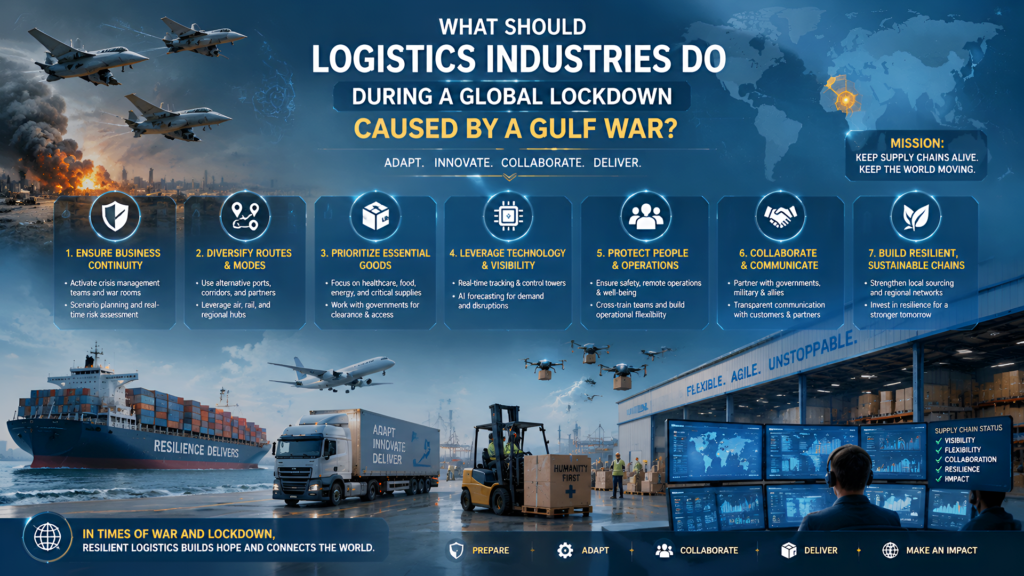
A global lockdown during a Gulf war can create major disruptions in transportation, fuel supply, international trade, and supply chain operations. The logistics industry must act quickly, strategically, and responsibly to continue operations and reduce business losses.
Countries in the Gulf region such as Saudi Arabia, United Arab Emirates, Qatar, and Iran are important for global oil transportation and shipping routes. If conflict increases and worldwide lockdowns happen, logistics companies must be prepared with emergency plans and alternative solutions.
Important Actions Logistics Industries Should Take During Lockdown
1. Create Emergency Logistics Plans
Every logistics company should prepare a crisis management plan that includes:
- Emergency transportation strategies
- Backup warehouse operations
- Alternative delivery routes
- Risk management procedures
- Employee safety guidelines
Quick decision-making becomes critical during global emergencies.
2. Use Alternative Shipping Routes
War zones and restricted regions may become unsafe for transportation.
Companies should:
- Identify backup ports
- Use safer shipping lanes
- Work with multiple transport partners
- Diversify international routes
This helps reduce delays and maintain cargo movement.
3. Increase Warehouse Storage Capacity
During lockdown situations, transportation delays are common. Companies should store additional inventory for:
- Essential goods
- Medical supplies
- Food products
- Industrial materials
- Fuel-related products
Maintaining safety stock helps businesses continue operations during supply chain interruptions.
4. Focus on Local Supply Chains
Global trade disruptions can affect imported goods. Logistics companies should support:
- Local suppliers
- Domestic transportation
- Regional manufacturing
- Nearby warehouse distribution
Strong local supply chains reduce dependence on international shipping during crises.
5. Invest in Technology and Automation
Digital logistics systems become extremely important during emergencies.
Companies should use:
- Real-time cargo tracking
- GPS monitoring
- Warehouse automation
- AI-based route optimization
- Digital inventory management
Technology improves visibility, reduces delays, and increases operational efficiency.
6. Protect Employees and Drivers
Employee safety must be a top priority during lockdown conditions
Companies should:
- Provide safety equipment
- Follow government health guidelines
- Support remote work for office teams
- Maintain emergency communication systems
- Offer mental and financial support to workers
A protected workforce helps maintain stable logistics operations.
7. Manage Fuel Consumption Efficiently
Fuel prices may increase sharply during a Gulf war. Logistics companies should:
- Optimize delivery routes
- Reduce empty vehicle movement
- Use fuel-efficient transportation
- Consolidate shipments where possible
Efficient fuel management helps reduce operating costs.
8. Strengthen Communication With Customers
During crises, customers need regular updates about shipment status and delivery timelines.
Logistics companies should:
- Provide real-time updates
- Maintain transparent communication
- Inform clients about delays early
- Offer flexible delivery solutions
Good communication builds trust during uncertain situations.
9. Improve Financial Planning
Lockdowns and global disruptions can increase operational expenses.
Businesses should:
- Control unnecessary spending
- Maintain emergency funds
- Review transportation costs
- Strengthen insurance coverage
- Prepare for market uncertainty
Strong financial planning helps companies survive longer disruptions.
10. Work Closely With Governments and Authorities
Logistics companies should coordinate with:
- Customs departments
- Port authorities
- Transportation ministries
- Emergency management teams
This helps businesses receive updated regulations, movement permissions, and operational support during lockdown periods
Conclusion
A global lockdown during a Gulf war can seriously affect the logistics industry through fuel price increases, transportation disruptions, shipping delays, and supply chain shortages. However, companies that prepare in advance can reduce risks and maintain smoother operations.
By focusing on emergency planning, technology, employee safety, local supply chains, and flexible transportation strategies, logistics industries can continue supporting global trade even during difficult times. Strong preparation and smart decision-making are the keys to surviving global logistics crises.