
Introduction
The growing tensions and military conflicts in the Gulf region during 2026 have created serious concerns for the global logistics and supply chain industry. The Gulf region is one of the world’s most important trade and energy corridors, connecting Asia, Europe, and Africa through critical shipping routes and oil export channels.
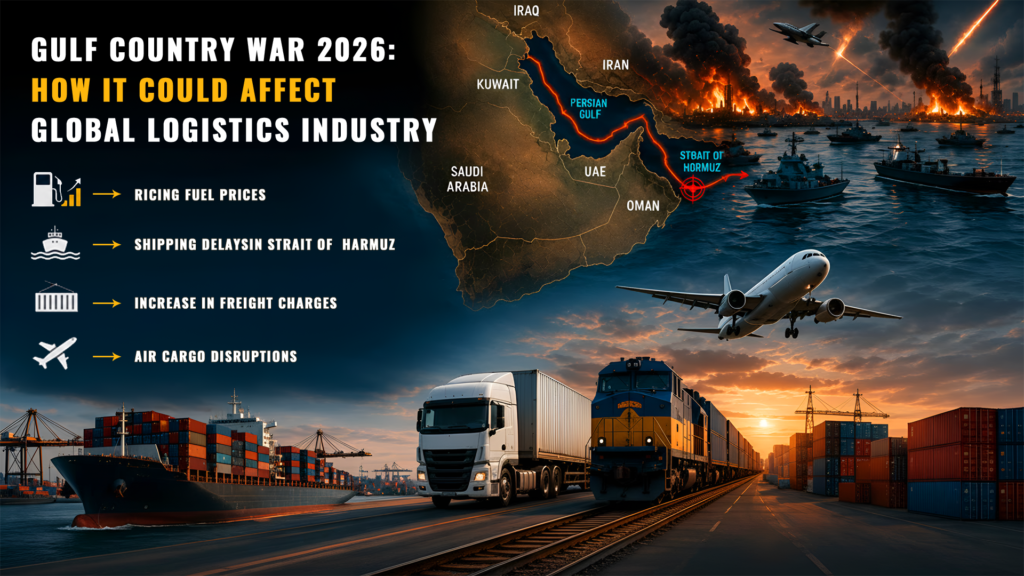
The biggest concern centers around the Strait of Hormuz, one of the world’s most important maritime chokepoints. Nearly 20% of global oil trade passes through this narrow route, making it essential for global transportation, shipping, and energy markets.
As military tensions continue in 2026, logistics companies, freight forwarders, shipping lines, and import-export businesses are already experiencing disruptions in fuel supply, freight movement, insurance costs, and delivery schedules.
Why the Gulf Region Is Important for Global Logistics
The Gulf countries — including Saudi Arabia, United Arab Emirates, Qatar, Kuwait, and Oman — play a major role in global trade and energy transportation.
The region is important because of:
- Massive oil and gas exports
- International container shipping routes
- Major seaports and airports
- Strong air cargo connectivity
- Global trade hubs and free zones
Ports such as Port of Jebel Ali are critical for international cargo movement and re-export operations.
Any disruption in this region immediately affects the worldwide logistics network.
2026 Gulf War and Strait of Hormuz Crisis
In 2026, rising military conflicts involving regional and international powers have increased risks across Gulf shipping routes. Reports indicate severe disruptions in maritime traffic, rising insurance costs, and declining vessel movement through the Strait of Hormuz.
According to recent reports, tanker traffic and container vessel movement through the strait have sharply reduced because of military threats, attacks on vessels, and operational risks.
Shipping companies are now rerouting cargo, delaying shipments, and increasing freight rates globally.
Major Effects on the Global Logistics Industry
1. Rising Fuel Prices Worldwide
The Gulf region supplies a major share of the world’s oil and LNG exports. Disruptions in the Strait of Hormuz could severely reduce oil supply, causing fuel prices to rise globally.
Higher fuel prices affect:
- Truck transportation
- Ocean freight
- Air cargo operations
- Courier and last-mile delivery services
Shipping companies may increase freight charges, leading to higher transportation costs for businesses and consumers.
2. Shipping Route Disruptions
The 2026 conflict has already caused vessels to avoid certain Gulf shipping lanes because of security risks and military activity. Some shipping companies are rerouting cargo around alternative routes, increasing transit time and operational costs.
Possible impacts include:
- Delayed cargo deliveries
- Port congestion
- Container shortages
- Longer shipping schedules
- Increased operational uncertainty
Global supply chains become slower and more expensive during such disruptions.
3. Increased Insurance and Freight Costs
War-risk insurance premiums for ships entering Gulf waters have risen significantly during the crisis.
This creates several financial challenges:
- Higher shipping insurance fees
- Increased freight rates
- More expensive import-export operations
- Rising logistics costs for manufacturers and retailers
Ultimately, businesses may pass these increased costs on to customers through higher product prices.
4. Air Cargo and Aviation Challenges
Military conflicts often result in restricted airspace and flight diversions. Airlines and cargo carriers may avoid certain Gulf air routes for safety reasons.
This can lead to:
- Longer flight routes
- Delayed air freight shipments
- Increased aviation fuel consumption
- Reduced cargo capacity
Air cargo costs between Asia, Europe, and the Middle East may continue increasing if tensions escalate further.
5. Supply Chain Interruptions Across Industries
Many industries rely heavily on Gulf trade routes for energy supplies, raw materials, and international shipments.
Industries likely to face major disruption include:
- Automotive
- Electronics
- Manufacturing
- Retail
- Construction
- E-commerce
- Pharmaceutical
Factories may face raw material shortages, while retailers could experience inventory delays and product shortages.
6. Port Congestion and Container Delays
When Gulf ports reduce operations or vessels avoid the region, cargo is redirected to alternative ports. This can create congestion across international logistics hubs.
Consequences include:
- Delayed customs clearance
- Longer vessel waiting times
- Shortage of containers
- Increased warehousing demand
Supply chains become less efficient and more unpredictable.
Impact on India and Asian Markets
Asian countries are highly dependent on Gulf oil and trade routes. Countries like India, China, Japan, and South Korea depend heavily on energy shipments passing through the Strait of Hormuz.
For India, the crisis could lead to:
- Increased fuel prices
- Higher import costs
- Rising logistics expenses
- Delays in international cargo movement Inflation in consumer goods
Indian exporters and importers may also face challenges in sea freight scheduling and shipping availability.
How Logistics Companies Can Prepare
To reduce operational risks during geopolitical crises, logistics companies should adopt proactive strategies
Diversify Shipping Routes
Businesses should reduce dependence on a single trade corridor and explore alternative logistics routes.
Strengthen Inventory Planning
Maintaining buffer stock can help companies handle supply disruptions more effectively.
Invest in Digital Logistics
Real-time cargo tracking, AI-based forecasting, and smart logistics planning can improve supply chain visibility.
Improve Risk Management
Companies should create contingency plans for fuel price volatility, shipping disruptions, and port delays.
Build Flexible Supplier Networks
Working with multiple suppliers across different regions reduces dependency on conflict-affected areas.
Long-Term Global Economic Impact
The 2026 Gulf conflict could create long-term economic uncertainty if disruptions continue. Prolonged instability may result in:
- Global inflation
- Slower international trade
- Higher transportation costs
- Reduced industrial productivity
- Supply shortages across markets
The logistics industry may need years to fully stabilize if maritime disruptions continue in critical trade corridors.
Conclusion
The Gulf Country War 2026 has become one of the biggest geopolitical threats to the global logistics industry. With rising tensions in the Strait of Hormuz, shipping companies, airlines, freight operators, and businesses worldwide are facing serious operational and financial challenges.
From rising fuel prices and shipping delays to supply chain interruptions and higher freight costs, the effects are already spreading across global markets. As international trade becomes increasingly interconnected, conflicts in strategic regions like the Gulf can impact economies worldwide within days.
For logistics companies, adaptability, digital transformation, and strong risk management strategies will be essential to survive future disruptions and maintain supply chain stability in an uncertain global environment.