
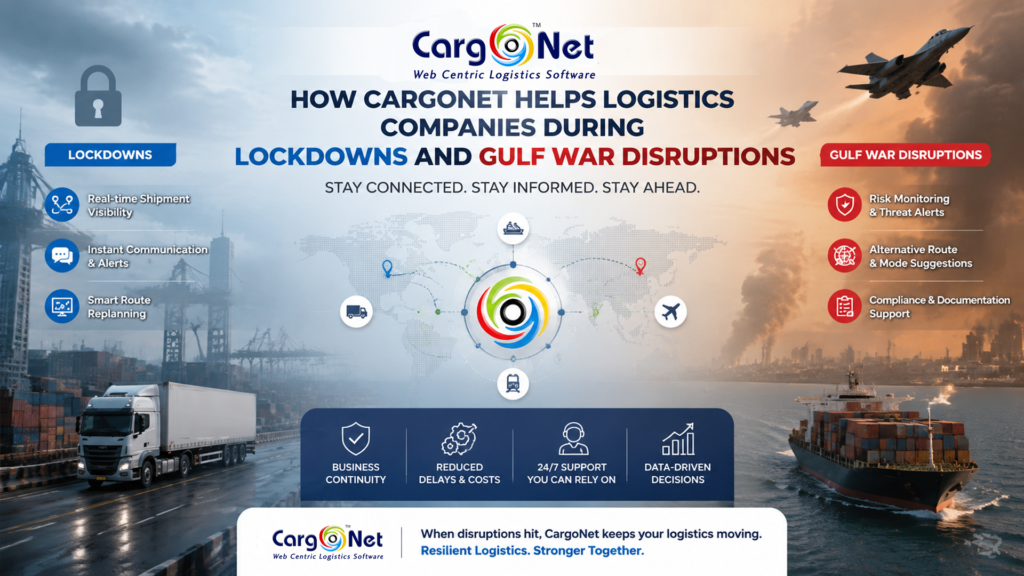
The global logistics industry plays a critical role in connecting businesses, industries, and consumers across the world. However, during major geopolitical conflicts such as a Gulf War, the logistics sector faces severe disruptions. Lockdowns, fuel price hikes, shipping delays, port congestion, airspace restrictions, and supply chain breakdowns can create major operational challenges for freight forwarders and logistics companies.
In these difficult situations, digital logistics platforms like CargoNet help businesses maintain operational continuity, improve communication, and manage cargo movements efficiently even during crisis periods.
The Impact of Gulf War and Lockdowns on Logistics
A Gulf War can directly affect global trade routes because the Gulf region is one of the world’s most important oil and shipping corridors. When conflicts increase in the region, logistics companies may experience:
- Increased fuel and transportation costs
- Shipment delays and cancellations
- Port and airport restrictions
- Customs clearance slowdowns
- Supply chain disruptions
- Reduced workforce availability during lockdowns
- Difficulty in tracking cargo movements
- Communication gaps between logistics partners
During such emergencies, traditional manual logistics operations become inefficient. This is where advanced logistics software solutions like CargoNet become essential.
How CargoNet Supports Logistics Operations During Crisis
1. Real-Time Cargo Tracking
One of the biggest challenges during lockdowns and war situations is shipment uncertainty. CargoNet provides real-time shipment tracking that helps logistics companies monitor cargo movement across air, sea, and land transportation.
With live tracking updates, businesses can:
- Reduce shipment confusion
- Improve delivery planning
- Inform customers instantly about delays
- Maintain better operational visibility
2. Cloud-Based Remote Operations
During lockdown situations, employees may not be able to work from offices. CargoNet’s cloud-based logistics management system allows teams to operate remotely from any location.
This enables:
- Remote shipment management
- Online documentation processing
- Virtual coordination between branches
- Continuous business operations during restrictions
Digital accessibility becomes highly important when physical office operations are limited.
3. Smart Route Planning During War Disruptions
Gulf conflicts can lead to restricted shipping lanes, blocked air routes, or unsafe transport zones. CargoNet helps freight forwarders identify alternative shipping routes quickly and efficiently.
Smart logistics planning helps companies:
- Avoid high-risk regions
- Minimize cargo delays
- Reduce operational losses
- Improve delivery timelines
4. Automated Documentation and Paperless Workflow
Manual paperwork can slow down logistics processes during emergencies. CargoNet simplifies operations through automated documentation systems.
The platform helps manage:
- Invoices
- Shipping bills
- Customs documents
- Airway bills
- Freight documentation
5. Better Customer Communication
Customers expect transparency during crisis situations. Delayed cargo without proper communication can damage client relationships.
CargoNet improves customer service through:
- Automated shipment notifications
- Real-time status updates
- Faster communication channels
- Centralized customer information
This helps logistics companies maintain trust and professionalism even during unstable market conditions.
6. Centralized Logistics Management
Managing multiple branches during global disruptions can become difficult. CargoNet provides centralized control over logistics operations through a single dashboard.
Companies can:
- Monitor all shipments in one place
- Coordinate between departments
- Track operational performance
- Manage freight forwarding activities efficiently
Centralized management improves decision-making during emergency situations.
7. Cost Optimization During Fuel Price Increases
Gulf conflicts often cause global oil price increases, directly affecting transportation costs. CargoNet helps companies reduce operational expenses through workflow automation and improved efficiency.
Benefits include:
- Reduced paperwork costs
- Faster processing time
- Better shipment planning
- Improved resource management
Operational efficiency becomes critical when profit margins are affected by rising fuel costs.
8. Improved Supply Chain Coordination
Supply chain interruptions are common during war and lockdown periods. CargoNet connects freight forwarders, transport providers, warehouses, and customs teams on one digital platform.
This improves:
- Communication
- Shipment coordination
- Delivery scheduling
- Supply chain visibility
Stronger coordination helps reduce disruptions and keeps cargo moving smoothly.
Why Digital Logistics Platforms Are Important During Global Crises
The logistics industry is becoming increasingly dependent on technology. During global emergencies like Gulf War tensions and international lockdowns, digital transformation helps businesses remain competitive and operational.
Platforms like CargoNet provide logistics companies with the flexibility, automation, and visibility needed to handle uncertain market conditions effectively.
Conclusion
Global conflicts and lockdowns can create major challenges for the logistics industry. Delays, rising costs, route restrictions, and operational disruptions can impact supply chains worldwide. However, advanced logistics solutions like CargoNet help companies overcome these difficulties through real-time tracking, cloud-based operations, automated workflows, and centralized logistics management.
By adopting digital logistics technology, freight forwarders and logistics businesses can improve resilience, maintain customer trust, and continue operations smoothly even during global crises such as Gulf War disruptions and lockdown situations.