India’s USD 345 Billion E-Commerce Decade: Dark Stores to Triple, AI to Drive 35% Retail Productivity Gain

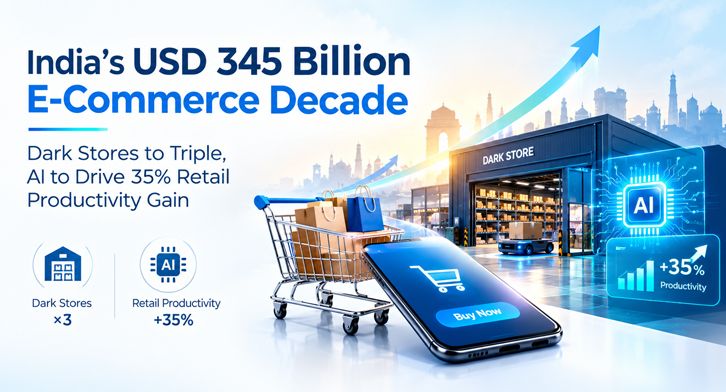
India’s digital retail market is on course to expand nearly three-fold — from USD 125 billion in 2024 to USD 345 billion by 2030 — at a compound annual growth rate of 18.4%, according to Infisum’s Smart Growth in a Fast Market report. The catalyst is quick commerce: sub-30-minute delivery platforms projected to capture 45–50% of all incremental e-retail growth over the next five years, reaching a market size of USD 65–70 billion by 2030.
Supporting this rapid delivery architecture requires hyperlocal fulfilment nodes — dark stores. India’s dark store network is expected to nearly triple from 2,525 locations in 2025 to approximately 7,500 by 2030. Blinkit currently dominates the quick commerce segment with 44% market share, having processed 900 million orders in FY26. Zepto holds 25%, Swiggy Instamart 20%.
India E-Commerce & Quick Commerce — 2024 vs. 2030 Projections (Source: Infisum)

Metric

2024 / FY26 Baseline

2030 Projection

Geopolitical E-commerce market

USD 125B

USD 345B

CAGR

—

18.4%

Quick commerce market

Growing

USD 65–70B

Quick commerce share of growth

—

45–50% of incremental e-retail

Dark store count

2,525 (2025)

~7,500

Online shopper base

Current cohort

420–440 million

E-com % of total retail

~5%

10–12%

Contribution to national GDP

—

~2.5%

AI productivity improvement (retail)

—

35–37% by 2030

Tier II/III share of new D2C orders

66% currently

Growing

Gen Z already accounts for roughly one-third of Indian online shoppers and is projected to become the country’s largest digital-spending cohort by 2030. More significantly for logistics operators, 66% of new direct-to-consumer orders now originate from Tier II and Tier III cities — meaning the inland freight network, not just metro distribution, determines who wins in the next growth phase.

Frequently Asked Questions

Why is India's e-commerce market expected to reach USD 345 billion by 2030?
India’s e-commerce is forecast to grow from USD 125 billion (2024) to USD 345 billion by 2030 at 18.4% CAGR, driven by quick commerce capturing 45–50% of incremental growth, a tripling of dark stores from 2,525 to 7,500, AI-powered retail productivity improvements of 35–37%, and 420–440 million online shoppers by 2030. Gen Z is the fastest-growing buyer segment; 66% of new D2C orders already come from Tier II and III cities, pulling inland freight demand beyond the metro core.
Quick commerce refers to on-demand delivery platforms (Blinkit, Zepto, Swiggy Instamart) promising sub-30-minute delivery from hyperlocal dark stores. Blinkit leads with 44% market share after processing 900 million FY26 orders. For logistics operators, quick commerce drives dark store build-out (tripling to 7,500 by 2030), dense urban inventory positioning, micro-fleet last-mile operations, and high-frequency replenishment cycles from regional distribution centres.
India GDP Accelerates to 7.8% in Q1 FY27 — Manufacturing, Exports, and Investment All Outperform

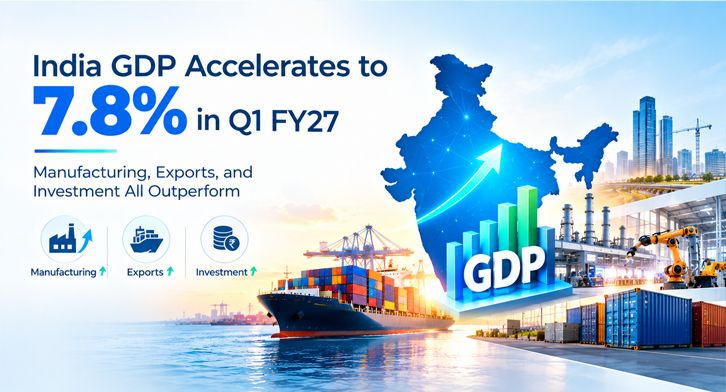
India’s real GDP expanded 7.8% year-on-year in Q1 FY27, accelerating from 6.9% in the same period a year earlier and clearing the Reserve Bank of India’s own forecast of 7% by 80 basis points. Real GDP at constant prices reached Rs. 81.36 lakh crore (USD 856.60 billion), while nominal GDP climbed 10.3% to Rs. 88.27 lakh crore (USD 929.35 billion).
Manufacturing grew 9.2%, with electrical equipment production surging 27% and capital goods output rising 15.2% — both direct indicators of industrial freight demand. Services expanded 10%, led by financial, real estate, IT, and professional services at 12.1%. Gross fixed capital formation — the investment measure most closely tied to industrial cargo volumes — increased 11.9%.
India Q1 FY27 GDP — Sectoral and Expenditure Performance (Source: Ministry of Statistics)

Metric

Q1 FY27 Growth

Freight Demand Signal

Real GDP (overall)

+7.8% YoY

Broad volume indicator

Manufacturing

+9.2%

Industrial cargo uplift

Electrical equipment

+27%

Components, export packaging

Capital goods

+15.2%

Heavy cargo, project freight

Services sector

+10%

Express, parcels, e-commerce

Gross fixed capital formation

+11.9%

Equipment imports, construction materials

Household consumption

+7.1%

FMCG, consumer goods, retail logistics

Exports (July, merch + services)

+13.31% YoY

Outbound container volumes

Apr–Jul cumulative exports

+13.16% YoY

Sustained freight demand trajectory

Bank credit — Industry

+20%

Investment in manufacturing capacity

Bank credit — Services

+22.9%

3PL, e-commerce, retail expansion

Combined merchandise and services exports in July reached Rs. 7.61 lakh crore (USD 80.14 billion). Cumulative April-to-July exports hit Rs. 30.06 lakh crore (USD 316.42 billion), up 13.16% year-on-year — four consecutive months of double-digit export growth that signals sustained outbound container demand well into H2 FY27.

Frequently Asked Questions

What does India's 7.8% GDP growth mean for freight and logistics operators?
India’s Q1 FY27 GDP growth of 7.8% signals broad-based demand acceleration across all freight modes. Manufacturing rose 9.2%, capital goods output 15.2%, gross fixed capital formation 11.9%, and exports 13.31% in July. Bank credit to industry grew 20% and to services 22.9% — meaning businesses are actively investing in capacity expansion, which translates directly into higher cargo volumes across ocean, air, rail, and road freight networks through FY27.
The strongest freight demand signals from Q1 FY27 GDP data come from: electrical equipment (+27% output), capital goods (+15.2%), financial and professional services (+12.1%), and manufacturing overall (+9.2%). E-commerce and services growth at 10% also drives express and last-mile freight. Export growth of 13%+ across four consecutive months confirms sustained outbound container volumes.

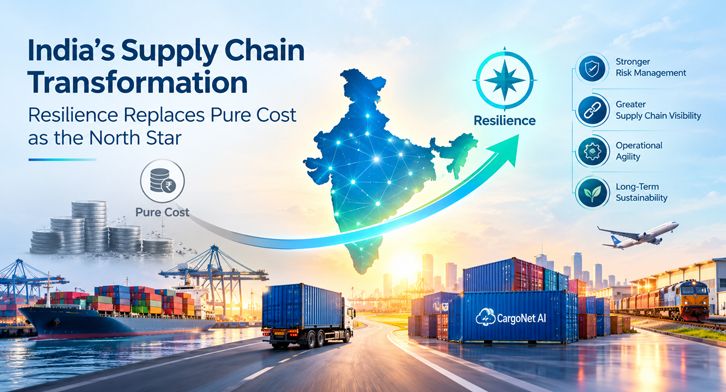
India’s Supply Chain Transformation: Resilience Replaces Pure Cost as the North Star

India’s supply chain community has reached a strategic inflection point. A comprehensive study by DP World — the “India Country Report 2026” — surveyed 451 senior logistics and supply chain decision-makers and found that supplier diversification has overtaken cost reduction as the dominant priority. That is not an incremental shift; it represents a wholesale rethink of what supply chain excellence actually means in a world where disruption is structural rather than exceptional.
Friend-shoring — routing supply chains through countries with aligned trade and political relationships — and strategic inventory positioning round out the top three priorities. Collectively, these three reflect a philosophy of managed redundancy: deliberately accepting additional cost and complexity in exchange for operational continuity when any single supply source fails.
The digitalization gap between India and the rest of the world is widening in India’s favour. More than half of surveyed Indian businesses have completed full digitalization of customer-facing services; globally, that milestone has been reached by fewer than four in ten. AI is delivering measurable results in three specific operational areas: route optimisation, documentation processing, and customs efficiency — the three highest-friction points in Indian cross-border freight.

India vs. Global — Strategic Priorities Comparison

Supply Chain Priorities — India versus Global Benchmark (DP World India Country Report 2026)

Priority / Metric

India

Global Benchmark

#1 Priority

Supplier diversification

Also high, lower urgency

#2 Priority

Strategic inventory positioning

Varies by sector

#3 Priority

Friend-shoring

Emerging globally

Customer-facing digitalization

>50% fully complete

<40% globally

Trade finance accessibility

57% report adequate

39% globally

AI adoption in logistics

Route, docs, customs

Patchy outside top players

Infrastructure priority

46% cite road networks

Varies by country

Top policy priority

FTAs (~50% of executives)

Lower ranked globally

The PLI (Production Linked Incentive) scheme is pulling manufacturing capacity back to Indian soil across 14 sectors. Meanwhile, eight trade agreements — with the UAE, Australia, UK, EFTA states, Oman, New Zealand, the EU, and most recently advances with the GCC and Israel — are opening new sourcing and distribution corridors. The DP World CEO for the Subcontinent region summarised the moment: diversified sourcing, strategic inventory, and access to new markets are no longer differentiators. They are prerequisites for competing in the decade ahead.

Frequently Asked Questions

What are the top supply chain priorities for Indian businesses in 2026?

According to the DP World India Country Report 2026, which surveyed 451 senior logistics executives, the top three priorities are:

Friend-shoring means routing supply chains through countries with politically and commercially aligned relationships — preferring suppliers in allied nations over purely lowest-cost sources. For India, this means the UAE, Australia, UK, EFTA, Oman, and EU trade corridors are being prioritised not just for cost but for supply security. It directly influences which lanes, ports, and freight corridors see volume growth in FY27.

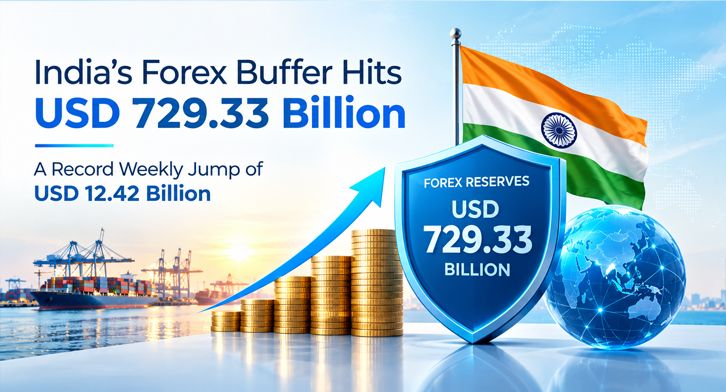
India’s Forex Buffer Hits USD 729.33 Billion — A Record Weekly Jump of USD 12.42 Billion

India’s foreign exchange reserves climbed USD 12.42 billion in a single week to reach USD 729.33 billion as of August 21, 2026, according to data from the Reserve Bank of India. The surge was driven primarily by foreign currency inflows that followed the RBI’s June-quarter measures to attract overseas deposits and foreign-currency borrowings — a deliberate policy action whose results are now registering in the reserves data.
India Forex Reserve Components — Weekly Change to August 21, 2026 (Source: RBI)

Reserve Component

Change in Week

Total as of Aug 21

Year-on-Year Change

Foreign Currency Assets

+USD 9.48B

USD 591.33B

+USD 9.08B YoY

Gold Reserves

+USD 2.80B

USD 591.33B

+USD 29.22B YoY

SDRs (IMF)

+USD 112M

USD 18.85B

—

IMF Reserve Position

+USD 26M

USD 4.93B

—

Total Reserves

+USD 12.42B

USD 729.33B

+USD 38.61B YoY

In rupee terms, total reserves stood at Rs 69.81 lakh crore as of August 21. Reserves have risen USD 38.22 billion since end-March 2026 and USD 38.61 billion year-on-year — a sustained improvement that substantially strengthens India’s capacity to defend the rupee, service external obligations, and maintain import cover. For freight importers, a robust forex buffer means currency volatility in import costs is less likely to disrupt purchasing cycles through the remainder of FY27.

Frequently Asked Questions

What is India's current foreign exchange reserve level?
India’s forex reserves reached USD 729.33 billion as of August 21, 2026 — a weekly increase of USD 12.42 billion driven by RBI policy measures. Foreign Currency Assets make up USD 591.33 billion, gold reserves USD 114.22 billion (up USD 29.22 billion year-on-year), with SDRs and IMF reserve position making up the balance. Reserves have grown USD 38.61 billion year-on-year.
A large forex buffer insulates the Indian rupee from sharp depreciation, reducing currency volatility in import costs. For freight buyers paying in USD or EUR, stable INR exchange rates translate to more predictable freight and cargo insurance costs. It also signals India’s creditworthiness in international trade finance markets — supporting LC issuance and documentary credit for large shipments.

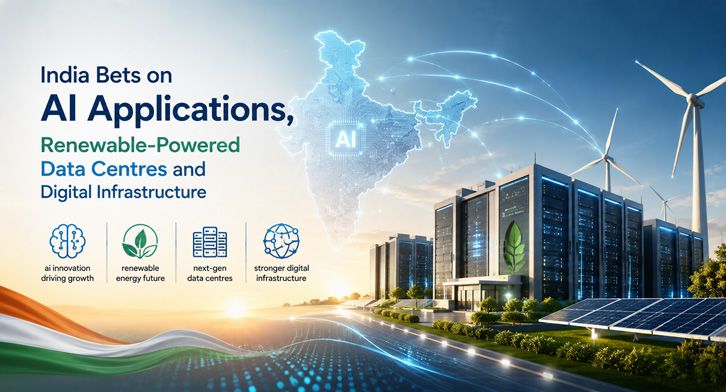
India Bets on AI Applications, Renewable-Powered Data Centres and Digital Infrastructure

India’s strongest opportunity in artificial intelligence lies in building practical AI applications for businesses and public services, according to Union Electronics and Information Technology Minister Ashwini Vaishnaw.
The country’s established IT sector, large developer base and understanding of enterprise requirements could help Indian companies develop AI solutions for industries including logistics, manufacturing, healthcare, finance and retail.
The minister said nearly 80% of emerging Indian startups are developing AI-based solutions, showing how quickly artificial intelligence is becoming part of the country’s innovation ecosystem.

Important Points

India’s AI Opportunity Is in Practical Applications

Instead of competing only in the development of large foundational AI models, India is positioning itself as a major developer of AI applications that solve specific business and public-service problems.
India’s IT services industry already has experience in understanding enterprise processes, integrating technology platforms and developing solutions for international customers. This gives the country a strong foundation for applying AI to areas such as:
The growing number of AI-focused startups suggests that artificial intelligence is moving beyond experimentation and becoming part of everyday business operations.

Renewable Energy Could Support Data-Centre Growth

Data centres require large and continuous supplies of electricity to operate servers, cooling systems and network infrastructure. As AI adoption increases, demand for computing power and data-centre capacity is also expected to rise.
India currently has around 250 GW of renewable energy capacity, according to the minister. This could help data-centre operators access cleaner electricity while managing the growing energy requirements of cloud computing and AI workloads.
Renewable-energy availability alone, however, will not determine future data-centre locations. Reliable power supply, transmission capacity, land, water availability, connectivity and cooling efficiency will also influence investment decisions.

India’s Technology and Infrastructure Position

Area

Reported position

Potential impact

AI startups

Nearly 80% of emerging startups developing AI solutions

Faster adoption of industry-specific AI

Renewable energy

Around 250 GW

Cleaner power options for data centres

Semiconductor talent

20% of global chip-design workforce

Strong base for chip design and electronics

University access

318 universities provided chip-design tools

Expansion of semiconductor skills

5G availability

Around 90% coverage

Faster deployment of connected digital services

Railway freight

Increased from 1,000 MT to 1,670 MT

Greater freight capacity and industrial connectivity

Semiconductor Design Strengthens India’s AI Ecosystem

Semiconductors are essential for AI computing, telecommunications, vehicles, industrial equipment and consumer electronics.
India accounts for approximately 20% of the global semiconductor design workforce. Advanced electronic-design automation tools have also been provided to 318 universities, enabling students to gain experience in chip design, fabrication, assembly and testing.
This talent base could help India expand from electronics assembly into higher-value activities such as component manufacturing, semiconductor design, advanced packaging and technology research.
India is also developing capabilities across finished electronic products, modules, sub-modules and components. The government’s broader semiconductor programme covers chip design, fabrication, packaging, materials, equipment and talent development.

5G and Digital Public Infrastructure Support AI Adoption

Around 90% of India reportedly has access to 5G, placing the country among the world’s largest 5G ecosystems.
Wider connectivity can help companies deploy AI-enabled services across factories, warehouses, ports, transport networks and customer-service operations. It could also support connected devices, real-time data exchange and remote access to digital services.
India’s digital public infrastructure provides another foundation for innovation. Shared digital systems can reduce the cost of developing services and allow startups to reach users more efficiently.

Rail Freight Growth Supports Industrial Competitiveness

India’s physical infrastructure is developing alongside its digital ecosystem. Railway freight volumes have risen from approximately 1,000 million tonnes a decade ago to 1,670 million tonnes, according to the minister.
Higher rail-freight capacity can support the movement of raw materials and finished products between industrial clusters, ports, warehouses and consumption centres.
For logistics companies, the combination of better railway infrastructure, 5G connectivity and AI applications could enable:

Why This Matters for Freight and Supply Chains

India’s technology and infrastructure investments are becoming increasingly connected. Renewable energy can support data centres, data centres can provide the computing capacity needed for AI, and 5G can connect companies and assets in real time.
At the same time, higher railway freight capacity can improve cargo movement across the country.
Together, these developments could allow freight forwarders, manufacturers, transport operators and warehouses to use AI for document processing, shipment planning, predictive alerts, capacity management and customer communication.

Frequently Asked Questions

What is India’s main strength in artificial intelligence?
India’s main AI strength is considered to be the applications layer. Its IT expertise and large developer ecosystem can help companies create AI solutions for specific business, industrial and public-service requirements.
Data centres consume significant amounts of electricity. India’s renewable energy capacity could provide data-centre operators with cleaner power options and support the expansion of energy-intensive AI infrastructure.
Union Minister Ashwini Vaishnaw said India has approximately 250 GW of renewable energy capacity.
India accounts for approximately 20% of the global semiconductor design workforce, according to figures cited by the minister.
AI can help logistics companies extract information from documents, automate repetitive workflows, predict delays, optimize routes, monitor shipments and provide faster customer updates.
Railway freight volumes have reportedly increased from around 1,000 million tonnes a decade ago to approximately 1,670 million tonnes currently.

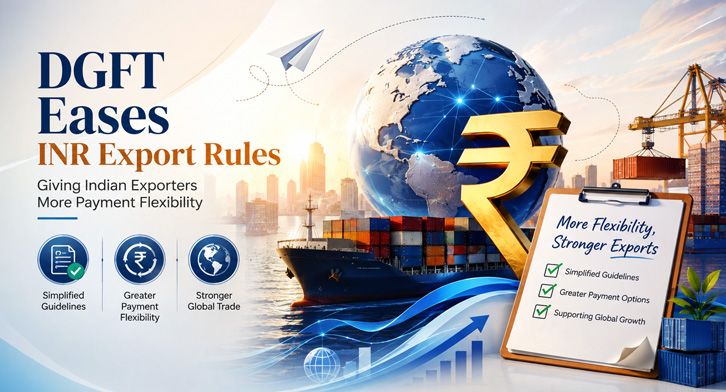
DGFT Eases INR Export Rules, Giving Indian Exporters More Payment Flexibility

Indian exporters can now invoice overseas buyers and receive eligible export payments in Indian rupees more easily after the Directorate General of Foreign Trade (DGFT) amended the Foreign Trade Policy 2023.
The change places eligible export proceeds received in INR on a similar footing to foreign-currency earnings for Foreign Trade Policy benefits and the fulfilment of export obligations. It is intended to remove a regulatory concern that may have discouraged exporters from choosing rupee-based settlement.
The amendment was issued through DGFT Notification No. 30/2026-27 dated August 20, 2026, covering changes to paragraphs 2.52 and 2.53 of the Foreign Trade Policy.

At a Glance

What Has Changed in India’s Rupee Export Settlement Rules?

Under the revised policy, exporters dealing with countries outside the Asian Clearing Union can denominate their contracts and invoices in either Indian rupees or foreign currency.
The export payment may also be received in INR or an eligible foreign currency, subject to the applicable banking and regulatory requirements.
The most important change concerns the treatment of export earnings received in rupees. Eligible INR realisations through approved banking channels can now be considered for:
This provides greater policy certainty to exporters and reduces the possibility of losing eligible trade benefits simply because an overseas transaction was settled in rupees.

Previous Rules Compared With the Revised Framework

Area

Earlier position

Revised position

Export contract

INR invoicing was possible, but rupee realisation was allowed only under specified conditions

Eligible contracts can be denominated in INR or foreign currency

Export invoice

Could be raised in INR in permitted cases

INR invoicing is clearly recognised for eligible exports

Export payment

Export proceeds were generally expected in freely convertible currency, with limited INR exceptions

Eligible payments can be received in INR or foreign currency

FTP benefits

Uncertainty existed over the treatment of some rupee receipts

Eligible INR receipts can qualify for FTP benefits

Export obligations

Treatment of rupee realisations could discourage INR settlement

Eligible INR receipts can count towards export-obligation fulfilment

Government-supported exports

Specific provisions applied

EXIM Bank and Government of India line-of-credit exports may be invoiced in INR

ACU markets

Separate settlement rules applied

Separate ACU provisions continue

How Can Exporters Receive International Payments in INR?

India’s rupee-settlement framework allows eligible international trade transactions to be processed through Special Rupee Vostro Accounts, commonly known as SRVAs.
An authorised dealer bank in India can maintain an SRVA for the correspondent bank of a trading-partner country. Under this mechanism, an Indian exporter receives payment in rupees from the balance held in the designated account.
The Reserve Bank of India introduced this trade-settlement mechanism in July 2022. It allows eligible exports and imports to be invoiced, paid for and settled in INR.
INR Export Settlement Process
The exact banking arrangement can vary by country and transaction. Exporters should therefore confirm the payment structure with their authorised dealer bank before finalising a rupee-denominated contract.

Why Does the DGFT Amendment Matter to Exporters?

More choice when negotiating payment terms
Exporters and overseas buyers can consider INR alongside conventional foreign currencies when structuring eligible transactions.
Greater certainty over export benefits
Eligible rupee receipts can receive Foreign Trade Policy treatment comparable to qualifying foreign-currency realisations. This removes an important policy concern for businesses considering INR settlement.
Potential reduction in currency risk
When an Indian exporter invoices and receives payment in rupees, exposure to exchange-rate movements may be reduced. The actual benefit will depend on the contract, pricing structure, settlement arrangement and currency exposure of both parties.
The RBI states that settling transactions in INR can help reduce exchange-rate risk for Indian exporters and importers.
Support for markets with foreign-currency constraints
Rupee settlement may provide another payment option when buyers face limited access to widely used settlement currencies. However, adoption will depend on overseas demand for INR, participating banks and the availability of rupee balances.
Easier participation in supported overseas projects
Allowing INR invoicing for exports backed by EXIM Bank or Government of India lines of credit could help businesses participating in government-supported trade and infrastructure projects.

Which Transactions Have Separate Rules?

The revised framework does not mean that identical rules apply to every export destination.
Countries participating in the Asian Clearing Union remain subject to the settlement arrangements prescribed for ACU transactions. Nepal and Bhutan also have separate provisions governing trade payments.
Transactions involving Iran must continue to follow restrictions covering sensitive goods and technologies, including applicable controls under India’s SCOMET framework.
Exporters should verify the relevant country, product, banking and compliance requirements before agreeing to receive payment in INR.

Will the New Rules Increase International Use of the Rupee?

The amendment supports India’s longer-term effort to increase the use of the rupee in cross-border trade. It aligns the Foreign Trade Policy more closely with the RBI’s existing INR settlement mechanism.
However, regulatory approval alone may not produce an immediate rise in rupee-denominated exports. Wider adoption will also depend on:
The amendment removes an important policy obstacle, but commercial acceptance and banking infrastructure will determine how widely INR settlement is used.

What Should Exporters Do Before Choosing INR Settlement?

Exporters considering rupee-based payment should:

Frequently Asked Questions

Can Indian exporters now invoice foreign buyers in rupees?
Yes. Eligible export contracts and invoices can be denominated in Indian rupees, subject to the Foreign Trade Policy, RBI rules and applicable banking requirements.
Yes. Eligible export payments may be received in INR through approved banking channels, including applicable rupee-based settlement arrangements.
Eligible rupee export realisations can qualify for Foreign Trade Policy benefits when they meet the prescribed conditions.
Yes. Qualifying export proceeds received in rupees can be considered for fulfilment of applicable export obligations.
An SRVA is an INR-denominated account maintained by an authorised dealer bank in India for an overseas correspondent bank. It can be used to settle eligible international trade transactions in rupees.
Different settlement provisions continue to apply to Asian Clearing Union members. Exporters should confirm the relevant requirements with their authorised dealer bank.
Yes. The policy permits exports backed by EXIM Bank or Government of India lines of credit to be invoiced in Indian rupees.
Not necessarily. It can reduce direct exchange-rate exposure for an Indian exporter receiving rupees, but other commercial, banking, pricing and counterparty risks may remain.

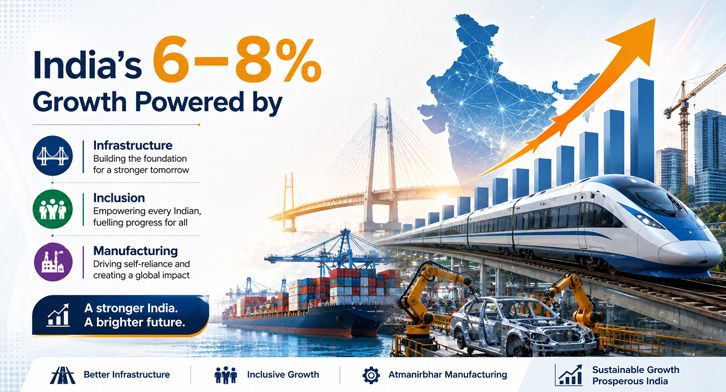
India’s 6–8% Growth Powered by Infrastructure, Inclusion and Manufacturing: Ashwini Vaishnaw

India’s sustained economic growth is gaining global attention, supported by continued investment in infrastructure, digital systems, inclusive development and domestic manufacturing, Union Information and Broadcasting Minister Ashwini Vaishnaw said.
According to the minister, India has maintained a growth rate of around 6% to 8%, placing it among the world’s major growing economies. He identified four pillars supporting this momentum: social infrastructure, digital and physical infrastructure, inclusive growth, and manufacturing. The statement was reported by Akashvani News.

Important Points

Four Pillars Supporting India’s Economic Growth

Growth pillar

Primary role

Potential economic effect

Social infrastructure

Expands access to essential services and welfare support

Greater workforce participation

Physical infrastructure

Improves roads, railways, ports, airports and industrial connectivity

Faster movement of goods and people

Digital infrastructure

Expands access to payments, banking and government services

Lower transaction costs and wider market access

Inclusive development

Extends economic opportunities across regions and communities

Broader participation in growth

Manufacturing

Increases domestic production and industrial investment

More jobs, exports and logistics demand

Infrastructure Investment Improving Connectivity

India’s investment in roads, railway networks, airports, ports and logistics corridors is improving connections between manufacturing centres and domestic and international markets.
Better transport infrastructure can help businesses move raw materials and finished products more efficiently. It can also reduce transit delays, support regional industrial development and improve access to consumption centres.
Digital infrastructure is complementing these physical networks. Online payments, digital identification and electronic government services are making banking, education and public services more accessible.
Together, physical and digital infrastructure can make it easier for companies to manage transactions, coordinate supply chains and reach customers across the country.

Inclusive Growth Expands Economic Participation

Vaishnaw emphasised that economic progress should reach people across different income groups, communities and regions.
Social welfare programmes and improved access to digital services can enable more citizens to participate in the formal economy. Financial inclusion can also help individuals and small businesses access payments, government benefits and financial services.
However, sustaining inclusive growth will depend on the creation of productive employment, skills development and better economic opportunities outside major urban centres.

Manufacturing Push Could Strengthen Supply Chains

Manufacturing is a major component of India’s long-term economic strategy. Expanding domestic production can create direct and indirect employment while generating demand for transportation, warehousing, freight forwarding and distribution services.
Government initiatives are also encouraging new industrial capacity and stronger domestic supply chains. India’s manufacturing policy focuses on attracting investment, increasing production and improving the country’s competitiveness in international markets.
A stronger manufacturing base could help India:

What Does India’s Growth Strategy Mean for Logistics?

Growth in infrastructure and manufacturing is likely to increase cargo movement across road, rail, air and sea networks. This could create new opportunities for freight forwarders, transport companies, customs brokers, ports, warehouses and technology providers.

Development

Likely impact on logistics

Higher manufacturing output

More movement of raw materials and finished goods

Export growth

Greater demand for ports, containers and freight forwarding

New industrial clusters

Expansion of regional transport and warehousing networks

Improved roads and railways

Better first-mile and last-mile connectivity

Digital infrastructure

Faster documentation, payments and shipment coordination

Broader regional development

New cargo origins, destinations and distribution markets

These effects are potential outcomes rather than figures announced by the minister. Their scale will depend on how quickly infrastructure projects are completed and new manufacturing capacity becomes operational.

How Infrastructure and Manufacturing Support Trade

Challenges That Could Influence Future Growth
Maintaining a 6%–8% growth range will require more than infrastructure spending. India will also need to improve project execution, workforce skills, industrial productivity and access to finance.
Important areas to monitor include:

Frequently Asked Questions

What is driving India’s economic growth?
According to Ashwini Vaishnaw, India’s growth is being supported by investment in social, digital and physical infrastructure, inclusive development and manufacturing.
The minister said India has been growing within a range of approximately 6% to 8%.
Infrastructure connects factories, suppliers, markets, ports and consumers. Better connectivity can reduce delays, improve access to services and support business expansion.
Manufacturing creates jobs, attracts investment, increases industrial production and supports exports. It also generates demand for logistics, warehousing and transportation.
Higher production may lead to more domestic and international cargo movement, increasing demand for freight forwarding, customs clearance, transportation, ports and warehouses.
Inclusive growth means ensuring that economic development creates opportunities and benefits for people across different communities, income groups and regions.

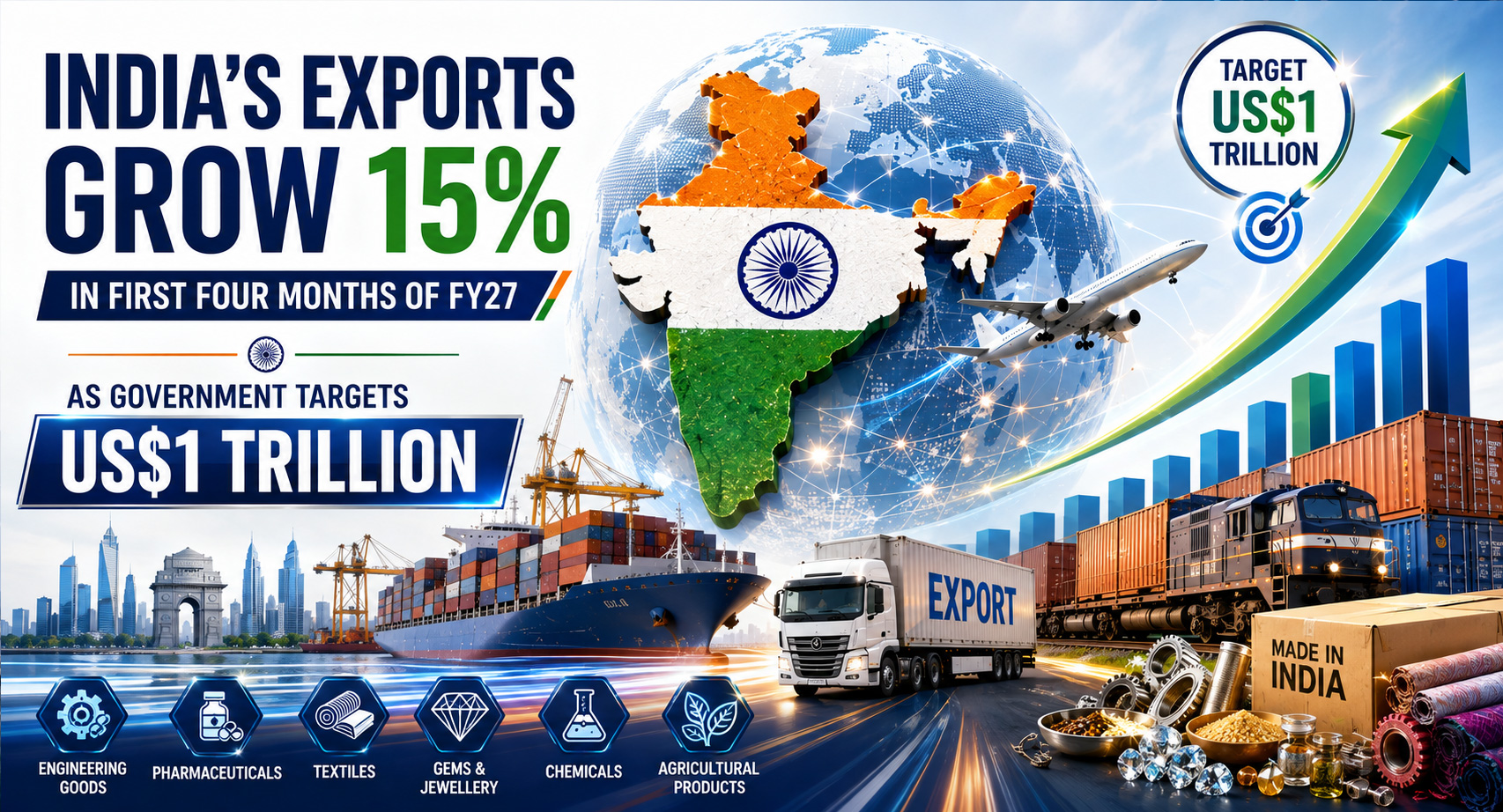
India’s Exports Grow 15% in First Four Months of FY27 as Government Targets US$1 Trillion

India’s exports are maintaining strong momentum in FY2026-27, with exports growing by around 15% during the first four months of the financial year, according to Union Minister of Commerce and Industry Piyush Goyal.
The government is targeting US$1 trillion in total exports during FY2026-27, as India seeks to strengthen its position in global trade despite geopolitical tensions, economic uncertainty and changing international supply chains.
Speaking at the Bharatiya Vyapar Mahotsav 2026, Goyal highlighted the need for Indian businesses to expand their international footprint, improve competitiveness and make greater use of technology, innovation and digitalisation.

Key Highlights

India’s US$1 Trillion Export Ambition

India’s latest export performance comes as the country attempts to significantly scale up its presence in international markets.
The country recorded total exports of approximately US$863 billion in FY2025-26, comprising both merchandise and services exports.

Export Segment

FY2025-26

Merchandise exports

US$442 billion

Services exports

US$421 billion

Total exports

US$863 billion

FY27 target

US$1 trillion

The target would require India to build on its recent export momentum while navigating a challenging global environment.

India’s Export Growth at a Glance

India’s Export Growth Journey

Free Trade Agreements Expand Market Access

India’s trade integration has also accelerated through new Free Trade Agreements.
The country has signed nine FTAs over the past four years, covering economies with a combined GDP of around US$60 trillion and providing preferential access to international trade valued at approximately US$25 trillion.

These agreements can help Indian exporters gain improved market access, reduce trade barriers and compete more effectively in international markets.

MSMEs and Manufacturers Key to Export Expansion

Achieving the US$1 trillion export ambition will require broader participation across India’s economy.
The government is encouraging manufacturers, MSMEs, farmers, fishermen and service-sector businesses to explore international markets and strengthen their export capabilities.
For smaller businesses, digital tools can play an increasingly important role in areas such as international sales, documentation, compliance, payments, logistics and supply-chain management.

Quality, Innovation and Digitalisation Take Centre Stage

India’s export strategy is increasingly moving beyond simply increasing volumes.
Businesses are being encouraged to focus on:
These factors can help Indian companies move towards higher-value exports and build stronger positions in global supply chains.

What India’s Export Growth Means for Logistics

Higher exports could create additional demand across India’s logistics ecosystem.
More international cargo will require efficient ports, container terminals, shipping services, air cargo networks, warehousing facilities, road and rail connectivity and freight-forwarding operations.
For logistics companies and freight forwarders, this creates opportunities to improve efficiency through automation, digital documentation, shipment visibility and integrated freight management systems.

Sustainability Becomes Part of Export Competitiveness

Sustainability is also becoming increasingly important for exporters targeting global markets.
Indian businesses are being encouraged to adopt practices involving recycling, reuse, resource efficiency and circular-economy models.
As global buyers increasingly assess environmental performance alongside price and quality, sustainable production and logistics could become important factors in determining export competitiveness.

What Comes Next for Indian Exports?

India’s approximately 15% export growth in the first four months of FY27 provides a positive starting point for the country’s US$1 trillion export ambition.
However, sustaining this growth will require coordinated efforts across manufacturing, agriculture, services, logistics and trade infrastructure.
Greater use of technology, stronger global market access, improved product quality and efficient logistics networks could help Indian businesses compete more effectively in international markets.
The focus is therefore shifting from simply exporting more to building an ecosystem capable of producing, moving and delivering globally competitive Indian products and services at scale.

Key Takeaway

India’s 15% export growth in the first four months of FY27 strengthens the country’s ambition to reach US$1 trillion in exports. Achieving the target will depend not only on stronger overseas demand but also on competitive manufacturing, MSME participation, innovation, digitalisation, trade agreements and an efficient logistics ecosystem.

Frequently Asked Questions

What is India’s export target for FY2026-27?
India is targeting approximately US$1 trillion in total exports during FY2026-27.
India recorded approximately US$863 billion in total exports in FY2025-26, including merchandise and services exports.
India recorded around 15% export growth during the first four months of FY2026-27.
Merchandise exports were approximately US$442 billion in FY2025-26.
Services exports reached approximately US$421 billion in FY2025-26.
Efficient ports, multimodal transportation, warehousing, freight forwarding, shipment tracking, digital documentation and integrated supply-chain management can help exporters move cargo faster and more efficiently.

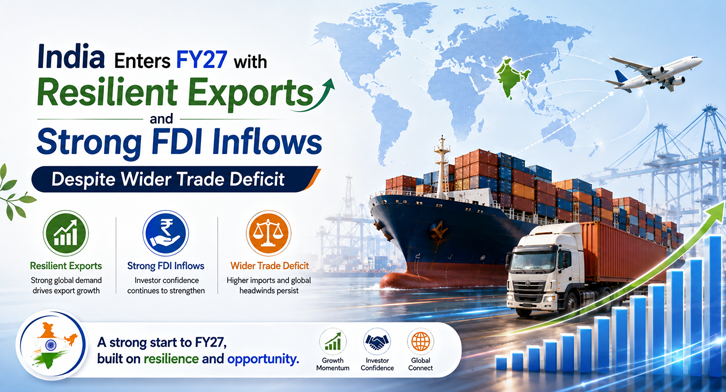
India Enters FY27 With Resilient Exports and Strong FDI Inflows Despite Wider Trade Deficit

India has started FY2026-27 with a resilient external sector, supported by strong merchandise exports, robust services exports and a renewed flow of foreign direct investment (FDI), even as rising imports continue to widen the merchandise trade deficit.
The Reserve Bank of India (RBI) has highlighted the strength of India’s external position amid elevated crude oil prices, strong domestic demand and continuing global trade uncertainties. While higher imports are putting pressure on the trade balance, strong services exports, remittances and foreign capital inflows are providing important support to the economy.

India’s Exports Maintain Momentum in FY27

India’s merchandise exports showed strong momentum during the first quarter of FY2026-27.
According to RBI data, merchandise exports increased to US$129.3 billion in Q1 FY27, compared with US$111.6 billion in the corresponding period of the previous year. This represents a 15.9% year-on-year increase.
The growth was supported by sectors including petroleum products, engineering goods and electronic goods, highlighting the increasing diversification of India’s export base.
This resilience is particularly significant as global trade remains exposed to geopolitical tensions, energy-price volatility and changes in trade policy.

Imports Grow Faster, Widening the Trade Deficit

While exports performed strongly, India’s imports expanded at an even faster pace.

Indicator

Q1 FY26

Q1 FY27

Change

Merchandise Exports

US$111.6 bn

US$129.3 bn

0.159

Merchandise Imports

US$180.3 bn

US$216.2 bn

0.199

Merchandise Trade Deficit

US$68.7 bn

US$86.6 bn

↑ US$17.9 bn

The increase in imports reflects strong domestic demand as well as higher purchases of key commodities and manufactured products. Crude oil, electronic goods and gold were among the important contributors to the wider import bill.
For India’s logistics industry, this combination of rising exports and imports points to continued demand for ocean freight, air cargo, customs clearance, warehousing, transportation and multimodal logistics services.

Services Exports Provide a Critical Cushion

India’s external sector is not dependent on merchandise trade alone.
The country’s growing services economy continues to offset part of the merchandise trade deficit. Software services, business services and Global Capability Centres (GCCs) remain important contributors to India’s services exports.
During April–May 2026, India’s services trade surplus increased to US$34.3 billion, compared with US31.7During April–May 2026, India’s services trade surplus increased to US$34.3 billion.
This combination of services earnings and remittance inflows helps reduce pressure on India’s current account despite the widening merchandise trade gap.

FDI Inflows Signal Continued Investor Confidence

Foreign investment is another major strength in India’s external sector.
Gross FDI inflows increased 14.8% year-on-year during April–June 2026, reaching US$30.7 billion, compared with US$26.7 billion during the same period of the previous year.
More importantly, net FDI inflows increased to US$7.9 billion, up from US$4.8 billion in Q1 FY26.
The recovery in foreign investment indicates that global investors continue to view India as an important destination for manufacturing, technology, infrastructure and services investment.

India’s External Sector: What Is Supporting It?

India’s external resilience can be understood through four major pillars:
At the same time, higher crude oil prices and import demand remain important risks to India’s trade balance.

What Does This Mean for the Logistics Industry?

India’s export and import growth has direct implications for the country’s logistics ecosystem.
1. Higher Container Demand
Growing merchandise exports can increase demand for containerised ocean freight, particularly across engineering, electronics and manufactured goods.
2. Rising Air Cargo Opportunities
High-value and time-sensitive products such as electronics, components and technology products can support continued growth in air freight.
3. Greater Demand for Customs Automation
As trade volumes increase, exporters and importers need faster documentation, customs filing and compliance processes.
4. Expansion of Warehousing
Growing manufacturing and import activity can increase demand for regional distribution centres, bonded warehouses and integrated logistics facilities.
5. Stronger Multimodal Logistics
India’s expanding manufacturing and export base is likely to increase demand for coordinated road, rail, port and shipping connectivity.
6. Greater Need for Digital Freight Management
Higher cargo volumes can make manual freight processes increasingly difficult to manage. Freight forwarders and logistics companies can benefit from automation across quotations, bookings, documentation, tracking, invoicing and financial reconciliation.

Q1 FY27 External Sector Snapshot

Area

Q1 FY27 Performance

Logistics Significance

Merchandise exports

US$129.3 bn

Higher outbound cargo demand

Merchandise imports

US$216.2 bn

Increased inbound cargo movement

Trade deficit

US$86.6 bn

Higher import dependence

Gross FDI

US$30.7 bn

Potential manufacturing & infrastructure investment

Net FDI

US$7.9 bn

Stronger external financing

Services surplus

US$52.2 bn

Supports external-sector stability

Net transfers

US$41.4 bn

Additional external-sector support

The RBI’s latest balance-of-payments data also show that the merchandise trade deficit widened to US$85.7 billion in Q1 FY27, while the services surplus increased to “US$52.2 billion and net transfers rose to US$41.4 billion.

The Bigger Picture for India's Trade and Logistics Sector

India’s external sector is entering FY27 with both opportunities and challenges.
On one side, stronger exports, rising services earnings and increased FDI indicate that India’s trade and investment ecosystem remains resilient. On the other, faster import growth and elevated energy costs could continue to put pressure on the merchandise trade balance.
The RBI expects healthy services exports, inward remittances and trade agreements—including the India-UK trade deal—to help mitigate some of the risks facing India’s current account.
For logistics companies, the message is clear: India’s trade volumes are expanding, but managing that growth efficiently will require greater visibility, automation and digital coordination across the supply chain.

What to Watch in FY27

The following factors will be important for India’s logistics and trade outlook during FY27:

Conclusion

India’s entry into FY27 presents a mixed but fundamentally resilient external-sector picture. Merchandise imports are putting pressure on the trade balance, but strong exports, expanding services earnings, rising remittances and renewed FDI inflows are helping maintain overall stability.
For India’s logistics industry, continued growth in trade and investment could create new opportunities across freight forwarding, container shipping, air cargo, warehousing, customs, transportation and digital supply-chain management.
As global trade becomes more volatile and cargo volumes increase, logistics companies that combine operational efficiency, real-time visibility and automation will be better positioned to capture the next phase of India’s trade growth.

Frequently Asked Questions

Is India's trade deficit increasing in FY27?
Yes. India’s merchandise trade deficit widened in Q1 FY27 as imports grew faster than exports. RBI data put the Q1 merchandise trade deficit at around US$86 billion.
Yes. Merchandise exports increased 15.9% year-on-year to US$129.3 billion in Q1 FY27.
Gross FDI inflows reached US$30.7 billion during April–June 2026, while net FDI inflows increased to US$7.9 billion.
Imports are growing faster than exports. Higher demand for crude oil, electronics, gold and other imported goods has contributed to the increase in India’s merchandise import bill.
Higher exports can increase demand for container shipping, air cargo, trucking, warehousing, customs clearance, freight forwarding and multimodal transportation services.

India’s Chemicals & Petrochemicals Sector Accelerates Growth, Attracts ₹3.4 Lakh Crore Investment

India’s chemicals and petrochemicals industry has recorded strong expansion over the past 12 years, supported by government policy reforms, new manufacturing infrastructure, investment incentives, research initiatives and skill development.
The sector is increasingly becoming an important pillar of India’s manufacturing, export and supply-chain ecosystem, with major investments flowing into Petroleum, Chemicals and Petrochemicals Investment Regions (PCPIRs).

Key Takeaways

India’s Chemical Manufacturing Sector: What Is Driving the Growth?

India’s chemicals and petrochemicals industry has undergone substantial transformation over the last decade.
Government initiatives focused on manufacturing capacity, infrastructure, investment promotion, technology development and workforce training have helped create a stronger industrial ecosystem.
The growth also supports the broader Viksit Bharat 2047 and Atmanirbhar Bharat objectives by encouraging domestic production and reducing dependence on imported chemical products.

PCPIRs Become Major Industrial Investment Hubs

Three operational PCPIRs are currently playing a significant role in India’s chemical manufacturing landscape:
Together, these regions have attracted approximately ₹3.4 lakh crore in investments, generated employment for nearly 3.7 lakh people, and supported the establishment of more than 2,200 chemical manufacturing units.

PCPIR Development at a Glance

Indicator

Reported figure

Operational PCPIRs

3

Investment attracted

₹3.4 lakh crore

Employment generated

~3.7 lakh

Chemical manufacturing units

2,200+

Key locations

Gujarat, Andhra Pradesh, Odisha

These industrial clusters are important not only for manufacturing but also for logistics, warehousing, transportation, ports, chemical storage and multimodal supply chains.

Chemical Sector FDI Shows Strong Momentum

Foreign investment has also increased significantly.
According to the figures provided, FDI inflows into the sector reached ₹1,04,895 crore between 2014 and 2026, compared with ₹45,240 crore during 2004–2014.

Period

FDI inflow

2004–2014

₹45,240 crore

2014–2026

₹1,04,895 crore

This investment growth indicates increasing confidence in India’s chemical manufacturing capabilities and its potential as a global production and export base.

Government Pushes Quality and Domestic Manufacturing

The Government has introduced 37 Quality Control Orders (QCOs) aimed at improving product quality and addressing the availability of sub-standard imports.
At the same time, 10 Plastic Parks have been approved, with four already having completed infrastructure.
Together, these measures are designed to strengthen domestic manufacturing and improve competitiveness across the chemicals and plastics value chain.

Research, Technology and Skills Gain Importance

India’s chemical-sector growth is also being supported by investments in technology and human capital.
The Central Institute of Petrochemicals Engineering & Technology (CIPET) has expanded its network to 51 centres, including 19 centres established since 2014.
CIPET has reportedly:
The Institute of Pesticide Formulation Technology (IPFT) has also transferred 64 pesticide formulation technologies to industry.
In addition, IPFT received ₹28.69 crore from the Department of Biotechnology to establish a Biofoundry Facility focused on biopesticides and advanced biological formulations.

₹3,030 Crore BHAVYA Rasayan Scheme

One of the major recent initiatives is the BHAVYA Rasayan Scheme, approved by the Union Cabinet with an outlay of ₹3,030 crore.
The scheme is expected to establish three plug-and-play Chemical Parks.

The objective is to:

Why This Matters for Logistics and Supply Chains

The expansion of India’s chemical and petrochemical manufacturing base could create significant opportunities across the logistics sector.
More chemical production means greater demand for:
The concentration of manufacturing activity around PCPIRs and chemical parks can also encourage the development of integrated manufacturing-to-port supply chains.
For logistics companies, this represents an opportunity to build specialized capabilities around the movement and storage of chemical products.

India’s Chemical Industry: Growth Outlook

The combination of manufacturing investments, chemical parks, infrastructure development, quality standards, technology transfer and workforce development is strengthening India’s position in the global chemicals and petrochemicals market.
The next phase of growth is likely to depend on how effectively India connects manufacturing capacity with ports, logistics infrastructure, domestic distribution networks and export markets.
For the logistics industry, the expansion of chemical manufacturing could therefore become an important source of long-term demand for specialized and technology-enabled supply-chain services.

At a Glance

India’s chemical and petrochemical sector is moving toward a more integrated manufacturing ecosystem, supported by investment, infrastructure and policy initiatives. As production capacity expands, the opportunity extends beyond chemical manufacturers to logistics providers, ports, warehouses, technology companies and supply-chain operators.

Frequently Asked Questions

What is driving the growth of India's chemicals and petrochemicals sector?
Policy reforms, infrastructure development, investment promotion, manufacturing capacity expansion, research, skill development and initiatives aimed at reducing import dependence are key growth drivers.
The three operational PCPIRs at Dahej, Visakhapatnam–Kakinada and Paradeep have attracted approximately ₹3.4 lakh crore in investment.
The sector received approximately ₹1,04,895 crore in FDI between 2014 and 2026, according to the figures provided.
More than 2,200 chemical manufacturing units have been established across the three operational PCPIRs.
The BHAVYA Rasayan Scheme is a government initiative with an approved outlay of ₹3,030 crore to establish three plug-and-play Chemical Parks and strengthen domestic chemical manufacturing.
Higher chemical production can increase demand for specialized transportation, bulk logistics, hazardous-material handling, warehousing, port logistics, compliance systems and digital supply-chain management.
cargonet-logo-icon
Cargonet Cargo Software Logo

Feedback & Reward program

Submit the Feedback and avail the Rewards.

1. Your satisfaction & reliability on CargoNet ?

2. Your Rating on Support & co-ordination team?

3. Satisfaction on the look and feel of CargoNet ?

4. Please specify any 2 best features that you feel more helpful in CargoNet?

5. Please specify any 2 best reports that you are taking on regular basis?

6. Are you using Copy Job option in CargoNet Software?

7. Are you using Automatic DSR (Daily Status Report) Option? It automatically sends reports to customer about the shipment status

8. Are you using Automatic Outstanding Reports option? Period Auto outstanding reminders to customer

9. Any other thoughts to improve in CargoNet? Please share.

* Join our Reward Program by recommending CargoNet (Cash Rewards Awaiting)

“Thanks for your feedback. Our goal is to create the best possible product, support & service, and your thoughts, ideas & suggestions play a major role in helping us identify opportunities to improve.”

Cut AI cost ,
not performance

discover how top Freight Forwarding companies  reduce AI-related expense and speed up operation with CargoNet AI, we will show it how
Share your information for instant access :