India Waives DGMA Licence Requirement for GIFT City Firms Chartering Foreign Ships

India has introduced a major regulatory reform to strengthen its maritime finance ecosystem by exempting eligible companies operating in Gujarat International Finance Tec-City (GIFT City) from obtaining a Directorate General of Maritime Administration (DGMA) licence for chartering foreign-flagged vessels.
The policy is expected to significantly simplify ship leasing and chartering operations, reduce compliance costs, and position GIFT City as a preferred global destination for maritime finance and ship leasing.
The exemption allows qualified GIFT City entities involved in ship leasing, maritime financial services, and related activities to charter foreign-flagged vessels without requiring a separate DGMA licence. By removing this administrative requirement, the government aims to accelerate transaction timelines, improve operational flexibility, and make India more competitive in the global maritime services market.
The latest reform is part of India’s broader strategy to establish GIFT City as a world-class International Financial Services Centre (IFSC), attracting global ship owners, leasing companies, banks, insurers, and maritime investors.
Industry experts believe the decision will encourage more vessel financing and leasing transactions to be structured from India instead of established offshore financial centres such as Singapore, Dubai, or London. Lower regulatory barriers are expected to improve ease of doing business while increasing confidence among international shipping companies looking to expand operations in India.
The move also complements earlier government initiatives that include tax incentives, regulatory reforms, and the development of a dedicated ship leasing ecosystem within GIFT City. Together, these measures are designed to increase India’s participation in the global maritime value chain while creating new opportunities in maritime finance, vessel ownership, insurance, and leasing services.
As global shipping companies continue to diversify financing hubs, the latest regulatory relaxation is expected to enhance GIFT City’s competitiveness and support India’s long-term ambition of becoming a leading international maritime and financial services hub.

Key Highlights

Why This Matters

The removal of the DGMA licensing requirement represents another important step in India’s efforts to compete with established maritime financial centres. By making vessel leasing easier and more cost-effective, GIFT City is becoming an increasingly attractive destination for global shipping businesses seeking efficient regulatory and financial frameworks.
The reform is expected to:

FAQs

Why has India removed the DGMA licence requirement for GIFT City companies?
The exemption is intended to simplify regulatory procedures, reduce compliance costs, and encourage ship leasing and maritime finance activities through GIFT City.
Eligible entities operating within GIFT City’s International Financial Services Centre (IFSC) that are engaged in ship leasing and maritime financial services can charter foreign-flagged vessels without obtaining a separate DGMA licence.
The policy reduces administrative delays, lowers operating costs, accelerates chartering transactions, and makes India more attractive for international ship leasing and financing.
GIFT City is being developed as India’s international financial hub, offering tax benefits, regulatory support, and specialized financial services for sectors including ship leasing, aviation leasing, insurance, and banking.
The reform strengthens India’s goal of becoming a global maritime finance centre by attracting international investment, expanding ship leasing activities, and increasing India’s participation in global shipping services.

ONE Launches India–North America Express (INX) Service to Boost Direct U.S. East Coast Connectivity

Ocean Network Express (ONE) has announced the launch of its new India–North America Express (INX) service, scheduled to commence in August 2026, marking a significant expansion of direct container shipping connectivity between India and the U.S. East Coast.
The new weekly service is designed to support the rapidly growing trade between India and North America by offering faster transit times, improved schedule reliability, and increased container capacity. The launch comes as global manufacturers continue to diversify supply chains and source more products from India under the expanding China+1 strategy.

ONE Expands India–U.S. Shipping Network

The India–North America Express (INX) service will provide exporters with a dedicated ocean freight solution connecting major Indian ports directly to key gateways on the U.S. East Coast. The service is expected to strengthen supply chain resilience while reducing transit delays for time-sensitive cargo.
Industries expected to benefit include:
By minimizing transshipment delays and providing more predictable sailing schedules, the new service aims to improve end-to-end logistics efficiency for exporters and importers alike.

Supporting India's Growing Export Economy

India’s exports to North America have witnessed steady growth as multinational companies diversify manufacturing beyond China. Rising demand across sectors including electronics, engineering, chemicals, and consumer goods has created a greater need for reliable ocean freight services.
The new INX service aligns with these market trends by offering:

Stronger Network and Better Customer Experience

According to ONE, the India–North America Express forms part of the company’s long-term strategy to strengthen its global liner network and provide customers with flexible and resilient shipping solutions.
Customers using the service will benefit from:
These enhancements are expected to help exporters better manage inventory, reduce logistics costs, and improve delivery performance.

India Emerges as a Preferred Global Manufacturing Hub

The launch of the INX service reflects India’s growing importance in global manufacturing and international trade. As businesses increasingly adopt diversified sourcing strategies, demand for dependable shipping connections between India and North America continues to rise.
Industry experts believe additional direct services will:
The expanded connectivity also provides importers with greater flexibility while enabling exporters to reach North American markets more efficiently.

Key Highlights

FAQs

What is the ONE India–North America Express (INX) service?
The India–North America Express (INX) is a new weekly container shipping service launched by Ocean Network Express (ONE) to provide direct connectivity between major Indian ports and the U.S. East Coast, improving transit times and schedule reliability.
The new India–North America Express service is scheduled to commence in August 2026.
Key sectors include pharmaceuticals, engineering goods, textiles, apparel, chemicals, automotive components, electronics, consumer goods, and other containerized exports.
The service supports rising India–North America trade, improves supply chain resilience, reduces transit delays, and provides exporters with more reliable ocean freight connectivity.
As global companies diversify manufacturing beyond China, India is emerging as a preferred sourcing destination. The INX service provides dependable shipping capacity that supports increasing exports from India to North America.

DP World Expands Coastal Shipping Network with India-Flagged Container Vessel ‘DP World Indus’

DP World has strengthened its commitment to India’s maritime and logistics sector with the acquisition of DP World Indus, an India-flagged container vessel that will enhance the company’s coastal shipping network and support the country’s multimodal logistics ambitions.
The addition of DP World Indus is expected to improve container transportation between major Indian ports by offering a more reliable, cost-effective, and environmentally sustainable alternative to long-distance road freight. The move aligns with India’s growing focus on shifting cargo from highways to coastal shipping, helping reduce road congestion, lower logistics costs, strengthen supply chain resilience, and cut carbon emissions.

DP World Strengthens India's Coastal Shipping Network

DP World currently operates one of India’s largest dedicated coastal container shipping networks, connecting 14 major ports through a fleet of 10 vessels. The company handled more than 473,000 TEUs in 2025, reflecting the rapid growth of coastal shipping as businesses increasingly adopt multimodal logistics solutions.
The newly inducted DP World Indus also completed its maiden voyage with a call at DP World’s Jeddah South Container Terminal, demonstrating the company’s strategy of integrating port operations with marine services to improve regional and international trade connectivity.

Coastal Shipping to Support India's Logistics Transformation

According to Ganesh Raj, Global Chief Operating Officer, Marine Services, DP World, India’s coastal shipping sector has enormous potential to transform domestic logistics while supporting sustainable economic growth.
He said the addition of the India-flagged vessel reinforces DP World’s commitment to expanding domestic maritime connectivity and delivering reliable shipping services that connect manufacturing hubs, industrial clusters, exporters, importers, and consumer markets across India.
Industry experts believe coastal shipping will play a critical role in India’s multimodal logistics strategy by offering:

Strategic Investment in India's Maritime Infrastructure

The acquisition forms part of DP World’s broader investment strategy in India, where the company continues expanding across:
Earlier this year, DP World also released its report, “Enhancing India’s Ship Registry: Pathways to Global Competitiveness,” outlining reforms aimed at making India’s ship registry globally competitive.
The report recommends improvements in:
These recommendations support India’s Maritime Vision 2030, which aims to position the country as a leading global maritime hub.

DP World Partners with Sagarmala Finance Corporation

Further reinforcing its coastal shipping ambitions, DP World’s Shipping Solutions signed a Memorandum of Understanding (MoU) with Sagarmala Finance Corporation Limited (SMFC) under the Ministry of Ports, Shipping and Waterways.
The partnership focuses on expanding sustainable coastal and short-sea shipping services, accelerating India’s transition toward greener, more efficient freight transportation.

Why This Matters

India is actively working to reduce logistics costs from nearly 13–14% of GDP to global benchmarks through multimodal transportation. Expanding coastal shipping capacity with India-flagged vessels such as DP World Indus supports this objective by moving more containerized cargo via sea instead of highways. This not only improves supply chain efficiency but also advances India’s sustainability goals through lower emissions and greener freight transport.

FAQs

What is DP World Indus?
DP World Indus is an India-flagged container vessel acquired by DP World to expand its coastal shipping network and improve container transportation between major Indian ports.
DP World’s dedicated coastal shipping network connects 14 Indian ports using a fleet of 10 container vessels.
Coastal shipping reduces logistics costs, lowers carbon emissions, eases highway congestion, improves supply chain resilience, and supports India’s multimodal logistics strategy.
DP World handled more than 473,000 TEUs through its coastal shipping services during 2025.
The vessel strengthens domestic maritime connectivity, promotes sustainable freight movement, and supports India’s ambition to become a global maritime and logistics hub under Maritime Vision 2030.

CU Lines Launches New KCI Weekly Service Connecting Korea, China, India and Pakistan

CU Lines is set to strengthen trade connectivity between Northeast Asia and the Indian Subcontinent with the launch of its new KCI (Korea–China–India) Weekly Service. The service will provide direct shipping links between major ports in South Korea, China, Malaysia, India, and Pakistan, offering exporters and importers faster, more reliable container transportation.
The maiden voyage of the new service is scheduled to depart from Busan, South Korea, on July 16, 2026. By introducing this dedicated route, CU Lines aims to improve cargo movement, reduce transit complexities, and expand its presence across one of the world’s fastest-growing trade corridors.
The KCI service will directly connect India’s two key container gateways—Nhava Sheva (JNPA) and Mundra Port—with leading manufacturing and export hubs across Northeast Asia.

KCI Weekly Service Port Rotation

The weekly service will follow this port rotation:
Busan → Gwangyang → Shanghai → Ningbo → Shekou → Port Klang → Nhava Sheva → Mundra → Karachi → Port Klang → Busan
This network creates a seamless shipping corridor linking manufacturers in Korea and China with importers and exporters across India and Pakistan.

Improved Connectivity to Middle East and Mediterranean Markets

Beyond direct port calls, the KCI service also enables customers to access CU Lines’ wider global liner network. Through transshipment at Port Klang, cargo can efficiently connect to destinations across:
The expanded connectivity offers greater flexibility for businesses moving cargo between Asia and emerging global markets.

CU Lines Deploys 6,700 TEU Vessel

CU Lines will participate in the service as one of the joint venture partners by deploying the 6,700 TEU container vessel MV RACINE on the KCI loop.
The deployment is expected to provide consistent weekly sailings while supporting growing container volumes between Northeast Asia and the Indian Subcontinent.

Why This Service Matters

The launch comes amid rising trade volumes between India, China, and South Korea, with increasing demand for reliable shipping capacity and diversified supply chains.
Direct services such as KCI are expected to:

Key Highlights

FAQs

What is the CU Lines KCI Service?
The KCI Service is a new weekly container shipping route launched by CU Lines connecting South Korea, China, Malaysia, India, and Pakistan through direct port calls.
The inaugural sailing is scheduled to depart from Busan on July 16, 2026.
The service will directly call at Nhava Sheva (JNPA) and Mundra Port, two of India’s largest container gateways.
CU Lines will deploy the 6,700 TEU MV RACINE as part of the KCI weekly service.
The service improves transit reliability, expands direct connectivity between Northeast Asia and India, and provides onward access to the Middle East, Red Sea, and East Mediterranean through Port Klang.

COSCO Pulls Vessels From CMA CGM India-Europe Service as Suez Canal Routing Returns

The gradual return of container shipping through the Suez Canal is reshaping global trade networks, prompting carriers to optimize vessel deployment across key international routes. In the latest development, COSCO Shipping has withdrawn several vessels from CMA CGM’s India-Europe service, reflecting a broader industry effort to rebalance capacity as normal Suez Canal operations resume.
The decision marks another milestone in the post-Red Sea disruption recovery, with shipping lines moving away from the longer and more expensive Cape of Good Hope diversions that dominated container trade over the past year.

COSCO Adjusts India-Europe Network

COSCO Shipping has revised its participation in CMA CGM’s India-Europe service by reducing its vessel contribution following the restoration of Suez Canal transits.
Container shipping alliances routinely adjust vessel deployment based on market demand, cargo volumes, operational efficiency, and fleet optimization. As transit conditions improve, carriers are redesigning service rotations to improve profitability while maintaining schedule reliability.
The move demonstrates how major ocean carriers continue to fine-tune their global shipping networks in response to changing market conditions.

Return to the Suez Canal Improves Transit Times

The resumption of Suez Canal routing offers significant operational advantages for shipping lines serving the India-Europe corridor.
Compared with voyages around the Cape of Good Hope, the Suez route provides:
For Indian exporters, faster sailings can improve supply chain planning and help reduce logistics costs across European trade lanes.

Why Shipping Lines Are Reshuffling Capacity

The latest vessel adjustments are part of a wider industry trend as carriers adapt to changing shipping conditions.
Major container lines are evaluating:
These changes allow carriers to maximize asset utilization while maintaining competitive service offerings.

Impact on India-Europe Trade

India’s trade with Europe continues to grow across sectors including:
A more stable Suez Canal route is expected to support exporters by providing more predictable shipping schedules and reducing transit uncertainty.
Although temporary vessel reallocations may result in minor schedule adjustments, industry experts expect service stability to improve as carriers complete their network realignment.

Industry Outlook

Container shipping companies are expected to continue monitoring
Additional service changes may occur in the coming months as carriers optimize their networks for the evolving India-Europe trade environment.

Key Highlights

FAQs

Why did COSCO remove vessels from CMA CGM's India-Europe service?
Why did COSCO remove vessels from CMA CGM’s India-Europe service?
The Suez Canal is the shortest maritime route between India and Europe, significantly reducing voyage distance, transit time, fuel consumption, and operating costs compared with sailing around the Cape of Good Hope.
Some temporary schedule changes may occur during the network transition. However, the return to the Suez Canal is expected to improve overall schedule reliability over time.
Faster transit times, lower logistics costs, improved schedule predictability, and more efficient supply chains can enhance India’s export competitiveness in European markets.

China–India Trade Boom Drives Deployment of New Container Ships Across Key Shipping Routes

The China–India shipping corridor is witnessing a significant capacity expansion as global container shipping lines introduce new-generation container vessels to capitalize on rapidly growing trade volumes between Asia’s two largest economies.
Rising demand for manufactured goods, industrial equipment, raw materials, electronics, chemicals, and consumer products is driving stronger cargo movement between major Chinese and Indian ports. In response, carriers are strengthening their regional networks by deploying larger and more efficient container ships designed to improve schedule reliability, cargo capacity, and operational performance.
The move highlights the increasing strategic importance of the China–India maritime trade lane, which has emerged as one of the fastest-growing container shipping markets in Asia. Shipping companies are investing in modern fleets to accommodate higher cargo demand while improving fuel efficiency and reducing operating costs.
Industry experts believe the introduction of newbuild vessels will support faster cargo movement, enhanced port connectivity, and greater supply chain resilience for businesses engaged in bilateral trade.

Key Highlights

Why Shipping Lines Are Expanding Capacity on China–India Routes

Several factors are contributing to the growing importance of the China–India container trade market:
Rising Bilateral Trade
Trade between China and India continues to generate strong containerized cargo volumes across sectors such as electronics, machinery, chemicals, textiles, automotive components, consumer goods, and industrial equipment.
Demand for Reliable Supply Chains
Importers and exporters are increasingly seeking dependable shipping services to support inventory management and production schedules. New vessels help carriers improve service consistency and reduce disruptions.
Operational Efficiency Gains
Modern container ships are equipped with advanced technologies that enhance fuel efficiency, lower emissions, and improve overall voyage performance, helping carriers remain competitive in a challenging market environment.
Strong Regional Growth Prospects
Asia remains the world’s largest manufacturing and trading hub, and the China–India corridor is expected to remain a major contributor to regional container shipping growth over the coming years.

Impact on Indian Ports and Logistics Sector

The deployment of additional container capacity could benefit India’s logistics ecosystem by:
As shipping lines continue investing in larger and more technologically advanced fleets, the China–India trade corridor is expected to play an increasingly important role in shaping Asia’s maritime logistics landscape.

FAQs

Why are shipping companies deploying new container ships on China–India routes?
Shipping companies are adding new vessels to meet rising cargo demand, improve service reliability, and increase capacity on one of Asia’s fastest-growing trade corridors.
Common cargo includes electronics, machinery, industrial equipment, chemicals, textiles, consumer goods, automotive parts, and raw materials.
Newbuild vessels offer greater cargo capacity, improved fuel efficiency, lower operating costs, and enhanced environmental performance.
Additional shipping capacity can improve cargo availability, strengthen supply chains, support port growth, and enhance trade connectivity with China.
Industry analysts expect continued growth in container volumes, supported by expanding trade activity, supply chain diversification, and ongoing investment in shipping infrastructure.

Maritime India Vision 2030 Milestone Achieved as India Becomes Top Ship Recycling Nation

India has become the world’s largest ship recycling nation in 2025, achieving a major milestone under the Maritime India Vision (MIV) 2030 five years ahead of schedule, according to the latest UNCTAD report. The achievement highlights India’s growing leadership in sustainable maritime services and reinforces its position as a global hub for environmentally responsible ship recycling.
India’s share of the global ship recycling market increased from 30.1% in 2024 to 35.4% in 2025, while ship recycling volumes surged nearly 60%, rising from 1.86 million gross tons (GT) to 2.99 million GT.

Government Reforms Drive Industry Growth

The rapid growth of India’s ship recycling industry has been supported by key policy reforms, including the Recycling of Ships Act, 2019, which aligns the country’s regulatory framework with the Hong Kong International Convention for the Safe and Environmentally Sound Recycling of Ships (HKC).
To modernize the sector, the government has provided Rs. 53.50 crore (US$6.05 million) in financial assistance, enabling 115 ship recycling yards to become HKC-compliant and meet international environmental and safety standards.

Incentives Boost Ship Recycling and Domestic Shipbuilding

The Government has also introduced the Ship-breaking Credit Note Scheme, under which ship owners receive a credit note equal to 40% of a recycled vessel’s scrap value. The credit can be used to pay up to 5% of the cost of a new vessel built at an Indian shipyard, encouraging both sustainable ship recycling and domestic shipbuilding.

India Expands Capacity to Meet Future Global Demand

India plans to nearly double its ship recycling capacity to approximately 9 million light displacement tons (LDT) through the expansion of the Alang Ship Recycling Yard in Gujarat.
According to industry estimates, more than 16,000 ships are expected to be recycled worldwide over the next decade. With its current market leadership, India is well-positioned to recycle 500–600 vessels annually, further strengthening its role in the global maritime industry.

Key Highlights:

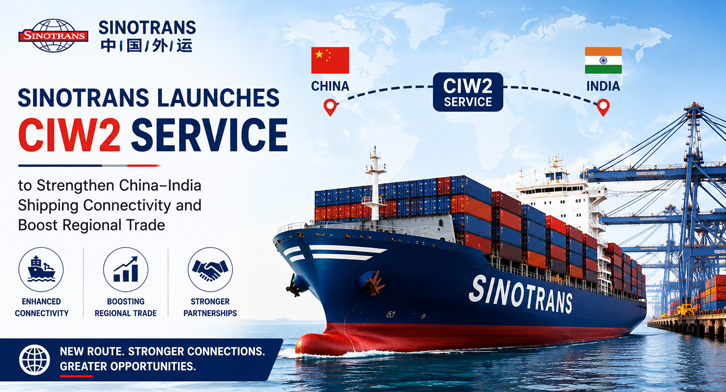
CWX2 Shipping Service by TS Lines Boosts Trade Between China and West India

Intra-Asia container carrier TS Lines has expanded its Indian Subcontinent network with the launch of the China-West India Express 2 (CWX2) service. The new weekly shipping route is designed to strengthen trade between China and West India by providing faster, more reliable, and efficient container transportation.
The CWX2 service directly connects major manufacturing hubs in Shanghai, Ningbo, and Shekou with key commercial ports on India’s west coast, helping businesses improve supply chain efficiency while reducing transit time and cargo handling.

Weekly Service Enhances Supply Chain Efficiency

The CWX2 service operates on a 42-day round-trip rotation, covering the following ports:
Shanghai → Ningbo → Shekou → Port Klang (West) → Nhava Sheva → Hazira → Mundra → Port Klang (West) → Shanghai
The direct shipping route is expected to facilitate the movement of:
By reducing transshipment requirements, the service offers greater schedule reliability and lower logistics costs for exporters and importers

Hazira Added to TS Lines' India Network

A major highlight of the CWX2 launch is TS Lines’ first scheduled call at Hazira Port.
With the addition of Hazira, the company now connects India’s three major western container gateways under a single service:
The expanded network improves access to key industrial and manufacturing hubs across Gujarat, Maharashtra, and northern India, enabling smoother cargo movement and stronger regional connectivity.

Supporting China–India Trade Growth

According to TS Lines, the new CWX2 service complements its existing Indian Subcontinent operations by increasing service frequency, improving routing flexibility, and strengthening network resilience.
The enhanced shipping connectivity is expected to support the growing logistics requirements of the China–India trade corridor, while promoting faster bilateral trade and more efficient supply chains.

Great Nicobar Island Deep Water Transshipment Port to Revamp Indo-Pacific Freight Logistics

The ambitious Great Nicobar Island development project is poised to become a transformative force in India’s maritime sector, positioning the Andaman and Nicobar Islands as a major logistics and transshipment hub in the Indo-Pacific region. The project is entering its implementation phase, with the International Container Transshipment Terminal (ICTT) emerging as its flagship component. The first phase of the terminal is targeted for completion within three years and is expected to handle around 6 million TEUs at an estimated investment of Rs. 20,000 crore. Located strategically near the Malacca Strait, one of the world’s busiest shipping corridors, Great Nicobar will reduce dependence on foreign ports for container transshipment.
Building the ICTT to an ultimate capacity of 21 million TEUs will fundamentally reshape trade patterns in the Indo-Pacific. Currently, a large share of India’s transshipment cargo is routed through international hubs like Colombo, Singapore, or Port Klang, adding extra time and costs for local exporters. By offering a world-class deep-water alternative right on the edge of the Malacca Strait, Great Nicobar allows mainline mega-vessels to drop cargo directly within Indian territory, speeding up transit times and significantly strengthening the country’s maritime security.
To support this massive container hub, the project includes a comprehensive multi-modal infrastructure grid. Plans feature a modern greenfield international airport alongside an extended runway at INS Baaz, allowing the island to handle large cargo aircraft and support integrated sea-air logistics. Additionally, partnering with Cochin Shipyard Ltd. to build advanced ship repair facilities ensures that international vessels can undergo full maintenance and refueling right at the terminal, creating a complete, self-sustaining maritime services ecosystem in the middle of major global trade lanes.

Key Highlights:

ONE Launches Integrated JTI Shipping Service to Streamline Asia Subcontinent Routes

Ocean Network Express (ONE) has introduced its new Japan-Thailand-Vietnam-Indian Subcontinent (JTI) service, offering shippers a faster and more reliable logistics solution across key Asian markets. The JTI service consolidates three existing services—TIP, JT1, and JV2—into a single comprehensive loop, providing customers with expanded port coverage, streamlined cargo flows, and improved schedule reliability. The service rotation includes major hubs such as Tokyo, Yokohama, Cai Mep, Laem Chabang, Singapore, Port Klang, Nhava Sheva, Pipavav, Karachi, and Colombo, creating a seamless connection across manufacturing and consumption hubs.
Consolidating three independent loops into the single JTI service represents a major upgrade in maritime logistics efficiency. Previously, managing separate routes required multiple vessel transfers, which increased the risk of container delays at transshipment hubs. By merging these routes into a unified service loop, ONE cuts out unnecessary port steps, simplifies documentation, and ensures a more predictable flow of cargo across East Asia, Southeast Asia, and the Indian Subcontinent.
The extensive port rotation links key industrial hubs directly to booming consumer markets. Providing a direct line between manufacturing gateways like Laem Chabang or Cai Mep and major Indian entry points like Nhava Sheva and Pipavav helps reduce transit times for critical electronics components and automotive parts. This reliable connectivity enables businesses to run lower inventory levels, confident that their supply chains are backed by a streamlined, highly predictable ocean transport loop.

Key Highlights:

cargonet-logo-icon
Cargonet Cargo Software Logo

Feedback & Reward program

Submit the Feedback and avail the Rewards.

1. Your satisfaction & reliability on CargoNet ?

2. Your Rating on Support & co-ordination team?

3. Satisfaction on the look and feel of CargoNet ?

4. Please specify any 2 best features that you feel more helpful in CargoNet?

5. Please specify any 2 best reports that you are taking on regular basis?

6. Are you using Copy Job option in CargoNet Software?

7. Are you using Automatic DSR (Daily Status Report) Option? It automatically sends reports to customer about the shipment status

8. Are you using Automatic Outstanding Reports option? Period Auto outstanding reminders to customer

9. Any other thoughts to improve in CargoNet? Please share.

* Join our Reward Program by recommending CargoNet (Cash Rewards Awaiting)

“Thanks for your feedback. Our goal is to create the best possible product, support & service, and your thoughts, ideas & suggestions play a major role in helping us identify opportunities to improve.”

Cut AI cost ,
not performance

discover how top Freight Forwarding companies  reduce AI-related expense and speed up operation with CargoNet AI, we will show it how
Share your information for instant access :

Get a Demo Now