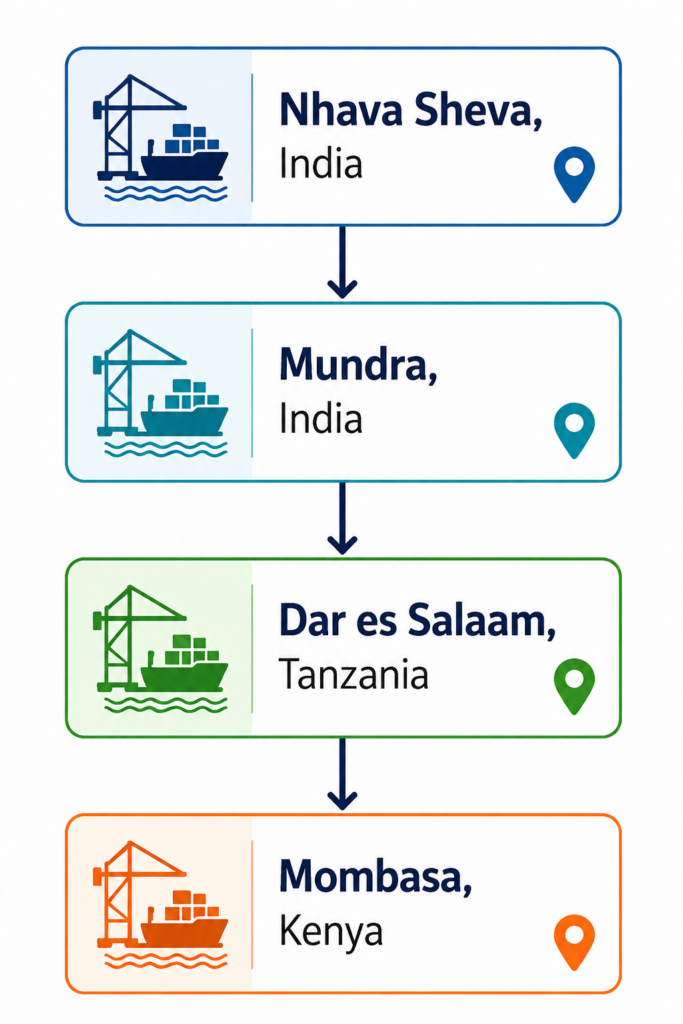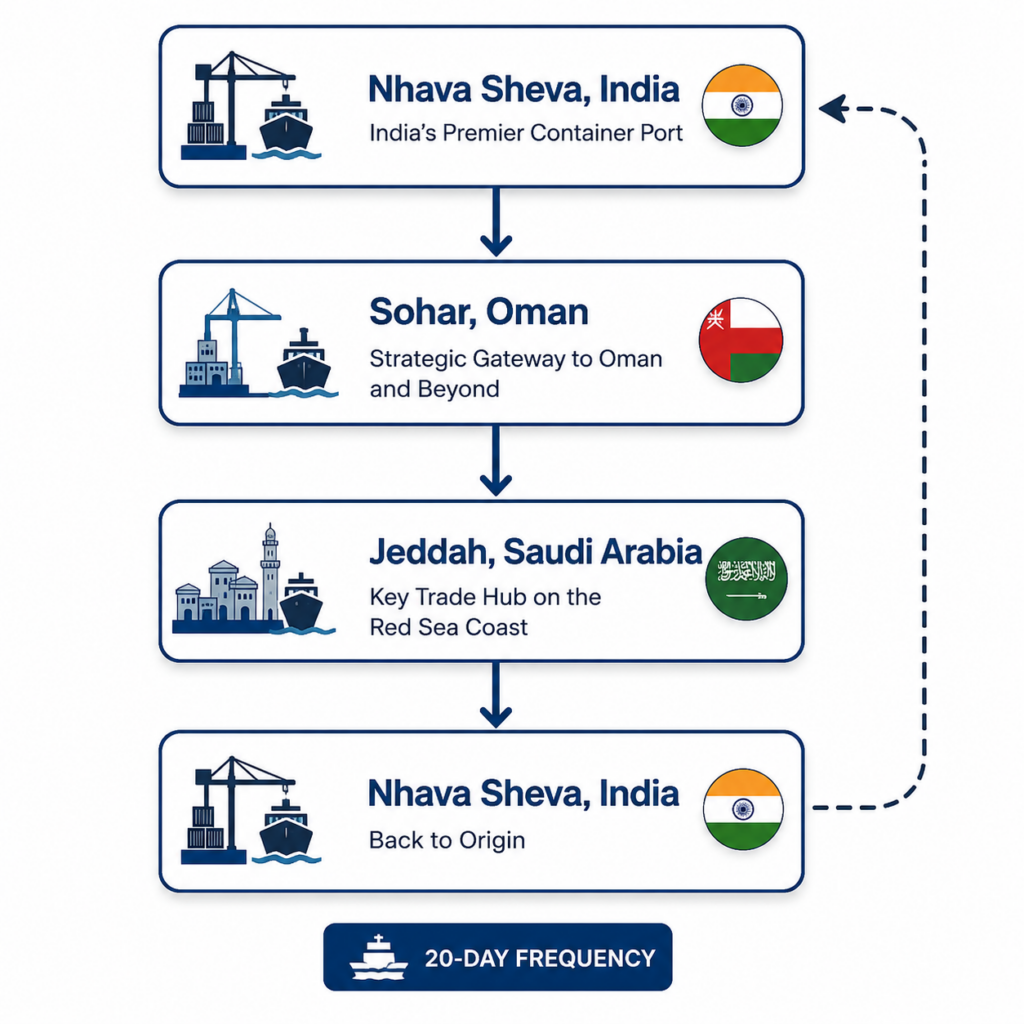

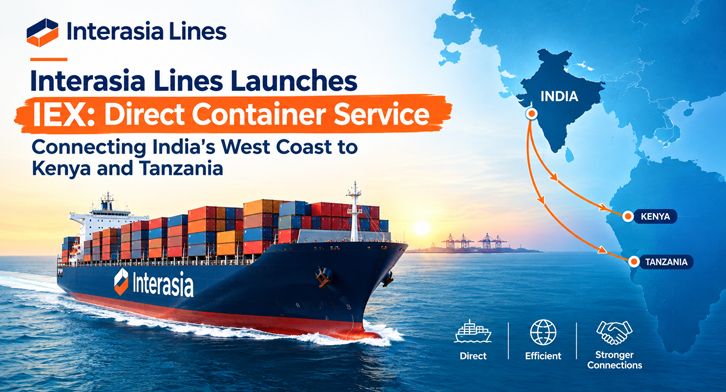
Interasia Lines is adding the India East Africa Express (IEX) to its network — a direct container service launching in September 2026 that will run on a 35-day round-trip rotation between India’s two largest west coast container gateways and the primary commercial ports of Tanzania and Kenya. The rotation: Nhava Sheva → Mundra → Dar es Salaam → Mombasa → back to Nhava Sheva.
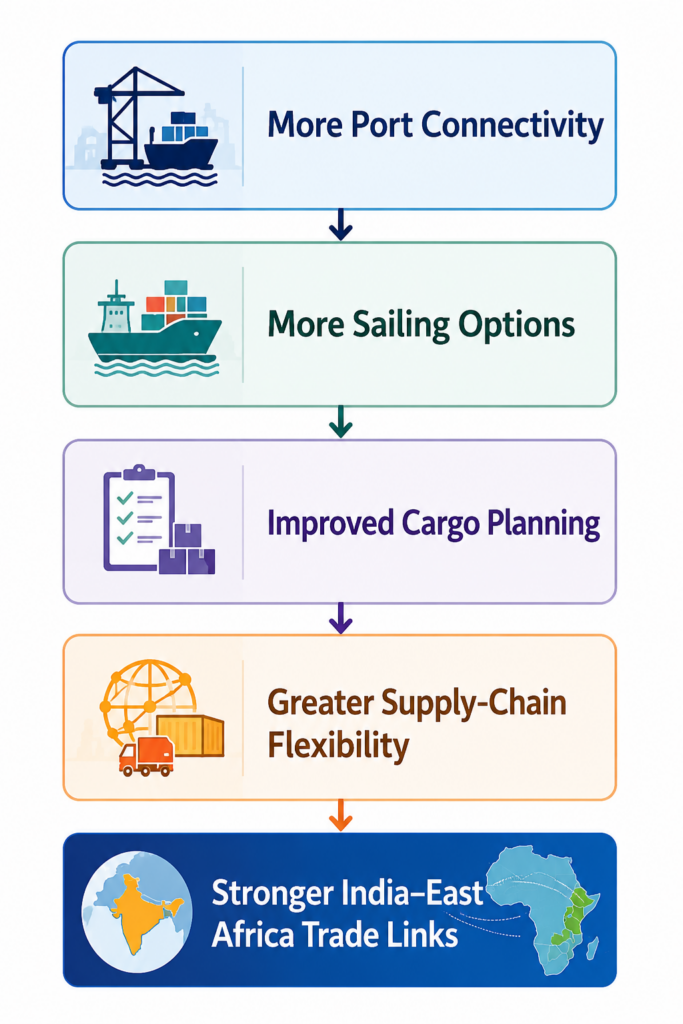
The significance of “direct” cannot be overstated on this lane. The bulk of India-to-East-Africa cargo currently moves via transhipment at Colombo, Salalah, or Jebel Ali — adding handling steps, port dwell, and transit days. IEX eliminates that intermediate leg, delivering a more predictable transit window and removing one potential point of delay for exporters shipping pharmaceuticals, textiles, rice, consumer goods, and engineering products to East African buyers.
Interasia Lines IEX — Service Specifications
Parameter
Detail
Service name
IEX — India East Africa Express
Launch date
September 2026
Rotation duration
35 days (round trip)
Port rotation
Nhava Sheva → Mundra → Dar es Salaam → Mombasa → Nhava Sheva
Countries served
India, Tanzania, Kenya
Key advantage
Direct — eliminates Colombo/Salalah/Jebel Ali transhipment
Competing carriers on lane
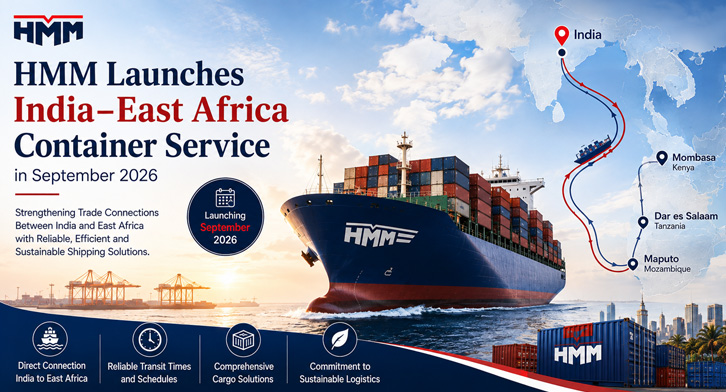
HMM, COSCO Shipping, Pacific International Lines
Primary cargo types (India→Africa)
Pharmaceuticals, textiles, rice, consumer goods, engineering
IEX joins a lane that multiple carriers are now entering simultaneously — reflecting genuine cargo demand growth rather than capacity speculation. For freight forwarders managing India-to-Kenya or India-to-Tanzania shipments, IEX provides an additional booking option that may support rate competition and improved departure frequency on a corridor that has historically been underserved by direct services.
Frequently Asked Questions
What is the Interasia Lines IEX India–East Africa shipping service?
IEX (India East Africa Express) is a new direct container service launched by Interasia Lines in September 2026. It operates a 35-day round-trip rotation: Nhava Sheva → Mundra → Dar es Salaam → Mombasa → Nhava Sheva. The service eliminates the need for transhipment at Colombo, Salalah, or Jebel Ali — which most India-to-East-Africa cargo currently requires — providing a more predictable and faster direct transit for pharma, textiles, rice, consumer goods, and engineering cargo.
Which shipping lines offer India to East Africa direct container services?
As of September 2026, direct India–East Africa container services are offered by Interasia Lines (IEX service, September 2026 launch), HMM, COSCO Shipping, and Pacific International Lines. Most other carriers route via Colombo, Salalah, or Jebel Ali transhipment. IEX’s 35-day round-trip from Nhava Sheva and Mundra is the newest direct option. Freight forwarders should compare departure frequency, transit time, and equipment availability across these carriers before booking.