Industrial and Logistics Hubs to Dominate India’s Warehousing Growth

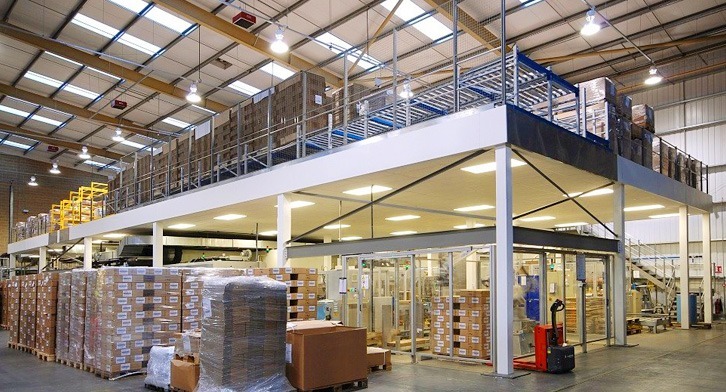
High-activity industrial clusters are expected to account for nearly 70–80% of India’s Grade A industrial and warehousing demand and supply in the coming years, according to a report by Colliers India. The report highlighted that Chennai leads the country with three major high-activity warehousing clusters, reflecting the city’s growing importance in India’s logistics and manufacturing ecosystem.
High-activity clusters are defined as micro markets that have recorded cumulative demand and supply exceeding 4 million sq ft since 2021. These hubs are emerging as the core drivers of India’s logistics expansion and industrial infrastructure growth.

Key Highlights

Infrastructure Driving Warehousing Growth

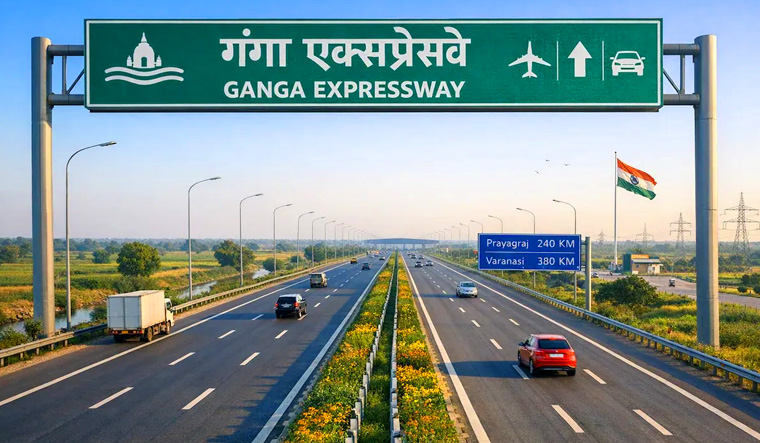
The report noted that infrastructure development remains a major growth driver for industrial and warehousing demand. Projects such as dedicated freight corridors, logistics parks, expressways and industrial corridors are strengthening connectivity and improving supply-chain efficiency across regions.
Key industrial hubs include:
Southern clusters such as Oragadam and NH16 in Chennai are witnessing strong demand due to seaport access and improved connectivity through the Bengaluru-Chennai Expressway.

Emerging Tier II Markets Gain Momentum

The report also highlighted growing opportunities in emerging Tier II markets including:
These cities are expected to become important supply-chain and distribution centres as e-commerce, manufacturing and export-oriented industries continue to expand across India.
Industry experts believe the rapid expansion of institutional-grade warehousing assets and integrated logistics infrastructure will further strengthen India’s position as a major logistics and manufacturing hub in the Asia-Pacific region.

Bharat Maritime Insurance Pool of USD 1.5 billion now operational

India is planning large multimodal logistics hubs to strengthen cargo connectivity, improve supply-chain efficiency and support growing domestic and international trade. The proposed projects will integrate road, rail, port and inland waterways infrastructure to enable faster and seamless cargo movement across the country.
The initiative has attracted strong interest from global container shipping lines and logistics operators, who view the projects as a major step toward enhancing India’s logistics competitiveness and transport efficiency.

Key Highlights

Officials stated that the logistics hubs will improve connectivity for manufacturing centres, industrial corridors and export businesses while supporting efficient freight transportation across regions. Industry experts believe the projects could position India as a leading regional logistics and manufacturing hub while encouraging greater private sector participation in warehousing, integrated transport and supply-chain infrastructure development.

Adani Ports Launches Weekly Rail Service from ICD Patli to Pipavav Port, Boosting Multimodal EXIM Connectivity

Adani Ports and Special Economic Zone Ltd (APSEZ) has launched a new weekly rail service connecting ICD Patli to Pipavav Port, further strengthening its multimodal logistics network and export–import (EXIM) supply chain capabilities.
The new service enhances direct rail connectivity between North India’s industrial clusters and a key western gateway port, offering exporters and importers a more predictable and efficient cargo movement option.

Strengthening North–West India Trade Links

Designed to simplify cargo planning, the weekly rail service provides end-to-end connectivity that helps reduce transit uncertainty and improve schedule reliability—two critical factors for EXIM customers operating in time-sensitive global supply chains.
With ICD Patli serving as a major inland logistics hub for the NCR and surrounding manufacturing regions, the dedicated rail link is expected to:

Part of a Broader Multimodal Strategy

APSEZ stated that the initiative aligns with its broader strategy of integrating ports, rail, and inland logistics infrastructure to create seamless and resilient supply chain ecosystems.
By combining port operations with rail connectivity and inland container depots, Adani Ports aims to deliver logistics solutions that balance speed, reliability, and scale, helping Indian businesses remain competitive in global trade lanes.

Key Highlights at a Glance

What This Means for EXIM Customers

The service is now operational and available to exporters and importers seeking streamlined, rail-led connectivity between northern manufacturing centres and Pipavav Port’s maritime network—especially beneficial for customers looking to optimise costs while maintaining delivery reliability.

How CargoNet Complements Multimodal Rail–Port Connectivity

As rail-linked port services expand, digital coordination becomes essential. Platforms like CargoNet help logistics providers and freight forwarders manage rail and sea movements, documentation, billing, and real-time cargo visibility on a single system—ensuring better planning, fewer delays, and tighter control across multimodal EXIM supply chains.

India’s Cold Chain Market Poised for Five-Fold Growth to $75 Billion by 2033

India’s cold chain industry—long considered the invisible backbone of food and pharmaceutical supply chains—is entering a decisive growth phase. As consumption patterns shift and demand for temperature-sensitive products surges, cold logistics is fast becoming one of India’s most critical infrastructure priorities.
According to a study by market intelligence platform Grand View Horizon, India’s cold chain market is expected to expand nearly five times, growing from around $13 billion today to $75 billion by 2033. The sector is projected to register close to 25% compound annual growth, driven by rising consumption of perishables, pharmaceuticals, vaccines, biologics, and e-grocery services.

From Behind-the-Scenes to Centre Stage

Despite its growing importance, India’s cold chain ecosystem has historically remained fragmented, capacity-led, and under-digitised. A report by Amicus Growth Advisors notes that increasing demand for dairy, fresh agricultural produce, meat, and high-value medicines is now colliding with outdated infrastructure and inconsistent service standards.
While billions of dollars are flowing into cold storage facilities, transport fleets, and warehousing, the report cautions that capacity expansion alone will not unlock sustainable value.
“The real opportunity lies in building integrated, end-to-end cold logistics platforms,” the report states, highlighting that technology-led, compliance-driven, and data-enabled operations will attract higher valuations and long-term capital.

Why Cold Chains Are Now Strategic Infrastructure

Sanjeev Jain, Managing Partner at Amicus Growth Advisors, describes cold chain logistics as the thin line between value creation and value erosion.
“India feeds more people than any other democracy, supplies vaccines globally, and produces one of the most diverse food baskets in the world. Yet, between the farm, factory, hospital, and home, value quietly melts away,” said Sanjeev Jain.
Jain stressed that cold chains are no longer just physical assets but economic enablers, directly influencing farmer incomes, food safety, export competitiveness, and pharmaceutical efficacy.

“For agriculture, cold chains prevent distress sales and improve price realisation. For dairy, they enable freshness at national scale. For pharmaceuticals and vaccines, they are the difference between regulatory compliance and catastrophic failure,” he added.

Consumption, Compliance, and Capital Are Reshaping the Sector

The report highlights that India’s consumption landscape is rapidly evolving:
At the same time, regulatory scrutiny is intensifying, customers are less tolerant of failures, and investors are becoming more selective—favouring operators who can deliver reliability, transparency, and end-to-end control.

Key Highlights

The Road Ahead

Covering the full cold chain spectrum—from temperature classifications and growth drivers to policy support such as Kisan Sampada subsidies and evolving regulatory frameworks—the report concludes that the next phase of growth will be defined by platform-led cold logistics models.
Those who secure reliability, leverage data-driven insights, and deliver consistent quality across the supply chain are set to define India’s emerging cold chain renaissance, supported by digital logistics platforms like CargoNet that enable end-to-end visibility, compliance, and intelligent cold chain control.

Sagarmala in Motion: 272 Road & Rail Projects Drive India’s Port-Led Development

India’s ambitious Sagarmala Programme continues to gain momentum with 272 critical road and rail connectivity projects underway, Minister of Ports, Shipping and Waterways Sarbananda Sonowal informed the Rajya Sabha on Tuesday.
These projects, spanning implementation by the Ministry of Road Transport and Highways, Ministry of Railways, major ports, and private sector players, form the backbone of India’s drive toward port-led infrastructure growth.

Project Progress Snapshot:

A National Sagarmala Apex Committee leads the charge on policy direction and inter-agency coordination. Parallelly, Maritime States Development Council (MSDC) meetings are fostering alignment across central and state bodies.

Investment & Mode of Execution:

This update reflects India’s commitment to modernizing its maritime logistics ecosystem through a combination of infrastructure development, policy reforms, and technology integration. Stay tuned for more insights as we track progress across the Sagarmala corridor.

Industrial & Warehousing Space Leasing Soars 63% in H1 2025 — Sets New Record: CBRE

India’s industrial and warehousing sector is on a tear — leasing activity hit an all-time high of 27.1 million sq. ft. in the first half of 2025, marking a 63% year-on-year surge, according to CBRE’s latest report. This explosive growth reflects the booming demand from 3PL providers and e-commerce giants, who are rapidly scaling operations to meet rising consumer expectations and enhance supply chain efficiency.

Key Highlights:

Insight: The logistics landscape in India is undergoing a structural transformation — with warehousing demand expanding both in scale and geography. For businesses, this is the time to rethink location strategies, adopt automation, and invest in scalable infrastructure.

Gujarat Nears Completion of Logistics Master Plans for 8 Key Cities

The Gujarat government is close to finalizing comprehensive logistics master plans for eight major cities and the entire state, a major step toward streamlining industrial transportation needs.
State Industries Minister Balvantsinh Rajput reviewed progress in a recent meeting held in Gandhinagar, where the Gujarat Infrastructure Development Board (GIDB) presented updates on ongoing infrastructure initiatives.

Key Highlights:

Minister Rajput urged officials to accelerate progress, especially in aligning these initiatives with the broader goal of lowering logistics costs and enhancing ease of doing business in Gujarat.
GIDB CEO P Swaroop also briefed on the development of Special Investment Regions (SIRs) and other strategic projects under the PM Gati Shakti National Master Plan.

India’s Industrial & Warehousing Demand Hits Record High in H1 2025

India’s industrial and warehousing sector witnessed unprecedented growth in the first half of 2025, with leasing activity touching 20 million sq ft — a 33% year-on-year increase, according to a new report by Colliers India.

The surge is being driven by strong demand across sectors like Third-Party Logistics (3PL), e-commerce, automobiles, and engineering, particularly in top metro cities.

Key Highlights:

(Each recorded over 2 million sq ft of demand)
The second quarter alone saw 11 million sq ft of leasing — the highest quarterly absorption in recent years, marking a 52% YoY growth.
“While 3PL players continue to lead, engineering, e-commerce, and automobile segments are steadily gaining share in Grade A warehousing demand,” — Vimal Nadar, National Director & Head of Research, Colliers India
“The growth trajectory looks solid. We expect robust performance in the upcoming quarters of 2025,” — Vijay Ganesh, MD, Industrial & Logistics Services, Colliers India

India Commits ₹5,000 Cr ($583M) to Boost Northeast Waterways

In a major push to enhance connectivity and logistics in the Northeast, the Government of India is investing ₹5,000 crore ($583.1 million) to develop inland water transport (IWT) infrastructure in the region. Union Minister for Ports, Shipping, and Waterways, Mr. Sarbananda Sonowal, announced the initiative, highlighting the Centre’s focused efforts to unlock the region’s trade potential and improve regional integration.

Over the past two years, the Ministry has already initiated projects worth ₹1,000 crore ($116.6 million), of which ₹300 crore ($35 million) worth of work has been completed. The remaining ₹700 crore ($81.6 million) is expected to be completed by 2025.

Key Highlights:

This renewed focus on inland waterways aligns with India’s broader push to modernize multi-modal transport, reduce logistics costs, and strengthen border trade with Bangladesh and Southeast Asia.

India Plans 200 Gati Shakti Cargo Terminals Along Rail Freight Corridors.

In a landmark move to bolster logistics and maritime infrastructure, the Indian government is planning 200 Gati Shakti Cargo Terminals to be developed along the country’s expanding Dedicated Freight Corridors (DFCs). This initiative is part of a broader multi-modal push under the PM Gati Shakti National Master Plan aimed at integrating transport networks, streamlining freight movement, and reducing logistics costs.
In parallel, India is strengthening its maritime ambitions through a strategic partnership with South Korea’s HD Hyundai. Earlier this month, HD Korea Shipbuilding & Offshore Engineering (HD KSOE) — the intermediate shipbuilding arm of HD Hyundai — signed a comprehensive Memorandum of Understanding (MoU) with Cochin Shipyard Limited (CSL), India’s largest state-owned shipbuilder.

Key Highlights from the MoU:

Why This Matters for the Logistics Sector:

cargonet-logo-icon
Cargonet Cargo Software Logo

Feedback & Reward program

Submit the Feedback and avail the Rewards.

1. Your satisfaction & reliability on CargoNet ?

2. Your Rating on Support & co-ordination team?

3. Satisfaction on the look and feel of CargoNet ?

4. Please specify any 2 best features that you feel more helpful in CargoNet?

5. Please specify any 2 best reports that you are taking on regular basis?

6. Are you using Copy Job option in CargoNet Software?

7. Are you using Automatic DSR (Daily Status Report) Option? It automatically sends reports to customer about the shipment status

8. Are you using Automatic Outstanding Reports option? Period Auto outstanding reminders to customer

9. Any other thoughts to improve in CargoNet? Please share.

* Join our Reward Program by recommending CargoNet (Cash Rewards Awaiting)

“Thanks for your feedback. Our goal is to create the best possible product, support & service, and your thoughts, ideas & suggestions play a major role in helping us identify opportunities to improve.”

Cut AI cost ,
not performance

discover how top Freight Forwarding companies  reduce AI-related expense and speed up operation with CargoNet AI, we will show it how
Share your information for instant access :

Get a Demo Now