

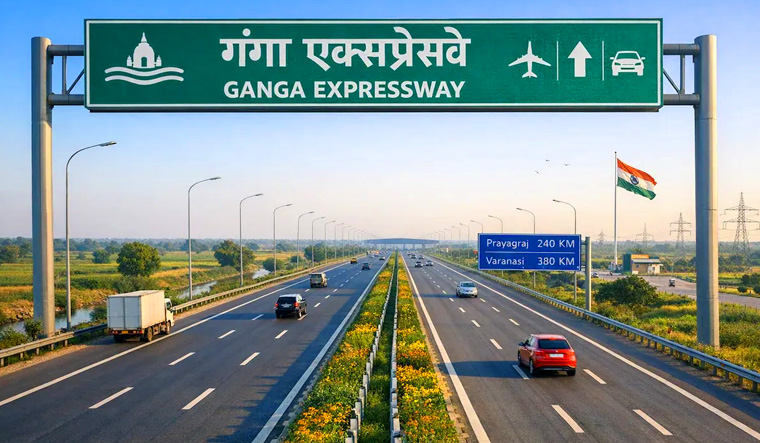
The newly operational 594-km Ganga Expressway is expected to significantly enhance logistics efficiency and industrial growth in Uttar Pradesh. According to state government estimates and industry experts, the expressway could generate between Rs. 25,000 crore and Rs. 30,000 crore in annual logistics and supply chain savings by reducing transit times, fuel consumption, vehicle operating costs, and transportation overheads.
The mega infrastructure project is poised to strengthen connectivity across the state while improving the movement of goods between manufacturing hubs, distribution centers, and export gateways.
Industrial Development Along the Corridor
To maximize the economic benefits of the expressway, the Uttar Pradesh government is developing 12 dedicated industrial nodes covering more than 6,500 acres along the corridor. These industrial clusters are expected to attract investments across manufacturing, logistics, warehousing, electronics, and allied sectors.
The corridor has already witnessed strong investor interest, with 987 investment proposals worth approximately Rs. 46,660 crore submitted for projects ranging from manufacturing facilities to logistics parks and distribution centers.
Boost to Manufacturing and Supply Chains
The improved connectivity offered by the Ganga Expressway is expected to reduce delivery times and enhance supply chain reliability for businesses operating in the region. Industries such as electronics, textiles, consumer goods, and food processing are likely to benefit from faster and more cost-efficient transportation networks.
The corridor is also expected to strengthen Uttar Pradesh’s position as a key manufacturing and logistics destination, supporting industrial expansion and job creation.
Faster Access to Air Cargo and Export Markets
A major advantage of the expressway is its improved connectivity to northern India’s air cargo hubs, which collectively handle more than 31% of the country’s total air freight traffic. This will enable faster movement of time-sensitive exports, including textiles, electronics, pharmaceuticals, and perishable agricultural products.
Enhanced road-to-air connectivity is expected to improve export competitiveness by reducing delivery timelines and ensuring more predictable logistics operations.
Driving Economic Growth and Investment
The Ganga Expressway is emerging as a strategic infrastructure asset that supports Uttar Pradesh’s broader industrialization and economic development goals. By improving freight mobility, attracting private investment, and enabling efficient supply chains, the corridor is expected to play a crucial role in boosting trade, manufacturing output, and regional economic growth.
Key Highlights:
- The 594-km Ganga Expressway is expected to generate Rs. 25,000–30,000 crore in annual logistics savings.
- Reduced transit times will lower fuel consumption and transportation costs.
- The Uttar Pradesh government is developing 12 industrial nodes across more than 6,500 acres.
- The corridor has attracted 987 investment proposals worth Rs. 46,660 crore.
- Key sectors include manufacturing, electronics, warehousing, and logistics.
- Improved connectivity will strengthen regional and national supply chains.
- The expressway provides better access to air cargo hubs handling over 31% of India's air freight.
- Export-oriented sectors such as textiles, electronics, and agriculture are expected to benefit significantly.
- The project is set to boost industrial growth, investment, and economic development across Uttar Pradesh.