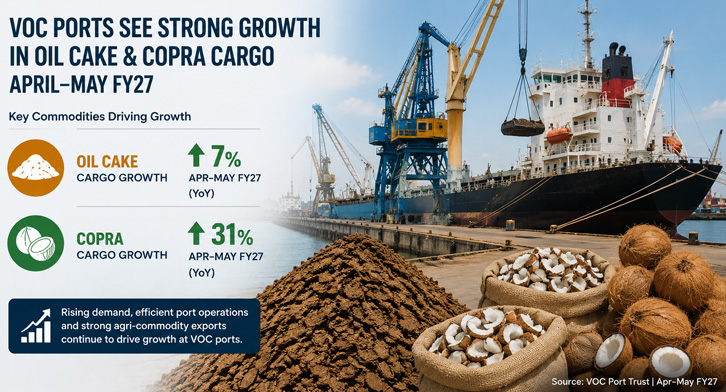
VOC Port Records 42.61% Surge in Oil Cake and Copra Cargo Handling During April-May FY27

V.O. Chidambaranar Port Authority (VOC Port) has reported a 42.61% year-on-year increase in Oil Cake and Copra cargo handling during the April-May period of FY 2026-27, marking a strong start to the financial year and reinforcing its position as one of India’s leading ports for agricultural and bulk cargo exports.
The significant rise in cargo volumes reflects increasing export demand for agricultural commodities, improved operational efficiency, and growing confidence among exporters, traders, and logistics stakeholders in the port’s infrastructure.
The performance also highlights VOC Port’s continued investment in modern cargo handling systems, faster vessel turnaround, and streamlined logistics processes that support India’s expanding maritime trade.

Key Highlights

Growth Reflects Strong Export Momentum

Oil Cake and Copra remain important agricultural export commodities, serving industries such as animal feed, edible oil processing, and agriculture across international markets. The sharp increase in cargo handled at VOC Port indicates healthy export activity and stronger trade movement during the opening months of FY27.
The growth also demonstrates the port’s ability to efficiently manage higher cargo volumes while maintaining smooth port operations and minimizing logistics bottlenecks.

Focus on Operational Excellence

V.O. Chidambaranar Port Authority continues to strengthen its cargo handling ecosystem through infrastructure upgrades, process optimization, and improved coordination with shipping lines, exporters, and logistics service providers.
These initiatives have enabled:
Such improvements are helping exporters reduce transit delays while enhancing the competitiveness of Indian agricultural products in global markets.

Supporting India's Maritime and Agricultural Economy

As India’s exports continue to expand, ports play a critical role in ensuring efficient cargo movement. VOC Port’s strong performance in handling Oil Cake and Copra cargo demonstrates its growing contribution to agricultural trade, supply chain resilience, and the country’s broader maritime logistics ecosystem.
The port authority reaffirmed its commitment to delivering seamless cargo operations, supporting exporters, and investing in modern logistics infrastructure to facilitate sustainable trade growth.

Why This Matters

The 42.61% growth in Oil Cake and Copra cargo handling highlights increasing export activity, stronger port efficiency, and rising confidence in VOC Port’s logistics capabilities. Continued investments in infrastructure and operational excellence are expected to further strengthen the port’s role in India’s agricultural export supply chain.

FAQs

How much did VOC Port's Oil Cake and Copra cargo handling grow?
VOC Port recorded a 42.61% year-on-year growth in Oil Cake and Copra cargo handling during April-May FY2026-27.
The increase was driven by higher agricultural export demand, improved cargo handling efficiency, enhanced logistics infrastructure, and greater confidence among exporters.
Oil Cake and Copra are key agricultural commodities used in animal feed, edible oil production, and other industrial applications, making them important export products for India.
Higher cargo volumes improve port utilization, strengthen supply chains, support exporters, and contribute to India’s growing maritime trade and agricultural exports.
V.O. Chidambaranar Port is one of India’s major ports, facilitating bulk cargo, container traffic, and agricultural exports while supporting efficient logistics and international trade.
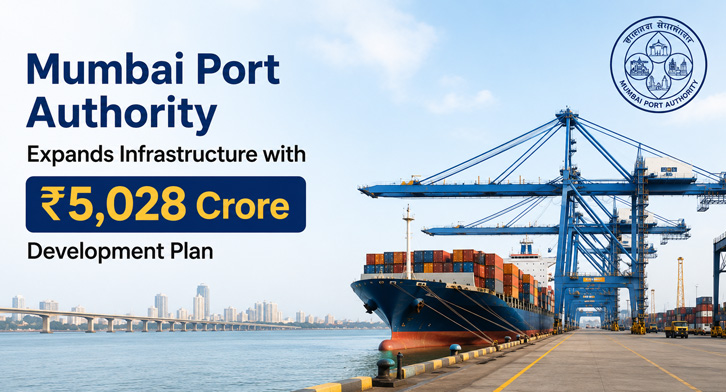
The Mumbai Port Authority Expands Infrastructure with ₹5,028 Crore Development Plan

The Mumbai Port Authority (MbPA) has announced an ambitious infrastructure development programme with an investment of ₹5,028.17 crore across 63 projects. The initiative is aimed at modernising port facilities, improving operational efficiency, and strengthening Mumbai Port’s position as a key gateway for India’s maritime trade.
The large-scale investment is expected to enhance cargo handling capacity, improve logistics performance, and support the growing demands of domestic and international trade.

Infrastructure Upgrades to Improve Port Efficiency

The development programme includes a wide range of projects focused on:
These initiatives are designed to streamline port operations, reduce turnaround times, and improve overall service quality.

Supporting India's Maritime Growth Strategy

The ₹5,028 crore investment aligns with India’s broader maritime infrastructure development goals and supports efforts to build world-class ports under the country’s long-term logistics and trade strategy.
By enhancing capacity and adopting technology-driven solutions, Mumbai Port aims to improve competitiveness, facilitate higher cargo volumes, and contribute to the growth of India’s blue economy.

Key Highlights:

India and Mauritius Expand Container Terminal Capacity to Strengthen Maritime Trade

India and Mauritius have partnered to expand container terminal capacity as part of a broader effort to strengthen maritime cooperation and improve regional trade connectivity. The collaboration focuses on developing modern port infrastructure, enhancing cargo handling capabilities, and creating more efficient logistics links between the two countries and global shipping markets.
The initiative is expected to reinforce supply chain resilience while supporting growing trade volumes across the Indian Ocean region.

Port Infrastructure Expansion to Boost Trade

The planned container terminal expansion will improve operational efficiency by increasing cargo handling capacity, accommodating higher vessel traffic, and enabling faster movement of goods.
The project is expected to:

Strengthening Regional Logistics and Supply Chains

As global shipping networks continue to evolve, India and Mauritius are investing in modern maritime infrastructure to improve logistics efficiency and build resilient supply chains.
The partnership is expected to strengthen India’s maritime presence in the Indian Ocean while creating new opportunities for regional trade, investment, and economic cooperation.

Supporting Long-Term Maritime Growth

The container terminal expansion reflects the shared commitment of India and Mauritius to developing world-class port infrastructure that supports sustainable trade growth. Improved port capabilities will help facilitate international commerce, enhance logistics performance, and contribute to long-term economic development.

Key Highlights:

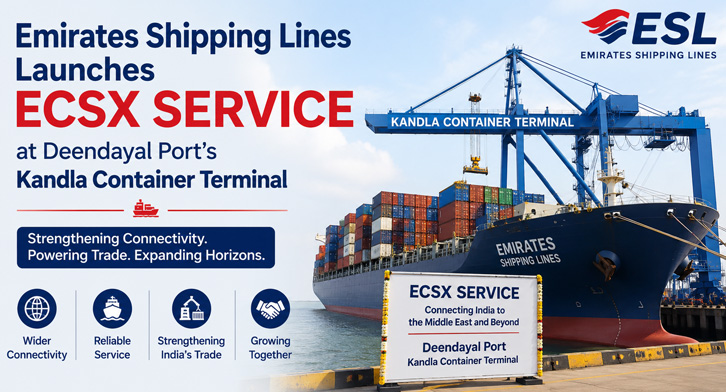
Emirates Shipping Lines Launches ECSX Service at Deendayal Port’s Kandla Container Terminal

Deendayal Port Authority (DPA) has welcomed the maiden call of MV ESL Shekou under Emirates Shipping Lines’ ECSX Service at the Kandla International Container Terminal (KICT) on June 18, 2026.
The inaugural vessel call marks an important milestone in enhancing container shipping connectivity and strengthening trade links between India and global markets. It also reflects the growing confidence of international shipping lines in Kandla Port as a key maritime gateway.

Strengthening Global Maritime Connectivity

The MV ESL Shekou, with a Gross Registered Tonnage (GRT) of 66,280 MT and a Length Overall (LOA) of 276 metres, is among the larger container vessels calling at Kandla.

Supporting India's Maritime Growth

The maiden ECSX service aligns with Deendayal Port Authority’s vision of “Connecting Global Trade and Driving Maritime Growth.” The new shipping service is expected to improve port competitiveness, attract additional international shipping services, and support India’s expanding maritime and logistics ecosystem.

Key Highlights:

Dhamra Port Deploys Next-Gen ZPMC Ship Loader to Accelerate Berth Productivity

Dhamra Port has strengthened its bulk cargo handling infrastructure with the arrival of a new ship loader supplied by Shanghai Zhenhua Heavy Industries Company (ZPMC). Operated by Adani Ports and Special Economic Zone, Dhamra Port has emerged as a key maritime gateway on India’s eastern coast, handling a diverse range of bulk, breakbulk, and containerized cargo. The newly delivered ship loader is expected to significantly enhance vessel loading operations by enabling faster and more efficient transfer of bulk commodities, helping to reduce turnaround times, optimize berth productivity, and support higher cargo throughput.
Adding the high-capacity ZPMC ship loader to Dhamra Port’s terminal marks a major boost for its bulk logistics infrastructure. In heavy commodity trade, vessel turnaround time is a key factor in overall efficiency; any loading delays can quickly lead to costly demurrage fees for shippers. This advanced machinery allows the port to transfer bulk materials onto vessels at a much faster rate, maximizing berth utilization and ensuring that large bulk carriers can be loaded, cleared, and sent on their routes on schedule.
This infrastructure upgrade provides immediate support to heavy industries throughout Eastern India, including mining, steel manufacturing, and power generation. By streamlining the handling of vital raw materials, the port enables these core industrial sectors to manage more efficient supply chains. The shift toward higher automation also ensures that the port can easily scale up to handle larger vessels and growing commodity volumes, reinforcing Dhamra’s position as a premier, high-speed maritime gateway on the east coast.

Key Highlights:

VOC Port Records Exponential 114% Traffic Growth in Renewable Windmill Cargo Handling

During the period of April–May in FY 2026-27, V.O. Chidambaranar Port handled significantly higher volumes of windmill blades, registering a massive growth of 113.95 percent compared to the corresponding period of FY 2025-26. The substantial increase reflects the growing momentum of India’s clean energy transition and the rising demand for wind power infrastructure across the country. Windmill blades are a critical component of renewable energy projects, and their efficient movement through ports is essential for timely project execution, positioning the port as a key gateway for clean energy ambitions.
The 114% spike in windmill blade volume highlights the port’s growing reputation as a premier hub for specialized project logistics. Moving oversized, fragile green energy components like windmill blades requires highly specialized equipment, precise crane handling, and extensive open storage space to prevent damage. The port’s strong performance in managing these complex shipments shows that its terminal teams and specialized storage yards can handle difficult, out-of-gauge (OOG) industrial cargo safely and efficiently.
This specialized logistics capability directly supports the timely rollout of large-scale renewable energy installations across India. By ensuring that imported and domestically manufactured wind components move through the terminal without hitches, VOC Port helps clean energy developers avoid costly construction delays. This proven reliability builds deep trust with international energy conglomerates, cementing the port’s role as a vital gateway for the region’s expanding green infrastructure network.

Key Highlights:

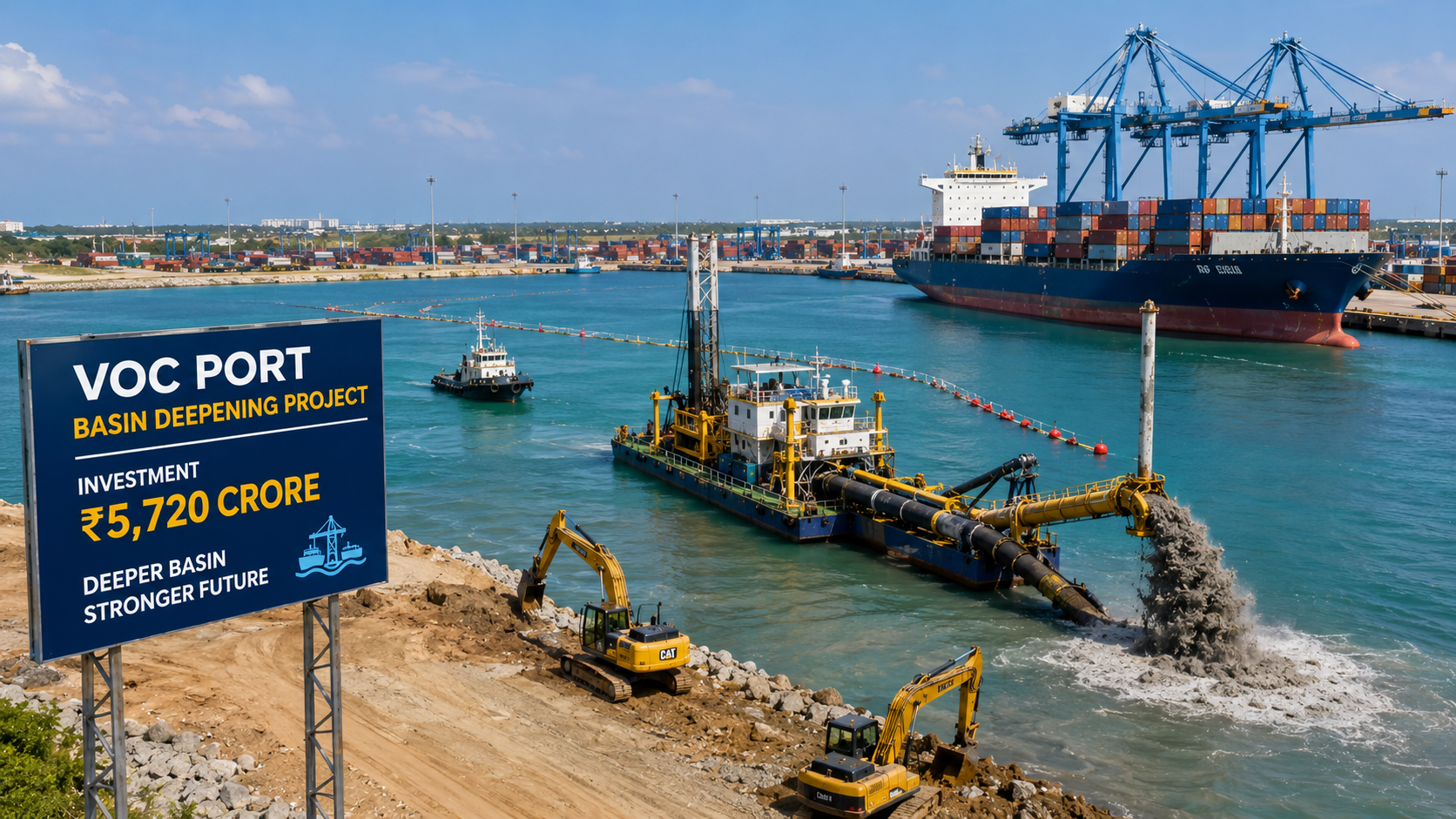
VOC Port Initiates ₹5,720-Crore Basin Deepening Project to Accommodate Evolving Mega Vessels

The V.O. Chidambaranar Port Authority in Thoothukudi is set to take up a Rs. 5,720-crore project to deepen its harbor basin and approach channel, a move aimed at enabling the port to handle larger container, bulk, and tanker vessels. The project will increase the port’s draught depth to 15.2 meters from the current 12.8 meters, extend the approach channel from 3.8 km to 10.04 km, modify the port entrance, and construct six new berths. Once completed, the enhanced depth will allow the port to handle fully laden Panamax vessels carrying up to 90,000 tonnes and very large container ships with capacities of up to 14,000 TEUs, preventing cargo diversion to nearby regional ports.
The ₹5,720-crore investment to deepen the harbor basin will bring major changes to freight logistics across South India. Currently, the port’s 12.8-meter draught prevents modern, deep-draft mainline vessels from docking fully loaded, forcing them to route cargo through intermediate ports. By deepening the basin to 15.2 meters and extending the navigation channel to 10.04 km, VOC Port will be fully equipped to handle massive 14,000 TEU container ships directly, cutting out extra handling steps and saving time for regional shippers.
This infrastructure upgrade will help lower overall shipping costs across the region. Allowing large mainline vessels to dock directly in Thoothukudi enables shipping lines to take advantage of economies of scale, reducing ocean freight rates per container. This increased efficiency positions VOC Port as a highly competitive maritime hub, allowing it to retain local cargo volumes and stand strong alongside neighboring deep-water hubs like Vizhinjam and Colombo.

Key Highlights:

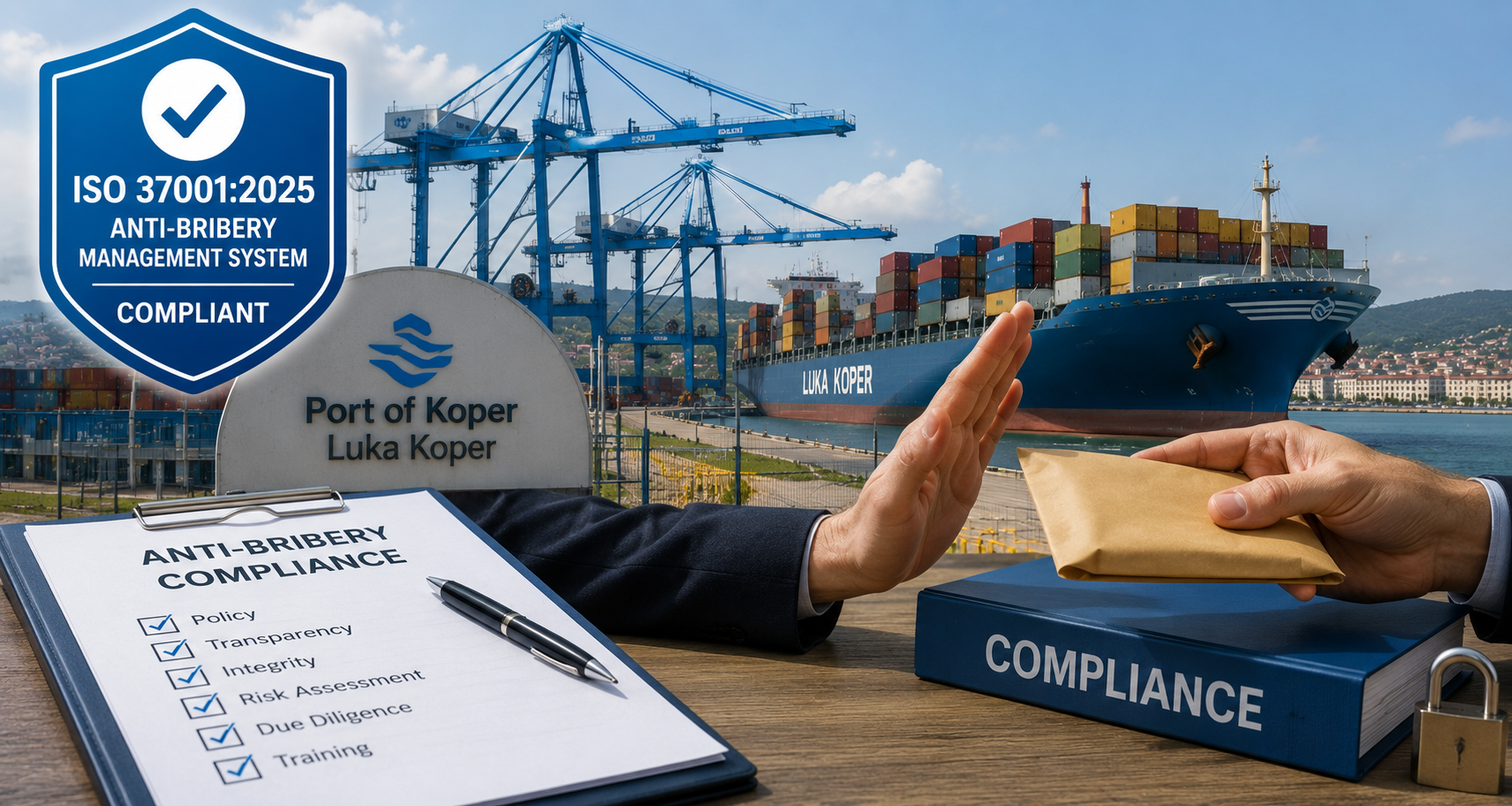
Port of Koper Implements ISO 37001:2025 Anti-Bribery Compliance Protocol

Luka Koper – Port of Koper in Slovenia has successfully completed its certification assessment and transitioned to the new ISO 37001:2025 anti-bribery standard, with zero non-conformities identified. For customers in the India market—where Port of Koper is represented by Samsara Group as a strategic business partner—this matters because it reflects a port ecosystem built on reliability, transparency, safety, and governance. The port’s integrated management system brings together multiple international standards, including ISO 9001 for quality, ISO 14001 for environmental management, ISO 45001 for safety, and AEO status for Customs security.
Upgrading to the new ISO 37001:2025 standard with zero non-conformities reinforces the port’s standing as a highly trusted gateway into Europe. In global shipping, regulatory compliance risks and hidden administrative delays can quickly drive up logistics costs. By embedding strict, audited anti-bribery protocols across all its operations, the Port of Koper ensures that customs clearance, vessel berthing, and cargo handling are executed transparently and predictably, giving international shippers complete peace of mind.
For Indian exporters, the close partnership between the port and the Samsara Group provides a direct, highly secure trade channel into Central and Eastern European markets. The port’s management framework combines quality, environmental safety, and Authorized Economic Operator (AEO) customs status into a single, seamless process. This high standard of operational governance means that container shipments moving along the India-Koper lane face fewer customs inspections and experience faster terminal turnaround times, keeping cross-border supply chains moving efficiently.

Key Highlights:

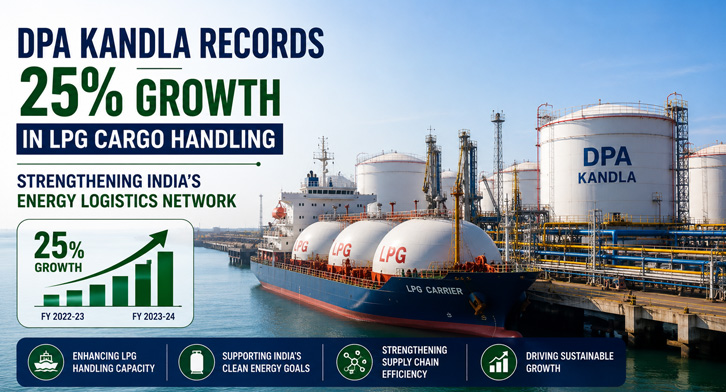
DPA Kandla Records 25% Growth in LPG Cargo Handling, Strengthening India’s Energy Logistics Network

The Deendayal Port Authority (DPA), Kandla has achieved a significant milestone in FY2025-26 by recording a 25% year-on-year growth in Liquefied Petroleum Gas (LPG) cargo handling, reinforcing its position as one of India’s leading energy logistics hubs. The strong performance highlights the port’s growing role in supporting the country’s energy security and maritime trade objectives.
During FY2025-26, DPA Kandla handled 133 LPG vessels and processed 2.61 million metric tonnes (MMT) of LPG cargo, reflecting increasing demand for energy imports and the port’s ability to efficiently manage high cargo volumes.

Strong Growth Reinforces Kandla's Strategic Importance

The impressive growth in LPG cargo traffic demonstrates the confidence of shipping lines, importers, and logistics stakeholders in Kandla’s modern infrastructure and operational capabilities. As one of India’s key ports for bulk and liquid cargo, DPA Kandla plays a vital role in ensuring the smooth import and distribution of LPG across the country.
The port’s strategic location and strong hinterland connectivity enable efficient transportation of energy products to major industrial and consumer markets.

Infrastructure Modernization Drives Operational Excellence

DPA Kandla has consistently invested in modernization initiatives, digital transformation, and infrastructure upgrades to improve cargo handling efficiency and service quality. These efforts have enhanced vessel turnaround times, streamlined operations, and strengthened the port’s capacity to handle increasing volumes of energy cargo.
The adoption of advanced technologies and customer-focused operational practices has further improved productivity and reliability across port operations.

Supporting India's Energy Security and Economic Growth

LPG remains a critical energy source for households, industries, and commercial establishments across India. By facilitating the efficient handling and distribution of LPG imports, DPA Kandla contributes directly to the country’s energy security objectives and supports sustained economic growth.
The achievement aligns with the Government of India’s broader vision under Maritime India Vision 2030, which aims to strengthen port infrastructure, improve logistics efficiency, and position India as a global maritime leader.

Continued Investments to Support Future Growth

DPA Kandla remains focused on expanding capacity, adopting new technologies, and enhancing customer service standards to meet future demand. Continued investments in infrastructure and operational improvements are expected to further strengthen the port’s role as a critical gateway for energy cargo and international trade.
With growing cargo volumes and expanding logistics capabilities, the port is well-positioned to support India’s evolving energy requirements and maritime growth ambitions.

Key Highlights:

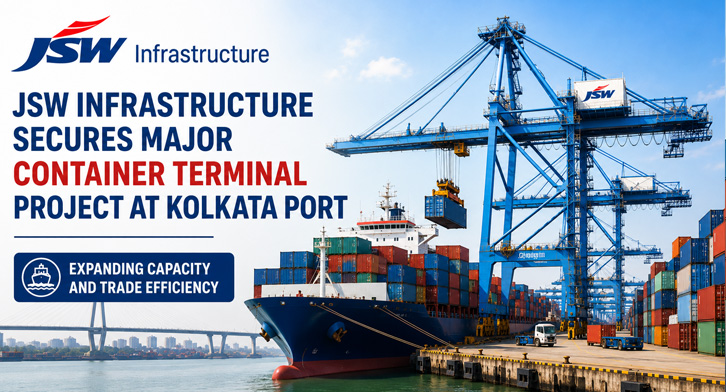
JSW Infrastructure Secures Major Container Terminal Project at Kolkata Port, Expanding Capacity and Trade Efficiency

JSW Infrastructure has secured a major container terminal development project at Kolkata Port’s Netaji Subhas Dock (NSD), strengthening its presence in India’s port and logistics sector. The company received a Letter of Award (LoA) through a competitive bidding process for the development of new container handling facilities under the Public-Private Partnership (PPP) model.
The project will be executed on a Design, Build, Finance, Operate and Transfer (DBFOT) basis and is expected to significantly enhance container handling capacity, improve operational efficiency, and support growing trade volumes through Eastern India.

New Terminal Project to Add Significant Container Handling Capacity

Under the 30-year concession agreement, the project will be developed in two phases and will include the modernization and development of multiple berths at Netaji Subhas Dock.
Upon completion, the new facility is expected to add approximately 0.93 million TEUs of container handling capacity, helping Kolkata Port accommodate increasing cargo traffic and support future trade growth.
The investment is aimed at creating modern port infrastructure capable of handling larger container volumes while improving overall terminal productivity.

Expansion Builds on Existing Port Modernization Projects

The latest award follows JSW Infrastructure’s earlier concession for the reconstruction of Berth 8 and mechanization of Berths 7 and 8 at NSD. That project is expected to add an additional 0.45 million TEUs of capacity, with interim operations scheduled to commence shortly.
Together, both projects will substantially strengthen container operations at Kolkata Dock System and improve the port’s ability to serve domestic and international trade requirements.

Kolkata Dock System Capacity to Reach 1.4 Million TEUs

With the completion of the newly awarded terminal and ongoing berth modernization works, JSW Infrastructure’s total container handling capacity at Kolkata Dock System is projected to increase to approximately 1.4 million TEUs.
The expanded capacity will help address existing infrastructure constraints, improve cargo flow efficiency, and support the increasing demand for containerized trade in Eastern India.
The project is also expected to strengthen Kolkata Port’s position as a key gateway for cargo moving to and from the eastern and northeastern regions of the country.

Modern Infrastructure to Improve Port Efficiency

The development will introduce advanced mechanized cargo handling systems designed to improve berth productivity and reduce vessel turnaround times. Enhanced operational efficiency will benefit shipping lines, exporters, importers, and logistics service providers by enabling faster cargo processing and reduced congestion.
Modernization efforts are expected to improve service reliability while supporting the port’s long-term growth strategy.

Supporting JSW Infrastructure's Container Growth Strategy

The Kolkata Port project forms part of JSW Infrastructure’s broader strategy to expand its footprint in the container business. Upon completion of all planned container expansion initiatives across its network, the company’s overall container handling capacity is expected to reach approximately 1.8 million TEUs.
The increased capacity will enable the company to handle larger volumes of third-party cargo while diversifying its cargo portfolio and strengthening its position in India’s maritime logistics sector.

Key Highlights:

cargonet-logo-icon
Cargonet Cargo Software Logo

Feedback & Reward program

Submit the Feedback and avail the Rewards.

1. Your satisfaction & reliability on CargoNet ?

2. Your Rating on Support & co-ordination team?

3. Satisfaction on the look and feel of CargoNet ?

4. Please specify any 2 best features that you feel more helpful in CargoNet?

5. Please specify any 2 best reports that you are taking on regular basis?

6. Are you using Copy Job option in CargoNet Software?

7. Are you using Automatic DSR (Daily Status Report) Option? It automatically sends reports to customer about the shipment status

8. Are you using Automatic Outstanding Reports option? Period Auto outstanding reminders to customer

9. Any other thoughts to improve in CargoNet? Please share.

* Join our Reward Program by recommending CargoNet (Cash Rewards Awaiting)

“Thanks for your feedback. Our goal is to create the best possible product, support & service, and your thoughts, ideas & suggestions play a major role in helping us identify opportunities to improve.”

Cut AI cost,
not performance

discover how top Freight Forwarding companies  reduce AI-related expense and speed up operation with CargoNet AI, we will show it how
Share your information for instant access :