Indian Railways Freight Growth Strengthens India’s Logistics and Supply Chain Network

Indian Railways continues to strengthen its position as the backbone of India’s freight transportation network, recording steady growth in cargo movement as industries increasingly shift towards rail-based logistics. Rising demand from sectors including coal, steel, cement, fertilizers, foodgrains, and containerized cargo highlights the railway network’s critical role in supporting India’s expanding economy and industrial output.
The consistent rise in freight volumes reflects growing confidence in rail transport as businesses seek more cost-effective, reliable, and environmentally sustainable logistics solutions. As India accelerates infrastructure development and manufacturing activity, rail freight is emerging as a preferred mode for moving bulk commodities and long-distance cargo.
A major driver behind this growth is the government’s continued investment in logistics infrastructure. The development of Dedicated Freight Corridors (DFCs), modernization of freight terminals, capacity expansion, and improved rail connectivity with ports, industrial corridors, and logistics parks have significantly enhanced operational efficiency while reducing transit times.
The integration of multimodal logistics infrastructure is also encouraging manufacturers, exporters, importers, and logistics companies to shift freight from road to rail. This modal shift is helping businesses lower transportation costs, improve supply chain reliability, reduce fuel consumption, and support India’s sustainability goals by lowering carbon emissions.
Indian Railways is simultaneously transforming its freight services through digitalization and customer-focused initiatives. Online freight booking, real-time shipment tracking, faster cargo handling, electronic documentation, and improved terminal operations are making rail logistics more efficient and accessible for businesses across multiple industries.
With India’s logistics sector undergoing rapid modernization, rail freight is expected to play an even larger role in improving supply chain resilience, reducing national logistics costs, and enhancing the country’s global trade competitiveness. Continued investments in rail infrastructure and technology are expected to support India’s vision of becoming a global manufacturing and export hub while increasing the share of rail in overall freight movement.

Key Highlights

Why This Matters

The continued expansion of Indian Railways’ freight operations is reshaping India’s logistics landscape. Efficient rail connectivity enables industries to move large cargo volumes at lower costs while reducing congestion on highways. The growing adoption of rail freight also aligns with India’s National Logistics Policy and PM Gati Shakti initiative aimed at building an integrated, multimodal transportation ecosystem.
As businesses prioritize supply chain resilience and sustainability, Indian Railways is expected to become an even more important logistics partner for domestic distribution and international trade.

FAQs

Why is Indian Railways freight traffic increasing?
Freight traffic is growing due to rising industrial production, expanding infrastructure projects, increased demand from manufacturing sectors, Dedicated Freight Corridors, and businesses shifting cargo from road to rail to reduce transportation costs.
The largest freight contributors include coal, steel, cement, fertilizers, foodgrains, automobiles, petroleum products, and containerized cargo.
Dedicated Freight Corridors increase rail capacity, reduce transit times, improve schedule reliability, lower operational costs, and enable faster movement of freight across major industrial corridors.
Rail transport offers lower transportation costs, higher fuel efficiency, reduced carbon emissions, improved reliability for long-distance cargo, and better integration with ports and logistics hubs.
Rail freight strengthens manufacturing, reduces logistics costs, improves export competitiveness, enhances supply chain efficiency, supports infrastructure development, and contributes to sustainable economic growth.

DP World Expands Coastal Shipping Network with India-Flagged Container Vessel ‘DP World Indus’

DP World has strengthened its commitment to India’s maritime and logistics sector with the acquisition of DP World Indus, an India-flagged container vessel that will enhance the company’s coastal shipping network and support the country’s multimodal logistics ambitions.
The addition of DP World Indus is expected to improve container transportation between major Indian ports by offering a more reliable, cost-effective, and environmentally sustainable alternative to long-distance road freight. The move aligns with India’s growing focus on shifting cargo from highways to coastal shipping, helping reduce road congestion, lower logistics costs, strengthen supply chain resilience, and cut carbon emissions.

DP World Strengthens India's Coastal Shipping Network

DP World currently operates one of India’s largest dedicated coastal container shipping networks, connecting 14 major ports through a fleet of 10 vessels. The company handled more than 473,000 TEUs in 2025, reflecting the rapid growth of coastal shipping as businesses increasingly adopt multimodal logistics solutions.
The newly inducted DP World Indus also completed its maiden voyage with a call at DP World’s Jeddah South Container Terminal, demonstrating the company’s strategy of integrating port operations with marine services to improve regional and international trade connectivity.

Coastal Shipping to Support India's Logistics Transformation

According to Ganesh Raj, Global Chief Operating Officer, Marine Services, DP World, India’s coastal shipping sector has enormous potential to transform domestic logistics while supporting sustainable economic growth.
He said the addition of the India-flagged vessel reinforces DP World’s commitment to expanding domestic maritime connectivity and delivering reliable shipping services that connect manufacturing hubs, industrial clusters, exporters, importers, and consumer markets across India.
Industry experts believe coastal shipping will play a critical role in India’s multimodal logistics strategy by offering:

Strategic Investment in India's Maritime Infrastructure

The acquisition forms part of DP World’s broader investment strategy in India, where the company continues expanding across:
Earlier this year, DP World also released its report, “Enhancing India’s Ship Registry: Pathways to Global Competitiveness,” outlining reforms aimed at making India’s ship registry globally competitive.
The report recommends improvements in:
These recommendations support India’s Maritime Vision 2030, which aims to position the country as a leading global maritime hub.

DP World Partners with Sagarmala Finance Corporation

Further reinforcing its coastal shipping ambitions, DP World’s Shipping Solutions signed a Memorandum of Understanding (MoU) with Sagarmala Finance Corporation Limited (SMFC) under the Ministry of Ports, Shipping and Waterways.
The partnership focuses on expanding sustainable coastal and short-sea shipping services, accelerating India’s transition toward greener, more efficient freight transportation.

Why This Matters

India is actively working to reduce logistics costs from nearly 13–14% of GDP to global benchmarks through multimodal transportation. Expanding coastal shipping capacity with India-flagged vessels such as DP World Indus supports this objective by moving more containerized cargo via sea instead of highways. This not only improves supply chain efficiency but also advances India’s sustainability goals through lower emissions and greener freight transport.

FAQs

What is DP World Indus?
DP World Indus is an India-flagged container vessel acquired by DP World to expand its coastal shipping network and improve container transportation between major Indian ports.
DP World’s dedicated coastal shipping network connects 14 Indian ports using a fleet of 10 container vessels.
Coastal shipping reduces logistics costs, lowers carbon emissions, eases highway congestion, improves supply chain resilience, and supports India’s multimodal logistics strategy.
DP World handled more than 473,000 TEUs through its coastal shipping services during 2025.
The vessel strengthens domestic maritime connectivity, promotes sustainable freight movement, and supports India’s ambition to become a global maritime and logistics hub under Maritime Vision 2030.

CU Lines Launches New KCI Weekly Service Connecting Korea, China, India and Pakistan

CU Lines is set to strengthen trade connectivity between Northeast Asia and the Indian Subcontinent with the launch of its new KCI (Korea–China–India) Weekly Service. The service will provide direct shipping links between major ports in South Korea, China, Malaysia, India, and Pakistan, offering exporters and importers faster, more reliable container transportation.
The maiden voyage of the new service is scheduled to depart from Busan, South Korea, on July 16, 2026. By introducing this dedicated route, CU Lines aims to improve cargo movement, reduce transit complexities, and expand its presence across one of the world’s fastest-growing trade corridors.
The KCI service will directly connect India’s two key container gateways—Nhava Sheva (JNPA) and Mundra Port—with leading manufacturing and export hubs across Northeast Asia.

KCI Weekly Service Port Rotation

The weekly service will follow this port rotation:
Busan → Gwangyang → Shanghai → Ningbo → Shekou → Port Klang → Nhava Sheva → Mundra → Karachi → Port Klang → Busan
This network creates a seamless shipping corridor linking manufacturers in Korea and China with importers and exporters across India and Pakistan.

Improved Connectivity to Middle East and Mediterranean Markets

Beyond direct port calls, the KCI service also enables customers to access CU Lines’ wider global liner network. Through transshipment at Port Klang, cargo can efficiently connect to destinations across:
The expanded connectivity offers greater flexibility for businesses moving cargo between Asia and emerging global markets.

CU Lines Deploys 6,700 TEU Vessel

CU Lines will participate in the service as one of the joint venture partners by deploying the 6,700 TEU container vessel MV RACINE on the KCI loop.
The deployment is expected to provide consistent weekly sailings while supporting growing container volumes between Northeast Asia and the Indian Subcontinent.

Why This Service Matters

The launch comes amid rising trade volumes between India, China, and South Korea, with increasing demand for reliable shipping capacity and diversified supply chains.
Direct services such as KCI are expected to:

Key Highlights

FAQs

What is the CU Lines KCI Service?
The KCI Service is a new weekly container shipping route launched by CU Lines connecting South Korea, China, Malaysia, India, and Pakistan through direct port calls.
The inaugural sailing is scheduled to depart from Busan on July 16, 2026.
The service will directly call at Nhava Sheva (JNPA) and Mundra Port, two of India’s largest container gateways.
CU Lines will deploy the 6,700 TEU MV RACINE as part of the KCI weekly service.
The service improves transit reliability, expands direct connectivity between Northeast Asia and India, and provides onward access to the Middle East, Red Sea, and East Mediterranean through Port Klang.

India’s Merchandise Exports Jump 15% in Q1 FY27, Government Targets Historic US$1 Trillion Exports

India has begun FY2026-27 with strong export momentum, recording more than 15% year-on-year growth in merchandise exports during the April-June quarter. Services exports also maintained steady performance, increasing by 11%, reinforcing India’s position as one of the world’s fastest-growing export economies.
Speaking at the Board of Trade meeting, Commerce and Industry Minister Piyush Goyal outlined the government’s ambitious roadmap to achieve US$1 trillion in total exports during the current financial year.
The government has set an export target of US$530 billion in merchandise exports and US$470 billion in services exports. Achieving these milestones would require annual growth of approximately 17% for goods exports and 11% for services exports, reflecting India’s expanding manufacturing capabilities, digital services strength, and growing global trade partnerships.
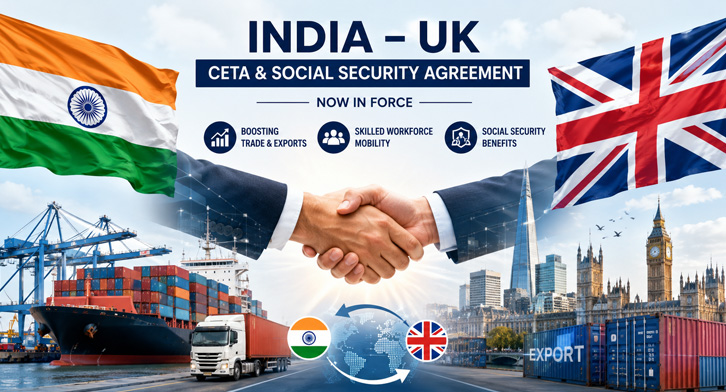
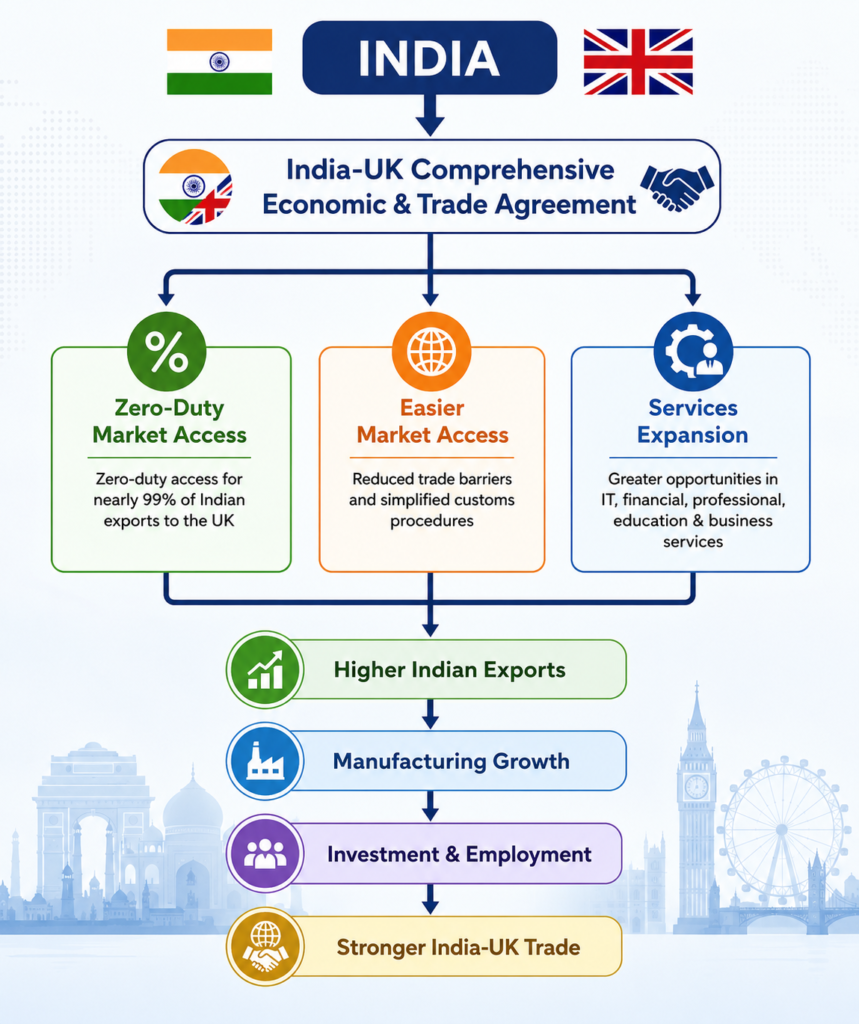
A major boost to India’s export outlook will come from the India–UK Comprehensive Economic and Trade Agreement (CETA), which is scheduled to come into force on July 15, 2026. Under the agreement, 99% of Indian exports to the UK will receive duty-free market access, significantly improving the competitiveness of Indian products across multiple sectors.
To strengthen export competitiveness nationwide, the government is accelerating its Districts as Export Hubs initiative. As part of this effort, around 1,000 export professionals will be deployed across the country to help local businesses identify international markets, build global brands, improve product quality, establish warehousing infrastructure, and access testing laboratories through the newly launched Export Promotion Mission.

Key Highlights

Why This Matters for the Logistics Industry

The government’s trillion-dollar export target is expected to significantly increase demand across India’s logistics ecosystem. Higher export volumes will drive growth in container shipping, multimodal transportation, freight forwarding, customs clearance, warehousing, cold chain logistics, and port infrastructure. Export-oriented manufacturing clusters and district-level export hubs are also expected to generate new opportunities for logistics service providers and supply chain technology companies.

FAQs

How much did India's merchandise exports grow in Q1 FY2026-27?
India’s merchandise exports grew by more than 15% year-on-year during the April-June quarter of FY2026-27.
The government aims to achieve US$530 billion in merchandise exports and US$470 billion in services exports, taking total exports to US$1 trillion.
The India-UK Comprehensive Economic and Trade Agreement (CETA) is scheduled to come into effect on July 15, 2026.
The initiative will help exporters with global branding, market access, warehousing, testing laboratories, quality certification, and export guidance, especially for MSMEs and district-based industries.

India Emerges as a Reliable Global Supplier of Green Fuels Amid Growing Hydrogen Exports

India Strengthens Position in the Global Green Hydrogen Supply Chain

India is rapidly establishing itself as a dependable global supplier of green hydrogen, green ammonia, and other low-carbon fuels, supported by its expanding renewable energy capacity and competitive production ecosystem. As international demand for clean energy solutions accelerates, Indian companies are securing long-term export agreements that position the country as a key contributor to the global energy transition.
Speaking at the India-Japan Energy Partnership Forum, Renewable Energy Secretary Santosh Kumar Sarangi said India’s green hydrogen industry is steadily moving toward commercial maturity, enabling the country to become an important participant in global green fuel supply chains.
The government believes India’s abundant renewable energy resources, improving production economics, and policy support under the National Green Hydrogen Mission are creating strong opportunities for exports while helping industries worldwide reduce carbon emissions.
One of the major developments highlighted during the forum is the growing collaboration between India and Japan in clean energy. ACME Group has signed long-term agreements to supply green ammonia and green methanol to Japanese customers, reflecting increasing international confidence in India’s ability to deliver sustainable fuels at competitive prices.
Industry experts believe these partnerships will strengthen cross-border green fuel logistics, attract foreign investment, encourage technology collaboration, and improve global energy security. With demand for low-carbon fuels expected to grow significantly over the coming decade, India is well positioned to become one of the world’s leading exporters of green hydrogen derivatives.
The country’s expanding green energy ecosystem is expected to play a vital role in supporting industrial decarbonization across sectors including shipping, chemicals, steel, fertilizers, and heavy manufacturing, while creating new opportunities for international trade and clean energy investments.

Key Highlights

Quick Facts

Topic

Details

Industry

Green Hydrogen

Category

Renewable Energy

Countries

India, Japan

Key Products

Green Hydrogen, Green Ammonia, Green Methanol

Growth Driver

Renewable Energy & Hydrogen Exports

Impact

Global Energy Transition & Decarbonization

FAQs

Why is India becoming a major green hydrogen supplier?
India offers abundant renewable energy resources, competitive production costs, supportive government policies, and rapidly expanding green hydrogen infrastructure. These advantages make the country an attractive supplier of clean fuels for global markets.
Japan is seeking reliable suppliers of low-carbon fuels to achieve its carbon neutrality goals. Indian companies are providing long-term supplies of green ammonia and green methanol to support Japan’s energy transition.
Green hydrogen can significantly reduce carbon emissions in industries such as shipping, steel, chemicals, fertilizers, power generation, and heavy manufacturing while improving long-term energy security.

India’s ₹7,000 Crore Warehouse Storage Solutions Market Accelerates as E-commerce, Manufacturing and Automation Fuel Demand

India’s warehousing revolution is creating significant opportunities for the country’s storage solutions industry, which is now valued at approximately ₹7,000 crore (Rs.70 billion). Driven by rapid growth in e-commerce, quick commerce, manufacturing, organized retail, and third-party logistics (3PL), businesses are investing heavily in advanced warehouse infrastructure to improve efficiency, optimize storage capacity, and support faster deliveries.

As India’s supply chains become increasingly sophisticated, warehouse operators are shifting away from traditional storage methods toward high-density, technology-driven facilities that maximize vertical space while reducing operational costs.

Key Highlights

Warehouse Automation Becomes the New Growth Engine

India’s logistics sector is undergoing a major transformation as companies seek faster, smarter, and more cost-effective warehouse operations.
Instead of constructing larger warehouses, developers are increasingly building taller, high-density storage facilities equipped with automated systems that significantly improve inventory management and warehouse productivity.
Modern warehouses now feature:
These technologies enable businesses to:
The trend is particularly important as same-day and next-day deliveries become the industry standard.

Godrej Enterprises Expands Manufacturing Capacity

Among the biggest beneficiaries of India’s warehouse expansion is Godrej Enterprises Group’s Storage Solutions business.
The company operates one of Asia’s largest and most advanced storage systems manufacturing facilities at Ambattur, Chennai, spread across 26 acres.
The plant manufactures industrial storage solutions for:
As the Ambattur facility completes 25 years of operations, Godrej is planning its next phase of expansion around Chennai to meet growing domestic demand from logistics, manufacturing, and industrial customers.

E-commerce and Manufacturing Drive Warehouse Investments

Industry experts say warehouse infrastructure spending is accelerating due to sustained growth in:
Businesses are increasingly investing in automation to improve supply chain resilience while reducing inventory costs and improving customer service levels.

Storage Equipment Manufacturers See Strong Demand

Apart from Godrej Enterprises Group, several leading manufacturers are witnessing increased demand for industrial storage solutions.
Key companies benefiting from the trend include:
These firms supply warehouse infrastructure and storage equipment across multiple sectors including manufacturing, retail, pharmaceuticals, automotive, engineering, and consumer goods.

India's Grade A Warehousing Market Continues to Expand

India’s logistics modernization is encouraging significant investments in Grade A warehouses, where advanced storage technologies are becoming standard infrastructure rather than optional upgrades.
As inventory volumes continue to grow and delivery timelines become shorter, warehouse operators are expected to increase investments in:
Industry analysts believe these investments will play a crucial role in improving productivity, maximizing warehouse space utilization, and supporting India’s rapidly expanding manufacturing and distribution ecosystem.

Why This Matters

The growth of India’s storage solutions industry reflects the broader modernization of the country’s logistics sector. Efficient warehouses have become critical for maintaining competitive supply chains, enabling businesses to reduce costs, improve inventory visibility, and meet rising consumer expectations for faster deliveries.
With government support for manufacturing, expanding industrial corridors, and sustained growth in e-commerce, demand for intelligent warehouse infrastructure is expected to remain strong over the coming years.

FAQs

What is the size of India's storage solutions industry?
India’s storage solutions industry is currently valued at approximately ₹7,000 crore (Rs.70 billion) and continues to grow alongside the country’s expanding warehousing sector.
Growth is primarily driven by e-commerce, quick commerce, manufacturing, organized retail, third-party logistics (3PL), and increasing investments in Grade A warehouses.
Modern warehouses are deploying Automated Storage and Retrieval Systems (ASRS), high-rise pallet racking, Warehouse Management Systems (WMS), robotics, conveyors, mezzanine flooring, and AI-enabled automation to improve operational efficiency.
Major players include Godrej Enterprises Group, Nilkamal, and Spanco Storage Systems, supplying industrial storage infrastructure across multiple sectors.
Vertical warehouses maximize storage capacity without increasing land requirements, helping businesses reduce costs while improving inventory management and operational efficiency.

Pipavav Port Launches Maersk FI2 Weekly Service, Strengthens India–Far East Trade Connectivity

The Port of Pipavav has marked another milestone in India’s maritime logistics sector with the maiden call of MV Maersk Cotonou, officially inaugurating A.P. Moller–Maersk’s FI2 weekly shipping service. The new service is expected to significantly improve direct maritime connectivity between India, China, and Southeast Asia while enhancing cargo movement for exporters and importers across North India.
The launch reinforces Pipavav Port’s growing role as one of India’s leading container gateways and highlights increasing confidence among global shipping lines in the port’s infrastructure and operational efficiency.

Maersk FI2 Weekly Service to Improve India–Far East Trade

The newly introduced FI2 weekly service establishes a dedicated shipping connection between Pipavav Port, China, and major Southeast Asian markets. Regular weekly sailings will provide businesses with greater schedule reliability, faster cargo movement, and improved supply chain predictability.
With direct connectivity to major manufacturing hubs across Asia, exporters and importers can expect reduced transit times and more dependable shipping schedules.

Dedicated Freight Corridor Boosts Inland Connectivity

One of the key advantages of the FI2 service is its seamless integration with India’s Dedicated Freight Corridor (DFC).
The combination of efficient port operations and high-capacity rail connectivity enables faster movement of containers from the port to inland logistics hubs across North India.
Industries handling time-sensitive cargo—including automotive, chemicals, retail, electronics, and technology—are expected to benefit from shorter delivery cycles and improved logistics efficiency.

Strengthening Pipavav's Position as a Strategic Container Gateway

The launch of the FI2 service further strengthens Pipavav Port’s position as a strategic gateway for India’s Far East trade.
The addition of another dedicated Maersk service reflects growing confidence in the port’s modern infrastructure, operational capabilities, and ability to support increasing international trade volumes.
As India’s manufacturing and export sectors continue to expand, enhanced shipping connectivity will play a crucial role in improving supply chain resilience and supporting economic growth.

Maiden Call Celebrated Onboard MV Maersk Cotonou

To commemorate the inaugural voyage, Port of Pipavav organized a welcome ceremony onboard MV Maersk Cotonou.
The event was attended by:
The ceremony marked another milestone in the long-standing partnership between Pipavav Port and Maersk.

Key Highlights

Why This Matters

The launch of Maersk’s FI2 weekly service is expected to improve India’s international logistics network by providing faster, more reliable shipping connections between India and key Asian manufacturing hubs. Better port connectivity combined with Dedicated Freight Corridor access will help businesses reduce logistics costs, improve inventory planning, and strengthen global supply chains.

FAQs

What is the Maersk FI2 service?
The FI2 service is Maersk’s weekly container shipping service connecting Pipavav Port with China and Southeast Asia through regular scheduled sailings.
Exporters and importers will benefit from improved shipping frequency, reliable schedules, faster transit times, and better rail connectivity to inland destinations.
Pipavav Port is one of India’s major container ports offering modern infrastructure, efficient cargo handling, and seamless rail connectivity through the Dedicated Freight Corridor.
Industries such as automotive, chemicals, electronics, retail, technology, and manufacturing are expected to gain from faster and more predictable logistics services.

India’s Coffee Exports Surge 28% in Q1 2026 as Global Demand Strengthens

India’s coffee export industry has started 2026 on a strong note, with export volumes rising 28% year-on-year during the first quarter (Q1 2026). Export value also increased by 12%, reflecting sustained international demand for Indian coffee despite fluctuations in global commodity prices.

The strong performance highlights India’s growing reputation as a reliable supplier of premium-quality coffee while creating fresh opportunities for exporters, logistics providers, container shipping companies, and supply chain operators.

The strong performance highlights India’s growing reputation as a reliable supplier of premium-quality coffee while creating fresh opportunities for exporters, logistics providers, container shipping companies, and supply chain operators.

Key Highlights

India's Coffee Exports Continue Upward Momentum

India’s coffee exports witnessed impressive growth during the first quarter of 2026, driven by rising demand from international buyers and improved domestic production. Export volumes climbed by 28% year-on-year, while export earnings recorded a healthy 12% increase, demonstrating the resilience of India’s coffee industry in an evolving global market.
The growth reflects increasing confidence among overseas buyers in Indian coffee, particularly premium Arabica and Robusta varieties that continue to gain popularity across traditional and emerging markets.

Why Are India's Coffee Exports Growing?

Several factors contributed to the strong export performance:
Growing Global Demand
International buyers are increasingly sourcing coffee from India due to its consistent quality, unique flavour profiles, and reliable supply chain. Demand remains strong from established coffee-consuming markets while emerging economies are also expanding their imports.
Competitive Pricing
Indian coffee exporters benefited from competitive pricing, allowing them to remain attractive despite changing global market conditions and increased competition from other producing nations.
Better Crop Availability
Improved harvests and stable production enabled exporters to fulfil larger international orders without major supply disruptions.
Expansion of Premium Coffee
Demand for specialty and premium coffee continues to rise worldwide, encouraging Indian producers to focus on higher-value products with better traceability and sustainable farming practices.

Export Value Grew Despite Softer Global Prices

Although shipment volumes increased sharply, export value grew at a comparatively slower pace.
This indicates that international coffee prices remained relatively soft during the quarter, while the export basket also included a larger share of competitively priced products. Even so, the increase in export earnings demonstrates the industry’s ability to maintain growth despite price volatility in global commodity markets.

Positive Impact on India's Logistics Industry

Higher coffee exports are creating significant opportunities across India’s logistics and supply chain ecosystem.
Growing shipment volumes have increased cargo movement through major ports, leading to stronger demand for:
Coffee-producing regions in southern India, along with export gateways on the western and southern coasts, are witnessing higher logistics activity as exporters accelerate shipments to overseas buyers.

Outlook for Coffee Exports

Industry experts remain optimistic about export performance for the remainder of 2026.
Several factors are expected to support continued growth:
If these trends continue, India is well-positioned to strengthen its presence in the global coffee trade while supporting agricultural exports and rural economic growth.

What This Means for the Logistics Sector

For logistics providers, freight forwarders, shipping companies, and warehouse operators, higher coffee exports translate into increased business opportunities.
As export volumes grow, demand is expected to rise for efficient multimodal transportation, temperature-controlled storage, faster customs processing, digital documentation, and reliable international shipping services.
The continued expansion of agricultural exports also reinforces India’s position as an important global logistics and supply chain hub.

FAQs

Why did India's coffee exports increase in Q1 2026?
Coffee exports grew due to stronger global demand, competitive pricing, improved crop availability, and rising demand for premium Arabica and Robusta coffee.
Export volumes increased by 28% year-on-year, while export value rose by 12% during the first quarter of 2026.
Global coffee prices remained relatively soft, and changes in the export product mix resulted in export value growing more slowly than shipment volumes.
Higher exports increase demand for container shipping, freight forwarding, warehousing, customs clearance, inland transportation, and port logistics services.
Industry outlook remains positive, supported by expanding global demand, premium coffee exports, sustainable production, improved logistics infrastructure, and growing international market access.

India-Japan Strengthen Strategic Partnership with Defence, AI, Economic Security and Clean Energy Initiatives

India and Japan have entered a new phase of their Special Strategic and Global Partnership by announcing a series of major initiatives across defence, artificial intelligence (AI), economic security, semiconductors, clean energy, pharmaceuticals and advanced manufacturing during the 16th India-Japan Annual Summit in New Delhi.
Prime Minister Narendra Modi and Japanese Prime Minister Sanae Takaichi unveiled several landmark agreements aimed at strengthening defence cooperation, boosting Japanese investment in India, building resilient supply chains, and accelerating collaboration in next-generation technologies.
One of the summit’s most significant outcomes was the launch of the first-ever India-Japan defence co-development project for a Naval Radio Antenna, marking a major milestone in bilateral defence manufacturing and maritime security cooperation.
The two nations also expanded collaboration in Artificial Intelligence (AI), semiconductors, quantum technologies, biotechnology, renewable energy and economic resilience, reinforcing their commitment to building a secure, innovative and sustainable Indo-Pacific region.

Key Highlights

India-Japan Launch Historic Defence Co-development Project

A major highlight of the summit was the signing of the first defence co-development programme between India and Japan. The project will jointly develop a Naval Radio Antenna, strengthening cooperation in defence technology, indigenous manufacturing and maritime security.
The initiative reflects growing strategic trust between the two nations and supports India’s efforts to expand domestic defence production while enhancing regional stability across the Indo-Pacific.

India and Japan Deepen AI and Emerging Technology Partnership

Recognising the growing importance of digital technologies, both governments adopted a Joint Statement on Artificial Intelligence (AI).
The partnership will encourage collaboration among research institutions, technology companies and innovation ecosystems in areas such as:
The initiative is expected to accelerate technological innovation while supporting secure and trusted digital infrastructure.

Japanese Investment in India Continues to Grow

Economic cooperation remained a major focus of the summit.
More than 100 business agreements signed over the past year are expected to generate approximately ₹94,380 crore (US$10 billion) in fresh Japanese investment across multiple sectors including manufacturing, infrastructure, logistics, mobility and technology.
Both governments also reaffirmed their long-term objective of attracting ₹58.57 lakh crore (US$62.11 billion) in Japanese investment into India over the coming decade while encouraging more Japanese companies to establish manufacturing and innovation centres in the country.

Stronger Economic Security and Supply Chain Resilience

India and Japan adopted a Joint Declaration on Economic Security, highlighting the importance of resilient and diversified supply chains.
The partnership will focus on reducing supply chain vulnerabilities across critical sectors such as:
The collaboration aims to improve long-term economic resilience while supporting trusted global value chains.

India-Japan Expand Cooperation in Clean Energy

The leaders also announced a Joint Statement on Energy Resilience, emphasizing cooperation in clean energy and sustainable development.
One of the flagship initiatives is the India-Japan Biogas Initiative, which plans to establish 1,000 biogas and organic fertilizer plants across India.
The programme is expected to:

New Mobility Partnership to Support Sustainable Manufacturing

India and Japan also unveiled the India-Japan Next Generation Mobility Partnership Framework.
The initiative will encourage collaboration in:
The framework supports both countries’ ambitions to build sustainable and globally competitive manufacturing ecosystems.

Healthcare and Biotechnology Collaboration

The summit also expanded cooperation in:
These initiatives aim to strengthen healthcare supply chains, improve medical research collaboration and enhance global health security.

Why This Partnership Matters

The India-Japan partnership is evolving beyond traditional trade into a comprehensive strategic alliance focused on defence, advanced technologies, clean energy and economic resilience.
As global supply chains continue to diversify, Japan remains one of India’s most important strategic partners in manufacturing, infrastructure development, digital innovation and sustainable growth.
The latest agreements are expected to accelerate investment, create new business opportunities, strengthen defence capabilities and support long-term economic growth in both countries.

FAQs

What were the major outcomes of the India-Japan Summit 2026?
The summit resulted in agreements covering defence co-development, artificial intelligence, economic security, clean energy, semiconductors, biotechnology and over ₹94,380 crore (US$10 billion) in expected Japanese investment in India.
India and Japan launched their first joint defence co-development project to develop a Naval Radio Antenna, marking a significant step in bilateral defence manufacturing cooperation.
New business agreements signed during the past year are expected to bring over ₹94,380 crore (US$10 billion) in Japanese investment, with both countries reaffirming a long-term investment target of ₹58.57 lakh crore (US$62.11 billion) over the next decade.
The initiative aims to establish 1,000 biogas and organic fertilizer plants across India to promote renewable energy, sustainable agriculture and rural development.
The partnership strengthens supply chain resilience through cooperation in semiconductors, advanced materials, critical technologies and manufacturing, creating more secure and diversified global logistics networks.

Indian Railways Freight Loading Rises 4% in June, Strengthening India’s Logistics Growth

Indian Railways continued its strong freight performance in June, recording a 4% increase in freight loading, reflecting steady growth in cargo transportation and reinforcing its role as the backbone of India’s logistics and supply chain network.
The rise in freight volumes was driven by robust demand from core sectors such as coal, iron ore, steel, cement, fertilizers, and other industrial commodities, highlighting sustained industrial activity and economic resilience. The continued growth also underscores the increasing preference for rail transport as businesses seek cost-effective, reliable, and environmentally sustainable freight solutions.

Indian Railways Maintains Freight Growth in FY27

Freight operations remained resilient during the first quarter (Q1) of FY2026-27, with overall freight loading growing by approximately 1.5% year-on-year despite evolving market conditions and changing cargo demand patterns.
The steady performance demonstrates Indian Railways’ ability to maintain consistent cargo movement while supporting key industries including power generation, manufacturing, mining, agriculture, and infrastructure development.

Infrastructure Investments Driving Higher Freight Efficiency

Indian Railways has been investing heavily in modernizing its freight ecosystem to improve operational efficiency and attract additional cargo from road transport.
Key initiatives include:
These initiatives are helping reduce transit times, improve supply chain reliability, and lower transportation costs for businesses.

Rail Freight Plays a Critical Role in India's Logistics Sector

With rising industrial production and growing domestic consumption, rail freight continues to play a crucial role in moving bulk commodities efficiently across the country.
The government’s continued focus on logistics infrastructure, multimodal connectivity, and freight corridor expansion is expected to further strengthen Indian Railways’ position as one of the most efficient freight transportation networks in Asia.
Industry experts believe sustained investments in rail infrastructure, digitalization, and logistics integration will support long-term freight growth while reducing logistics costs and improving India’s global competitiveness.

Key Highlights

FAQs

Why did Indian Railways freight loading increase in June 2026?
Freight loading increased by 4% due to strong demand from coal, minerals, steel, cement, fertilizers, and other industrial sectors, supported by improvements in rail infrastructure and operational efficiency.
Indian Railways reported approximately 1.5% growth in freight loading during the first quarter of FY2026-27, reflecting stable cargo demand across key industries.
Growth is being driven by infrastructure upgrades, Dedicated Freight Corridors, faster train turnaround, digital freight management, multimodal logistics integration, and increasing demand for bulk commodity transportation.
The initiative aligns with PM Gati Shakti by promoting integrated infrastructure planning, multimodal transportation, and seamless cargo movement across India’s logistics network.
Rail freight offers lower transportation costs, higher fuel efficiency, reduced carbon emissions, and the ability to move large cargo volumes over long distances, making it a vital component of India’s logistics and supply chain network.
cargonet-logo-icon
Cargonet Cargo Software Logo

Feedback & Reward program

Submit the Feedback and avail the Rewards.

1. Your satisfaction & reliability on CargoNet ?

2. Your Rating on Support & co-ordination team?

3. Satisfaction on the look and feel of CargoNet ?

4. Please specify any 2 best features that you feel more helpful in CargoNet?

5. Please specify any 2 best reports that you are taking on regular basis?

6. Are you using Copy Job option in CargoNet Software?

7. Are you using Automatic DSR (Daily Status Report) Option? It automatically sends reports to customer about the shipment status

8. Are you using Automatic Outstanding Reports option? Period Auto outstanding reminders to customer

9. Any other thoughts to improve in CargoNet? Please share.

* Join our Reward Program by recommending CargoNet (Cash Rewards Awaiting)

“Thanks for your feedback. Our goal is to create the best possible product, support & service, and your thoughts, ideas & suggestions play a major role in helping us identify opportunities to improve.”

Cut AI cost ,
not performance

discover how top Freight Forwarding companies  reduce AI-related expense and speed up operation with CargoNet AI, we will show it how
Share your information for instant access :

Get a Demo Now