
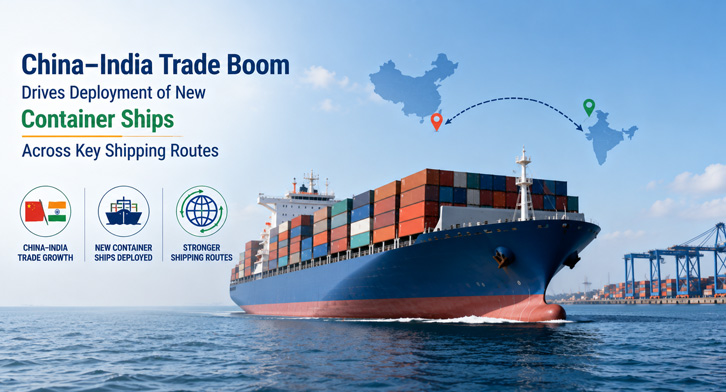
The China–India shipping corridor is witnessing a significant capacity expansion as global container shipping lines introduce new-generation container vessels to capitalize on rapidly growing trade volumes between Asia’s two largest economies.
Rising demand for manufactured goods, industrial equipment, raw materials, electronics, chemicals, and consumer products is driving stronger cargo movement between major Chinese and Indian ports. In response, carriers are strengthening their regional networks by deploying larger and more efficient container ships designed to improve schedule reliability, cargo capacity, and operational performance.
The move highlights the increasing strategic importance of the China–India maritime trade lane, which has emerged as one of the fastest-growing container shipping markets in Asia. Shipping companies are investing in modern fleets to accommodate higher cargo demand while improving fuel efficiency and reducing operating costs.
Industry experts believe the introduction of newbuild vessels will support faster cargo movement, enhanced port connectivity, and greater supply chain resilience for businesses engaged in bilateral trade.
Key Highlights
- Newbuild container ships are being deployed on China–India trade routes.
- Growing cargo volumes are driving demand for additional shipping capacity.
- Trade growth is supported by increased movement of manufacturing and industrial goods
- Modern vessels offer higher cargo capacity and improved fuel efficiency.
- Shipping lines aim to enhance schedule reliability and service frequency.
- China–India maritime trade continues to attract investment from global carriers.
- Expanded fleet capacity is expected to strengthen regional supply chains.
- Improved connectivity between Chinese and Indian ports could reduce transit bottlenecks.
Why Shipping Lines Are Expanding Capacity on China–India Routes
Several factors are contributing to the growing importance of the China–India container trade market:
Rising Bilateral Trade
Trade between China and India continues to generate strong containerized cargo volumes across sectors such as electronics, machinery, chemicals, textiles, automotive components, consumer goods, and industrial equipment.
Demand for Reliable Supply Chains
Importers and exporters are increasingly seeking dependable shipping services to support inventory management and production schedules. New vessels help carriers improve service consistency and reduce disruptions.
Operational Efficiency Gains
Modern container ships are equipped with advanced technologies that enhance fuel efficiency, lower emissions, and improve overall voyage performance, helping carriers remain competitive in a challenging market environment.
Strong Regional Growth Prospects
Asia remains the world’s largest manufacturing and trading hub, and the China–India corridor is expected to remain a major contributor to regional container shipping growth over the coming years.
Impact on Indian Ports and Logistics Sector
The deployment of additional container capacity could benefit India’s logistics ecosystem by:
- Increasing container availability for exporters and importers.
- Supporting higher throughput at major container ports.
- Enhancing connectivity with manufacturing hubs in China.
- Improving cargo movement efficiency across supply chains.
- Strengthening India's position in regional maritime trade networks.
As shipping lines continue investing in larger and more technologically advanced fleets, the China–India trade corridor is expected to play an increasingly important role in shaping Asia’s maritime logistics landscape.
FAQs
Why are shipping companies deploying new container ships on China–India routes?
Shipping companies are adding new vessels to meet rising cargo demand, improve service reliability, and increase capacity on one of Asia’s fastest-growing trade corridors.
What types of cargo are transported between China and India?
Common cargo includes electronics, machinery, industrial equipment, chemicals, textiles, consumer goods, automotive parts, and raw materials.
How do newbuild container ships benefit shipping lines?
Newbuild vessels offer greater cargo capacity, improved fuel efficiency, lower operating costs, and enhanced environmental performance.
What impact will this have on India's logistics industry?
Additional shipping capacity can improve cargo availability, strengthen supply chains, support port growth, and enhance trade connectivity with China.
What is the outlook for China–India maritime trade?
Industry analysts expect continued growth in container volumes, supported by expanding trade activity, supply chain diversification, and ongoing investment in shipping infrastructure.