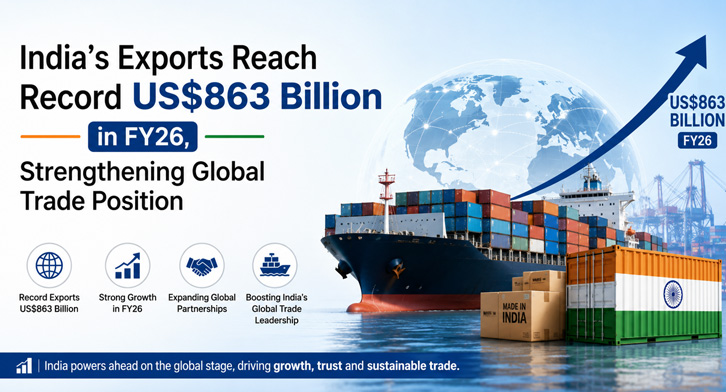
India’s Exports Reach Record US$863 Billion in FY26, Strengthening Global Trade Position

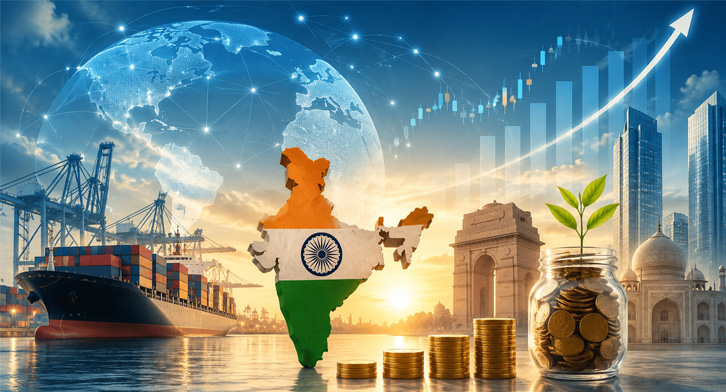
India achieved a historic milestone in FY2025-26 as total exports reached an all-time high of US$863 billion, nearly doubling from US$468 billion in FY2014-15. The achievement highlights the country’s growing strength in global trade and reflects the success of government initiatives aimed at boosting exports, strengthening manufacturing, and expanding international market access.

According to the Ministry of Commerce, India’s export growth has been driven by strong performance in both services and merchandise trade. Services exports emerged as a key growth engine, increasing from US$158 billion to US$421 billion over the past decade and registering an impressive 9.3% CAGR. The growth was supported by rising global demand for information technology services, consulting, financial services, and digital solutions.
Merchandise exports also recorded steady growth, rising from US$310 billion to US$442 billion during the same period. Non-petroleum exports reached a record US$387.9 billion, demonstrating the diversification and resilience of India’s manufacturing and industrial sectors.
The government has attributed this performance to strategic trade agreements, improved ease of doing business, infrastructure development, and export promotion initiatives. Investments in ports, logistics networks, digital trade facilitation, and manufacturing capabilities have enhanced India’s competitiveness in international markets.
As India continues to strengthen its global trade partnerships and diversify its export basket, the country is well-positioned to achieve higher export targets and further expand its role in global supply chains.

Key Highlights:

India Well Positioned for Growth: Global Reforms and Foreign Capital Infusion

Union Minister of Finance and Corporate Affairs Ms. Nirmala Sitharaman stated that India remains well positioned for long-term economic growth, supported by strong domestic demand and a resilient economy. Speaking at the Mindmine Summit 2026, she emphasized that the Government and the Reserve Bank of India (RBI) are taking structured steps to attract greater foreign capital participation and improve access to global financial markets. Key initiatives include measures under the Fully Accessible Route (FAR) framework and favorable withholding tax provisions for foreign investors.
The structural evolution of the Indian financial ecosystem is designed to build deep market liquidity, allowing global asset managers to seamlessly participate in domestic debt and equity markets. By standardizing tax treatments and removing procedural red tape under the FAR route, India is establishing an institutional framework comparable to mature western financial hubs. This systematic inflow of stable foreign capital acts as an economic buffer, providing the treasury with non-inflationary funding to back heavy infrastructure projects.
While challenges like crude oil price volatility, supply chain disruptions, geopolitical tensions, and climate risks persist, the country’s rising consumption levels provide strong resilience against global uncertainties. This massive consumer base acts as a shock absorber against global inflation cycles. As global trade blocks realign, India’s internal consumption engine ensures that industries remain profitable and active, even during severe contractions in external western consumer demand.

Key Highlights:

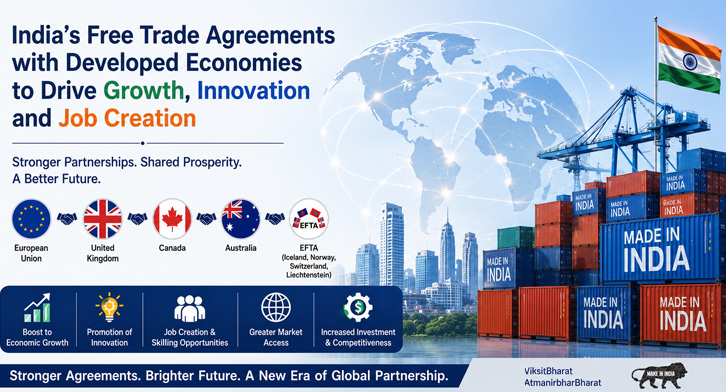
India’s Free Trade Agreements with Developed Economies to Drive Growth, Innovation and Job Creation

India is strengthening its global economic presence through strategic Free Trade Agreements (FTAs) with developed economies, aimed at accelerating economic growth, attracting investments, fostering innovation, and creating employment opportunities. Speaking at the 5th Annual Meeting of India Global Innovation Connect in New Delhi, Union Commerce and Industry Minister Mr. Piyush Goyal highlighted the important role of FTAs in supporting India’s long-term development goals and expanding its participation in global value chains.
The government views these trade partnerships as a key pillar of India’s economic transformation strategy, enabling businesses to access new markets, advanced technologies, and international investment opportunities.

EFTA Agreement to Attract Major Investments

A significant milestone in India’s trade strategy is the Trade and Economic Partnership Agreement (TEPA) signed with the European Free Trade Association (EFTA), which includes Switzerland, Norway, Liechtenstein, and Iceland.
Under the agreement, EFTA member countries have committed investments worth approximately US$100 billion (₹9.26 lakh crore) in India over the next 15 years. The partnership is also expected to support the creation of one million direct jobs, providing a major boost to India’s manufacturing, services, and technology sectors.

Trade Partnerships Strengthen Innovation and Competitiveness

India’s engagement with developed economies goes beyond trade and investment. These partnerships are designed to encourage innovation, technology transfer, skill development, and quality enhancement across industries.
By combining India’s skilled workforce, competitive manufacturing capabilities, and large consumer market with global expertise and capital, FTAs are expected to improve productivity and strengthen India’s competitiveness in international markets.

Expanding Global Market Access Through FTAs

Over the past three to four years, India has successfully concluded nine Free Trade Agreements covering 38 countries. These agreements have opened access to new export markets while providing Indian businesses opportunities to participate more effectively in global supply chains.
The government continues to focus on improving ease of doing business, simplifying taxation systems, and creating a stable investment environment to maximize the benefits of these trade agreements.

Infrastructure and Innovation Support Economic Transformation

India’s infrastructure transformation is further enhancing its attractiveness as a global investment destination. The country’s expanding logistics network, growing renewable energy capacity, and unified national power grid of over 500 GW are supporting manufacturing growth and attracting investments in sectors such as data centres and advanced technologies.
To accelerate innovation-led growth, the government has operationalized a ₹1 lakh crore (US$10.83 billion) Research and Development Innovation Fund, with the first projects already approved.

Key Highlights:

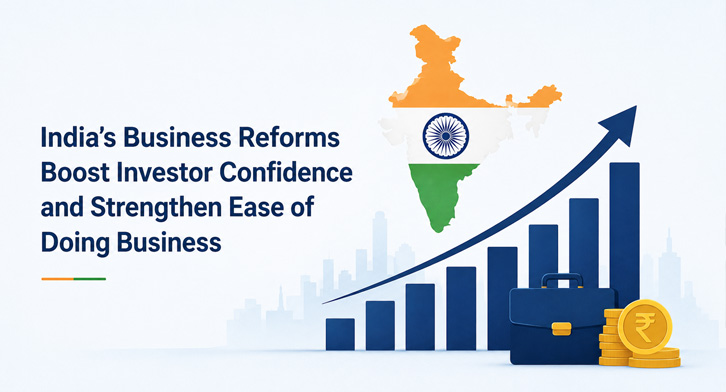
India’s Business Reforms Boost Investor Confidence and Strengthen Ease of Doing Business

India has emerged as one of the world’s most attractive business and investment destinations through a decade of transformative reforms focused on regulatory simplification, digital governance, compliance reduction, and improved market accessibility. These initiatives have significantly enhanced the country’s business environment, strengthened investor confidence, and improved global competitiveness.
Over the past 12 years, the Government of India has implemented a series of reforms aimed at creating a transparent, efficient, and business-friendly ecosystem. The results are evident in India’s improved global rankings, growing startup ecosystem, and increasing investor interest across sectors.
The government has focused on reducing compliance burdens, simplifying regulatory procedures, and promoting trust-based governance to create a more efficient business environment for both domestic and international investors.

Digital Governance Drives Business Efficiency

India’s digital transformation has become a key pillar of economic growth and business facilitation. The country has consistently maintained its position in the highest category of the World Bank’s GovTech Maturity Index, demonstrating significant progress in digital public service delivery.
Several digital initiatives have simplified business operations and reduced administrative challenges. Platforms such as SPICe+, MCA21 Version 3, and the Udyam Registration Portal have streamlined company registration, compliance management, and MSME formalization processes.
These digital governance initiatives have improved transparency, accelerated approvals, and reduced operational costs for businesses across sectors.

Digital Payments and Market Access Create New Opportunities

India’s digital payments ecosystem continues to set global benchmarks. During FY2025-26, the Unified Payments Interface (UPI) processed transactions worth approximately ₹314 lakh crore, demonstrating the scale and maturity of the country’s digital economy.
The Government e-Marketplace (GeM) has also emerged as a powerful platform for startups and MSMEs, recording cumulative transactions exceeding ₹18.4 lakh crore. These initiatives have expanded market access, improved procurement transparency, and created new business opportunities for entrepreneurs.

Key Highlights:

India Records Strong 7.7% GDP Growth in FY26, Reinforcing Its Position as the World’s Fastest-Growing Major Economy

India has once again demonstrated its economic resilience and growth potential by recording a robust Gross Domestic Product (GDP) growth rate of 7.7% in FY2025-26. The achievement reaffirms India’s position as the world’s fastest-growing major economy and highlights the success of ongoing economic reforms, infrastructure investments, and development-focused policies.
Speaking at a public gathering in Daman, Prime Minister Narendra Modi described the latest growth figures as a reflection of the country’s strong economic foundations and its ability to maintain momentum despite global economic uncertainties. The Indian economy also expanded by 7.8% during the quarter ending March 31, 2026, underlining the sustained strength of domestic demand, investment activity, and economic productivity.

Strong Economic Performance Amid Global Challenges

India’s growth comes at a time when many major economies continue to face economic headwinds, including inflationary pressures, geopolitical uncertainties, and slower growth rates. Despite these challenges, India has maintained a strong growth trajectory supported by resilient domestic consumption, expanding industrial activity, and rising investments across key sectors.
The latest GDP figures demonstrate the effectiveness of India’s economic strategy and the growing contribution of domestic drivers to overall economic expansion. Strong performance across manufacturing, services, infrastructure, and digital sectors has helped sustain growth and strengthen investor confidence.

Infrastructure Development Continues to Fuel Growth

A major factor behind India’s economic success has been the government’s sustained focus on infrastructure development. Significant investments in highways, railways, ports, airports, renewable energy projects, and digital infrastructure have improved connectivity, increased productivity, and supported long-term economic development.
These infrastructure projects have not only generated employment opportunities but have also enhanced logistics efficiency, strengthened supply chains, and improved the movement of goods and services across the country. As India continues to modernize its infrastructure network, the benefits are expected to further support industrial growth and economic competitiveness.

Reforms and Ease of Doing Business Drive Competitiveness

Prime Minister Modi emphasized that ongoing reforms remain central to India’s development agenda. The government’s vision of “Reform, Perform and Transform” has led to initiatives aimed at simplifying regulations, attracting investments, improving governance, and enhancing ease of doing business.
These reforms have encouraged entrepreneurship, increased private sector participation, and strengthened India’s attractiveness as a global investment destination. The continued focus on improving productivity and reducing business barriers has contributed significantly to economic growth and job creation.

Key Highlights

India–UK Relations Strengthened by New Critical Minerals and Maritime Sector Initiatives

India and the United Kingdom have taken significant steps to deepen their strategic partnership with the launch of new initiatives focused on critical minerals, maritime security, trade, defence, and technology cooperation.
The announcements were made during the visit of UK Foreign Secretary Yvette Cooper to India, highlighting the growing alignment between the two countries on economic resilience, supply chain security, and regional stability.

Critical Minerals Observatory to Strengthen Supply Chain Resilience

One of the key outcomes of the visit was the launch of the Critical Minerals Global Supply Chain Observatory. The initiative is aimed at enhancing cooperation in critical minerals, strengthening supply chain resilience, and supporting secure access to essential resources required for clean energy technologies, advanced manufacturing, and strategic industries.
The observatory is expected to improve collaboration on mineral supply chains while addressing emerging global challenges related to resource security and sustainable development.

India and UK Sign Maritime Security Cooperation Agreement

India and the UK also signed a Memorandum of Understanding (MoU) to establish a Regional Maritime Security Centre of Excellence.
The proposed centre will support Indian Ocean nations in building capacity to tackle non-traditional maritime security challenges, including maritime crime, illegal activities at sea, disaster response, and emerging security threats.
The initiative reflects the growing importance of maritime cooperation in ensuring a secure and stable Indo-Pacific region.

Focus on Trade, Defence, Technology, and Clean Energy

During discussions, External Affairs Minister S. Jaishankar and UK Foreign Secretary Yvette Cooper reviewed progress across several key areas of bilateral cooperation, including:
The leaders also discussed new opportunities in artificial intelligence (AI), clean energy technologies, and critical minerals development.

Comprehensive Trade Deal and Defence Roadmap Drive Growth

India and the UK recently finalized the Comprehensive Economic and Trade Agreement (CETA), which is expected to strengthen economic cooperation, increase bilateral trade, and enhance supply chain resilience.
Alongside the trade agreement, both countries have adopted a Comprehensive Strategic Partnership and a Defence Industrial Roadmap designed to expand collaboration in defence manufacturing, innovation, and strategic technologies.
According to Jaishankar, these developments mark a transition in India–UK relations from a primarily historical connection to a future-focused partnership driven by economic growth, advanced technology, and shared strategic interests.

Vision 2035 to Guide Long-Term Partnership

The two nations continue to advance their shared Vision 2035 framework, launched to promote mutual prosperity, sustainable development, and global cooperation.
Prime Minister Narendra Modi highlighted that the deepening India–UK partnership has created unprecedented opportunities for growth and innovation and will continue to contribute to global development and stability.

Key Highlights:

New Red Sea Maritime Route Strengthens Trade Links Between Saudi Arabia, India, and Djibouti

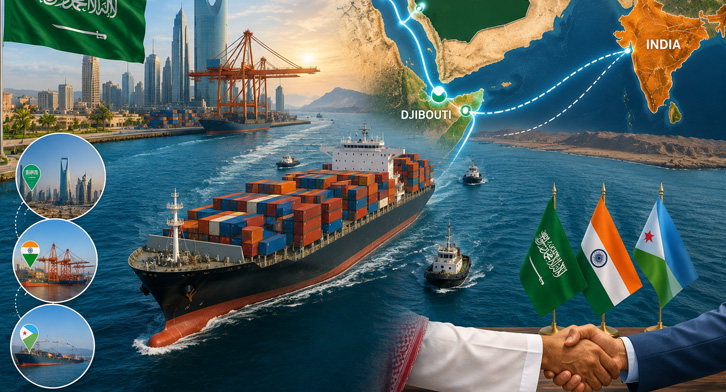
Saudi Arabia has launched a strategic new Red Sea shipping route linking Jeddah Islamic Port with major ports in India and Djibouti, reinforcing its position as a key maritime and logistics hub. Introduced by the Saudi Ports Authority (Mawani) in partnership with leading global container shipping operators, the India–Red Sea–Djibouti (IRD) service is designed to enhance trade connectivity, improve supply chain efficiency, and reduce transit times across critical international markets.

Creating a High-Capacity Trade Corridor

The newly launched IRD route establishes a seamless maritime corridor connecting the Indian Subcontinent, East Africa, and Saudi Arabia’s western coastline. By facilitating faster cargo movement and improved port connectivity, the service is expected to support growing trade volumes between these strategically important regions.

The route also strengthens Jeddah Islamic Port’s role as a major gateway for regional and international commerce, enabling smoother cargo distribution across multiple markets.

Enhancing Supply Chain Resilience Amid Maritime Disruptions

The launch comes at a time when global shipping networks are facing increasing challenges due to regional geopolitical tensions and disruptions in key maritime corridors. The new Red Sea route offers shipping companies and cargo owners an efficient and reliable logistics alternative, helping mitigate risks associated with congested or volatile trade routes.
By positioning Jeddah as a leading transshipment hub, Saudi Arabia aims to provide global supply chains with greater flexibility and resilience.

Supporting Saudi Arabia’s Vision 2030 Goals

The IRD shipping service aligns with Saudi Arabia’s Vision 2030 strategy, which seeks to transform the Kingdom into a global logistics powerhouse. The initiative supports efforts to expand port capacity, attract international trade flows, and strengthen Saudi Arabia’s role as a logistics bridge connecting Asia, Africa, and Europe.
The development is also expected to contribute to the Kingdom’s objective of significantly increasing container handling capacity and enhancing the competitiveness of its maritime sector.

Key Highlights:

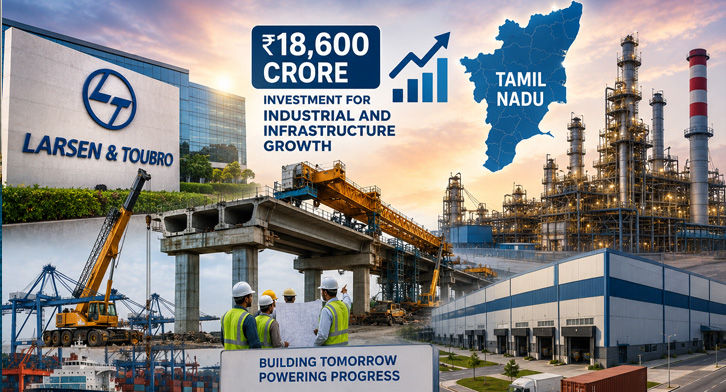
₹18,600 Crore L&T Investment to Accelerate Tamil Nadu’s Industrial and Infrastructure Expansion

Tamil Nadu has signed a landmark Memorandum of Understanding (MoU) with Larsen & Toubro (L&T) for three major industrial projects involving a total investment of ₹18,600 crore. The projects are expected to generate employment opportunities for approximately 8,200 people and further strengthen the state’s position as one of India’s leading investment destinations.
The MoU was signed in the presence of Chief Minister V. Joseph Vijay, who held discussions with L&T Chairman and Managing Director S.N. Subrahmanyan regarding the company’s expansion plans and future investments in the state.

Focus on Data Centres, Electronics Manufacturing, and Shipbuilding

The investment package covers three strategic sectors that are expected to drive Tamil Nadu’s industrial and technological growth.
Data Centre Expansion in Kancheepuram
The largest project under the agreement is a Data Centre Expansion Project in Kancheepuram district. L&T will invest ₹15,000 crore in developing advanced digital infrastructure, supporting the growing demand for cloud services, artificial intelligence (AI), and data processing capabilities.
The project is expected to create around 500 jobs and strengthen Tamil Nadu’s emerging position as a digital infrastructure hub.
Electronics Manufacturing Facility in Coimbatore
L&T will establish a new Electronics and Electronic Systems Manufacturing (EESM) facility in Coimbatore with an investment of ₹2,500 crore.
The project is expected to generate approximately 2,000 employment opportunities and contribute to the growth of India’s electronics manufacturing ecosystem, supporting both domestic and export-oriented production.
Shipbuilding Expansion at Kattupalli
The company will also invest ₹1,100 crore to expand its shipbuilding facility at Kattupalli in Tiruvallur district.
The expansion is expected to create nearly 5,700 jobs and enhance Tamil Nadu’s capabilities in shipbuilding, marine engineering, and offshore infrastructure development.

Supporting Offshore Wind Energy and Maritime Infrastructure

The Kattupalli expansion project is expected to play a significant role in developing world-class infrastructure for the offshore wind energy sector. The facility will support the construction and assembly of offshore renewable energy components while creating substantial direct and indirect employment opportunities.
The project aligns with India’s broader clean energy and maritime development objectives.

Strengthening Tamil Nadu's Vision for Economic Growth

The investments are aligned with the Tamil Nadu government’s vision of transforming the state into a US$1.5 trillion economy by 2036.
The projects are expected to:

Government Assures Support for Future Expansion

During the discussions, Chief Minister Vijay welcomed L&T’s continued commitment to investing in Tamil Nadu and reaffirmed the state’s support for industrial expansion initiatives.
The government assured full cooperation for project implementation and future investments aimed at accelerating economic growth, innovation, and job creation

Key Highlights:

India and Brunei Advance Maritime Partnership for Sustainable Shipping and Connectivity

India and Brunei Darussalam have reaffirmed their commitment to strengthening maritime cooperation through high-level discussions aimed at enhancing collaboration across key areas of the maritime sector.

Shri Venkatesapathy S., Joint Secretary, Ministry of Ports, Shipping and Waterways (MoPSW), held talks with Siti Arnyfariza binti Mohd Jaini to explore opportunities for deeper engagement and strategic partnership in maritime infrastructure, shipping, and port development.

Focus Areas: Shipping, Ports, and Maritime Heritage

The discussions centered on expanding cooperation in several critical areas, including shipping services, port operations, maritime infrastructure development, and the National Maritime Heritage Complex initiative.

Strengthening Institutional Partnerships

The meeting highlighted the shared objective of building stronger institutional linkages between India and Brunei. Officials explored avenues for long-term cooperation that can enhance operational efficiency, maritime capacity building, and sustainable development within the sector.
The dialogue also underscored the growing role of maritime partnerships in supporting regional economic integration and trade facilitation.

Supporting Indo-Pacific Connectivity and Growth

The engagement aligns with broader efforts to strengthen maritime connectivity across the Indo-Pacific region. Enhanced cooperation between India and Brunei is expected to contribute to smoother trade flows, improved port connectivity, and sustainable maritime development.
The discussions reflect the increasing strategic importance of maritime collaboration in promoting regional stability, economic growth, and resilient supply chains.

Key Highlights:

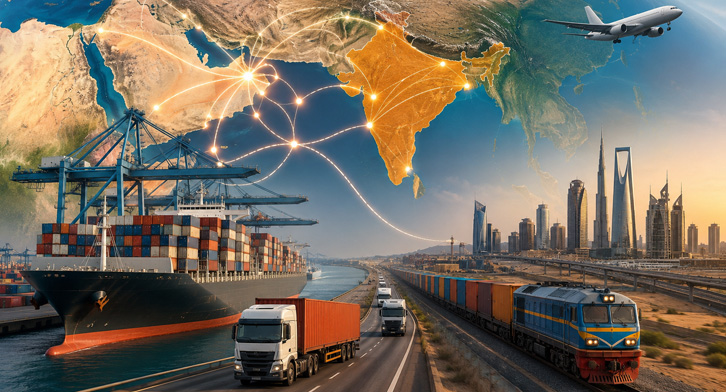
 Strategic West Asia Corridors Connecting India to Global Markets

Shipping Services Shift to Alternative West Asian Routes

The ongoing conflict in West Asia has significantly disrupted maritime traffic through the Strait of Hormuz, a critical global shipping chokepoint. In response, shipping operators have rapidly expanded alternative trade and logistics routes connecting India with ports located east of Hormuz and along the Red Sea.
Government data shows that the number of shipping services operating on these alternative routes increased from 127 in February to 257 in April before stabilizing at 245 services in May. The sharp rise highlights the growing reliance on diversified maritime corridors to maintain trade flows between India and West Asia.

India Adopts Multimodal Logistics Strategy

To mitigate supply chain disruptions caused by restricted vessel movements in the Persian Gulf, authorities and logistics providers have implemented a multimodal transportation strategy for essential imports.
This approach combines maritime and overland transport networks to ensure the uninterrupted movement of critical commodities, particularly fertilisers and industrial raw materials.

Fertiliser Cargo Rerouted Through Saudi Arabia

Several India-bound fertiliser shipments stranded in Persian Gulf facilities are being rerouted through Saudi Arabia. Cargo is first offloaded at Gulf terminals and then transported by road across the kingdom to Yanbu Port on the Red Sea.
From Yanbu, the fertiliser is reloaded onto vessels destined for Indian ports, creating an alternative supply chain that bypasses congestion and security concerns in the Strait of Hormuz.

Key Highlights

cargonet-logo-icon
Cargonet Cargo Software Logo

Feedback & Reward program

Submit the Feedback and avail the Rewards.

1. Your satisfaction & reliability on CargoNet ?

2. Your Rating on Support & co-ordination team?

3. Satisfaction on the look and feel of CargoNet ?

4. Please specify any 2 best features that you feel more helpful in CargoNet?

5. Please specify any 2 best reports that you are taking on regular basis?

6. Are you using Copy Job option in CargoNet Software?

7. Are you using Automatic DSR (Daily Status Report) Option? It automatically sends reports to customer about the shipment status

8. Are you using Automatic Outstanding Reports option? Period Auto outstanding reminders to customer

9. Any other thoughts to improve in CargoNet? Please share.

* Join our Reward Program by recommending CargoNet (Cash Rewards Awaiting)

“Thanks for your feedback. Our goal is to create the best possible product, support & service, and your thoughts, ideas & suggestions play a major role in helping us identify opportunities to improve.”

Cut AI cost,
not performance

discover how top Freight Forwarding companies  reduce AI-related expense and speed up operation with CargoNet AI, we will show it how
Share your information for instant access :