CULines Expands Maritime Network via Strategic Vessel Deployment on Hercules Route

CU Lines has announced the deployment of its vessels on the Hercules service, a move aimed at expanding the carrier’s network reach and enhancing cargo connectivity across key regional trade lanes. The decision reflects the company’s strategy to strengthen its market presence while offering customers additional shipping capacity and service options. By assigning vessels to the Hercules route, CU Lines is expected to improve coverage for shippers moving cargo between major commercial hubs served by the network, helping to maintain reliable sailing schedules across the route.
This route expansion comes at a time when shippers are actively looking for reliable alternatives to congested main trade lanes. By adding vessels to the Hercules loop, CU Lines gives freight forwarders more options to bypass port bottlenecks, helping to keep cargo moving steadily between key manufacturing centers. This deployment helps distribute the cargo load more evenly across regional networks, reducing transit delays and protecting supply chains from unexpected disruptions on primary shipping routes.
Additionally, the strategy shows how container lines are collaborating through slot-sharing and vessel-sharing agreements to maximize fleet efficiency. Instead of operating isolated routes, carriers are linking their networks to offer more frequent sailings and broader port coverage without needing to build new ships. For logistics providers, this integrated approach translates into highly reliable schedules and greater flexibility when booking space for time-sensitive cargo across growing regional economies.

Key Highlights:

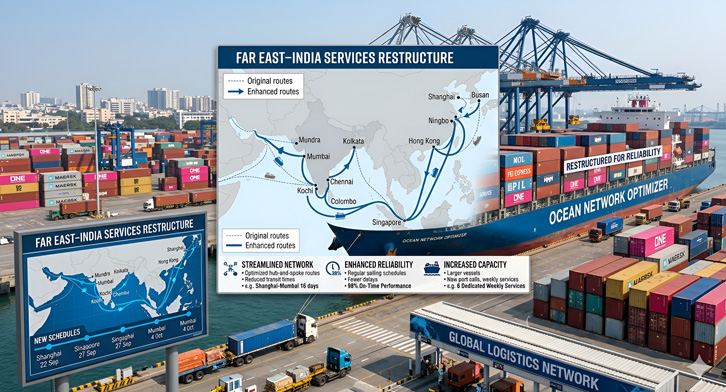
Shipping Lines Restructure Far East–India Services to Enhance Network Efficiency and Service Reliability

Major container shipping operators are reshaping their Far East–India service networks as a long-standing joint service is being divided into two separate loops. The restructuring reflects evolving market dynamics, changing cargo demand patterns, and the industry’s focus on improving operational flexibility and schedule reliability across key Asia–India trade corridors.
According to shipping industry analysts, the move highlights how carriers are adapting their service offerings to better serve customers while optimizing vessel deployment and port coverage in a competitive and rapidly changing market environment.

Gold Star Line and Global Feeder Shipping Launch Revamped NIX Service

Under the new arrangement, Gold Star Line and Global Feeder Shipping (GFS) will jointly operate an enhanced NIX service using five vessels with capacities of approximately 5,000 TEUs each.
The revised service rotation will connect major trade hubs including:
The service is designed to provide efficient cargo connectivity between China, Southeast Asia, and India’s major west coast ports, supporting growing trade flows across the region.

Shipping Lines Seek Greater Flexibility in Network Design

Industry experts note that splitting the long-running joint loop into two independent services provides carriers with greater flexibility in managing operations.
The new structure allows operators to optimize:
By operating separate service products, carriers can better respond to customer requirements and changing trade patterns while maintaining operational efficiency.

Market Conditions Drive Strategic Service Adjustments

The restructuring reflects broader trends within the container shipping industry, particularly on intra-Asia and Asia–India routes. Shipping companies are increasingly adjusting service networks to address fluctuating cargo demand, congestion risks, and evolving supply chain requirements.
Major transshipment hubs such as Port Klang and gateway ports like Nhava Sheva continue to experience varying levels of congestion and operational pressure, prompting carriers to redesign service networks for improved reliability.
These adjustments are also helping operators navigate volatile freight markets while maintaining competitive service offerings.

Key Highlights:

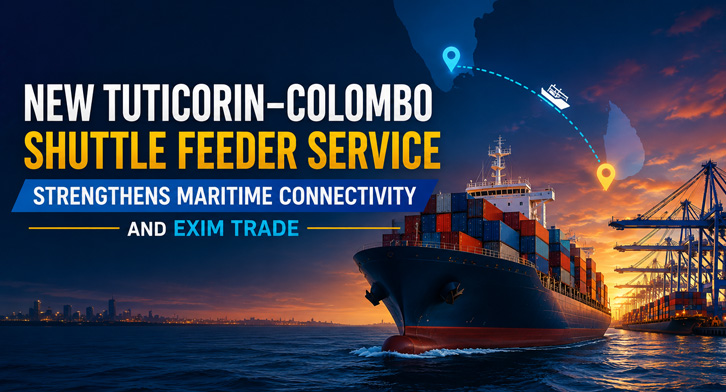
New Tuticorin–Colombo Shuttle Feeder Service Strengthens Maritime Connectivity and EXIM Trade

Major container shipping operators are reshaping their Far East–India service networks as a long-standing joint service is being divided into two separate loops. The restructuring reflects evolving market dynamics, changing cargo demand patterns, and the industry’s focus on improving operational flexibility and schedule reliability across key Asia–India trade corridors.
According to shipping industry analysts, the move highlights how carriers are adapting their service offerings to better serve customers while optimizing vessel deployment and port coverage in a competitive and rapidly changing market environment.

Gold Star Line and Global Feeder Shipping Launch Revamped NIX Service

Under the new arrangement, Gold Star Line and Global Feeder Shipping (GFS) will jointly operate an enhanced NIX service using five vessels with capacities of approximately 5,000 TEUs each.
The revised service rotation will connect major trade hubs including:
The service is designed to provide efficient cargo connectivity between China, Southeast Asia, and India’s major west coast ports, supporting growing trade flows across the region.

Shipping Lines Seek Greater Flexibility in Network Design

Industry experts note that splitting the long-running joint loop into two independent services provides carriers with greater flexibility in managing operations.
The new structure allows operators to optimize:
By operating separate service products, carriers can better respond to customer requirements and changing trade patterns while maintaining operational efficiency.

Market Conditions Drive Strategic Service Adjustments

The restructuring reflects broader trends within the container shipping industry, particularly on intra-Asia and Asia–India routes. Shipping companies are increasingly adjusting service networks to address fluctuating cargo demand, congestion risks, and evolving supply chain requirements.
Major transshipment hubs such as Port Klang and gateway ports like Nhava Sheva continue to experience varying levels of congestion and operational pressure, prompting carriers to redesign service networks for improved reliability.
These adjustments are also helping operators navigate volatile freight markets while maintaining competitive service offerings.

Key Highlights:

outheast Asia–India Maritime Connectivity Strengthened with New OOCL Shipping

Orient Overseas Container Line (OOCL) has launched the Southeast Asia–Indian Subcontinent Service 2 (SIS2), a new weekly container shipping service designed to enhance direct connectivity between major Southeast Asian hubs and key ports across the Indian subcontinent.
Introduced in June 2026, the service aims to support growing trade volumes between South Asia and Southeast Asia by providing increased capacity, improved service frequency, and greater supply chain efficiency.

Enhancing Direct Container Connectivity

The SIS2 service connects important gateway and transshipment ports across Southeast Asia with major destinations in the Indian subcontinent, offering shippers a more reliable and efficient transportation solution.
The new shipping loop is expected to:
The service is designed to support both import and export cargo flows, helping businesses streamline logistics operations across one of Asia’s fastest-growing trade corridors.

Integrated Network Provides Greater Flexibility

OOCL has deployed modern, high-capacity vessels on the SIS2 route and integrated the service into its broader regional shipping network.
The integration enables customers to benefit from:
By complementing existing services on the Southeast Asia–Indian Subcontinent trade lane, SIS2 offers additional options for exporters, importers, freight forwarders, and logistics providers.

Rising Intra-Asian Trade Drives Demand

The launch comes amid strong growth in cargo demand between Southeast Asia and South Asia.
Several factors are contributing to the increasing trade volumes, including:
Manufacturing Diversification
Companies are expanding manufacturing operations across Asia, creating new sourcing and distribution patterns that require stronger regional shipping networks.
Growth in Intra-Asian Trade
Trade between Asian economies continues to increase, driving demand for more direct and reliable container services.
Expansion of E-Commerce
The rapid growth of cross-border e-commerce is generating higher cargo volumes and increasing the need for faster, more predictable shipping solutions.

Supporting Supply Chain Efficiency

OOCL expects the SIS2 service to help businesses improve inventory management and supply chain performance.
Key benefits include:
These advantages are particularly important for manufacturers, retailers, and exporters operating in highly competitive regional markets.

Commitment to Operational Reliability

OOCL stated that it will continue monitoring market conditions and trade developments to ensure capacity remains aligned with customer demand.
The company aims to maintain operational reliability while adapting its network and vessel deployment strategy to evolving cargo flows across Asia.
Customers can access detailed schedules, port rotations, and vessel information through OOCL’s official booking and service platforms.

Key Highlights:

Saudi Ports Authority Unveils New Shipping Service Connecting Jeddah, India, and Djibouti

Saudi Ports Authority (Mawani) has launched a new shipping service connecting Jeddah Islamic Port with key ports in India and Djibouti, further strengthening maritime connectivity across the Red Sea and Indian Ocean regions.

The new service is designed to facilitate faster cargo movement, improve logistics efficiency, and support growing trade volumes between Saudi Arabia, India, and East Africa.

Boosting Regional Trade and Supply Chain Efficiency

The shipping service will provide importers, exporters, and logistics operators with enhanced connectivity and more reliable transportation options across strategically important trade corridors.
Key benefits of the new service include:
The route is expected to support the movement of containerized cargo, industrial products, raw materials, and consumer goods between the three regions.

Jeddah Islamic Port Strengthens Its Role as a Regional Hub

Jeddah Islamic Port remains one of Saudi Arabia’s most important maritime gateways and a key pillar of the Kingdom’s logistics and trade strategy.
Located on the Red Sea, the port serves as a major transshipment hub connecting global trade routes across:
The introduction of the new shipping service is expected to further enhance Jeddah’s position as a leading regional logistics and distribution center.

Strengthening India–Saudi Arabia Trade Relations

India continues to be one of Saudi Arabia’s largest trading partners, with strong bilateral trade across multiple sectors.
Major areas of trade include:
The new maritime connection is expected to facilitate smoother cargo flows and support the continued growth of economic ties between the two countries.

Djibouti's Strategic Importance in Global Shipping

Djibouti plays a vital role in international maritime trade due to its strategic location at the entrance to the Red Sea and near some of the world’s busiest shipping lanes.
As a key logistics gateway for East Africa, Djibouti provides:
The inclusion of Djibouti in the new service strengthens trade links between Asia, the Middle East, and Africa.

Supporting Saudi Arabia's Logistics and Vision 2030 Goals

The launch aligns with Saudi Arabia’s Vision 2030 strategy, which aims to transform the Kingdom into a global logistics hub by expanding maritime infrastructure, improving port connectivity, and attracting international trade flows.
Enhanced shipping services are expected to contribute to:

Key Highlights:

Hoegh Autoliners Expands India Presence with Maiden Arrival of Aurora Class Vessel

Hoegh Aurora, the flagship vessel of Hoegh Autoliners’ next-generation Aurora Class fleet, has completed its historic maiden calls at the Indian ports of Ennore, Mumbai, and Pipavav. The milestone marks a significant step in the company’s long-term commitment to India’s rapidly expanding manufacturing, automotive, and industrial export sectors.
The vessel’s arrival reinforces Hoegh Autoliners’ role in supporting India’s growing integration into global trade networks through advanced and sustainable ocean transportation solutions.

Strengthening India's Global Export Connectivity

For more than 15 years, Hoegh Autoliners has connected Indian manufacturers with international markets across Asia, Europe, Africa, and the Americas. The company has transported millions of cubic metres of automobiles, industrial equipment, and project cargo from Indian ports to customers worldwide.
Key export cargoes handled by Hoegh Autoliners include:
The maiden voyage of Hoegh Aurora further enhances shipping capacity available to Indian exporters while supporting the country’s ambitions to become a leading global manufacturing hub.

India Emerges as a Strategic Market for Hoegh Autoliners

According to Hoegh Autoliners, India remains one of the company’s most important and fastest-growing markets.
The introduction of the Aurora Class fleet enables the company to offer:
The vessel is specifically designed to support growing demand from India’s automotive, engineering, infrastructure, and heavy equipment industries.

World's Most Environmentally Friendly PCTC

The Aurora Class represents a major advancement in sustainable maritime transportation and reflects Hoegh Autoliners’ long-term decarbonisation strategy.
Designed as the world’s most environmentally friendly Pure Car and Truck Carrier (PCTC), Hoegh Aurora incorporates advanced technologies aimed at reducing environmental impact while maintaining operational efficiency.
Sustainability Features
The Aurora Class is expected to play a key role in Hoegh Autoliners’ goal of achieving net-zero emissions by 2040.

Largest PCTC Ever to Call an Indian Port

With a carrying capacity of 9,100 Car Equivalent Units (CEUs), Hoegh Aurora is the largest Pure Car and Truck Carrier ever to call at an Indian port.
The vessel surpasses the company’s Horizon Class ships, which have a capacity of 8,500 CEUs and have regularly served Indian ports since 2017.
The increased capacity enables more efficient transportation of vehicles and large industrial cargoes while reducing emissions per shipment.

Built for High & Heavy and Project Cargo

In addition to automobiles, the Aurora Class has been purpose-built to transport oversized, heavy-lift, and project cargo.
Advanced Cargo Handling Features

Ningbo Ocean Shipping Launches India Container Service to Enhance Port Connectivity

Ningbo Ocean Shipping has launched its first India service, marking a significant milestone in the company’s regional expansion strategy and extending its container shipping network into South Asia. The move strengthens maritime connectivity between China and India while supporting growing trade flows across the region.
The new service was officially inaugurated on May 24 with the maiden call of the vessel X PRESS Capella at Nhava Sheva. The route connects Ningbo-Zhoushan Port in China with Nhava Sheva and Mundra Port, two of India’s most important container gateways on the west coast.

Enhanced Connectivity for India-China Trade

The newly launched service provides a direct maritime link between China and India, improving cargo movement efficiency and reducing transit times. By connecting to Nhava Sheva and Mundra, the route offers Chinese exporters better access to India’s key industrial, manufacturing, and consumption hubs.
The service is expected to facilitate the movement of a wide range of cargo, supporting bilateral trade and strengthening regional supply chains.

Strategic Importance of Nhava Sheva and Mundra

The route includes calls at Nhava Sheva (Jawaharlal Nehru Port), India’s largest container port, and Mundra Port, one of the country’s leading commercial and logistics hubs. Together, these ports serve as critical gateways for international trade and provide access to northwestern India’s major industrial and manufacturing regions.
Improved shipping connectivity through these ports is expected to benefit exporters, importers, and logistics providers operating across the India-China trade corridor.

Strengthening Ningbo Ocean Shipping's Asian Network

The India service launch forms part of Ningbo Ocean Shipping’s broader strategy to evolve from a regional carrier into a major Asia-focused shipping operator. In recent years, the company has expanded its presence across key Asian markets, including Vietnam, Thailand, the Philippines, and Cambodia, while also strengthening operations in the Middle East.
The addition of India further enhances the company’s intra-Asia network and positions it to capitalize on increasing trade volumes within the region.

Supporting Regional Trade Growth

The new service also reinforces the role of Ningbo-Zhoushan Port as a major maritime gateway connecting China’s manufacturing centers with emerging Asian markets. Industry analysts view the launch as a strategic move that goes beyond capacity expansion, reflecting a long-term focus on building a more integrated and connected shipping network across Asia.
As trade and manufacturing activity continue to grow across the region, direct shipping services such as this are expected to play an increasingly important role in supporting efficient supply chains and regional economic integration.

Key Highlights:

Singapore–Kolkata Shipping Corridor Reopens as COSCO Expands Trade Network

COSCO Shipping has reinstated its Singapore–Kolkata SKX1 service, restoring direct maritime connectivity between Singapore, Southeast Asia’s leading transshipment hub, and Kolkata, one of eastern India’s most important ports. The service revival comes amid rising regional trade volumes and increasing demand for efficient supply chain solutions across Asia.
The route had previously been suspended as part of network rationalisation efforts, forcing many exporters and importers to depend on indirect transshipment services that increased both transit times and logistics costs.

Boost for Trade and Logistics

Kolkata serves as a vital trade gateway for eastern and northeastern India, as well as neighbouring countries such as Nepal and Bhutan. The port supports economic activity across major states including West Bengal, Odisha, and Jharkhand.
Enhanced connectivity through the Singapore–Kolkata route is expected to strengthen regional trade, improve supply chain efficiency, and support export growth across eastern India.

Supporting Growing Intra-Asia Trade

Industry experts view the revival of the SKX1 service as part of a broader trend of shipping companies expanding intra-Asia networks to accommodate growing trade flows. The recovery of global trade, combined with India’s emergence as a manufacturing and export hub, has increased demand for reliable regional shipping services.
Singapore’s position as a major global transshipment hub further enhances the route’s value by providing seamless connections to destinations across Asia, Europe, and North America.

Positive Outlook for Regional Trade

The reopening of the Singapore–Kolkata shipping lane aligns with growing trade ties between India and ASEAN countries and supports supply chain diversification strategies adopted by global businesses. The move is expected to improve logistics efficiency, reduce transit times, and strengthen eastern India’s role in regional and global trade networks.

Key Highlights:

Hapag-Lloyd–Greta Shipping Partnership Revives India–Gulf Trade Route

Hapag-Lloyd and Greta Shipping have relaunched their India–Middle East Gulf shipping cooperation through a revised India–Gulf 1 (IG1) service, strengthening regional trade and maritime connectivity. The updated route replaces the suspended JIX1/IG1 network and introduces a simplified service model designed to improve operational efficiency and support trade flows between India and the Gulf region.

Service Network Relaunched with Optimized Route

The revised India–Gulf service features a shorter and more streamlined rotation to enhance reliability and shipping efficiency across key ports.

Key Highlights:

Focus on Trade and Logistics Efficiency

The updated shipping network reflects efforts to improve maritime logistics, supply chain resilience, and trade connectivity amid evolving regional conditions. The revised route is expected to provide faster transit and improved efficiency for cargo movement between India and Gulf markets.

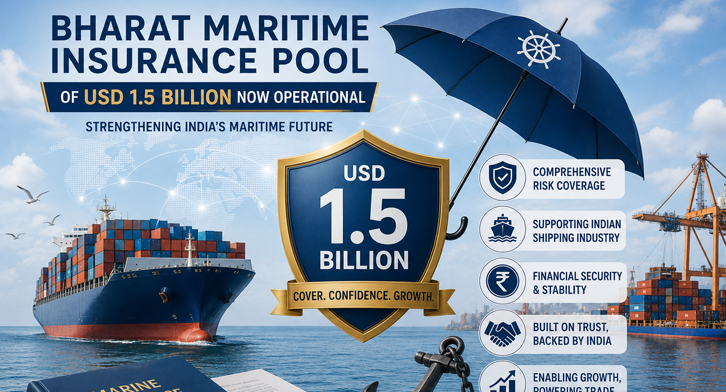
Bharat Maritime Insurance Pool of USD 1.5 billion now operational

India has taken a major step towards becoming a global shipbuilding hub with the signing of a tripartite MoU to develop the country’s first Mega Greenfield Shipyard at Thoothukudi in partnership with HD Korea Shipbuilding & Offshore Engineering Co., Ltd..
The project will be developed jointly by NSHIP-TN, SIPCOT Tamil Nadu and Sagarmala Finance Corporation under the Ministry of Ports, Shipping and Waterways.

Key Highlights

The shipyard is expected to significantly boost India’s shipbuilding capacity, attract global investments and support the country’s goal of becoming one of the world’s top five shipbuilding nations by 2047. The initiative will also strengthen maritime infrastructure, industrial growth and employment generation in the region.
cargonet-logo-icon
Cargonet Cargo Software Logo

Feedback & Reward program

Submit the Feedback and avail the Rewards.

1. Your satisfaction & reliability on CargoNet ?

2. Your Rating on Support & co-ordination team?

3. Satisfaction on the look and feel of CargoNet ?

4. Please specify any 2 best features that you feel more helpful in CargoNet?

5. Please specify any 2 best reports that you are taking on regular basis?

6. Are you using Copy Job option in CargoNet Software?

7. Are you using Automatic DSR (Daily Status Report) Option? It automatically sends reports to customer about the shipment status

8. Are you using Automatic Outstanding Reports option? Period Auto outstanding reminders to customer

9. Any other thoughts to improve in CargoNet? Please share.

* Join our Reward Program by recommending CargoNet (Cash Rewards Awaiting)

“Thanks for your feedback. Our goal is to create the best possible product, support & service, and your thoughts, ideas & suggestions play a major role in helping us identify opportunities to improve.”

Cut AI cost,
not performance

discover how top Freight Forwarding companies  reduce AI-related expense and speed up operation with CargoNet AI, we will show it how
Share your information for instant access :