Enhancing Maritime Operations: CargoNet Ship Spare Logistics Software for Agencies

In the dynamic world of maritime operations, the efficient management of ship spares is crucial for maintaining vessel readiness and operational continuity. CargoNet Ship Spare Logistics Software stands at the forefront, offering specialized solutions that streamline the complexities of managing spare parts. This blog explores how CargoNet Ship Spare Logistics Software empowers agencies to optimize inventory management, streamline procurement processes, and ensure timely delivery of essential parts.

Understanding Ship Spare Logistics

Ship spare logistics refers to the management and transportation of spare parts and equipment required for the maintenance and repair of ships. This specialized logistics service ensures that the necessary parts are delivered to vessels at various ports worldwide, often under tight schedules. The process involves coordinating with suppliers, freight forwarders, and port authorities to ensure timely delivery, as delays can affect the operational efficiency of ships.

Key elements of ship spare logistics include:

These tasks are inherently complex and require efficient management to minimize downtime and operational disruptions.

Introducing CargoNet Ship Spare Logistics Software

CargoNet Ship Spare Logistics Software is designed to address the unique challenges faced by Ship Spare Agencies. By integrating advanced features and functionalities, CargoNet provides a comprehensive solution that enhances efficiency, accuracy, and compliance in managing ship spare logistics.

Key Features of CargoNet Ship Spare Logistics Software

Real-Time Inventory Tracking:

Monitor spare parts inventory in real-time across multiple vessels and locations. This feature ensures that agencies have visibility into stock levels, reducing the risk of stockouts and optimizing inventory management.

Automated Reordering:

Set automated thresholds for reordering critical spare parts based on predefined levels. This feature helps agencies maintain optimal inventory levels and minimize downtime by ensuring continuous availability of essential parts.

Supplier Integration:

Seamlessly integrate with global suppliers to streamline procurement processes. CargoNet facilitates efficient communication and collaboration with suppliers, reducing lead times and administrative overhead.

Centralized Management:

Consolidate and manage all spare parts and procurement activities in a centralized platform. This feature simplifies data management, improves decision-making, and enhances operational efficiency.

Compliance and Documentation Management:

Ensure compliance with international regulations and streamline documentation processes. CargoNet facilitates accurate record-keeping of purchase orders, invoices, and customs documentation, simplifying audits and regulatory compliance.

Benefits of CargoNet Ship Spare Logistics Software

Conclusion

CargoNet Ship Spare Logistics Software is a game-changer for Ship Spare Agencies, offering advanced capabilities to streamline logistics operations, enhance efficiency, and ensure compliance. By leveraging innovative technology and robust features, agencies can optimize inventory management, improve procurement processes, and maintain operational continuity across their maritime operations. Embracing CargoNet Ship Spare Logistics Software empowers agencies to navigate the complexities of ship spare logistics with confidence, ensuring vessels remain well-maintained and operational in a competitive maritime landscape.

Ready to Transform Your Ship Spare Logistics?

Discover the power of CargoNet Ship Spare Logistics Software today. Contact us for a personalized demo and learn how our solutions can empower your agency to achieve operational excellence and efficiency in managing ship spares.

Streamline Your Operations with CargoNet NVOCC Software

At CargoNet, we’ve spent years working closely with NVOCC operators across regions. We understand these pain points deeply. That’s why we built our platform with powerful modules at its core:
CargoNet also supports daily operations with essential features like Lead & Quotation Management, NVOCC Export and Import Modules, Container Maintenance, Container Tracking, Finance Management, Central Pricing Desk, EDI Integration, and Road Transport Coordination—all designed to enhance efficiency and control across your NVOCC workflow.

What is NVOCC Software, and Why Does It Matter in 2025?

In today’s fast-paced logistics landscape—where trade routes are shifting, customer demands are rising, and compliance requirements are tightening—NVOCC Software has become a mission-critical tool for Non-Vessel Operating Common Carriers (NVOCCs).
NVOCCs operate without owning vessels but take on the responsibilities of a carrier. They issue House Bills of Lading, coordinate shipments, manage container inventory, and interact with both shippers and shipping lines. This unique position brings operational complexity that outdated systems or manual processes simply cannot handle.
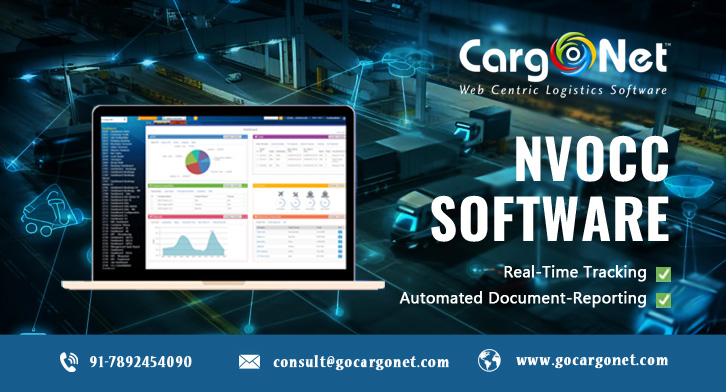
That’s why modern NVOCCs are turning to CargoNet NVOCC Software—a powerful digital platform purpose-built to streamline, automate, and optimize the entire NVOCC workflow.

What Does NVOCC Software Do?

NVOCC Software is designed to automate and simplify the daily tasks that NVOCCs handle, including:
But CargoNet doesn’t stop at digitizing tasks. It brings advanced capabilities like:

Core Modules That Make CargoNet Different

Let’s explore two of CargoNet’s most powerful modules designed to bring back control, profitability, and transparency to your operations.

Deep Dive: CargoNet Principal Operation Module

CargoNet Principal Operation module is built specifically for NVOCC headquarters, allowing broader system access and total operational command.

Key Capabilities:

Reporting Tools

The Power of MRG: Minimum Rate Guideline Module

Pricing in global trade is dynamic. Market disruptions, geopolitical conflict, port congestion, and fuel surcharges can all affect profitability. The MRG module ensures you’re always in control of your pricing policies—no matter what.

Core Features:

Why Choose CargoNet NVOCC Software?

Feature

Without CargoNet AI Discipline

Principle Operation Module

Centralized control over financials, rates, and inventory

MRG Rate Governance

Prevents under-quoting and ensures profitability during volatile events

Full Container Lifecycle

Buy, lease, track, and gate-out—all in one platform

Advanced Reporting

Real-time container-wise and vessel-wise profitability insights

Agent Restrictions

Role-based control ensures compliance and security

Global-Ready

Supports multi-region ops, agent relations, and sub-companies

Built-In Financial Tools

Sales, purchase, lease, credit notes—all connected

Real-Time Reporting

Access P&L and container stock across vessels and agents

Seamless Compliance

Integrated with customs filing and regulatory formats

Modular & Scalable

Use only what you need—expand as you grow

NVOCC Operation Gaining Control?

Managing a global NVOCC operation today isn’t just about moving containers—it’s about managing risk, controlling costs, and staying compliant across borders. But many operators still struggle with:
All the above Module drives system driven Control on your operations

NVOCC Operations Made easy via CargoNet

CargoNet NVOCC Software offers a robust solution that automates critical processes, improves operational efficiency, and ensures compliance with global shipping standards. From booking management to real-time tracking and document automation, CargoNet empowers your NVOCC business to operate at its best—no matter how complex your operations become.
Whether you’re managing a regional operation or a global network of agents, CargoNet delivers the control, clarity, and scalability needed to compete in 2025 and beyond.

Take the Next Step Toward Operational Excellence

At CargoNet, we combine industry expertise, technical excellence, and trusted best practices to empower your NVOCC business.

Experience the authoritative control and smart pricing you need to succeed—no matter what challenges arise.

Master Airway Bill (MAWB) Generation Software: Streamlining Air Freight with CargoNet

In the evolving landscape of air freight logistics, the Master Airway Bill (MAWB) is crucial for smooth operations and legal compliance. As the global air freight market grows from $272 billion in 2019 to $376 billion by 2027, efficient documentation is more important than ever. CargoNet’s MAWB Generation Software is designed to automate and streamline this process, enhancing accuracy and compliance.

What is a Master Airway Bill (MAWB)?

The Master Airway Bill is a legal document issued by airlines that confirms receipt of cargo for transportation. It includes:
With air freight handling over 52 million metric tons of cargo annually, automating MAWB generation can significantly boost efficiency and accuracy.

Why Choose CargoNet’s MAWB Generation Software?

Creating MAWBs manually can lead to inefficiencies and errors. CargoNet’s MAWB Generation Software automates this process, helping your business save time and reduce errors while ensuring compliance with international standards.
Here’s how CargoNet optimizes the MAWB process:

Master Airway Bill (MAWB) Generation Process with CargoNet Software

CargoNet Master Airway Bill Generation Software streamlines the MAWB creation process with the following steps:

Gather Shipment Information:

Use CargoNet to input and store essential shipment details such as origin, destination, weight, dimensions, and type of goods. The software facilitates easy data entry and retrieval.

Prepare the Air Waybill Form:

Utilize CargoNet’s electronic air waybill form. The software automates MAWB creation, ensuring accuracy and compliance with international standards.

Enter Shipper and Consignee Details:

Input shipper (sender) and consignee (recipient) information into CargoNet. The software auto-fills and verifies addresses and contact details to minimize errors.

Provide Flight Information:

Enter flight details, including flight numbers, departure and arrival dates, and airport codes, into CargoNet. The software integrates with carrier systems to streamline this process.

Specify Cargo Details:

Detailed cargo descriptions, quantities, and special handling instructions using CargoNet. The software efficiently manages and tracks cargo specifics.

Declare Value and Insurance:

Declare the shipment’s value and any insurance coverage within CargoNet. The software calculates and includes these details in the MAWB.

Calculate Charges:

CargoNet automates the calculation of charges, including freight, handling, and insurance fees, ensuring accurate and up-to-date cost calculations.

Sign and Issue:

Review the completed MAWB in CargoNet. Once confirmed, digitally sign the document within the software. CargoNet allows for electronic issuance of the MAWB, reducing paperwork and processing time.

Distribute Copies:

CargoNet facilitates the electronic distribution of MAWB copies to the shipper, consignee, and carrier, ensuring all parties receive their respective documents promptly.

Track and Manage:

Use CargoNet’s tracking features to monitor the shipment’s progress. The software provides real-time updates and helps manage any issues that arise during transit.

Key Features of CargoNet MAWB Generation Software

Benefits for Freight Forwarders

By automating MAWB generation with CargoNet, freight forwarders can:

Conclusion

With the air freight industry experiencing significant growth, adopting advanced solutions like CargoNet’s Master Airway Bill MAWB Generation Software is essential for staying competitive. Automate your MAWB creation process to improve efficiency, accuracy, and compliance in your logistics operations.

Ready to Transform Your Air Freight Documentation?

Automate your MAWB generation with CargoNet and benefit from faster, more accurate documentation, real-time tracking, and complete compliance. Stay ahead in the growing air freight market.

CargoNet Pay as you Go: Flexible, Customizable Freight and Logistics Management for Modern Businesses

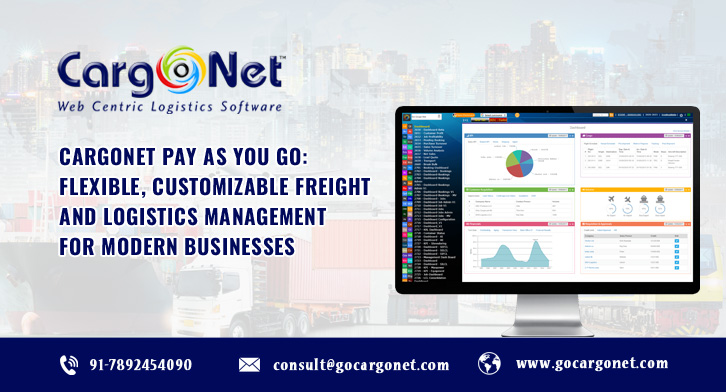
CargoNet Pay as you Go is a customizable platform designed for businesses that need efficient logistics management without the burden of unnecessary costs. Whether you’re handling international customs filings, tracking shipments, or managing cargo data, CargoNet provides a tailored solution to fit your needs. With a range of standalone modules available, you only pay for the services you use — giving your business maximum flexibility and operational efficiency.

1. Freight Forwarding Software Module

CargoNet Freight Forwarding Software Module enables freight forwarders to manage every aspect of their logistics operations efficiently. This module is designed for sea, air, and land freight, ensuring smooth coordination across all shipment modes.
Overview: Simplifies the management of ocean freight for both imports and exports, automating the creation of Bills of Lading (BoL), manifests, and shipping instructions.
Features: Real-time shipment tracking, automated documentation, integration with port systems, and regulatory compliance for smooth sea freight operations.
Overview: Streamlines the air freight process for both import and export, ensuring accurate Air Waybill (AWB) creation, tracking, and compliance with global aviation regulations.
Features: AWB generation, electronic manifest submission, real-time shipment tracking, and airline tariff integration for cost transparency.
Overview: Automates the coordination of land freight, including trucking and rail transportation, to ensure seamless integration with sea and air shipments.
Features: Automated dispatch, route planning, vehicle tracking, and regulatory compliance for cross-border land transportation.
Overview: Manage quotes for sea, air, and land freight services, ensuring accurate cost estimation and customer transparency.
Features: Real-time rate updates, quote comparison, and automated quote generation based on shipment specifics.
Overview: Automates the consolidation of shipments for cost optimization, with easy deconsolidation options for multi-consignment cargo.
Features: Automated creation of manifests, seamless customs integration, and real-time cargo breakdown tracking.

2. Finance and E-Invoicing Module

CargoNet Finance and E-Invoicing Module provides freight forwarders and logistics companies with powerful financial tools to manage their billing, invoicing, and accounting operations in one unified system.
Overview: Automates the generation of invoices for freight services, ensuring accurate billing based on shipment details.
Features: Customizable invoicing templates, automated invoice generation, and real-time integration with shipment data to reduce errors.
Overview: Ensures compliance with global e-invoicing regulations, enabling businesses to submit digital invoices directly to clients or government portals.
Features: Automated e-invoice generation, electronic submission to government tax portals (GST, VAT), and real-time tracking of invoice status.
Overview: Centralizes all financial data, providing tools for freight cost management, revenue tracking, and expense monitoring.
Features: Financial reports, profit and loss tracking, cash flow management, and full integration with CargoNet’s logistics modules.
Overview: Manage receivables and payables within the CargoNet system, ensuring timely payments and collections for your freight operations.
Features: Automated payment reminders, real-time tracking of outstanding invoices, and secure payment gateway integration.
Overview: Simplifies payment processing by allowing businesses to print cheques directly after entering payment details in the system.
Features: Automated cheque generation, customizable cheque templates, and integration with CargoNet’s accounting system for streamlined payment processing.

3.Freight forwarding Regulatory Compliance

Overview: In compliance with India’s Sea Cargo Manifest and Transshipment Regulations, SCMTR CSN handles the generation and submission of Cargo Summary Notifications.
Features: CargoNet Automated submissions, real-time compliance checks, and audit trails for easy tracking.
Overview: Cargo Information Management – Electronic Submission handles electronic filings for multiple types of shipments and helps businesses adhere to regional and international regulations.

Features:CargoNet Centralized management for electronic customs filings, ensuring compliance with multiple jurisdictions.

Overview: Required for the transport of goods across states within India, e-WayBill ensures GST compliance.

Features: This module automates the creation and submission of e-way bills, reducing paperwork and ensuring compliance.

Overview: Verified Gross Mass (VGM) is essential for shipping containers. Incorrect weight declarations can result in fines or delays.
Features: CargoNet’s VGM module ensures accurate weight reporting and timely submission to port authorities.
Overview: Form 13 is necessary for containerized cargo clearance at Indian ports. CargoNet’s module simplifies its generation and electronic submission.
Features: Fully automated workflows for generating Form 13, real-time submission to Indian ports, and seamless integration with port systems.
Overview: Special Economic Zones (SEZ) require specific compliance filings. The SEZ Filing module streamlines the process by automating submissions for SEZ cargo.
Features: Our Solution is full automation for SEZ compliance, ensuring that you meet all regulatory requirements for transactions within these zones.
Overview: Fast Tag integration automates toll payments for vehicles transporting cargo, ensuring smooth passage through toll booths in India.
Features: CargoNet enables automatic deduction and tracking of toll payments, streamlining the toll management process for cargo vehicles.

4.Indian Customs Software

India’s dynamic customs regulations require businesses to have an efficient and adaptable solution for filing and compliance. CargoNet’s Indian Customs Software is designed to simplify the entire customs documentation and submission process, providing a seamless interface for managing imports, exports, and manifest declarations.
Overview: Automates the preparation and submission of necessary import documents, including Bills of Entry and import licenses.
Features: This module reduces manual errors by automating the entire import process, ensuring quicker and more accurate filings.
Overview: Streamlines the creation of export documents such as Shipping Bills, commercial invoices, and packing lists.
Features: Fully automated document generation ensures that export shipments comply with customs requirements and are processed promptly.
Overview: Simplifies the filing of consolidated cargo manifests for multi-consignment shipments, easing the administrative burden for businesses.
Features: Automatically generates and submits Consol Manifests to Indian Customs, ensuring compliance with the latest regulations and improving operational efficiency.

5. Customs EDI Software

The backbone of any international logistics operation is customs clearance. CargoNet provides a suite of EDI (Electronic Data Interchange) tools that automate the customs submission process across different countries, ensuring faster clearance and reduced paperwork.
Overview: The AMS system is critical for any shipments entering the US, and failure to comply can lead to delays or penalties. The CargoNet AMS Filing Software streamlines this process by automating the submission of cargo data to US Customs and Border Protection (CBP).
Features: Real-time validation of manifest data, automated compliance checks, and integration with US port systems for seamless operations.
Overview: Required for all ocean imports into the US, the ISF filing, also known as “10+2”, must be completed before cargo arrives.
Features: Our Solution simplifies this complex process by integrating shipping information into a single form, automating the 10+2 submission to US Customs.
Overview: The ACI (Advance Commercial Information) system is Canada’s customs filing mechanism. All shipments entering Canada must have pre-arrival information submitted through ACI.
Features: Automated data validation, real-time tracking, and integration with the Canadian Border Services Agency (CBSA), ensuring your cargo data is submitted correctly.
Overview: For shipping to and from Japan, the JP24 module ensures that maritime container cargo declarations comply with Japan’s customs requirements.
Features: CargoNet software assists in the timely submission of cargo information, helping to mitigate delays and improve risk assessment accuracy.

6.GMAX – Advanced Shipment Information (ASI) Module

Managing documentation for air and ocean shipments can be complex and time-consuming. The GMAX ASI module within CargoNet simplifies and automates this process, making it easy to generate and manage critical documents like Air Waybills (AWBs) and House Manifests.
Overview: Air Waybills are essential for international air freight, ensuring all shipping details, such as sender/receiver information, weight, and cargo description, are accurately recorded. The GMAX ASI module automates AWB creation, streamlining the entire process.
Features: CargoNet electronically generates, stores, and tracks AWBs, reducing manual data entry and minimizing errors. This system ensures every shipment is properly documented and readily accessible for tracking and regulatory purposes.
Overview: House Manifests are critical for consolidated shipments, providing customs with a detailed breakdown of cargo.
Features: CargoNet automates the generation of house manifests, ensuring that every shipment complies with regional customs requirements. This not only speeds up the documentation process but also improves accuracy, reducing the risk of customs delays.

7. Tracking Solutions

Real-time visibility of cargo is essential for effective logistics operations. CargoNet provides advanced tracking solutions for both containers and individual shipments.
Overview: Offers real-time updates on the location and status of shipping containers.
Features: CargoNet ensures accurate tracking and provides immediate notifications of any delays or issues in transit.
Overview: Provides comprehensive visibility across the entire shipment lifecycle, from pickup to delivery.
Features: CargoNet includes real-time notifications on shipment status, customizable alerts, and integration with customer-facing portals to enhance client visibility.

Why Choose CargoNet Pay as you Go?

With CargoNet, you only pay for the modules your business requires, eliminating the cost of unnecessary services.
Choose from a wide selection of modules designed for customs management, shipment tracking, cargo data handling, and more. Tailor your logistics operations to your exact needs.
Stay compliant with international regulations for customs and shipping with specialized modules for the US, Canada, Japan, India, and more.
Automate complex processes like customs filing, shipment tracking, and document generation, reducing manual errors and improving speed.

How It Works

Choose the specific modules your business needs, whether it’s for customs filings, shipment tracking, or documentation.
With the CargoNet pay-as-you-go model, you have full control over your logistics spending. Add or remove modules as your business evolves.
Enjoy efficient, automated processes that streamline your logistics management and improve compliance.

Who Benefits from CargoNet Pay as you Go?

Gain full control over your shipment tracking and customs filings, paying only for the services you require.
Streamline operations with customized modules for documentation, real-time tracking, and regulatory compliance.
Manage international shipments seamlessly with solutions tailored for global customs regulations.
Take control of your logistics operations with CargoNet Pay as you Go. Choose your modules, pay for what you need, and start optimizing your supply chain today.

Contact our team for a personalized consultation at +91 7892454090

Frequently Asked Questions

CargoNet Pay & Go is a comprehensive customs compliance solution that offers a range of services tailored to your specific needs.

Our pricing is based on the services you select. Contact us for a personalized quote.

Yes, we employ the latest security measures to protect your data.

Boosting Logistics Efficiency with CargoNet FASTag Integration and Expense Tracking

In India’s fast-growing logistics landscape, the demand for speed, accuracy, and efficiency is higher than ever. As fleet operations expand, managing toll expenses efficiently becomes a critical task. CargoNet, a leader in logistics software, has introduced FASTag integration to automate toll payments and expense tracking. This powerful tool helps logistics companies optimize fleet management effortlessly.

What is FASTag?

FASTag is India’s electronic toll collection system using Radio Frequency Identification (RFID) technology. It allows vehicles to pass through toll plazas without stopping for cash payments. The toll amount is automatically deducted from a linked prepaid account. This system saves time, reduces fuel consumption, and improves traffic flow, especially for commercial vehicles, which are now required by law to use FASTag.

CargoNet FASTag Integration in India

CargoNet’s FASTag integration addresses the challenges of toll management for Indian logistics companies. Fleet managers no longer need to handle physical toll receipts or make manual payments. Everything is automated and centralized, improving accuracy and transparency in toll expense management.

Key Benefits of CargoNet FASTag Integration

CargoNet FASTag Tracking and Expense Management in India

CargoNet’s FASTag integration also comes with a powerful expense management system. Logistics companies can track toll expenses in real time, controlling costs and optimizing toll-related spending.

Key Features of the Expense Tracking System

Why FASTag Integration is Crucial for India’s Logistics Industry

Integrating FASTag into logistics operations is essential not just for automating toll payments but also for boosting fleet efficiency. In India, where FASTag is mandatory for commercial vehicles, CargoNet’s integration ensures compliance and optimizes toll management.

Benefits of CargoNet FASTag Integration for Indian Logistics Companies

Conclusion

CargoNet’s FASTag integration is transforming toll management in India’s logistics sector. By automating toll payments and simplifying expense tracking, CargoNet helps companies improve efficiency, reduce costs, and focus on timely deliveries.
Ready to optimize your logistics operations? CargoNet’s FASTag integration makes toll management and expense tracking easier than ever. Call us at +91 7892454090 to learn how we can simplify fleet management and give you a competitive edge.

Navigating Freight Movement Challenges in Landlocked Countries: How CargoNet Software Can Transform Logistics

Introduction

Landlocked countries, which are entirely surrounded by land and lack direct access to seaports, face distinctive logistical challenges when it comes to international trade. Without a coastline, these nations must rely on neighboring countries’ transport networks and routes to access global markets, complicating the movement of goods. This geographical limitation necessitates efficient and effective management of freight to overcome obstacles related to transit times, costs, and regulatory complexities. CargoNet advanced freight movement software offers a comprehensive solution to these challenges, providing landlocked countries with tools to streamline their logistics operations and enhance their supply chain management.

What Are Landlocked Countries?

Landlocked countries are nations encircled by land, lacking any direct coastline along oceans or seas. This unique position complicates their ability to engage in global trade efficiently, as they depend on neighboring countries’ infrastructure and agreements to access maritime routes. The absence of direct sea access poses significant hurdles, including increased transportation costs, longer transit times, and complex logistics networks.

Challenges Faced by Landlocked Countries

How CargoNet Transforms Freight Management

Key Benefits of CargoNet Freight Movement Software for Landlocked Countries

Logistics Barriers in Landlocked Regions: CargoNet Solutions

By leveraging powerful tools like CargoNet, landlocked countries can overcome geographical constraints and build more resilient, efficient supply chains. This advancement not only benefits individual businesses but also contributes to overall economic growth and regional integration. For instance, a landlocked country in Central Asia using CargoNet might achieve:
As global trade dynamics continue to shift, adopting advanced freight movement software like CargoNet will become increasingly crucial for landlocked countries. By leveraging such innovative solutions, these nations can enhance their logistical capabilities, streamline operations, and effectively capitalize on their strategic positions as critical land bridges between regions. Embracing CargoNet enables landlocked countries to not only navigate their unique challenges more efficiently but also to thrive in the competitive global market, transforming geographical constraints into strategic advantages.
Ready to turn geographical challenges into strategic advantages? Discover how CargoNet can elevate your logistics operations. Contact us today to learn more and get started!

CargoNet AI: Transforming Logistics Through Intelligent Email Processing

In the dynamic world of logistics and freight forwarding, efficiency is essential. CargoNet advanced suggestive AI is revolutionizing the industry by leveraging the power of email communications to automate and optimize logistics and freight operation workflows. Here’s how this innovative technology is enhancing operations and driving success in the logistics sector.

Intelligent Email Analysis and Workflow Automation

Central to CargoNet suggestive AI for logistics is its ability to analyze incoming emails and automatically generate relevant workflows. This sophisticated system comprehends the context and content of emails, initiating appropriate processes with minimal human intervention. Here’s how it’s transforming key facets of logistics and freight forwarding:

Accurate Freight Cost Calculation

CargoNet AI-driven freight solutions examine emails for shipment details and swiftly calculate freight costs. By factoring in variables such as weight, dimensions, destination, and special handling requirements, it delivers precise quotes within seconds. This efficiency not only saves time but also minimizes pricing errors.

Optimal Carrier Matching

Upon receiving a shipping request via email, CargoNet AI promptly identifies the most suitable carrier. It evaluates criteria including cargo type, destination, transit time requirements, and carrier performance history to recommend the best option, streamlining the booking process.

Enhanced Shipping Time Predictions

By analyzing both historical data and current conditions, CargoNet AI provides highly accurate shipping time forecasts. It considers potential delays, customs processing times, and carrier performance to offer clients realistic delivery expectations.

Real-Time Shipment Tracking

The AI continuously monitors tracking updates received via email and automatically updates shipment statuses within the system. It also proactively alerts clients to potential delays or issues, thereby improving transparency and customer satisfaction.

Strategic Shipment Consolidation

CargoNet suggestive AI identifies opportunities for shipment consolidation by analyzing incoming orders. It proposes combining shipments with similar destinations or schedules, which can lead to cost reductions for both the company and its clients, showcasing efficient cargo management.

Streamlined Freight Accounting

The AI extracts essential financial data from emails and updates accounting records automatically. It can match invoices with shipments, identify discrepancies, and suggest payment prioritization, thus simplifying the accounting process.

Accelerated Email Responses

CargoNet AI generates responses to common email inquiries, ensuring prompt and consistent communication. It handles routine questions about shipping rates, transit times, and documentation, allowing staff to focus on more complex tasks. This intelligent email processing significantly enhances operational efficiency.

Instant Workflow Activation

By automating workflow creation based on email content, CargoNet AI accelerates processes. Whether it’s initiating a booking, processing a claim, or managing a customer inquiry, the system activates workflows immediately, reducing lag times and boosting overall efficiency with AI-powered logistics.

The CargoNet Advantage: Continuous Improvement

By integrating suggestive AI for email processing and workflow automation, CargoNet provides a comprehensive solution that redefines logistics and freight forwarding operations. Our system continuously learns and evolves, enhancing its suggestions and aligning more closely with your specific business requirements.

Transformative Benefits for Logistics Operations

Adopting CargoNet email-driven suggestive AI offers numerous advantages:

Embrace the Future of Logistics with CargoNet

As the logistics industry evolves, the need for rapid information processing and prompt action becomes increasingly critical. CargoNet suggestive AI email processing system provides the competitive edge companies require to excel in this challenging landscape.
Ready to elevate your logistics operations with cutting-edge AI technology? Contact CargoNet today to discover how our suggestive AI can transform your email processing, optimize your workflows, and advance your business to new levels of efficiency and success.

Digital Freight Forwarders Using CargoNet vs Traditional Freight Forwarders

The freight forwarding industry stands at a pivotal juncture, driven by technological advancements that are fundamentally reshaping how goods are transported worldwide. Among these innovations, digital solutions CargoNet are at the forefront, revolutionizing freight forwarding operations. In this blog, we will explore the contrasts between digital freight forwarders utilizing CargoNet and their traditional counterparts. We’ll delve into the key differences, advantages, and challenges associated with each approach, providing a comprehensive analysis for industry stakeholders.

Overview of Freight Forwarding

Freight forwarders play a crucial role in the global supply chain, acting as intermediaries between shippers and carriers to facilitate the transportation of goods. Traditionally, this process has been labor-intensive, involving extensive paperwork, manual coordination, and significant human intervention.

Traditional Freight Forwarding

Historically, freight forwarding has relied on manual processes, extensive documentation, and face-to-face interactions. These methods, while effective in the past, are often plagued by inefficiencies and delays.

Digital Freight Forwarding

The advent of digital technologies has introduced a new paradigm in freight forwarding. Digital freight forwarders leverage advanced software platforms like CargoNet, enhancing operational efficiency, transparency, and customer service.

What is CargoNet?

CargoNet is a cutting-edge software platform designed to streamline and optimize the freight forwarding process. It integrates various functionalities, including real-time tracking, automated documentation, and advanced data analytics, providing a comprehensive solution for modern freight forwarding needs.

Benefits of CargoNet

CargoNet offers several advantages, such as:

Key Differences Between Digital and Traditional Freight Forwarders

Operational Efficiency

Speed and Reliability

Cost Efficiency

Customer Experience

Advantages of Using CargoNet

Improved Accuracy and Reduced Errors

CargoNet automation features drastically reduce human errors, ensuring accurate documentation and seamless operations. This leads to fewer shipment delays and disputes, enhancing overall reliability.

Enhanced Data Management

CargoNet centralizes data management, allowing for easy access to shipment details, performance metrics, and historical data. This centralized data repository facilitates better decision-making and strategic planning.

Scalability and Flexibility

Digital solutions like CargoNet are highly scalable, making it easier for freight forwarders to expand their services and adapt to changing market demands. Whether it’s handling increased shipment volumes or integrating new services, CargoNet provides the flexibility needed for growth.

Sustainability

By reducing paper usage and promoting digital documentation, CargoNet supports sustainable practices in freight forwarding. This not only reduces the environmental impact but also aligns with global sustainability goals.

Challenges and Considerations

Adoption and Integration

Transitioning from traditional to digital systems can be challenging. Freight forwarders must invest in training and change management to ensure a smooth transition.

Initial Investment

Implementing digital solutions CargoNet requires a significant initial investment in software, hardware, and training. However, the long-term benefits often outweigh these costs.

Training and Skill Development

The shift to digital solutions necessitates upskilling the workforce. Freight forwarders need to invest in training programs to equip their staff with the skills required to operate new technologies effectively.

Cybersecurity

With the increase in digital operations, ensuring robust cybersecurity measures is essential. Freight forwarders must implement comprehensive security protocols to protect sensitive data and prevent cyber threats.

Conclusion

In conclusion, the shift towards digital freight forwarding using platforms like CargoNet represents a significant leap forward for the industry. While traditional freight forwarding has its merits, the advantages offered by digital solutions are undeniable. From enhanced efficiency and cost savings to improved customer experience and sustainability, digital freight forwarders are setting new standards in the logistics sector.
As the industry continues to evolve, embracing digital solutions like CargoNet will be crucial for staying competitive and meeting the demands of the modern supply chain. We encourage freight forwarders to explore these advancements and consider the transformative potential of digital technologies for their operations.

Microsoft Outage Grounds Flights and Disrupts Cargo Chains: How to Prepare for Future Incidents

A recent disruption in Microsoft cloud services has caused widespread impacts, particularly on aviation and cargo logistics. Linked to issues with CrowdStrike Falcon’s cybersecurity platform, the outage exposed critical vulnerabilities in digital systems supporting global transportation and logistics. The aviation sector has been notably affected, with numerous flight management systems rendered inoperative, leading to extensive cancellations and delays. This incident underscores the urgent need for resilience and preparedness in our technology-dependent world.

Overview of the Microsoft Service Interruption

On July 19, Microsoft experienced a major outage affecting several of its cloud-based services, including Azure, Teams, and Outlook. The issue was linked to a technical problem with CrowdStrike Falcon’s cybersecurity platform, which is integrated into Microsoft’s infrastructure. CrowdStrike, a global leader in cybersecurity, provides advanced antivirus and threat detection services for Microsoft’s Windows devices. The problem originated from a recent update released by CrowdStrike, which inadvertently impacted IT systems worldwide.
CrowdStrike quickly identified the issue and began working on a resolution. Microsoft CEO Satya Nadella stated, “Yesterday, CrowdStrike released an update that began impacting IT systems globally. We are aware of this issue and are working closely with CrowdStrike and across the industry to provide customers with technical guidance and support to safely bring their systems back online.”
CrowdStrike Falcon is known for its comprehensive security solutions, including endpoint protection, threat intelligence, and incident response services. The incident underscores the critical importance of robust cybersecurity measures in maintaining digital infrastructure resilience.

Aviation Sector: Operational Challenges

The impact of the outage on the aviation industry was both immediate and severe. Systems critical for flight management, reliant on Microsoft’s cloud services, were disrupted, leading to over 1,000 flight cancellations and numerous delays globally. Key challenges included:
Major carriers such as Etihad, Qatar Airways, and Lufthansa issued alerts on their websites about potential service degradation in their booking systems, adding to passenger frustrations.

Cargo and Logistics: Supply Chain Disruptions

The cargo and logistics sector experienced significant disruptions due to the outage. Kuehne + Nagel, a major logistics provider, stated that they are closely monitoring the situation affecting airlines and airports globally. They reassured their customers that their own IT systems are functioning normally and that they are assessing any potential impacts on air cargo, while keeping their clients informed.

Key disruptions in the cargo sector included:

Economic Implications

While the full economic impact of the outage is still being assessed, preliminary reports suggest substantial financial repercussions for airlines and cargo operators. The affected companies experienced notable fluctuations in their stock prices, reflecting the broader economic consequences of the disruption. The incident underscores the vulnerabilities inherent in industries that heavily depend on digital infrastructure.

Technological Dependencies in Modern Transportation

The Microsoft outage has highlighted the critical reliance of modern transportation on cloud-based services. Industry experts are now calling for a reassessment of risk management strategies related to centralized IT infrastructure. The need for enhanced technological resilience has become a key focus.

Cybersecurity Concerns

The situation was further complicated by warnings from the US Cybersecurity and Infrastructure Security Agency (CISA) about potential exploitation attempts by hackers during the outage. This emphasizes the need for robust cybersecurity measures to safeguard against vulnerabilities in critical infrastructure.

Industry Response and Future Preparedness

In response to the outage, the aviation and cargo logistics industries are re-evaluating their technological dependencies and risk management strategies. Key areas of focus for improving resilience include:

Diversified Tech Infrastructure

Robust Offline Contingency Plans

Reducing Single-Provider Dependency

Enhanced Communication Protocols

Regulatory Compliance and Industry Standards

By addressing these areas, the aviation and cargo logistics industries can significantly enhance their resilience against future technological disruptions. This proactive approach will not only mitigate operational risks but also build customer trust and ensure the integrity of global supply chains.

Conclusion and Outlook

The Microsoft outage has exposed critical vulnerabilities within the aviation and cargo logistics sectors, underscoring the need for a balanced approach to leveraging digital technology. As these industries increasingly integrate advanced technologies, ensuring operational resilience against disruptions will be crucial. Future investments will likely focus on strengthening technological redundancy and enhancing crisis management strategies to better prepare for similar challenges.

Source : stattimes.com

Master Air Waybill (MAWB) vs. House Air Waybill (HAWB): Key Differences and Uses

Master Air Waybill (MAWB) vs. House Air Waybill (HAWB): Key Differences and Uses

In the realm of air freight, two critical documents facilitate the transportation of goods: the Master Air Waybill (MAWB) and the House Air Waybill (HAWB). Understanding the differences between these documents is essential for efficient logistics management. This blog will explore the key distinctions and uses of MAWB and HAWB, and how they fit into the broader context of air freight operations.

What is a Master Air Waybill (MAWB)?

A Master Air Waybill (MAWB) is issued by an airline or its authorized agent. It serves as a contract between the shipper and the airline, outlining the terms and conditions of carriage. The MAWB covers the entire journey of the shipment from the point of origin to the final destination.

What is a House Air Waybill (HAWB)?

A House Air Waybill (HAWB) is issued by a freight forwarder. It details the agreement between the freight forwarder and the shipper. The HAWB is used when a freight forwarder consolidates multiple shipments into one master shipment under a single MAWB.

Key Differences Between MAWB and HAWB

Issuing Party

Contractual Relationship

Level of Detail

Scope of Coverage

Role in Consolidation

How CargoNet Simplifies HAWB and MAWB Management

Efficiently managing HAWBs and MAWBs can be challenging due to the complexity and volume of data involved. CargoNet software offers comprehensive solutions to streamline these processes.

Automated Documentation

Generate accurate MAWB and HAWB documents with ease, using pre-built templates and customization options.

Compliance Assurance

Built-in compliance checks ensure all shipments adhere to international shipping regulations.

Real-Time Tracking

Track both MAWB and HAWB shipments in real-time, receiving instant updates and notifications.

Centralized Document Management

Store and manage all MAWB and HAWB documents in a secure, centralized digital repository.

Seamless Integration

Integrate with ERP systems and carrier platforms for smooth data flow and reduced inefficiencies.

Comprehensive Reporting and Analytics

Access advanced reporting and analytics tools to generate custom reports and gain insights into shipment performance.

Conclusion

Understanding the differences between Master Air Waybills (MAWB) and House Air Waybills (HAWB) is crucial for effective air freight management. CargoNet software addresses the challenges associated with managing these documents by providing automated solutions, ensuring compliance, and enhancing visibility and efficiency.

Ready to optimize your air freight operations?

Sign up for a free trial of CargoNet software today and experience the benefits of streamlined MAWB and HAWB management. Contact our sales team for a personalized demo and see how CargoNet can meet your specific needs.
cargonet-logo-icon
Cargonet Cargo Software Logo

Feedback & Reward program

Submit the Feedback and avail the Rewards.

1. Your satisfaction & reliability on CargoNet ?

2. Your Rating on Support & co-ordination team?

3. Satisfaction on the look and feel of CargoNet ?

4. Please specify any 2 best features that you feel more helpful in CargoNet?

5. Please specify any 2 best reports that you are taking on regular basis?

6. Are you using Copy Job option in CargoNet Software?

7. Are you using Automatic DSR (Daily Status Report) Option? It automatically sends reports to customer about the shipment status

8. Are you using Automatic Outstanding Reports option? Period Auto outstanding reminders to customer

9. Any other thoughts to improve in CargoNet? Please share.

* Join our Reward Program by recommending CargoNet (Cash Rewards Awaiting)

“Thanks for your feedback. Our goal is to create the best possible product, support & service, and your thoughts, ideas & suggestions play a major role in helping us identify opportunities to improve.”

Cut AI cost ,
not performance

discover how top Freight Forwarding companies  reduce AI-related expense and speed up operation with CargoNet AI, we will show it how

Share your information for instant access :

Get a Demo Now

Get a Demo Now