
For freight forwarders, a customer quotation is more than a price. It is often the first major step toward winning a shipment.
But creating that quotation can still involve reading emails, checking spreadsheets, searching carrier rates, calculating surcharges, converting currencies, applying margins, verifying shipment details and finally preparing a customer-ready quote.
When enquiries arrive continuously across email, WhatsApp, spreadsheets and different systems, the quoting process becomes difficult to scale.
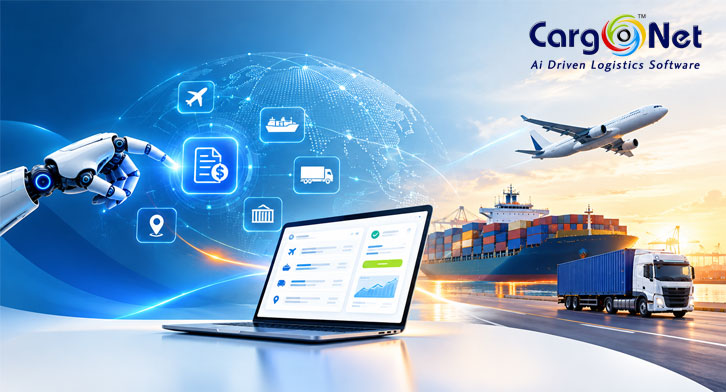
This is where AI quote generation in logistics is changing the freight quotation process.
Instead of making pricing teams manually collect and assemble information for every enquiry, AI can help interpret the customer request, identify shipment requirements, access relevant rate information, assist with calculations and prepare a quotation for review.
For freight forwarders looking to respond faster without losing pricing control, AI freight quotation can turn quoting from a repetitive manual activity into an intelligent, connected workflow.
What Is AI Freight Quotation?
AI freight quotation is the use of artificial intelligence to assist with collecting shipment requirements, interpreting freight enquiries, identifying relevant rates and charges, calculating pricing and preparing customer quotations.
Traditional freight quotation often depends heavily on people finding information across multiple sources.
An AI-assisted quotation workflow can connect these steps.
For example:
Customer enquiry → Shipment details → Rate selection → Cost calculation → Margin → Quote generation → Customer response
The goal is not simply to generate a number.
A useful AI freight quotation system should understand the context behind the shipment and help the pricing team create a quote that is faster, consistent, transparent and commercially usable.
CargoNet approaches this as part of a broader AI-powered freight platform, where quotations are connected with sales, operations, documentation, tracking and finance rather than operating as an isolated activity.
Why Freight Quotation Is Still a Problem for Logistics Teams
The freight quotation process looks straightforward from the outside.
A customer asks:
“Please quote 2 × 40ft containers from Mumbai to Hamburg.”
But the pricing team may need much more information before providing a reliable quotation.
- Origin and destination
- Port or airport
- Mode of transport
- FCL or LCL
- Container type
- Cargo weight and volume
- Commodity
- Carrier
- Carrier
- Freight rate
- Fuel or bunker surcharges
- Origin charges
- Destination charges
- Documentation charges
- Customs-related costs
- Inland transportation
- Currency conversion
- Rate validity
- Customer-specific pricing
- Agent or carrier rates
- Desired margin
- Excel spreadsheets
- Email conversations
- Carrier portals
- Internal rate cards
- Previous quotations
- Customer agreements
- Agent communications
- ERP or freight management systems
The more sources a pricing team has to check, the more manual the quotation process becomes.
Recent freight-tech discussions show the same pattern: pricing teams increasingly deal with RFQs arriving through email, Excel, PDFs and messaging channels, while rate information remains distributed across different sources.
The Hidden Cost of Manual Freight Quotation
1. Slow response times
A customer may be comparing several freight forwarders at the same time.
If one forwarder responds while another is still searching through spreadsheets and emails, the faster response can influence the customer’s next step.
That makes quotation speed a commercial issue, not simply an operational one.
2. Rate information is scattered
Pricing teams may switch between multiple files, portals and email threads to find the correct rate.
This creates unnecessary searching and comparison work.
3. Manual data entry creates opportunities for mistakes
A quotation can contain many individual values.
A wrong:
● port
● currency
● container type
● surcharge
● validity date
● rate
● quantity
● customer detail
● margin
can change the final commercial outcome.
4. Experienced pricing knowledge becomes difficult to scale
In many organizations, experienced pricing professionals know which rates to use, which charges to consider and which customers require special treatment.
That knowledge can remain trapped in individual experience rather than being consistently available across the organization.
5. Follow-ups can get missed
The quotation is sent, but what happens next?
Without a connected workflow, sales teams may have to manually remember which quotation needs a follow-up and when.
Modern freight quotation systems are increasingly addressing not only quote creation but also quote pipelines and follow-up workflows.
How AI Quote Generation Works in Logistics
AI quote generation does not mean asking an AI chatbot:
“Give me the price from Chennai to Rotterdam.”
A useful logistics AI needs access to structured freight information and business rules.
A practical AI quotation workflow can look like this:
Step 1: AI reads the enquiry
The enquiry may arrive through email or another business channel.
AI identifies important information such as:
● Origin
● Destination
● Shipment mode
● Cargo type
● Quantity
● Container type
● Weight
● Volume
● Required service
● Customer requirements
Instead of manually retyping every field, the information can be structured for the quotation workflow.
Step 2: AI identifies the quotation requirements
The system determines what information is available and what may be missing.
For example:
Customer enquiry
5 pallets
2,400 kg
Mumbai → Dubai
Air freight
Delivery required by October 10
The AI can structure the request into a standardized quotation requirement.
Step 3: Relevant rates are identified
The quotation engine can use available rate data and business rules to identify relevant pricing information.
CargoNet’s freight quote management capability is designed to work with multiple shipping and airline rates and provide comparison of available pricing options.
Step 4: Costs and charges are assembled
A freight quote may contain several components rather than one freight number.
AI-assisted workflows can help bring these components together so the pricing team can see the broader cost structure before creating the customer quote.
Step 5: Margin and pricing rules are applied
The quote should reflect the company’s commercial rules.
This can include:
● Customer-specific pricing
● Markups
● Margin requirements
● Currency rules
● Minimum charges
● Trade-lane rules
● Service-specific charges
Step 6: AI prepares the quotation
The system can generate a structured quotation using the required customer and shipment information.
The result can be a customer-ready quote rather than another internal spreadsheet.
Step 7: Human review remains available
AI should not remove commercial control.
For important or complex quotations, the pricing team can review the generated quote before sending it.
This creates a practical model:
AI prepares. People decide.
How AI Quote Generation Works in Logistics
Traditional Quotation
AI-Assisted Quotation
Read enquiry manually
AI extracts enquiry details
Search multiple rate sources
Relevant rate information can be surfaced
Re-enter shipment details
Structured shipment data can be reused
Calculate charges manually
Automated calculation assistance
Prepare quote manually
AI-assisted quote generation
Manually check consistency
Rules and validations can support review
Follow up separately
Quote workflow can support follow-ups
Information remains fragmented
Quote data can connect with other workflows
The objective is not simply to replace a spreadsheet.
The objective is to connect enquiry → pricing → quotation → sales → execution
How CargoNet AI Can Solve the Freight Quotation Problem
CargoNet brings freight quotations into an AI-powered freight management environment rather than treating quotation as a standalone activity.
Its platform combines core freight operations with AI capabilities across areas such as quotations, tracking, invoicing, documentation and sales.
1. AI-assisted quote generation
CargoNet’s AI Sales Agent is positioned to help generate quotes quickly and automate follow-ups.
Instead of starting from a blank quotation every time, the system can assist the team in moving from customer requirement to quotation.
Enquiry → AI assistance → Quote → Review → Customer
This reduces repetitive work for sales and pricing teams.
2. Centralized freight rate management
Freight rates can change frequently and may come from multiple carriers, airlines, agents and internal agreements.
CargoNet’s freight quote management capability supports multiple carrier and airline rates and comparison of available options.
This provides an important foundation for AI quotation.
AI is only as useful as the business data and rules behind it.
Centralized rate information gives the quotation process a more reliable foundation.
3. One-time data entry across workflows
One of the biggest problems in logistics is repeatedly entering the same information.
CargoNet’s platform emphasizes entering information once and using it across workflows.
For quotation teams, this means shipment information does not have to become an isolated piece of data.
The same information can potentially support downstream processes such as:
Quote → Booking → Shipment → Documentation → Tracking → Billing
This creates continuity between sales and operations.
4. AI document intelligencea
Freight quotations are often supported by documents such as:
● Commercial invoices
● Packing lists
● Shipping instructions
● Rate sheets
● Customer RFQs
● Agent quotations
CargoNet’s AI capabilities include document processing designed to extract information from logistics documents and reduce manual data entry.
This becomes particularly valuable when the quotation request itself contains structured or semi-structured information.
Instead of treating documents as files that employees must manually read, AI can help convert relevant information into usable data.
5. Faster sales response
Speed matters because freight enquiries are often time-sensitive.
CargoNet specifically positions faster quotes as one of the benefits of its AI-powered platform.
The commercial workflow becomes:
Customer enquiry arrives
↓
AI identifies requirements
↓
Relevant pricing information is surfaced
↓
Quote is prepared
↓
Sales reviews and sends
↓
Follow-up is automated or tracked
This allows sales teams to spend less time assembling information and more time engaging with customers.
What Makes AI Freight Quotation Different From a Simple Quote Calculator?
A traditional calculator answers:
“What is the price?”
An AI freight quotation workflow can help answer:
“What should we quote, based on this particular shipment, customer, rate structure and business context?”
That difference is important.
A freight forwarder’s pricing decision can depend on more than a base freight rate.
For example:
Base freight
Origin charges
- Destination charges
- Fuel/surcharges
- Inland transportation
- Other applicable costs
- Customer pricing rules
- Margin
Customer quotation
AI can help connect these pieces while keeping the underlying pricing rules and human approval process in place.
AI Freight Quotation Should Not Mean “Black Box Pricing”
One concern freight forwarders may have is:
“If AI creates the quotation, how do I know where the number came from?”
This is an important question.
For commercial freight operations, AI should support transparency and control.
A practical AI quotation system should allow teams to understand:
- Which shipment details were identified
- Which rates were considered
- Which charges were included
- Which pricing rules were applied
- What margin was used
- When the rate expires
- What requires human review
The goal is AI-assisted decision-making, not uncontrolled automated pricing.
CargoNet’s broader AI architecture also emphasizes combining AI capabilities with conventional database and rule-based systems rather than sending every logistics query through a large language model.
That hybrid approach is particularly relevant to freight quotation, where structured business rules and reliable rate data matter as much as natural-language understanding.
Key Benefits of AI Quote Generation for Freight Forwarders
- Faster quotation turnaround. AI can reduce repetitive steps between receiving an enquiry and preparing the quote.
- Less manual data entry. Shipment information can be extracted and reused rather than repeatedly typed.
- More consistent quotations. Standardized workflows can help reduce variation in how different employees prepare quotes.
- Better pricing visibility. Centralized rate information makes it easier to compare pricing options.
- Improved sales productivity Salespeople can spend less time preparing spreadsheets and more time engaging with customers.
- Better scalability As enquiry volumes increase, automation can help teams handle more requests without increasing manual workload at the same rate.
- Connected downstream operations A quotation should not disappear after it is sent. When quotation data is connected to freight operations, it can support booking, documentation, shipment execution and billing.
Key Benefits of AI Quote Generation for Freight Forwarders
AI quote generation can be particularly useful when a company experiences one or more of these problems:
“Our rates are spread across too many Excel files.”
AI can help structure and retrieve information from centralized rate data.
“Our team spends too much time preparing quotes.”
AI can automate repetitive extraction and preparation tasks.
“Every salesperson prepares quotations differently.”
Standardized workflows can improve consistency.
“We receive enquiries through email and documents.”
AI can extract relevant shipment information from unstructured requests.
“Our pricing team is overloaded.”
Automation can reduce repetitive work and allow people to focus on exceptions and commercial decisions.
“We lose time following up on quotations.”
A connected sales workflow can track quotation status and follow-up activities.
“We want AI, but we don’t want to lose control.”
Human review and business rules can remain part of the quotation workflow.
AI Quote Generation for Air, Sea and Road Freight
AI freight quotation should not be limited to one mode.
Modern freight forwarders may manage:
- Air freight
- Ocean freight
- Road freight
- Rail freight
- Multimodal transportation
- FCL
- LCL
- Consolidation
- Inland transportation
- Warehousing
- Port services
The complexity increases when multiple services are combined into one customer requirement.
An AI-powered freight platform can help connect the quotation process across these workflows instead of maintaining separate quotation processes for every service.
CargoNet’s current platform supports air, sea and road freight alongside CRM, quotations, tracking and invoicing, with additional AI capabilities available across its platform tiers.
What Should You Look for in AI Freight Quotation Software?
If you are evaluating an AI freight quotation solution, don’t only ask:
“Can it generate a quote?”
Ask these questions instead:
Can it understand real freight enquiries?
Can it work with our existing rates?
Can it handle multiple freight modes?
Can it apply our pricing rules?
Can users review AI-generated quotations?
Does quotation connect to sales and operations?
Can the system scale?
Can AI be adopted gradually?
The Future of Freight Quotation: From Software to AI Agents
The next stage of freight quotation is moving beyond simple automation.
Instead of software merely storing rates, an AI quotation agent can potentially become an active participant in the workflow.
For example:
Customer:
“Please quote 3 × 40HC from Nhava Sheva to Rotterdam.”
AI agent:
1. Reads the enquiry
2. Extracts shipment requirements
3. Checks available rate information
4. Identifies applicable charges
5. Applies configured pricing rules
6. Prepares the quotation
7. Flags missing information
8. Sends the draft for approval
9. Tracks the quotation
10. Reminds the sales team about follow-up
The human team remains responsible for commercial decisions where required.
The AI handles repetitive coordination.
This is the difference between AI as a chatbot and AI as a workflow agent.
CargoNet is developing its AI capabilities around this broader model, with AI Sales Agent functionality and specialized AI capabilities across operations, finance and support.
AI Freight Quotation: From Faster Quotes to Better Freight Operations
The real value of AI quote generation is not simply saving a few minutes on each quotation.
It is about connecting the commercial process with the rest of the freight operation.
A customer enquiry contains information.
That information can become:
Enquiry → Quote → Booking → Shipment → Documents → Tracking → Invoice
When these processes are disconnected, teams repeatedly enter the same data and manually move information between systems.
When they are connected, the quotation becomes the starting point for an end-to-end freight workflow.
That is where AI can deliver more value.
How CargoNet AI Helps Modern Freight Forwarders
CargoNet combines freight management with AI-powered capabilities to help freight forwarders manage sales, pricing, shipments, documentation, tracking and finance in a connected environment.
For quotation teams, this means moving from:
Manual enquiry handling
to
AI-assisted quotation
from:
Scattered rates
to
Connected rate management
from:
Repeated data entry
to
One-time data capture
and from:
Quote as a document
to
Quote as part of the freight workflow.
The result is a more connected approach to freight quotation—one where AI handles repetitive work while people retain control over pricing and customer decisions.
How CargoNet AI Helps Modern Freight Forwarders
If your pricing team is spending too much time searching for rates, entering shipment details, calculating charges and preparing repetitive quotations, it may be time to rethink the quotation workflow.
CargoNet AI helps freight forwarders connect enquiry handling, freight rates, quotation, sales and operations in one AI-powered freight platform.
Explore how AI can help your team generate quotes faster, reduce repetitive work and manage freight operations with greater control.
CargoNet — AI-Powered Freight Forwarding Software.
Smart. Secure. Seamless. Scalable.