
Deloitte’s FY27 GDP Growth Outlook: The Macro Picture
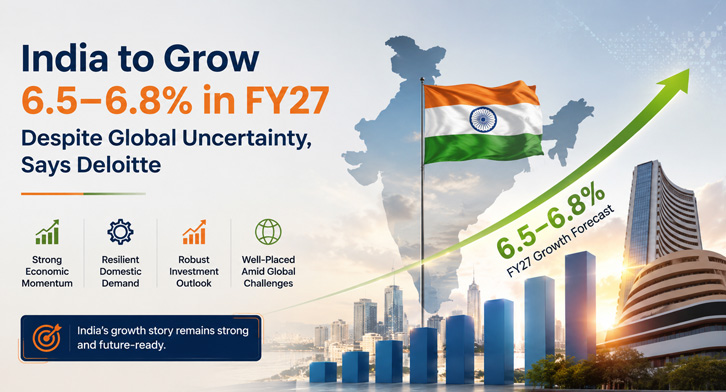
Despite persistent global headwinds—including geopolitical tension, volatile commodity prices, and supply chain realignments—India remains on track as one of the world’s fastest-growing major economies. Deloitte forecasts India’s real GDP growth at 6.5%–6.8% for FY27, closely aligning with the Reserve Bank of India’s (RBI) projected baseline of 6.60%.
While global trade conditions remain uncertain, India’s domestic fundamentals—backed by strong consumer demand, capital expenditure in infrastructure, and strategic manufacturing incentives—provide a resilient foundation for long-term supply chain expansion.
Economic Metric
Forecast / Value
Strategic Impact on Logistics & Freight
Deloitte FY27 GDP Forecast
6.5% – 6.8%
Sustained long-term demand across freight corridors
RBI FY27 GDP Target
6.60%
Stable monetary policy supporting fleet expansion
FY26 GDP Baseline
7.70%
Normalization toward sustainable, high-volume growth
Primary Growth Engine
Domestic Consumption
Spikes in retail, e-commerce, and last-mile delivery
Primary Risk Factor
Commodity Inflation
Variable fuel surcharges and rising operating costs
Deloitte's FY27 GDP Growth Outlook
Indicator
Forecast
FY27 GDP Growth
6.5–6.8%
RBI FY27 Forecast
6.60%
FY26 GDP Growth
7.70%
Growth Driver
Domestic Demand
Major Risks
Inflation, Geopolitical Tensions
Key Opportunities
Manufacturing, Infrastructure, FTAs
How GDP Growth Translates Across Specific Logistics Sectors
Economic expansion directly feeds into cargo movement. Based on Deloitte’s growth metrics, here is the projected impact across key transport modes:
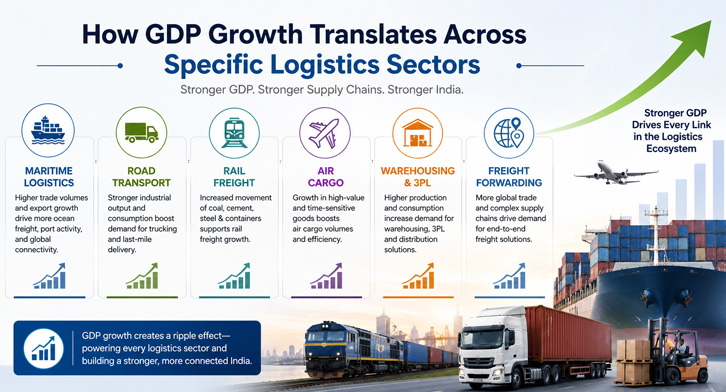
- Road Freight & Trucking: Higher domestic consumption drives elevated tonnage for inter-state highway transport and industrial corridors.
- Warehousing & Cold Chain: Rising retail sales accelerate demand for modern Grade-A warehousing and cold-chain infrastructure near tier-1 and tier-2 hubs.
- Maritime & Shipping: FTA acceleration and manufacturing exports boost containerized ocean freight and port traffic along major trade lanes.
- Air Cargo: High-value manufacturing sectors (electronics, pharmaceuticals) will drive increased demand for express air freight services.
Why Deloitte Expects Stronger Growth in the Second Half
According to Deloitte, economic momentum is likely to improve in the latter half of FY27 due to several positive factors:
1. Festive Demand
Higher consumer spending during India’s festive season is expected to boost retail sales, manufacturing output, transportation, and logistics activity.
2. Monetary Easing
Lower borrowing costs can encourage businesses to expand operations while supporting investment across infrastructure, manufacturing, warehousing, and logistics.
3. Improving Global Trade Conditions
Although global trade remains uncertain, gradual stabilization could improve export demand and increase freight volumes.
4. Infrastructure Investments
Continued investments in roads, ports, railways, industrial corridors, and logistics parks are expected to strengthen India’s supply chain efficiency.
Key Risks: Inflation and Supply Chain Pressures
While the macro outlook is optimistic, freight operators must prepare for margin volatility due to several ongoing risks identified in the report:
- Energy & Crude Oil Volatility: Fluctuating fuel prices directly impact road freight rates and ocean carrier fuel surcharges.
- Agricultural & Weather Disruptions: Unpredictable monsoon patterns can trigger food inflation, altering inland agricultural freight patterns.
- Critical Mineral & Material Costs: Higher costs for industrial raw materials could slow equipment manufacturing and fleet expansion timelines.
Free Trade Agreements Could Drive Long-Term Growth
Deloitte identifies India’s expanding network of Free Trade Agreements (FTAs) as a major catalyst for long-term economic growth.
The report notes that trade agreements alone are not enough. To maximize their impact, India must also focus on:
- Improving industrial competitiveness
- Building resilient domestic supply chains
- Simplifying regulations
- Investing in innovation and technology
- Enhancing workforce skills
- Increasing domestic value addition
These measures can strengthen India’s position as a global manufacturing and export hub.
Inflation Remains the Biggest Challenge
While growth prospects remain strong, inflation continues to pose risks.
Factors contributing to inflationary pressure include:
- Rising crude oil prices
- Higher fertilizer costs
- Expensive critical minerals
- Increased edible oil prices
- Weather-related disruptions affecting food production
Persistent inflation could impact household spending, business costs, and overall economic momentum.
What This Means for the Logistics Industry
India’s stronger economic outlook is expected to generate significant opportunities across the logistics ecosystem.
Sector
Expected Impact
Road Freight
Higher cargo movement
Shipping
Increased export-import volumes
Warehousing
Rising storage demand
Rail Logistics
Improved freight movement
Freight Forwarding
Increased international trade
Ports
Higher container throughput
As manufacturing, exports, and domestic consumption continue to expand, logistics providers may benefit from higher shipment volumes and increased demand for integrated supply chain services.
Economic Outlook Snapshot
Growth Drivers
Potential Risks
Domestic Consumption
Inflation
Manufacturing Expansion
Oil Price Volatility
Infrastructure Investment
Geopolitical Conflicts
Free Trade Agreements
Currency Depreciation
Policy Reforms
Global Trade Disruptions
Supply Chain Improvements
Commodity Price Volatility
CargoNet Analysis: How Freight Forwarders & Shippers Should Prepare
To capitalize on India’s FY27 economic momentum while mitigating cost risks, supply chain managers should focus on three strategic priorities:
- Lock in Fixed Capacity for H2: Secure long-term ocean and road freight contracts early to avoid spot rate surges during the H2 festive volume spike.
- Leverage Multi-Modal Freight: Utilize Dedicated Freight Corridors (DFCs) and coastal shipping routes to offset rising road transport fuel costs.
- Digitize Supply Chain Visibility: Implement real-time freight tracking and route optimization tools to improve turnaround times and lower fleet idle times.
FAQs
What is Deloitte’s GDP growth forecast for India in FY27?
Deloitte projects India’s GDP growth to be between 6.5% and 6.8% for FY27, positioning India as one of the fastest-growing major global economies.
How will India's FY27 GDP growth impact the logistics and freight industry?
Sustained economic growth directly boosts cargo movement, resulting in higher road freight volumes, increased demand for Grade-A warehousing, and greater EXIM container throughput across ports.
Why is economic momentum expected to increase in the second half of FY27?
Growth in H2 FY27 will be driven by festive season retail demand, anticipated monetary easing (lower interest rates), strategic FTA implementations, and ongoing national infrastructure investments.
What are the main inflation risks for Indian supply chains in FY27?
Primary supply chain risks include volatile crude oil prices, rising fertilizer and commodity costs, critical mineral price spikes, and potential weather disruptions affecting agricultural freight flows.