
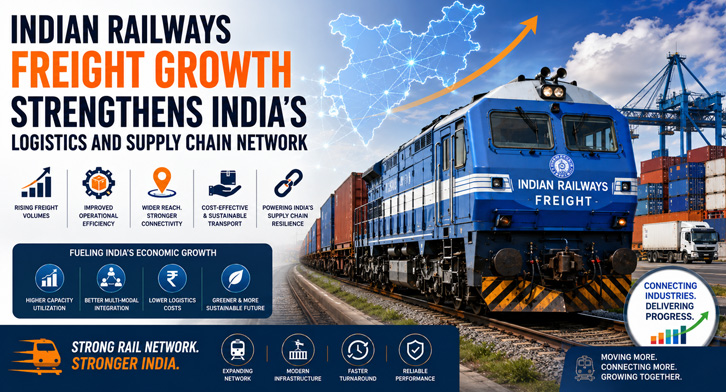
Indian Railways continues to strengthen its position as the backbone of India’s freight transportation network, recording steady growth in cargo movement as industries increasingly shift towards rail-based logistics. Rising demand from sectors including coal, steel, cement, fertilizers, foodgrains, and containerized cargo highlights the railway network’s critical role in supporting India’s expanding economy and industrial output.
The consistent rise in freight volumes reflects growing confidence in rail transport as businesses seek more cost-effective, reliable, and environmentally sustainable logistics solutions. As India accelerates infrastructure development and manufacturing activity, rail freight is emerging as a preferred mode for moving bulk commodities and long-distance cargo.
A major driver behind this growth is the government’s continued investment in logistics infrastructure. The development of Dedicated Freight Corridors (DFCs), modernization of freight terminals, capacity expansion, and improved rail connectivity with ports, industrial corridors, and logistics parks have significantly enhanced operational efficiency while reducing transit times.
The integration of multimodal logistics infrastructure is also encouraging manufacturers, exporters, importers, and logistics companies to shift freight from road to rail. This modal shift is helping businesses lower transportation costs, improve supply chain reliability, reduce fuel consumption, and support India’s sustainability goals by lowering carbon emissions.
Indian Railways is simultaneously transforming its freight services through digitalization and customer-focused initiatives. Online freight booking, real-time shipment tracking, faster cargo handling, electronic documentation, and improved terminal operations are making rail logistics more efficient and accessible for businesses across multiple industries.
With India’s logistics sector undergoing rapid modernization, rail freight is expected to play an even larger role in improving supply chain resilience, reducing national logistics costs, and enhancing the country’s global trade competitiveness. Continued investments in rail infrastructure and technology are expected to support India’s vision of becoming a global manufacturing and export hub while increasing the share of rail in overall freight movement.
Key Highlights
- Indian Railways recorded sustained growth in freight transportation across major industrial sectors.
- Coal, steel, cement, fertilizers, foodgrains, and containers remained the largest contributors to freight volumes.
- Dedicated Freight Corridors (DFCs) are improving speed, capacity, and operational efficiency.
- Modern freight terminals and multimodal logistics parks are strengthening cargo movement.
- Port connectivity and industrial corridor integration are encouraging cargo shifts from road to rail.
- Digital freight services and real-time cargo tracking are enhancing customer experience.
- Lower logistics costs and reduced carbon emissions make rail an increasingly attractive transport option.
- Rail freight growth supports India's manufacturing, exports, infrastructure development, and economic expansion.
Why This Matters
The continued expansion of Indian Railways’ freight operations is reshaping India’s logistics landscape. Efficient rail connectivity enables industries to move large cargo volumes at lower costs while reducing congestion on highways. The growing adoption of rail freight also aligns with India’s National Logistics Policy and PM Gati Shakti initiative aimed at building an integrated, multimodal transportation ecosystem.
As businesses prioritize supply chain resilience and sustainability, Indian Railways is expected to become an even more important logistics partner for domestic distribution and international trade.
FAQs
Why is Indian Railways freight traffic increasing?
Freight traffic is growing due to rising industrial production, expanding infrastructure projects, increased demand from manufacturing sectors, Dedicated Freight Corridors, and businesses shifting cargo from road to rail to reduce transportation costs.
Which industries contribute the most to Indian Railways freight?
The largest freight contributors include coal, steel, cement, fertilizers, foodgrains, automobiles, petroleum products, and containerized cargo.
How do Dedicated Freight Corridors improve logistics?
Dedicated Freight Corridors increase rail capacity, reduce transit times, improve schedule reliability, lower operational costs, and enable faster movement of freight across major industrial corridors.
Why are companies shifting cargo from road to rail?
Rail transport offers lower transportation costs, higher fuel efficiency, reduced carbon emissions, improved reliability for long-distance cargo, and better integration with ports and logistics hubs.
How does rail freight support India's economy?
Rail freight strengthens manufacturing, reduces logistics costs, improves export competitiveness, enhances supply chain efficiency, supports infrastructure development, and contributes to sustainable economic growth.