

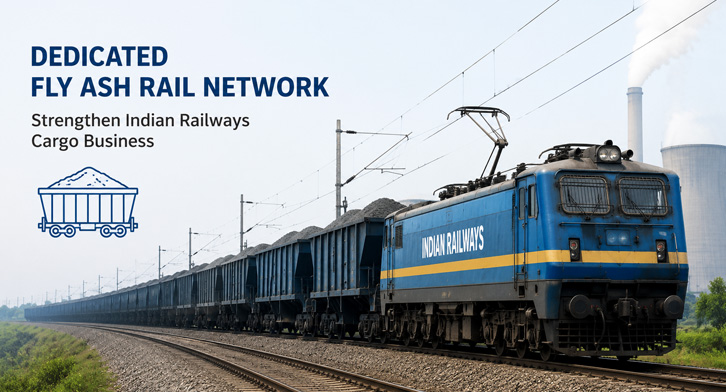
Indian Railways is set to establish a dedicated rail-based logistics network for fly ash transportation, creating a significant opportunity to expand freight business while supporting key industries such as cement, construction, road development, infrastructure, mining, and real estate.
The initiative aims to shift large-scale fly ash transportation from road to rail, improving logistics efficiency, reducing transportation costs, and strengthening India’s bulk cargo supply chain.
Green Logistics Initiative to Improve Supply Chain Efficiency
India generates nearly 340 million tonnes of fly ash annually from thermal power plants. Although much of it is utilized by cement manufacturers, brick makers, and infrastructure projects, a considerable volume remains underutilized due to high transportation costs and logistical challenges.
To address these issues, Indian Railways plans to introduce a green logistics programme featuring specialized containers and dedicated rail corridors connecting fly ash generation centres with major industrial consumption hubs. The network is expected to ensure faster, safer, and more reliable transportation while easing pressure on road infrastructure.
Supporting Sustainability and the Circular Economy
The proposed rail-based transport system will contribute to India’s environmental goals by reducing road freight movement and lowering carbon emissions. Greater utilization of fly ash will also promote the circular economy, reducing landfill disposal while supplying a cost-effective raw material for cement, construction, and infrastructure projects.
The initiative supports sustainable industrial growth by encouraging the recycling and productive use of industrial by-products.
New Freight Opportunity for Indian Railways
The dedicated fly ash transport network is expected to become a major source of additional freight revenue for Indian Railways. As freight transportation remains a key contributor to railway earnings, the initiative aligns with the Railways’ strategy of attracting bulk industrial cargo currently transported by road.
Industry experts believe the programme’s success will depend on modern loading facilities at thermal power plants, efficient handling infrastructure at destination points, and competitive freight pricing. If implemented effectively, the network could create an integrated logistics ecosystem benefiting power producers, industrial consumers, and the railway sector.
With India’s infrastructure and construction activities continuing to expand, demand for fly ash is expected to grow steadily, making dedicated rail transportation an increasingly important component of the country’s industrial supply chain.
Key Highlights:
- Indian Railways plans a dedicated fly ash transport network to expand freight operations.
- India produces nearly 340 million tonnes of fly ash annually.
- The initiative supports the cement, construction, infrastructure, mining, road development, and real estate sectors.
- Specialized containers and dedicated rail corridors will improve bulk cargo movement.
- Rail transportation will reduce logistics costs, transit time, and dependence on road transport.
- The programme supports green logistics by lowering carbon emissions.
- Increased fly ash utilization promotes the circular economy and reduces industrial waste.
- The project is expected to generate significant freight revenue for Indian Railways.
- Improved logistics infrastructure will strengthen India's industrial supply chain.
- Rising infrastructure development is expected to increase long-term demand for fly ash transportation by rail.