
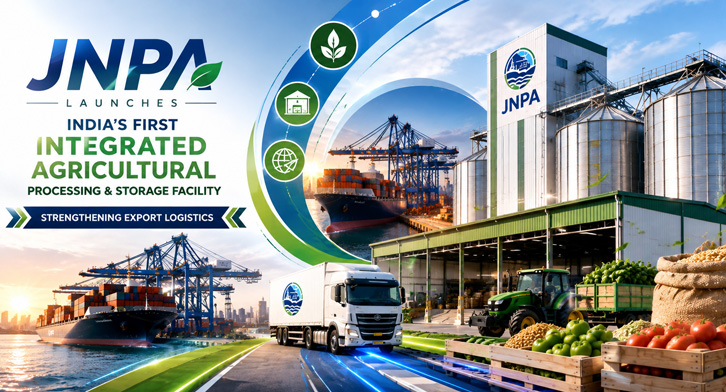
In a significant step towards modernising India’s agricultural logistics infrastructure, Jawaharlal Nehru Port Authority (JNPA) has announced the development of the country’s first Integrated Export-Import-cum-Domestic Agricultural Processing & Storage Facility within its port premises.
The project is designed to create a comprehensive logistics ecosystem that combines agricultural processing, storage, cold chain infrastructure and export services at a single location. By integrating these facilities directly inside one of India’s busiest container ports, JNPA aims to improve cargo handling efficiency, reduce logistics costs and strengthen India’s agricultural export competitiveness.
The project is designed to create a comprehensive logistics ecosystem that combines agricultural processing, storage, cold chain infrastructure and export services at a single location. By integrating these facilities directly inside one of India’s busiest container ports, JNPA aims to improve cargo handling efficiency, reduce logistics costs and strengthen India’s agricultural export competitiveness.
Strategically positioned within the port, the facility will provide seamless connectivity to container terminals, national highways and key hinterland production centres, enabling faster movement of agricultural commodities across domestic and international markets.
Key Highlights
- India's first integrated agricultural processing and storage facility inside a major port
- Located within JNPA for seamless cargo movement
- Supports both export-import and domestic agricultural trade
- Includes cold storage, frozen storage and dry warehouses
- Features export packhouse and pre-cooling infrastructure
- Enhances multimodal logistics connectivity
- Reduces post-harvest losses
- Improves export readiness for agricultural products
- Strengthens India's agricultural supply chain
- Supports government initiatives to increase agricultural exports
Modern Infrastructure to Improve Agricultural Supply Chains
The integrated facility has been designed to address multiple logistics challenges faced by agricultural exporters by bringing together processing, storage and export infrastructure under one roof.
The project includes:
- Cold Storage Units
- Pre-Cooling Facilities
- Frozen Storage
- Dry Warehouses
- Export Packhouse
- Cargo Handling Infrastructure
This integrated approach is expected to minimise cargo handling time while maintaining product freshness and quality throughout the logistics chain.
Strengthening India's Agricultural Export Competitiveness
Agricultural commodities often face quality deterioration due to fragmented storage and transportation systems.
The new facility seeks to overcome these challenges by offering:
- Faster cargo consolidation
- Reduced transit delays
- Better temperature-controlled logistics
- Improved quality preservation
- Value-added agricultural processing
- Efficient export documentation and handling
The infrastructure is expected to enhance India’s competitiveness in global agricultural markets while supporting exporters with modern logistics capabilities.
Improved Multimodal Connectivity
One of the project’s biggest advantages is its strategic location inside JNPA.
The facility connects seamlessly with:
- Container terminals
- National highways
- Inland production centres
- Domestic distribution networks
- International shipping routes
This integrated connectivity enables smoother movement of agricultural products from farms to overseas buyers with reduced logistics bottlenecks.
Core Infrastructure Components of the Integrated Facility
Facility
Purpose
Cold Storage
Temperature-controlled storage
Pre-Cooling Units
Rapid cooling after harvest
Frozen Storage
Long-term preservation
Dry Warehouse
Storage of non-perishable cargo
Export Packhouse
Sorting, grading and packaging
Integrated Logistics Hub
Faster cargo movement
Key Benefits of JNPA's Integrated Agri Logistics Facility
Area
Expected Impact
Agricultural Exports
Higher export efficiency
Farmers
Better market access
Exporters
Lower logistics costs
Supply Chain
Reduced cargo handling time
Food Quality
Lower post-harvest losses
Logistics
Faster multimodal transportation
Trade
Improved global competitiveness
Why This Project Matters
India is among the world’s largest agricultural producers, but logistics inefficiencies continue to contribute to post-harvest losses and higher transportation costs.
By integrating processing, storage and export infrastructure within the port ecosystem, JNPA is creating a modern logistics model that can improve operational efficiency while supporting long-term agricultural export growth.
The project also aligns with the Government of India’s broader objective of strengthening export-oriented logistics infrastructure through multimodal connectivity and modern supply chain development.
Investment Snapshot: JNPA's Integrated Agri Logistics Infrastructure
Particular
Details
Project
Integrated Export-Import-cum-Domestic Agricultural Processing & Storage Facility
Location
Jawaharlal Nehru Port Authority (JNPA)
Sector
Agricultural Logistics
Focus
Export & Domestic Trade
Major Infrastructure
Lower post-Cold Chain, Warehousing, Packhouselosses
Objective
Improve agricultural logistics and exports
Agricultural Logistics Set for a New Growth Phase
The development reflects a growing focus on integrated logistics infrastructure that combines storage, processing and transportation within major ports.
As demand for high-quality agricultural exports continues to rise, facilities offering temperature-controlled storage, value-added processing and multimodal connectivity are expected to play a key role in reducing supply chain inefficiencies and enhancing India’s position in global agricultural trade.
FAQs
What is JNPA's new agricultural processing facility?
JNPA is developing India’s first integrated Export-Import-cum-Domestic Agricultural Processing & Storage Facility inside its port premises to improve agricultural logistics and exports.
What facilities will be available?
The facility will include cold storage, frozen storage, dry warehouses, pre-cooling units, export packhouses and integrated cargo handling infrastructure.
How will the project benefit agricultural exporters?
It will reduce logistics costs, minimise post-harvest losses, improve cargo quality, speed up exports and strengthen supply chain efficiency.
Why is the project significant?
It is India’s first integrated agricultural logistics facility located within a major port, bringing together processing, storage and export operations in one location.
How does the facility support India's agricultural exports?
By improving multimodal connectivity, reducing handling delays and providing modern cold chain infrastructure, the facility enhances the efficiency and competitiveness of Indian agricultural exports.