

India is expected to remain the fastest-growing major economy in the world.
In its latest outlook, Moody’s Ratings has projected India’s GDP to grow at 6.4% in FY27, the highest among all G20 economies. The growth outlook reflects strong domestic demand, policy momentum, and a resilient banking system — all critical indicators for the logistics and freight sector.
For businesses in shipping, freight forwarding, warehousing, and cross-border trade, this signals continued expansion opportunities.
What’s Driving India’s Growth?
Moody’s highlights several structural strengths powering the Indian economy:
- Strong domestic consumption trends
- Supportive government policy initiatives
- Resilient banking sector
- Improving credit growth
- Stable inflation environment
This steady macroeconomic foundation creates a positive outlook for trade volumes, cargo movement, and infrastructure investment.
GDP Forecast: How It Compares
Here’s how the projections stack up:
- FY27 (Moody’s projection): 6.4%
- FY26 (Official estimate): 7.4%
- FY25 (Official estimate): 6.5%
- Economic Survey projection for FY27: 6.8%–7.2%
While Moody’s estimate is slightly conservative compared to government expectations, India still outpaces other G20 economies in projected growth.
Banking System Outlook: A Key Signal for Trade & Logistics
A stable banking system is critical for working capital, trade finance, and freight credit cycles.
Moody’s notes:
- Asset quality remains resilient
- Some pressure expected in theMSME segment
- Banks have adequate provisions and reserves
- Capitalisation levels remain stable
- Profitability among large corporate borrowers supports system strength
For logistics businesses, this means continued access to funding and trade finance, especially important for freight forwarders and exporters.
Credit Growth & Interest Rate Environment
- Loan growth expected at 11%–13% in FY27
- Compared to 10.6% in FY26 (year to date)
- Reserve Bank of India reduced policy rate by 125 basis points to 5.25% in 2025
- Further easing in FY27 depends on economic slowdown trends
Lower borrowing costs could further stimulate:
- Infrastructure projects
- Manufacturing output
- Export-import trade
- Fleet expansion and warehousing investments
What This Means for the Logistics Sector
For freight forwarders, transporters, and supply chain players:
- Higher consumption = Increased cargo volumes
- Credit growth = More trade financing
- Infrastructure spending = Better logistics networks
- Stable banking system = Stronger business confidence
- India retaining fastest G20 growth = Increased foreign investment
This macro momentum directly supports sectors like:
- Air freight
- Sea freight
- Warehousing
- Cross-border trade
How CargoNet Helps Logistics Businesses Capture This Growth
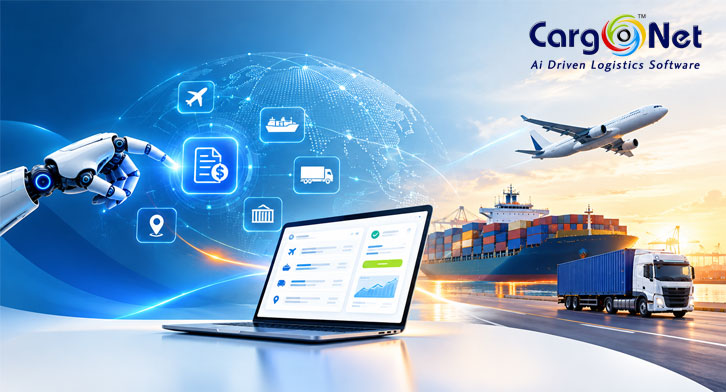
As volumes rise and operations scale, logistics companies need greater visibility, control, and financial clarity. Digital logistics platforms like CargoNet play a critical role in enabling this transition.
CargoNet helps logistics and freight businesses:
- Manage air, sea, and inland freight operations from a single platform
- Streamline documentation, compliance, and billing
- Gain real-time visibility into shipments and finances
- Improve cost control, profitability, and decision-making
- Scale operations efficiently as trade volumes grow
Key Takeaways
- India projected to grow 6.4% in FY27, fastest in G20
- Banking sector remains resilient despite MSME stress
- Credit growth accelerating
- Interest rates lowered to support economic momentum
- Strong domestic demand remains the core growth engine
As India’s economic momentum drives higher trade volumes and more complex supply chains, logistics businesses must evolve with speed and precision. CargoNet enables freight forwarders and logistics companies to operate smarter, stay compliant, and scale confidently in the world’s fastest-growing major economy.