

India’s Renewable Energy Growth Delivers Major Import Savings
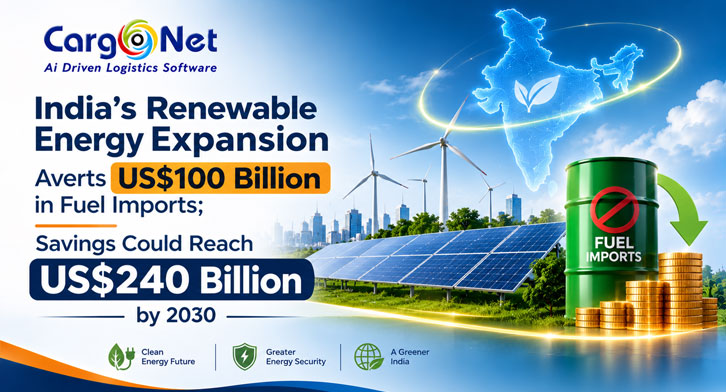
India’s accelerating renewable energy expansion is delivering significant economic and energy security benefits, helping the country avoid more than US$100 billion in coal and natural gas import expenditure between 2011 and 2025, with cumulative savings that could reach nearly US$240 billion by 2030, according to the International Energy Agency’s (IEA) India Renewable Energy Market Report 2026, released on November 3, 2026.
The findings highlight how investments in solar power, wind energy and bioenergy are reducing India’s dependence on imported fossil fuels while strengthening its resilience against international energy price fluctuations. According to the IEA’s India Renewable Energy Market Report 2026, renewable electricity generation has already delivered substantial import cost reductions, with solar PV contributing approximately 60% of the savings and wind power accounting for nearly 30%.
The development is particularly significant for India’s external trade position. Lower dependence on imported coal and natural gas can reduce pressure on foreign exchange reserves, improve energy supply security and limit the country’s exposure to disruptions in international fuel markets.
Renewable Energy Expansion Reduces India’s Coal Import Requirements
India’s renewable energy growth is also changing the country’s conventional fuel import requirements. The IEA estimates that without the solar PV, wind and bioenergy capacity added since 2010, India’s coal imports in 2025 would have been approximately 110 million tonnes higher.
The country’s dependence on imported fuels for electricity generation would also have exceeded 30%, approximately twice the actual level.
This reduction has important implications for India’s maritime logistics and domestic transportation ecosystem. Lower coal import requirements can influence dry bulk shipping demand, coal terminal utilisation, port cargo handling and rail transportation volumes.
India’s major ports handle substantial volumes of coal and other energy commodities. A gradual shift towards domestic renewable electricity generation could change the composition of energy-related cargo moving through these ports, while creating opportunities for infrastructure investments supporting renewable energy supply chains.
According to the IEA report, annual savings on coal and natural gas imports could reach approximately US$35 billion by 2030, assuming international fuel prices remain broadly around their 2024–25 average levels.
India’s Renewable Energy Capacity Reaches 299.25 GW
India’s renewable energy infrastructure continues to expand, with total installed renewable energy capacity, including large hydropower, reaching approximately 299.25 GW as of September 30, 2026.
Solar power represents the largest component of this capacity, followed by wind and hydropower.
According to the Central Electricity Authority’s September 2026 power sector data, India’s renewable energy capacity includes:
Renewable Energy Source
Installed Capacity
Solar Power
171.05 GW
Wind Power
59.20 GW
Large Hydropower
52.06 GW
Biomass and Waste-to-Energy
11.75 GW
Small Hydropower
5.18 GW
Total
299.25 GW
Solar power accounts for the largest share of India’s renewable energy infrastructure, reflecting the rapid deployment of utility-scale solar parks, rooftop installations and distributed solar projects.
The NITI Aayog India Climate and Energy Dashboard also tracks renewable capacity, power generation and transmission infrastructure, providing an overview of the country’s progress towards its clean energy objectives.
Renewable Electricity Generation Expected to Increase by 2030
India’s renewable electricity generation is expected to expand significantly as additional solar and wind projects become operational. The IEA projects that renewable power capacity could reach approximately 530 GW by 2030.
Solar PV is expected to drive more than 80% of renewable capacity additions during this period, supported by utility-scale projects, rooftop solar installations and commercial renewable energy procurement.
This expansion is also creating demand for supporting infrastructure, including battery storage systems, transmission networks, power electronics, solar modules and wind turbine components.
For India’s logistics industry, the expansion represents an emerging cargo opportunity. Renewable energy projects require the transportation of oversized equipment, solar panels, inverters, batteries, wind turbine blades and other specialised components from manufacturing centres and ports to project locations.
Government Initiatives Supporting India’s Clean Energy Transition
Government policies and financial incentives continue to play an important role in accelerating renewable energy investments and strengthening domestic manufacturing capabilities.
Some of the major initiatives include:
- PM Surya Ghar: Muft Bijli Yojana: Encourages residential rooftop solar adoption and expands distributed renewable energy generation.
- PM-KUSUM: Supports solar-powered agricultural pumps and decentralised renewable energy infrastructure.
- Production Linked Incentive (PLI) Scheme: Encourages domestic manufacturing of high-efficiency solar photovoltaic modules and strengthens India’s renewable energy supply chain.
- Renewable Energy Auctions: Encourage private-sector investment through competitive procurement and long-term power purchase arrangements.
These initiatives are helping expand India’s renewable energy ecosystem while creating opportunities for domestic manufacturers, infrastructure developers, logistics providers and international technology suppliers.
Renewable Energy Growth Creates New Opportunities for India’s Logistics Sector
India’s transition towards renewable energy is expected to influence freight transportation, port infrastructure and industrial supply chains.
While reduced coal imports could gradually affect certain dry bulk cargo movements, the renewable energy industry is generating demand for new categories of specialised cargo.
The expanding solar and wind sectors require efficient transportation networks for moving large equipment and components across domestic and international supply chains.
Key logistics opportunities include:
1. Solar panel transportation
Growing solar installations are increasing the movement of photovoltaic modules, inverters and supporting equipment.
2. Wind energy project logistics
Wind turbine blades, towers and nacelles require specialised heavy-lift transportation and project cargo handling.
3. Battery storage supply chains
Grid-scale energy storage investments are creating demand for battery transportation, warehousing and specialised handling.
4. Port infrastructure development
Ports may see changing cargo requirements as conventional fuel imports evolve and renewable energy equipment imports and exports expand.
5. Multimodal transportation
Renewable energy projects require coordinated road, rail, sea freight and specialised project logistics services.
For freight forwarders and logistics service providers, these developments present opportunities to diversify cargo portfolios and support India’s growing clean energy manufacturing and infrastructure ecosystem.
Infrastructure Investment Remains Critical for Renewable Energy Growth
Despite the rapid expansion of renewable energy capacity, the transition requires significant investments in transmission infrastructure, energy storage and grid flexibility.
Solar and wind generation are dependent on weather conditions, making energy storage and efficient electricity transmission essential for maintaining supply reliability.
The IEA has highlighted the importance of improving grid integration, accelerating storage deployment and strengthening electricity infrastructure to support India’s renewable energy ambitions.
These investments will also require coordinated industrial supply chains, efficient project cargo management and reliable transportation infrastructure.
As India expands its renewable energy ecosystem, logistics companies will play an increasingly important role in connecting manufacturers, ports, distribution centres and renewable energy project locations.
Conclusion: Renewable Energy Reshapes India’s Energy and Logistics Landscape
India’s renewable energy expansion is becoming an important contributor to energy security, import cost reduction and industrial development. Avoiding more than US$100 billion in fossil fuel import expenditure demonstrates the economic value of investing in domestic clean energy generation.
As the country moves towards its 2030 renewable energy ambitions, the impact will extend beyond electricity generation to manufacturing, international trade, port infrastructure and freight transportation.
For India’s logistics industry, the transition presents both challenges and opportunities, particularly as conventional energy cargo requirements evolve and renewable energy supply chains expand.
Frequently Asked Questions
How much has India saved through renewable energy expansion?
India saved more than US$100 billion in coal and natural gas import expenditure between 2011 and 2025 through renewable electricity generation, according to the IEA.
How much could India save on fuel imports by 2030?
Cumulative savings could reach nearly US$240 billion by 2030, assuming international fuel prices remain broadly around their 2024–25 average levels.
What is India’s total renewable energy capacity in September 2026?
India’s installed renewable energy capacity, including large hydropower, reached 299.25 GW as of September 30, 2026.
How does renewable energy growth affect India’s logistics industry?
Renewable energy expansion creates demand for solar panel transportation, wind turbine project cargo, battery logistics, specialised warehousing and multimodal freight transportation. It may also influence conventional coal import and transportation volumes.
Which renewable energy source contributes the most to India’s installed capacity?
Solar power is India’s largest renewable energy source, with installed capacity of 171.05 GW as of September 2026.