
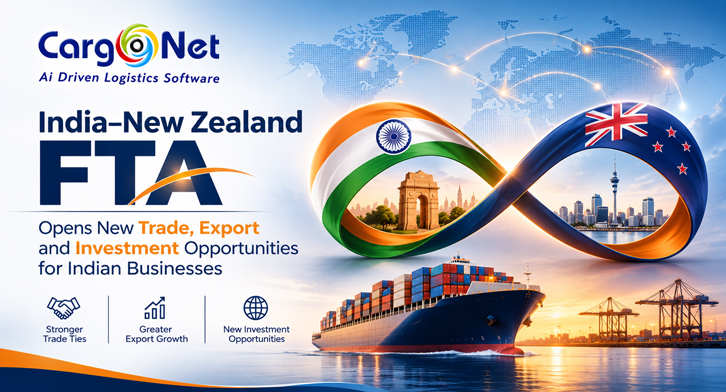
India and New Zealand have entered a new phase of economic cooperation following the implementation of the India–New Zealand Free Trade Agreement (FTA) on
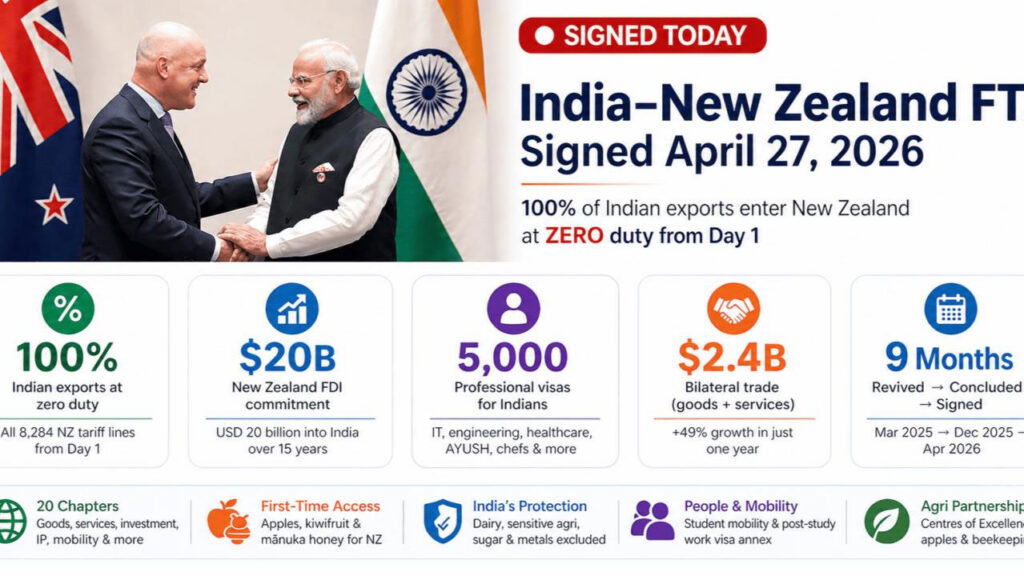
- 100% zero-duty access: All Indian exports receive zero-duty access to the New Zealand market from the agreement’s implementation date.
- US$20 billion investment commitment: New Zealand has committed to facilitating investment of US$20 billion into India.
- Trade expansion target: Both countries have an aspirational target of doubling bilateral trade in goods and services to NZ$7 billion (approximately ₹35,000 crore) by 2030.
- Manufacturing opportunities: Textiles, apparel, leather, footwear, engineering goods, pharmaceuticals and processed food sectors are positioned to benefit.
- MSME growth: Small businesses, artisans, women entrepreneurs and startups gain opportunities to access international markets.
- Logistics development: Increased trade opportunities could support demand for freight forwarding, customs clearance, warehousing, transportation and international supply chain services.
These developments are outlined in the Government of India’s official FTA announcement.
Indian Export Sectors Expected to Benefit
The agreement provides Indian exporters with improved access to a developed international market. Labour-intensive industries and manufacturing businesses are among the sectors expected to gain from reduced tariff barriers.
Industry
Potential opportunities
Textiles and apparel
Improved price competitiveness and export opportunities
Pharmaceuticals
Greater access to the New Zealand market
Engineering goods
Increased demand for machinery and industrial products
Leather and footwear
Improved export competitiveness
Gems and jewellery
Expanded overseas business opportunities
Processed food
Opportunities for agricultural value-added exports
Machinery and equipment
Greater scope for manufacturing exports
According to the April 2026 FTA announcement by the Government of India, the agreement specifically highlights opportunities for labour-intensive industries, including textiles, leather, footwear, engineering goods and processed food.
How the FTA Could Impact India’s Logistics and Freight Forwarding Industry
The India–New Zealand FTA is not limited to reducing import duties. It also creates opportunities for businesses involved in international cargo movement, trade facilitation and supply chain management.
As exporters explore the New Zealand market, logistics providers could see increased demand for international freight services, export documentation, customs compliance and shipment coordination.
1. Increased demand for international freight forwarding
Greater export opportunities for Indian manufacturers could generate additional demand for ocean freight, air freight, cargo consolidation and international transportation services.
2. Growth in customs clearance and export documentation
Exporters will need to manage commercial invoices, packing lists, certificates of origin, shipping bills and other trade documentation. Freight forwarders and customs brokers can support businesses in managing these requirements efficiently.
3. Opportunities for warehousing and cargo handling
An increase in cross-border trade could create additional demand for export warehousing, cargo handling, container consolidation and distribution services.
4. Stronger supply chain partnerships
Indian exporters may explore new partnerships with New Zealand-based distributors, importers and logistics companies, creating opportunities for integrated international supply chain operations.
5. Greater adoption of digital freight management
As trade volumes and shipment coordination requirements grow, digital freight forwarding platforms can help businesses manage bookings, documentation, shipment visibility, customer communication and financial operations more efficiently.
New Zealand’s US$20 Billion Investment Commitment
One of the major highlights of the agreement is New Zealand’s commitment to facilitate US$20 billion in investment into India. This investment framework is expected to support industrial development, employment generation, infrastructure and business partnerships.
The investment commitment could create opportunities across manufacturing, technology, renewable energy, agriculture and other sectors. It may also encourage stronger participation from international companies looking to establish or expand their operations in India.
According to the Government of India’s official FTA backgrounder, the agreement also includes provisions to strengthen MSMEs, women-led enterprises, professional mobility and long-term economic cooperation.
India–New Zealand Trade Target: NZ$7 Billion by 2030
Both countries have established an ambitious objective of doubling bilateral trade in goods and services to approximately NZ$7 billion (₹35,000 crore) by 2030.
Achieving this target will require stronger export participation, investment partnerships, efficient logistics infrastructure and improved trade facilitation.
For Indian businesses, the agreement presents an opportunity to diversify export destinations and reduce dependence on traditional international markets.
India–New Zealand FTA: Important Figures
Parameter
Details
FTA signed
April 27, 2026
Agreement effective from
October 20, 2026
Zero-duty access for Indian exports
100%
New Zealand investment commitment
US$20 billion
Bilateral trade target by 2030
NZ$7 billion
Trade target in Indian currency
Approximately ₹35,000 crore
Negotiations concluded
December 22, 2025
India–New Zealand FTA: Trade and Logistics Opportunities
The agreement could strengthen trade connectivity between Indian manufacturing centres and New Zealand’s import and distribution markets. Exporters and logistics providers can explore opportunities in:
- Ocean freight and international container shipping.
- Air cargo transportation for high-value and time-sensitive shipments.
- Customs brokerage and export-import compliance.
- Warehousing, distribution and cargo consolidation.
- Digital freight management and shipment tracking.
- Export documentation and certificate of origin management.
However, businesses should verify the applicable product-specific tariff classification, rules of origin and customs requirements before claiming preferential treatment. Zero-duty access does not automatically remove regulatory requirements, other applicable charges or product certification obligations. The New Zealand Customs FTA guidance provides further details on eligibility and tariff preferences.
India–New Zealand FTA: Trade Route and Economic Impact
Conclusion
The India–New Zealand Free Trade Agreement represents an important step towards expanding India’s international trade partnerships. With 100% zero-duty access for Indian exports, a US$20 billion investment facilitation commitment and a bilateral trade target of NZ$7 billion by 2030, the agreement creates opportunities for manufacturers, exporters, MSMEs and service providers.
For India’s logistics and freight forwarding industry, the growing trade relationship could open new avenues for international cargo movement, digital documentation, customs management and supply chain integration. Effective implementation and greater participation from Indian businesses will be essential to translating these opportunities into sustained trade growth.
Frequently Asked Questions
When did the India–New Zealand Free Trade Agreement come into effect?
The India–New Zealand FTA officially entered into force on October 20, 2026.
What are the major benefits of the India–New Zealand FTA for Indian exporters?
Indian exporters receive 100% zero-duty access to the New Zealand market, helping improve price competitiveness and expand international market opportunities.
Which Indian industries are expected to benefit from the FTA?
Major sectors include textiles, apparel, leather, footwear, pharmaceuticals, engineering goods, machinery and processed food.
What is the India–New Zealand bilateral trade target for 2030?
Both countries aim to double bilateral trade in goods and services to NZ$7 billion, approximately ₹35,000 crore, by 2030.
How much investment has New Zealand committed to facilitate in India?
New Zealand has committed to facilitating US$20 billion in investment into India.
How will the FTA benefit India’s logistics industry?
The agreement could create additional demand for international freight forwarding, ocean and air cargo, customs clearance, warehousing, export documentation and supply chain management.