
The International Monetary Fund (IMF) has raised India’s economic growth forecast for FY2026–27 to 7%, up from 6.4% in its July projection. Strong domestic demand, resilient services activity and sustained economic momentum have supported the upward revision despite higher energy prices and geopolitical uncertainty.
According to the IMF’s October 2026 World Economic Outlook, India continues to demonstrate economic resilience amid a challenging global environment. The Fund has also raised its growth forecast for FY2027–28 to 7%, reflecting expectations of continued economic activity.
IMF India GDP Growth Forecast: FY2026–27 and FY2027–28
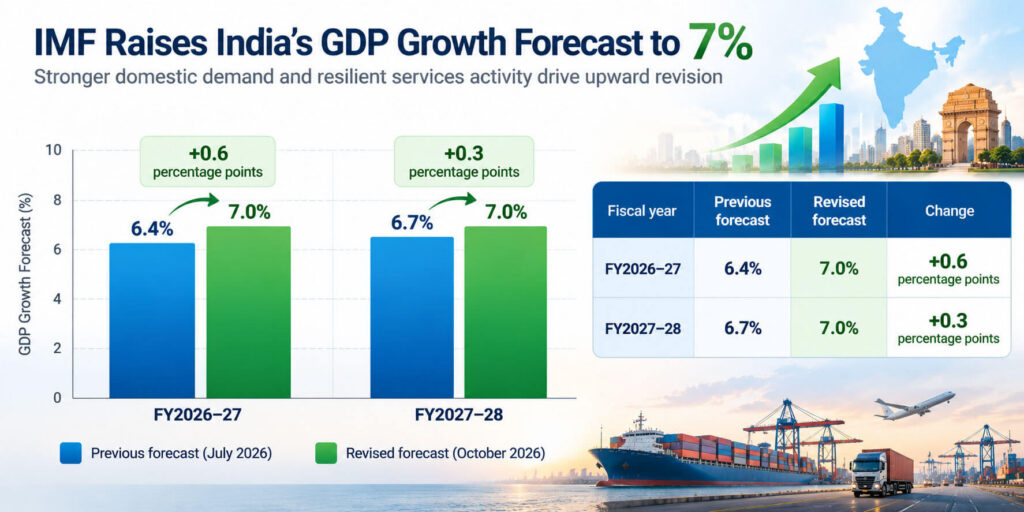
Source: IMF October 2026 World Economic Outlook. Forecast comparisons are based on the July 2026 projections.
What Is Driving India’s Economic Growth?
The IMF’s upward revision reflects several factors:
- Domestic demand: Consumer spending and domestic business activity are supporting economic momentum.
- Services sector: Strong services activity is helping sustain economic expansion.
- Demographic advantages: India’s working-age population offers opportunities for production and consumption.
- Structural reforms: Continued reforms could improve productivity and investment conditions.
- Technology investment: Growth in artificial intelligence and related technologies is supporting economic activity across Asia.
How Could Economic Growth Affect India’s Logistics Industry?
Economic expansion can increase demand for transportation, warehousing, international shipping and supply chain services. However, actual logistics demand will depend on industrial output, trade volumes, fuel prices and business investment.
Potential impact on freight forwarding
- Increased demand for domestic and international cargo movement.
- Higher requirements for warehousing and distribution.
- Continued pressure on freight margins if oil and transportation costs rise.
- Greater demand for shipment visibility and operational efficiency.
- More opportunities to automate documentation and freight workflows.
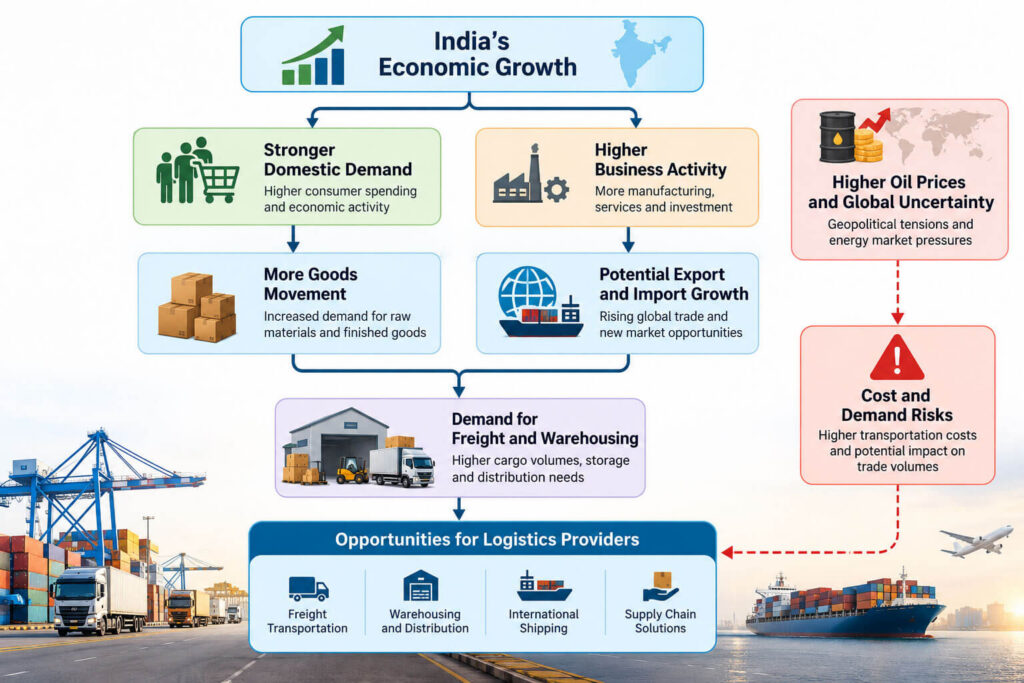
Risks to India’s Economic Outlook
Higher crude oil prices could increase transportation and manufacturing costs. Geopolitical tensions and weaker demand in major export markets could also affect Indian businesses.
For freight forwarders, the implications extend beyond shipment volumes. Companies must manage operating costs, freight rates, documentation accuracy and customer expectations to protect profitability.
Frequently Asked Questions
What is the IMF’s latest India GDP growth forecast?
The IMF projects growth of 7% for FY2026–27 and 7% for FY2027–28 in its October 2026 outlook.
Why did the IMF revise India’s forecast upward?
The revision reflects stronger economic momentum, resilient domestic demand and robust services activity.
What does India’s growth forecast mean for logistics companies?
It could support demand for freight transportation, warehousing and supply chain services, although fuel costs and global uncertainty remain important risks.