
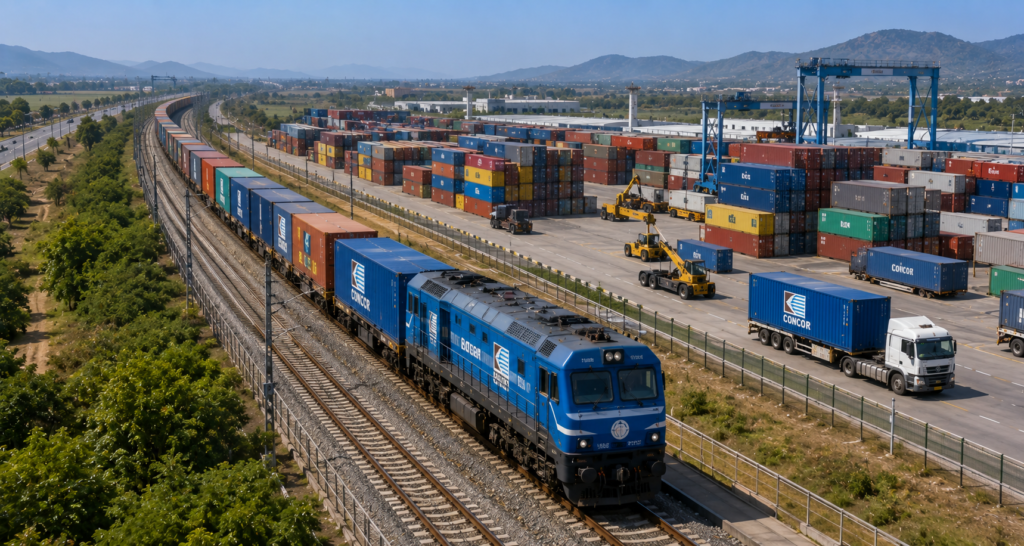
The Container Corporation of India (CONCOR) has launched a new 2,400-kilometer logistics corridor for the transportation of pig iron, creating a direct freight link between Andhra Pradesh and key industrial markets in North India. The initiative is aimed at improving supply chain efficiency, reducing transit times, and supporting the growing demand for bulk raw materials across the country’s manufacturing sector. By leveraging rail-based logistics, the service is expected to provide a more cost-effective and environmentally sustainable alternative to long-distance road transportation, ensuring reliable transportation of large cargo volumes.
The Container Corporation of India (CONCOR) has launched a new 2,400-kilometer logistics corridor for the transportation of pig iron, creating a direct freight link between Andhra Pradesh and key industrial markets in North India. The initiative is aimed at improving supply chain efficiency, reducing transit times, and supporting the growing demand for bulk raw materials across the country’s manufacturing sector. By leveraging rail-based logistics, the service is expected to provide a more cost-effective and environmentally sustainable alternative to long-distance road transportation, ensuring reliable transportation of large cargo volumes.
Furthermore, shifting bulk industrial freight from road to rail delivers a major environmental advantage. Rail transport consumes significantly less fuel per ton-mile than long-haul diesel trucks, allowing industrial conglomerates to drastically cut their supply chain carbon emissions and meet national sustainability goals. By building an efficient, low-emission link between southern production centers and northern industrial hubs, this corridor helps create a cleaner, more integrated national supply chain.
Key Highlights:
- Long-Distance Rail Networks: A newly established 2,400-km logistics corridor directly links southern raw material production with northern markets.
- Sustainable Bulk Transport: Utilizing rail-based logistics lowers transportation costs and significantly reduces carbon emissions compared to road freight.
- Bottleneck Elimination: Dedicated freight movement minimizes handling delays and improves raw material visibility throughout the supply chain.
- National Supply Chain Integration: Connecting southern manufacturing hubs with northern consumption centers strengthens overall national industrial integration.