India Opens Insurance Sector to 100% FDI Under Automatic Route

In a major reform aimed at boosting foreign investment and deepening financial inclusion, the Government of India has officially notified 100% Foreign Direct Investment (FDI) in the insurance sector under the automatic route.
The move, formalized by the Department for Promotion of Industry and Internal Trade (DPIIT), marks a structural shift in India’s insurance landscape. With this, private insurance companies can now access full foreign ownership without prior government approval — a decision expected to attract global insurers and long-term capital into the country.

The move, formalized by the Department for Promotion of Industry and Internal Trade (DPIIT), marks a structural shift in India’s insurance landscape. With this, private insurance companies can now access full foreign ownership without prior government approval — a decision expected to attract global insurers and long-term capital into the country.

However, the reform comes with clear governance safeguards to ensure Indian management oversight.
The notification follows the passage of the Sabka Bima Sabki Raksha (Amendment of Insurance Laws) Bill, 2025, which received Presidential assent and has now been operationalised through amendments to the Consolidated FDI Policy.

What’s Changing?

Under Press Note No. 1 (2026 Series):

Why This Matters

This reform is expected to:

For global insurers, India now becomes one of the most open large markets in the insurance sector. For domestic players, it signals a more competitive, capital-rich environment.
Impact on Logistics & Trade
For businesses — including logistics, freight forwarding, warehousing, and supply chain companies — this move could mean:
As India strengthens its position as a global trade and manufacturing hub, deeper insurance reforms add another layer of confidence for investors and supply chain stakeholders.:


India Poised to Become the World’s Hub for Large-Scale Organic Farming

India is rapidly positioning itself as a global powerhouse for large-scale organic food production, as the government sharpens its focus on sustainable agriculture and export-led growth.
Speaking on India’s organic farming potential, Commerce Secretary Rajesh Agrawal said the country is well-placed to meet rising global demand for organic food, while deepening trade ties with key partners such as the European Union.
Over the past decade, India’s exports of organic products have tripled, and the government has now set an ambitious target to triple them again within the next five years —signaling strong confidence in the sector’s scalability and global appeal.

India’s vast agricultural base gives it a natural advantage. Out of 150.3 million hectares of total cropped land, around 4.7 million hectares are already under organic farming, supported by nearly 2.4 million farmers. While organic farming currently accounts for about 3% of total agricultural output, the scope for expansion remains significant.

To strengthen India’s credibility in global markets, the government is focusing on robust certification systems, farmer cooperatives, and supply chain transparency. The long-running National Programme for Organic Production (NPOP) has played a key role in aligning domestic standards with international norms—helping Indian organic products gain trust worldwide.
India’s growing influence was evident at BIOFACH 2026, where nearly 100 exhibitors from 20 Indian states showcased a wide range of organic products, reinforcing the country’s reputation as a reliable sourcing destination for global buyers.
As global demand for environmentally friendly and sustainably produced food continues to rise, organic farming is emerging as a strategic export sector—with India aiming to strengthen supply chains, improve market access, and build end-to-end trust in certification and traceability.

Key Highlights at a Glance

Foreign Company Registrations in India Hit 5-Year High in 2025

Services Sector Commands 87% Share — Global Confidence in India Strengthens

India is once again firmly on the global investment radar.
Foreign company registrations in India surged to a five-year high in 2025, signaling renewed global confidence in the country’s economic growth, regulatory stability, and expanding market opportunities.
According to data from the Ministry of Corporate Affairs, 92 overseas companies registered operations in India in 2025 — a sharp rise compared to 53 in 2024.
The last comparable peak was in 2020, when 93 foreign firms entered the Indian market.

Registrations Jump Sharply in 2025

Here’s how the trend unfolded:
Most new entities were incorporated in:
Under the Companies Act, 2013, a foreign company is defined as an entity incorporated outside India that establishes a place of business within the country.
Services Sector Leads the Surge

The biggest story? The overwhelming dominance of the services sector

This includes companies in:


For logistics and supply chain stakeholders, the strong participation in transport, storage, and trading signals continued integration of India into global value chains.

Manufacturing Sees Revival
While services dominate, industrial registrations are showing early signs of revival.
This could indicate growing interest aligned with India’s production-linked incentive (PLI) schemes and supply chain diversification strategies
Bigger Picture: India’s Expanding Corporate Base
As of December 2025:
Meanwhile, India’s overall corporate ecosystem is expanding rapidly:

What This Means for Logistics & Trade

For freight forwarders, 3PLs, warehouse operators, and logistics tech providers, this trend is significant:

For freight forwarders, 3PLs, warehouse operators, and logistics tech providers, this trend is significant:

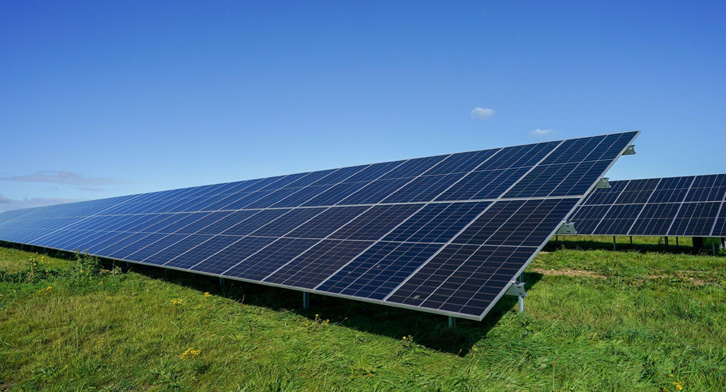
India Rises to 3rd in Global Solar Energy Generation, Surpassing Japan

India has officially become the world’s third-largest generator of solar energy, overtaking Japan, according to the latest data released by the International Renewable Energy Agency (IRENA). Union Minister of New and Renewable Energy, Mr. Prahlad Joshi, announced this milestone, marking a significant leap in India’s clean energy journey.
India generated 1,08,494 GWh of solar power, surpassing Japan’s 96,459 GWh—a testament to the nation’s focused push toward sustainable power sources. This development aligns with India’s broader goal of achieving 500 GW of non-fossil fuel-based electricity capacity by 2030.
“India is leading the way in the global clean energy revolution,” said Minister Joshi, crediting the progress to the visionary leadership of Prime Minister Narendra Modi.

Key Highlights:

IMF Upgrades India’s Growth Forecast for 2025 & 2026

In a strong vote of confidence for India’s economic momentum, the International Monetary Fund (IMF) has revised India’s GDP growth forecast upwards in its latest World Economic Outlook Update (July 2025 edition).

The upgrade reflects a more favorable global economic environment and stronger domestic resilience than previously anticipated.

Key Highlights:

Why It Matters for Logistics

Stronger GDP growth means higher consumption, industrial activity, and investment — all of which drive demand for logistics, warehousing, and supply chain solutions. The upgraded forecast offers a positive outlook for freight forwarders, NVOCCs, and 3PL providers planning for capacity and expansion in 2025–26.

India’s Digital Payments Soar: 650 Billion Transactions Worth $138 Trillion in Just Six Years

India’s digital payment revolution is rewriting the rules of financial inclusion. In a remarkable six-year journey, the country clocked over 65,000 crore (650 billion) digital transactions, with a staggering total value of ₹12,000 lakh crore (US$ 138.26 trillion).
Union Minister of State for Finance, Mr. Pankaj Chaudhary, credited this boom to collaborative efforts between the Government, RBI, NPCI, fintechs, banks, and state governments, particularly in expanding digital penetration across tier-2 and tier-3 cities.

Key Highlights:

What This Means for Logistics & MSMEs:

The growing digital payments ecosystem and MSME-focused credit reforms are unlocking faster financing and streamlined cash flow for logistics operators. The new digital credit model promises easier access to capital, enabling fleet expansion, working capital management, and technology adoption, especially for small transporters and freight forwarders in non-metro areas.

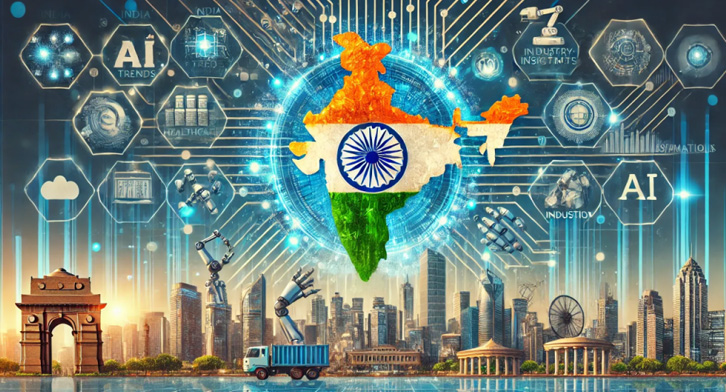
India’s AI Strategy: Driving Inclusion, Innovation & Global Leadership

India is fast becoming a global powerhouse in artificial intelligence (AI), with a national strategy anchored in inclusion, innovation, and ethical governance. Spearheaded by Prime Minister Narendra Modi’s vision to democratise technology, the country is turning AI into a powerful engine for solving local challenges, boosting economic growth, and creating jobs.
With a digital economy worth over ₹21.6 lakh crore (US$ 250 billion) and a tech workforce of more than 6 million, India is ranked among the world’s top AI nations by the Stanford AI Index and is the 2nd-largest contributor to AI projects on GitHub.

Key Highlights:

What It Means:

India isn’t just adopting AI — it’s shaping its future. With an emphasis on open ecosystems, developer support, data protection, and ethical AI, the country is setting a model for responsible AI leadership globally.

India’s Concert Economy to Generate 1.2 Crore Temporary Jobs by 2030–2032

India’s booming concert and live event sector is on track to become a major employment engine, with 1.2 crore (12 million) temporary jobs expected to be created by 2030–2032, according to a report by global tech and digital talent solutions provider NLB Services.
With over 100 large-format concerts forecast annually, the ripple effect is set to transform not just tier-1 cities, but also tier-2 and 3 urban centers across the country.

Key Highlights:

Each concert is estimated to generate 15,000–20,000 temporary jobs across:
An estimated 10–15% of these temporary roles are converting into full-time careers in:
Over the next few years, India’s concert economy could surpass ₹15,000 crore (US$ 1.74 billion) in cumulative contribution—driven by ticketing, hospitality, transportation, and broader economic multipliers.

India’s Semiconductor Startups Attract Record Investments Backed by Government Push

India’s semiconductor sector is gaining strong momentum, with design-focused startups securing record funding thanks to robust support from the Government of India. Key initiatives such as the Design Linked Incentive (DLI) Scheme and the Chips to Startup (C2S) Programme, under the aegis of the Ministry of Electronics and Information Technology (MeitY), are catalyzing innovation in chip design and advanced electronics.
One standout success is Netrasemi, a government-backed startup that has secured Rs. 107 crore (~US$ 12.38 million) in VC funding. The startup focuses on chip design for smart vision, CCTV systems, and IoT solutions.
Union Minister Mr. Ashwini Vaishnaw hailed these developments, stating that India’s growing design ecosystem, backed by the India Semiconductor Mission, is fueling innovation-led, self-reliant growth in advanced technology sectors.

Key Highlights:

Why It Matters for the Logistics Sector:

With smarter chips powering IoT and CCTV technologies, India’s logistics and supply chain industries stand to benefit from enhanced tracking, surveillance, and data-driven automation.

India Sees 44% Surge in IP Filings in 5 Years: Digital Push & Reforms Fuel Growth

India has recorded a striking 44% increase in Intellectual Property (IP) filings over the past five years, underscoring the nation’s growing innovation culture. This growth is powered by major policy reforms, fee concessions, and a sweeping digital transformation led by the Ministry of Commerce & Industry.
The number of IP applications filed by Indian citizens jumped from 477,533 in 2020-21 to 689,991 in 2024-25 — a clear indicator of the country’s rising focus on protecting innovations and indigenous products.

Key Growth Highlights by IP Category:

Reform-Driven Momentum:

Incentives for Innovation:

Notable Milestone:

Minister of State Mr. Jitin Prasada emphasized that these developments reflect the government’s ongoing commitment to building a robust IP ecosystem and supporting innovation-driven growth.
cargonet-logo-icon
Cargonet Cargo Software Logo

Feedback & Reward program

Submit the Feedback and avail the Rewards.

1. Your satisfaction & reliability on CargoNet ?

2. Your Rating on Support & co-ordination team?

3. Satisfaction on the look and feel of CargoNet ?

4. Please specify any 2 best features that you feel more helpful in CargoNet?

5. Please specify any 2 best reports that you are taking on regular basis?

6. Are you using Copy Job option in CargoNet Software?

7. Are you using Automatic DSR (Daily Status Report) Option? It automatically sends reports to customer about the shipment status

8. Are you using Automatic Outstanding Reports option? Period Auto outstanding reminders to customer

9. Any other thoughts to improve in CargoNet? Please share.

* Join our Reward Program by recommending CargoNet (Cash Rewards Awaiting)

“Thanks for your feedback. Our goal is to create the best possible product, support & service, and your thoughts, ideas & suggestions play a major role in helping us identify opportunities to improve.”

Cut AI cost,
not performance

discover how top Freight Forwarding companies  reduce AI-related expense and speed up operation with CargoNet AI, we will show it how
Share your information for instant access :