
India Bags ₹3,000 Cr Locomotive Export Deal with Guinea — Boosts ‘Make in India’ & Africa Ties

In a significant leap for India’s railway export ambitions, the Marhowrah Diesel Locomotive Factory in Bihar will manufacture and ship 150 high-powered locomotives to Guinea as part of a ₹3,000 crore (US$ 345.9 million) deal. These state-of-the-art Evolution Series ES43ACmi locomotives will support Guinea’s ambitious Simandou iron ore project — one of Africa’s largest mining developments.
This deal, secured through global competitive bidding, marks a strategic win under the ‘Make in India’ initiative, strengthening India’s footprint in global rail infrastructure and deepening India-Africa trade ties.

Key Highlights:

Global & Economic Impact:

This milestone project positions India as a competitive global supplier of heavy-haul rail solutions and reinforces its commitment to high-value manufacturing exports.
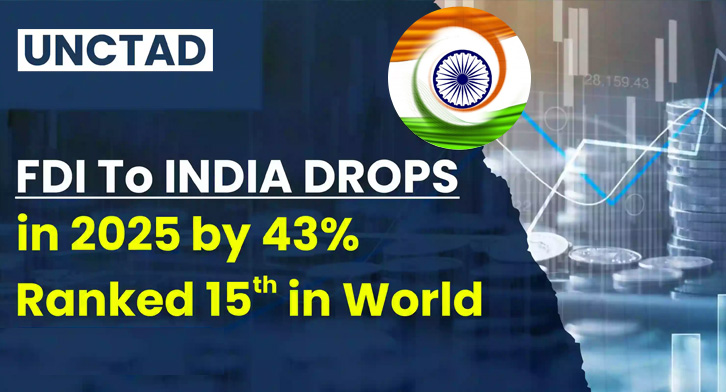
India Moves to 15th Spot in Global FDI Rankings

New Delhi – India has moved up one spot to become the 15th largest destination for foreign direct investment (FDI) globally in 2024, according to the World Investment Report 2025 published by the United Nations Conference on Trade and Development (UNCTAD). This jump comes despite a modest 1.9% dip in inflows, which stood at $27.6 billion compared to $28.1 billion in 2023.
“India remained the dominant FDI destination in South Asia, accounting for the vast majority of inflows in the subregion,” the report noted.
While global FDI slipped 11% to $1.5 trillion in 2024, India’s consistent performance signals enduring investor confidence—especially in manufacturing and digital infrastructure.

Key Highlights:

India ranks 15th globally in FDI inflows (2024), up from 16th in 2023 FDI inflow: $27.6 billion, down 1.9% YoY
India continues to dominate South Asia’s FDI landscape, with the region receiving $24.1 billion overall
India ranked 4th globally in greenfield project announcements in 2024, with 1,080 projects Also among top 5 countries securing international project finance (97 deals)
India attracted the most greenfield digital economy investments in the Global South (2020–2024), totaling $54 billion
This sector is growing 10–12% annually—outpacing global GDP growth
India climbed to 18th in FDI outflows, with $23.8 billion in overseas investments
Four of the 10 largest global megaprojects were in semiconductors—including one in India
Basic metals and electronics projects boosted India’s manufacturing rise

Global Context:

Editor’s Note:

India’s rise in the UNCTAD rankings—paired with a booming digital and greenfield investment footprint—signals a clear trend: India is increasingly being seen as a resilient and attractive destination for strategic long-term capital, especially in logistics, tech, and core manufacturing.
With government initiatives like ‘Make in India’, the PLI schemes, and Gati Shakti infrastructure push, the country is not just attracting funds—it’s cementing itself as a global manufacturing and logistics powerhouse for the future.

MOL Deepens India Play with Real Estate, Clean-Tech, and More Ships

Mitsui O.S.K. Lines (MOL), the world’s second-largest shipping company by fleet size, is doubling down on India.

The 141-year-old Japanese shipping giant sees India as a key maritime growth hub and is rapidly expanding its presence with a three-pronged strategy focusing on regional empowerment, diversification, and decarbonisation.

In a bold move, MOL has empowered its India-based leadership under Captain Anand Jayaraman to drive strategic growth across the South Asia and Middle East region, while aggressively investing in long-term sustainability and business stability.

Key Developments:

“India is a very important market for us. It’s a big maritime nation — and we want to be a bigger part of that journey,” said Captain Jayaraman.

Why It Matters:

MOL’s India push signals growing global confidence in the country’s maritime potential — not just as a shipping corridor, but as a logistics, innovation, and sustainability hub.
As India builds out new ports and expands its green energy ambitions, expect global carriers like MOL to anchor deeper and stronger into this emerging powerhouse.

India Emerges as a Rising Powerhouse for Data Centres & Chip Manufacturing

Amid rising global trade tensions and a slowdown in cross-border investments, India is carving out a critical role in the global tech and logistics landscape — fast becoming a key hub for data centre infrastructure and semiconductor manufacturing, according to the latest Moody’s Analytics report, AI Is Beating the Odds.
The report reveals a surprising trend: despite macroeconomic uncertainties, capital investment in AI-related infrastructure is not just holding steady — it’s accelerating. This growth is primarily driven by the need to bridge the widening gap between exploding AI demand and the limited global supply chain capacity.

Key Highlights from Moody’s Report:

Logistics & Industrial Impact:

The Bigger Picture:

As artificial intelligence reshapes industries, nations that can support the physical backbone — data infrastructure, chip production, and supply chain logistics — are quickly rising to prominence. India’s positioning at this intersection of tech and logistics puts it on track to become a global hub for digital infrastructure in the coming decade.

Indian Toy Standards Surpass Global Norms, Driving Export Growth: BIS

India’s toy industry is gaining international recognition—not just for creativity, but for quality. According to the Bureau of Indian Standards (BIS), India’s toy manufacturing standards now exceed global norms, helping domestic players expand into international markets with confidence.

The BIS has aligned its safety frameworks with global standards from the ISO and IEC, covering a comprehensive range of physical, chemical, and electrical safety requirements. These standards are backed by the Toys (Quality Control) Order, 2020, enforced by the Department for Promotion of Industry and Internal Trade (DPIIT) since January 1, 2021.

Why It Matters:

Industry Voices:

“Our standards address Indian conditions—humidity, temperature, and user patterns—which global benchmarks often miss. This gives us a competitive advantage,” said Mr. Adbhut Singh, Scientist E and Director at BIS’s Western Regional Office Laboratory (WROL), Mumbai.
“BIS certification pushed us to innovate. We now produce over 1 lakh toys a month and grew to ₹25 crore (US$2.9M) in FY25,” shared Mr. Moiz Gabajiwala, CEO, Zephyr Toymakers Pvt Ltd, who aims for 20% growth in FY26.

Safety First:

Support for MSMEs:

The Big Picture:

With BIS playing a proactive role in quality assurance and compliance, India is not just protecting its children—it’s building a globally competitive, self-reliant toy manufacturing ecosystem. This transformation is a powerful example of how smart regulation and innovation can turn a domestic industry into an export engine.

India’s Exports Surge Ahead: Fastest-Growing Among Major Economies, Says UNCTAD

India’s export story continues to shine on the global stage. According to the UNCTAD Key Statistics and Trends in International Trade 2024, India recorded the highest export growth rate among major economies from 2010 to 2023—an impressive 6.3% increase in its share of global exports.
This strong performance underscores the resilience and adaptability of India’s trade ecosystem, powered by its robust policy framework, export diversification, and expanding role in global value chains.
“India’s consistent export growth reflects the dynamism of its trade sector and the success of strategic initiatives in manufacturing and services,” a government official said.

Key Highlights at a Glance:

Growth fueled by:

What This Means for Indian Logistics & Trade:

India’s steady rise in export rankings is a positive signal for freight forwarders, NVOCCs, port operators, and global buyers. With policy support and improving infrastructure, India is poised to become an even more influential trade hub in the coming decade.

India’s Largest Auto-Focused Gati Shakti Cargo Terminal Inaugurated at Maruti Suzuki, Manesar

In a landmark boost to India’s logistics and multimodal transport infrastructure, Union Minister for Railways, Information & Broadcasting and Electronics & IT, Mr. Ashwini Vaishnaw inaugurated the country’s largest automobile-focused Gati Shakti Multi-Modal Cargo Terminal at Maruti Suzuki India Limited’s Manesar facility.
This cutting-edge cargo terminal is a strategic development under the Government of India’s PM Gati Shakti – National Master Plan, aimed at revolutionizing India’s logistics network by promoting faster, more efficient, and seamless freight movement.

Why This Terminal Matters

The Gati Shakti Cargo Terminal is not just another logistics node — it’s a pivotal link that redefines how automobiles move across the country. Key facts:

Railway Performance Soars

At the inauguration, Mr. Vaishnaw also shared performance highlights of Indian Railways:
“In FY 2023–24, Indian Railways moved 720 crore passengers and 1,617 million tonnes of freight, making us the second-largest rail freight mover in the world,” the minister noted.
This historic freight performance reflects the growing emphasis on rail-based logistics — not only for reducing carbon emissions and road congestion but also for cutting end-to-end delivery times.

Key Takeaways

India–UAE CEPA Doubles Bilateral Trade in Just Three Years

The India–UAE Comprehensive Economic Partnership Agreement (CEPA), signed on February 18, 2022 and enforced from May 1, 2022, has emerged as a strategic game-changer in India’s global trade policy.
In just three years, bilateral trade between the two nations has doubled, reaffirming the CEPA as one of India’s most impactful free trade agreements to date — and a blueprint for future economic partnerships in the Middle East and beyond.

Why It Matters for Trade & Logistics:

Strategic Takeaway:

The CEPA is more than a trade agreement — it’s a catalyst for regional integration, global supply chain diversification, and economic diplomacy. For logistics professionals, it opens up new corridors of opportunity and efficiency, particularly in cross-border freight, port partnerships, and trade facilitation tech.

Cargo Handling at Major Indian Ports Rises 4.3% in FY25 — Driven by Containers, POL & Fertilisers

India’s maritime sector continues to show strong momentum. In Fiscal Year 2024–25, the country’s 12 major ports handled a total of 855 million tonnes of cargo — marking a 4.3% year-on-year increase, according to data released by the Ministry of Ports, Shipping and Waterways.
This uptick reflects the resilience of India’s port infrastructure and the growing role of multimodal logistics in driving trade efficiency.

Key Highlights:

Commodities Snapshot (FY25):

Commodity

Volume (MT)

Share (%)

POL

254.5

29.80%

Container Traffic

193.5

22.60%

Coal

186.6

21.80%

Others (Iron Ore, Pellets, etc.)

Remaining

21.80%

India’s 12 major ports, governed under the Major Port Authorities Act, 2021, include a strategic mix of west coast, east coast, and southern maritime gateways. These are Deendayal Port, Mumbai Port, Jawaharlal Nehru Port (JNPA), Mormugao Port, New Mangalore Port, and Cochin Port on the western coast; VO Chidambaranar Port, Chennai Port, Kamarajar Port, and Visakhapatnam Port on the eastern coastline; along with Paradip Port and Syama Prasad Mookerjee Port, which play critical roles in connecting eastern and northeastern India to global trade routes. Collectively, these ports form the backbone of India’s seaborne trade infrastructure.

Why It Matters:

India’s increasing cargo throughput reflects strong industrial activity, improved port infrastructure, and enhanced connectivity. With key ports expanding capacity and attracting private capital, India is positioning itself as a major global trade and logistics hub in the Indo-Pacific region.

Unifeeder Launches India-Mediterranean (IMD) Service, Boosting India–Med Connectivity

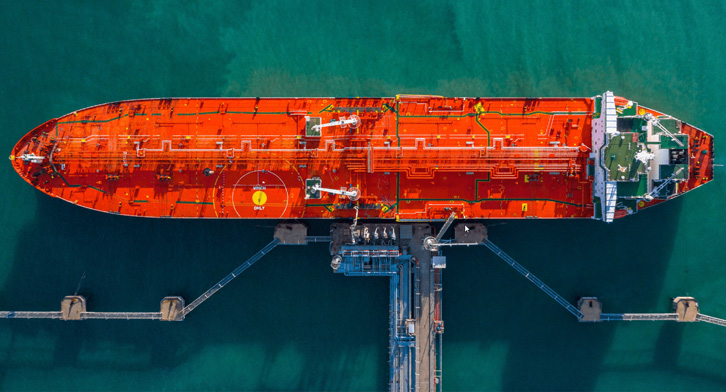
In a significant boost to India–Mediterranean trade lanes, Unifeeder has launched its India Med Service (IMD)—a new shipping route connecting India with Northern Egypt and Türkiye. This move is part of Unifeeder’s ongoing effort to enhance its presence in the Indian Subcontinent and Mediterranean region.
“This strategic addition strengthens our ISC services by enhancing connectivity between India and the Mediterranean region,” Unifeeder stated.
The IMD service is designed to cater to both dry and reefer cargo, ensuring flexibility and efficiency for diverse cargo requirements.

Key Highlights:

Strategic Outlook

This expansion follows last year’s announcement of a strategic partnership between Unifeeder A/S and MPC Container Ships ASA, aimed at co-investing in energy efficiency technologies. The IMD service underscores Unifeeder’s dual focus on sustainability and regional connectivity.
cargonet-logo-icon
Cargonet Cargo Software Logo

Feedback & Reward program

Submit the Feedback and avail the Rewards.

1. Your satisfaction & reliability on CargoNet ?

2. Your Rating on Support & co-ordination team?

3. Satisfaction on the look and feel of CargoNet ?

4. Please specify any 2 best features that you feel more helpful in CargoNet?

5. Please specify any 2 best reports that you are taking on regular basis?

6. Are you using Copy Job option in CargoNet Software?

7. Are you using Automatic DSR (Daily Status Report) Option? It automatically sends reports to customer about the shipment status

8. Are you using Automatic Outstanding Reports option? Period Auto outstanding reminders to customer

9. Any other thoughts to improve in CargoNet? Please share.

* Join our Reward Program by recommending CargoNet (Cash Rewards Awaiting)

“Thanks for your feedback. Our goal is to create the best possible product, support & service, and your thoughts, ideas & suggestions play a major role in helping us identify opportunities to improve.”

Cut AI cost,
not performance

discover how top Freight Forwarding companies  reduce AI-related expense and speed up operation with CargoNet AI, we will show it how
Share your information for instant access :