
India’s Digital Payments Soar: 650 Billion Transactions Worth $138 Trillion in Just Six Years

India’s digital payment revolution is rewriting the rules of financial inclusion. In a remarkable six-year journey, the country clocked over 65,000 crore (650 billion) digital transactions, with a staggering total value of ₹12,000 lakh crore (US$ 138.26 trillion).
Union Minister of State for Finance, Mr. Pankaj Chaudhary, credited this boom to collaborative efforts between the Government, RBI, NPCI, fintechs, banks, and state governments, particularly in expanding digital penetration across tier-2 and tier-3 cities.

Key Highlights:

What This Means for Logistics & MSMEs:

The growing digital payments ecosystem and MSME-focused credit reforms are unlocking faster financing and streamlined cash flow for logistics operators. The new digital credit model promises easier access to capital, enabling fleet expansion, working capital management, and technology adoption, especially for small transporters and freight forwarders in non-metro areas.
India’s AI Strategy: Driving Inclusion, Innovation & Global Leadership

India is fast becoming a global powerhouse in artificial intelligence (AI), with a national strategy anchored in inclusion, innovation, and ethical governance. Spearheaded by Prime Minister Narendra Modi’s vision to democratise technology, the country is turning AI into a powerful engine for solving local challenges, boosting economic growth, and creating jobs.
With a digital economy worth over ₹21.6 lakh crore (US$ 250 billion) and a tech workforce of more than 6 million, India is ranked among the world’s top AI nations by the Stanford AI Index and is the 2nd-largest contributor to AI projects on GitHub.

Key Highlights:

What It Means:

India isn’t just adopting AI — it’s shaping its future. With an emphasis on open ecosystems, developer support, data protection, and ethical AI, the country is setting a model for responsible AI leadership globally.

Infrastructure & Construction Drive India’s Steel Demand — Government Projects, EV Shift Add Momentum

India’s steel consumption is witnessing robust growth, with infrastructure and construction sectors accounting for nearly 65% of the total domestic steel usage, according to industry experts.
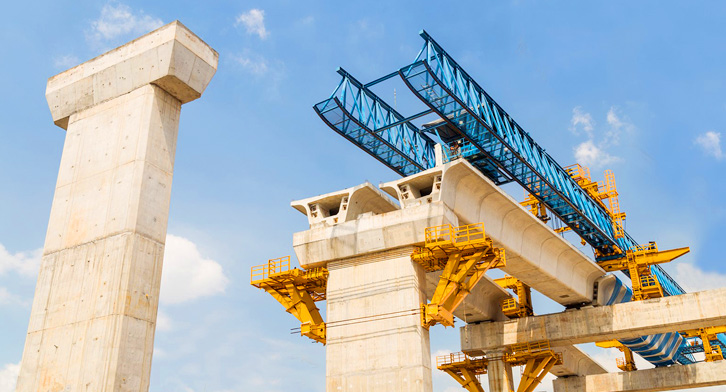
Speaking on this trend, Mr. Sanjay Singh, Director – Strategy and External Relations at Jindal Steel & Power, revealed that 25–30% of this demand stems directly from government-led infrastructure projects, including roads, bridges, and urban development schemes. This surge underlines the government’s continued push to upgrade national infrastructure as a pillar of economic growth.
Adding to this, Ms. Swati Agrawal, CEO & President – Advisory at CARE Analytics, highlighted the booming real estate market and evolving automotive landscape as secondary yet significant contributors to steel demand. The transition to electric vehicles (EVs) and investments in EV charging infrastructure are emerging as new demand drivers for steel, especially in urban corridors.

Policy Moves to Shield Domestic Steelmakers

To curb the influx of cheap imports and support local production, the Central Government enforced a 12% safeguard duty on steel imports in April 2025. The measure is mainly aimed at Chinese imports, with minimum import prices now fixed between Rs. 58,398 (US$ 675) and Rs. 83,378 (US$ 964) per tonne for key steel categories.
Mr. Singh acknowledged the safeguard duty’s impact, saying it has “insulated Indian producers from low-cost steel flooding the market,” thereby strengthening the competitiveness of domestic manufacturers.

Key Highlights:

India Eyes Expansion of Fruit Exports to Kuwait Beyond Mangoes

After the overwhelming success of the Indian Mango Festival at The Avenues Mall, India is now setting its sights on widening its fruit export basket to Kuwait.
Speaking to Kuwait Times, Indian Ambassador Dr. Adarsh Swaika revealed that discussions are in progress to introduce a new range of Indian-grown fruits such as dragon fruit, blueberries, and blackberries into the Kuwaiti market.
“These fruits are now being cultivated in India, and there is potential for them to enter the Kuwaiti market soon,” said Dr. Swaika.
This strategic move builds on the momentum created by the successful launch of six new late-season mango varieties in Kuwait, now available at Lulu Hypermarket and soon at other major retailers.

Key Highlights:

Why This Matters

India’s move to expand fruit exports is a key example of agri-logistics innovation and international market diversification. For logistics players and exporters, this signals growing demand in the GCC region for high-quality Indian horticultural products and the need to scale cold-chain infrastructure to meet rising expectations.

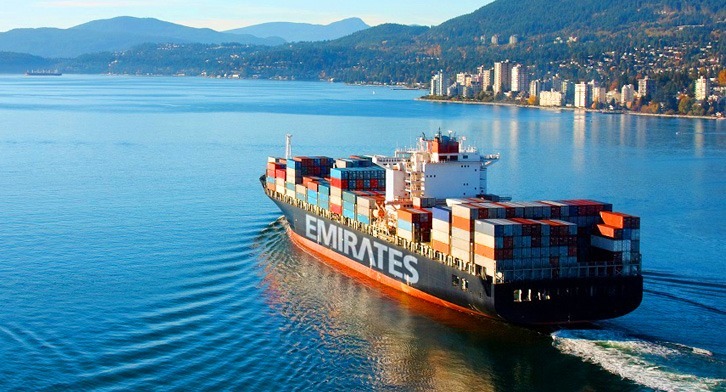
Emirates Shipping Line Enhances Gulf–India–Africa (GIA) Service

Emirates Shipping Line (ESL) is revamping its Gulf India Africa Express (GIA) service as part of its ongoing efforts to enhance service reliability, schedule efficiency, and market connectivity. The changes, announced via a recent advisory, are set to go live from August 27, 2025.
The GIA service plays a crucial role in connecting India, the Gulf region, and East Africa, and the optimized rotation is expected to strengthen trade links and transshipment options across these strategic regions.

Key Highlights of the Streamlined GIA Service:

Streamlined service to ensure better operational efficiency and schedule reliability.
Direct weekly connections between:
Seamless connections for Red Sea and East Mediterranean cargo via Nhava Sheva and Jebel Ali.
Backed by ESL’s trusted service agency network for localized support and service excellence.
Consistent weekly schedule to support planning and supply chain stability.

Updated GIA Port Rotation:

India’s Major Ports See 11% Surge in Container Volumes in Q1 FY26

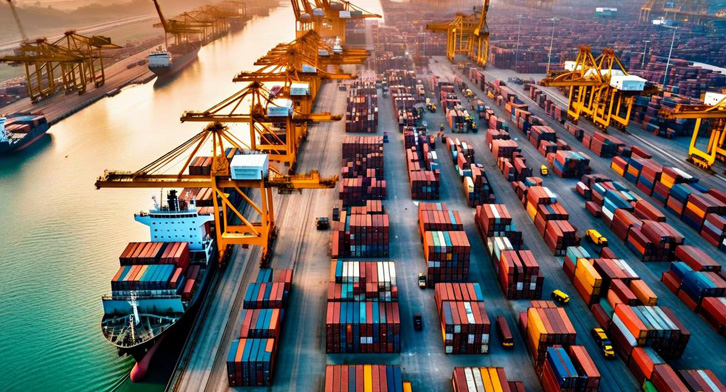
India’s 12 major ports recorded strong growth in Q1 FY26, handling 220 million tonnes (MT) of cargo — a 6% year-on-year (YoY) rise, with container traffic leading the surge.

Key Highlights:

Top Performing Ports

Container Traffic Performance

According to Drewry’s July 17 report:

This decline reverses the upward rate trend seen in May-June, indicating a short-lived impact of earlier US tariff hikes.

Other Cargo Insights

Quick Facts: India's Major Ports

Gujarat Nears Completion of Logistics Master Plans for 8 Key Cities

The Gujarat government is close to finalizing comprehensive logistics master plans for eight major cities and the entire state, a major step toward streamlining industrial transportation needs.
State Industries Minister Balvantsinh Rajput reviewed progress in a recent meeting held in Gandhinagar, where the Gujarat Infrastructure Development Board (GIDB) presented updates on ongoing infrastructure initiatives.

Key Highlights:

Minister Rajput urged officials to accelerate progress, especially in aligning these initiatives with the broader goal of lowering logistics costs and enhancing ease of doing business in Gujarat.
GIDB CEO P Swaroop also briefed on the development of Special Investment Regions (SIRs) and other strategic projects under the PM Gati Shakti National Master Plan.

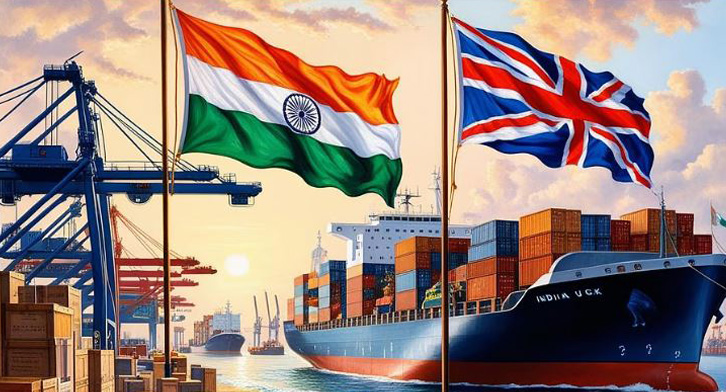
India-UK Sign Landmark CETA Deal to Boost Trade and Logistics Synergy

In a major step toward strengthening bilateral economic ties, India and the United Kingdom have signed the Comprehensive Economic and Trade Agreement (CETA)—a breakthrough pact poised to reshape trade dynamics between the two nations.
The agreement was signed by India’s Union Minister of Commerce & Industry, Mr. Piyush Goyal, and the UK’s Secretary of State for Business and Trade, Mr. Jonathan Reynolds, under the visionary leadership of Prime Minister Narendra Modi.
Currently valued at ₹4.83 lakh crore (US$56 billion), bilateral trade is set to double by 2030, backed by the sweeping benefits of this agreement.

Key Highlights of the India-UK CETA

This landmark agreement not only opens new doors for export growth and job creation but also places India on a stronger footing in the evolving global supply chain landscape.
Stay tuned for more updates on how CETA impacts logistics, shipping, and cross-border trade operations.

India’s Concert Economy to Generate 1.2 Crore Temporary Jobs by 2030–2032

India’s booming concert and live event sector is on track to become a major employment engine, with 1.2 crore (12 million) temporary jobs expected to be created by 2030–2032, according to a report by global tech and digital talent solutions provider NLB Services.
With over 100 large-format concerts forecast annually, the ripple effect is set to transform not just tier-1 cities, but also tier-2 and 3 urban centers across the country.

Key Highlights:

Each concert is estimated to generate 15,000–20,000 temporary jobs across:
An estimated 10–15% of these temporary roles are converting into full-time careers in:
Over the next few years, India’s concert economy could surpass ₹15,000 crore (US$ 1.74 billion) in cumulative contribution—driven by ticketing, hospitality, transportation, and broader economic multipliers.

India’s Semiconductor Startups Attract Record Investments Backed by Government Push

India’s semiconductor sector is gaining strong momentum, with design-focused startups securing record funding thanks to robust support from the Government of India. Key initiatives such as the Design Linked Incentive (DLI) Scheme and the Chips to Startup (C2S) Programme, under the aegis of the Ministry of Electronics and Information Technology (MeitY), are catalyzing innovation in chip design and advanced electronics.
One standout success is Netrasemi, a government-backed startup that has secured Rs. 107 crore (~US$ 12.38 million) in VC funding. The startup focuses on chip design for smart vision, CCTV systems, and IoT solutions.
Union Minister Mr. Ashwini Vaishnaw hailed these developments, stating that India’s growing design ecosystem, backed by the India Semiconductor Mission, is fueling innovation-led, self-reliant growth in advanced technology sectors.

Key Highlights:

Why It Matters for the Logistics Sector:

With smarter chips powering IoT and CCTV technologies, India’s logistics and supply chain industries stand to benefit from enhanced tracking, surveillance, and data-driven automation.
cargonet-logo-icon
Cargonet Cargo Software Logo

Feedback & Reward program

Submit the Feedback and avail the Rewards.

1. Your satisfaction & reliability on CargoNet ?

2. Your Rating on Support & co-ordination team?

3. Satisfaction on the look and feel of CargoNet ?

4. Please specify any 2 best features that you feel more helpful in CargoNet?

5. Please specify any 2 best reports that you are taking on regular basis?

6. Are you using Copy Job option in CargoNet Software?

7. Are you using Automatic DSR (Daily Status Report) Option? It automatically sends reports to customer about the shipment status

8. Are you using Automatic Outstanding Reports option? Period Auto outstanding reminders to customer

9. Any other thoughts to improve in CargoNet? Please share.

* Join our Reward Program by recommending CargoNet (Cash Rewards Awaiting)

“Thanks for your feedback. Our goal is to create the best possible product, support & service, and your thoughts, ideas & suggestions play a major role in helping us identify opportunities to improve.”

Cut AI cost,
not performance

discover how top Freight Forwarding companies  reduce AI-related expense and speed up operation with CargoNet AI, we will show it how
Share your information for instant access :