India–UAE CEPA Doubles Bilateral Trade in Just Three Years

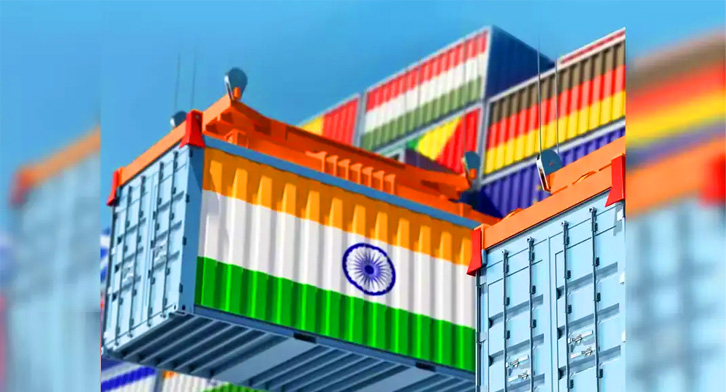
The India–UAE Comprehensive Economic Partnership Agreement (CEPA), signed on February 18, 2022 and enforced from May 1, 2022, has emerged as a strategic game-changer in India’s global trade policy.
In just three years, bilateral trade between the two nations has doubled, reaffirming the CEPA as one of India’s most impactful free trade agreements to date — and a blueprint for future economic partnerships in the Middle East and beyond.

Why It Matters for Trade & Logistics:

Strategic Takeaway:

The CEPA is more than a trade agreement — it’s a catalyst for regional integration, global supply chain diversification, and economic diplomacy. For logistics professionals, it opens up new corridors of opportunity and efficiency, particularly in cross-border freight, port partnerships, and trade facilitation tech.

Cargo Handling at Major Indian Ports Rises 4.3% in FY25 — Driven by Containers, POL & Fertilisers

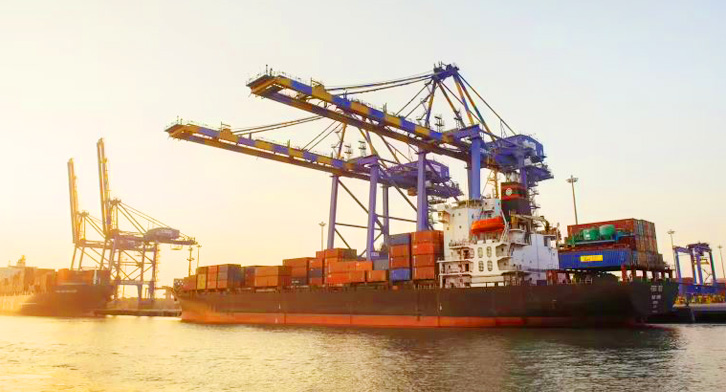
India’s maritime sector continues to show strong momentum. In Fiscal Year 2024–25, the country’s 12 major ports handled a total of 855 million tonnes of cargo — marking a 4.3% year-on-year increase, according to data released by the Ministry of Ports, Shipping and Waterways.
This uptick reflects the resilience of India’s port infrastructure and the growing role of multimodal logistics in driving trade efficiency.

Key Highlights:

Commodities Snapshot (FY25):

Commodity

Volume (MT)

Share (%)

POL

254.5

29.80%

Container Traffic

193.5

22.60%

Coal

186.6

21.80%

Others (Iron Ore, Pellets, etc.)

Remaining

21.80%

India’s 12 major ports, governed under the Major Port Authorities Act, 2021, include a strategic mix of west coast, east coast, and southern maritime gateways. These are Deendayal Port, Mumbai Port, Jawaharlal Nehru Port (JNPA), Mormugao Port, New Mangalore Port, and Cochin Port on the western coast; VO Chidambaranar Port, Chennai Port, Kamarajar Port, and Visakhapatnam Port on the eastern coastline; along with Paradip Port and Syama Prasad Mookerjee Port, which play critical roles in connecting eastern and northeastern India to global trade routes. Collectively, these ports form the backbone of India’s seaborne trade infrastructure.

Why It Matters:

India’s increasing cargo throughput reflects strong industrial activity, improved port infrastructure, and enhanced connectivity. With key ports expanding capacity and attracting private capital, India is positioning itself as a major global trade and logistics hub in the Indo-Pacific region.

Top 8 Freight Forwarding Software Solutions in 2025: Expert Insights and Recommendations

At CargoNet, we understand how vital it is to choose the right freight forwarding software to optimize your logistics operations, improve efficiency, and ensure compliance. With rapid advancements in technology, selecting the best solution can be overwhelming. That’s why we’ve carefully evaluated and compiled the top 8 freight forwarding software solutions in 2025—to help you make informed decisions that power your business forward.

Key Features Every Freight Forwarder Needs in 2025

Spotlight on CargoNet:

The AI-Powered Freight Software Built for Forwarders, by Forwarders

What is CargoNet?

CargoNet is a fully automated, AI-powered freight forwarding software built specifically for freight forwarders, NVOCCs, consolidators, and 3PLs. Designed with deep logistics expertise, it gives users complete control over multi-modal operations—covering everything from booking to delivery, compliance to billing, and document handling to visibility.

It supports both cloud-based and on-premise installations and operates through a modular pay-as-you-go model, enabling scalability and flexibility.

CargoNet Key Modules and Smart Capabilities Module Description

Module

Description

Sea & Air Freight

FCL, LCL, consolidation, HBL/MAWB creation, smart carrier allocation

Freight Quote Engine

AI-driven quoting with real-time rates, margin logic, and validity alerts

Customs Integration

EDI-enabled filings for AMS (US), ACI (Canada), JP24 (Japan), SCMTR (India)

Freight Accounting

Automated invoicing, multi-currency support, tax handling, and cheque printing

Operations Workflow

Auto-milestones, predictive delay alerts, container tracking

Client Portal

Real-time shipment tracking, documents, invoices, and booking requests

API Integrations

REST APIs for CRM, TMS, port community systems, and accounting software

Mobile Access

Android/iOS support for instant updates, POD uploads, and alerts

Why Freight Forwarding Software is Essential in 2025

1. Automation

Automation of critical documents like Bills of Lading and customs declarations reduces manual errors and accelerates shipment processing.

2. Shipment visibility

End-to-end shipment visibility enables timely updates and proactive issue resolution, enhancing customer satisfaction.

3. AI-powered analytics

AI-powered analytics optimize freight pricing and routing for cost savings and efficiency.

4. Compliance

Seamless regulatory compliance integration lowers risk of fines and shipment delays.

5. Collaboration tools

Cloud-based collaboration tools connect shippers, carriers, and customs agents in one unified platform.

CargoNet Solves the Core Pain Points with AI & Automation

1. Fragmented Documentation

Challenge: Using multiple systems for invoices, HBLs, and notices causes errors.
CargoNet Solution: A centralized, AI-assisted document engine auto-generates and links shipping documents—reducing manual effort by 60%.

2. Freight Quote Inaccuracy

Challenge: Manual rate collection from spreadsheets or emails results in errors.
CargoNet Solution: CargoNet’s AI-powered quote engine auto-pulls carrier rates, adds smart margin logic, and alerts users before quote expiry.

3. Limited Shipment Visibility

Challenge: Clients expect real-time updates, but systems often lack live tracking.
CargoNet Solution: Integrated APIs connect to carrier systems and container platforms, updating shipment milestones in real time for clients.

4. Regulatory Complexity

Challenge: Different countries require unique customs filings (AMS, ACI, JP24, etc.)
CargoNet Solution: Our EDI modules automate filings, compliance logs, and flag potential risks using AI-based screening.

5. Billing Delays & Errors

Challenge: Missed charges and unclear ledgers affect profit margins.
CargoNet Solution: Automated invoicing ties operations to billing in real time. Smart validation prevents duplicate or missed charges.

Current Challenges for Freight Forwarders in 2025

How CargoNet Helps

CargoNet empowers logistics companies through AI-powered exception handling, digital workflows, and real-time dashboards. From quote to delivery, it reduces errors, automates routine tasks, and enhances customer trust—all while improving operational efficiency.

Top 8 Freight Forwarding Software in 2025

Module

Deployment

Best For

Unique Feature

CargoNet

Cloud, Hybrid, Local Cloud (OpenStack), and On-Premises

Enterprise Deployments includes customization , Global Freight Forwarding NVOCCs , Warehousing , TMS All integrated in one ERP, Match to Any Size Organization.

Embedded with No Code Platforms , Inbuild App Generator ,AI & Automation with modular pay-as-you-go design

CargoWise

Cloud

Enterprise logistics

End-to-end automation & compliance tools

Magaya

Cloud

US logistics firms

Built-in WMS and CRM features

LogistaaS

Cloud

SMEs

Simple, affordable, fast to deploy

Ramco Logistics

Cloud

Enterprises

AI, transport planning, warehouse ops

GoFreight

Cloud

Small forwarders

Clean UI and rapid onboarding

BoxTop Tech

Desktop

UK/EU agents

Email sync & document tools

Chain.io

Cloud

Tech-savvy users

API-first integrations for digital stack

How to Choose the Right Freight Software

In 2025, freight forwarders face intense pressure to operate faster, leaner, and smarter. Spreadsheets and siloed systems no longer cut it.

Ready to Future-Proof Your Freight Operations?

Experience how CargoNet’s AI-powered and automation-driven freight solution can simplify your processes, enhance visibility, and keep you compliant—across sea, air, and land.

Unifeeder Launches India-Mediterranean (IMD) Service, Boosting India–Med Connectivity

In a significant boost to India–Mediterranean trade lanes, Unifeeder has launched its India Med Service (IMD)—a new shipping route connecting India with Northern Egypt and Türkiye. This move is part of Unifeeder’s ongoing effort to enhance its presence in the Indian Subcontinent and Mediterranean region.
“This strategic addition strengthens our ISC services by enhancing connectivity between India and the Mediterranean region,” Unifeeder stated.
The IMD service is designed to cater to both dry and reefer cargo, ensuring flexibility and efficiency for diverse cargo requirements.

Key Highlights:

Strategic Outlook

This expansion follows last year’s announcement of a strategic partnership between Unifeeder A/S and MPC Container Ships ASA, aimed at co-investing in energy efficiency technologies. The IMD service underscores Unifeeder’s dual focus on sustainability and regional connectivity.

Big Names Line Up for Tuna Tekra Port Project: Adani, Vedanta, Essar in the Race

India’s port infrastructure is heating up — and the latest battlefront is Tuna Tekra, Gujarat.
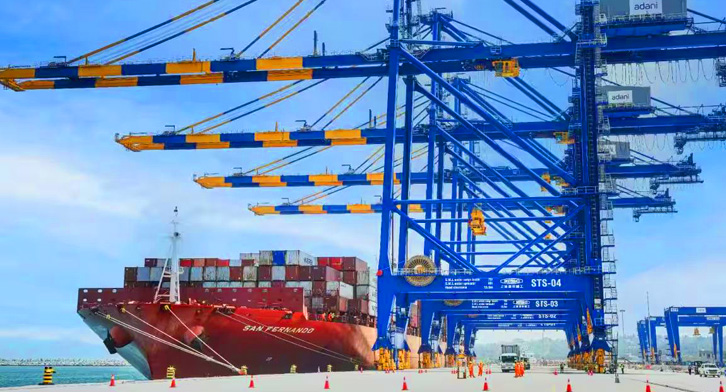
Top players like Adani Ports and SEZ Ltd, Vedanta Ltd, Essar Ports Ltd, and Gautam Freight Pvt Ltd have submitted initial bids for developing a multipurpose cargo berth at Tuna, Deendayal Port Authority’s key satellite facility.
This ₹1,552.57 crore (₹15.5 billion) project will boost India’s cargo handling capacity by 18.33 million tonnes annually, excluding containers and liquid cargo.
In a bid to secure the project, bidders are competing on the highest royalty per tonne of cargo handled, making this the port authority’s third attempt to attract private investment for this crucial berth.
Once completed, this modern terminal will accommodate large vessels of up to 100,000 DWT with 15m draft, handle diverse dry cargo — from food grains to steel — and ease the pressure on Deendayal Port’s already stretched dry cargo handling facilities.

Key Features & Project Highlights:

Infrastructure Commitments for Successful Bidder:

Dredging Responsibilities:

Additional Approvals:

Why This Matters:

Deendayal Port is the gateway for Northern India’s vast land-locked states, including Jammu & Kashmir, Uttar Pradesh, Madhya Pradesh, and Gujarat. This project is critical to reduce congestion and meet the growing demand for dry bulk handling.

India’s Services Sector Hits 3-Month High in May, But Manufacturing Loses Steam

India’s services sector saw its fastest growth in three months this May, thanks to robust export demand and record employment gains, keeping the economy’s expansion momentum alive.

Key Highlights:

The HSBC India Services PMI (seasonally adjusted) rose to 58.8 in May, up from 58.7 in April — well above the 50-mark, signaling sustained sector expansion.
Companies ramped up hiring at the fastest pace on record to meet rising demand and export orders.
Strong overseas demand remains a critical growth engine for India’s services industry.
Both input costs and output charges climbed above historical averages, hinting at inflationary pressures.
RBI expects 6.5% GDP growth this fiscal, supported by rural demand, public investments, and services exports.

Manufacturing Sector Shows Signs of Cooling:

Logistics & Freight Takeaway:

India Commits USD 20 Billion to Transform Maritime & Multimodal Logistics: Key Highlights from Nor-Shipping 2025

India has stepped up its game in the global maritime landscape, committing a whopping USD 20 billion to fast-track infrastructure development, multimodal logistics, and trade facilitation. Union Minister for Ports, Shipping and Waterways, Mr. Sarbananda Sonowal, made this landmark announcement during his keynote speech at the India@Nor-Shipping Country Session in Oslo.

Why This Matters:

India is not just upgrading its ports—it’s reshaping the future of maritime connectivity, sustainability, and global trade influence.

Top Highlights from the Minister’s Address:

Massive Investment Push:

Strengthening Global Maritime Corridors:

India’s Shipbuilding Ambition:

Green Maritime Future:

Digital Maritime Ecosystem:

Sustainable Ship Recycling:

Innovative Maritime Financing:

India’s Bold Vision:

“India’s maritime journey is not just about growth—it’s about creating a resilient, green, tech-enabled and globally competitive ecosystem. We are paving the way for India to become a maritime powerhouse, shaping the future of global shipping and trade,” — Mr. Sarbananda Sonowal

Why the Industry Should Watch This:

India’s Palm Oil Imports Surge 87% in May — Biggest Jump in Six Months!

India’s demand for palm oil roared back to life in May 2025, with imports skyrocketing 87% compared to April, hitting 600,000 metric tons — the highest monthly volume since November 2024.
The reason? Lower inventories at home and palm oil’s newly regained price edge over soy and sunflower oils,prompting Indian refiners to ramp up their buying sharply.
This surge could have ripple effects beyond India — possibly boosting Malaysian palm oil prices and supporting U.S. soy oil futures, say market watchers.

Why the Sudden Spike?

“Palm oil’s discount changed everything — buyers have switched back fast,” says Rajesh Patel of GGN Research.

Other Edible Oil Movements

Combined, these lifted India’s total edible oil imports by 37% to 1.18 million tons in May — the highest volume since December 2024.

Key Highlights at a Glance

India & Japan Chart New Course in Maritime Collaboration: Focus on Shipyards, Green Ports & Digitisation

In a landmark step to strengthen maritime ties, India and Japan have opened fresh chapters of cooperation spanning shipbuilding, port digitisation, and green port initiatives. The Union Minister of Ports, Shipping & Waterways, Mr. Sarbananda Sonowal, met with Mr. Terada Yoshimichi, Japan’s Vice Minister for International Affairs (MLITT), during the ongoing Oslo meet, aiming to unlock mutual opportunities in the fast-evolving maritime sector.

What’s on the table?

India has invited top Japanese shipbuilding giants like Imabari Shipbuilding, JMUC, Kanagawa Dockyard, and Mitsubishi Heavy Industries to explore investments and JVs with Indian yards—including potential greenfield projects such as Imabari’s planned presence in Andhra Pradesh.

Plans include joint efforts in port automation, digitisation, and smart logistics platforms, which will boost efficiency and transparency across the Indo-Japanese maritime corridor.
Both nations are exploring co-development of clean energy maritime clusters, including sustainable port infrastructure and disaster-resilient technologies to transform the Andaman & Nicobar and Lakshadweep Islands into Smart Islands.
Japan expressed keen interest in training and employing Indian seafarers, while India emphasised the importance of bilateral cooperation in maritime education and R&D.
The meeting also focused on setting up an MoU framework involving Cochin Shipyard Limited (CSL), Indian universities, and public agencies to develop next-generation ship designs and sustainable marine technologies.

Why it matters:

“Japan’s global expertise in shipbuilding and repair, coupled with India’s fast-growing maritime sector, presents a win-win scenario for both nations. This collaboration will not only drive investments but also make our port infrastructure greener, smarter, and future-ready,” said Mr. Sonowal.

Meanwhile, Mr. Yoshimichi reaffirmed Japan’s interest in expanding its long-standing railway cooperation with India into the maritime space—laying the groundwork for a broader Indo-Japanese economic partnership.

Quick Highlights:

PSA Mumbai Phase 2: Now Fully Facility-Ready at JN Port!

Big news from India’s logistics landscape — Phase 2 of PSA Mumbai (BMCT) at Jawaharlal Nehru Port is now fully operational!

The gates are set, the wharf is complete, and the yard is ready to roll — significantly boosting the terminal’s capacity and service strength.

In a note of appreciation, PSA India credited this milestone to the dedication, teamwork, and collaboration of its teams and valued partners.

What this Expansion Means: Key Highlights

Why This Matters:

As the statement from PSA India proudly noted — this is not just an infrastructure upgrade, but a bold step toward shaping the future of Indian logistics and global commerce.

cargonet-logo-icon
Cargonet Cargo Software Logo

Feedback & Reward program

Submit the Feedback and avail the Rewards.

1. Your satisfaction & reliability on CargoNet ?

2. Your Rating on Support & co-ordination team?

3. Satisfaction on the look and feel of CargoNet ?

4. Please specify any 2 best features that you feel more helpful in CargoNet?

5. Please specify any 2 best reports that you are taking on regular basis?

6. Are you using Copy Job option in CargoNet Software?

7. Are you using Automatic DSR (Daily Status Report) Option? It automatically sends reports to customer about the shipment status

8. Are you using Automatic Outstanding Reports option? Period Auto outstanding reminders to customer

9. Any other thoughts to improve in CargoNet? Please share.

* Join our Reward Program by recommending CargoNet (Cash Rewards Awaiting)

“Thanks for your feedback. Our goal is to create the best possible product, support & service, and your thoughts, ideas & suggestions play a major role in helping us identify opportunities to improve.”

Cut AI cost ,
not performance

discover how top Freight Forwarding companies  reduce AI-related expense and speed up operation with CargoNet AI, we will show it how
Share your information for instant access :

Get a Demo Now

Get a Demo Now