India Commits ₹5,000 Cr ($583M) to Boost Northeast Waterways

In a major push to enhance connectivity and logistics in the Northeast, the Government of India is investing ₹5,000 crore ($583.1 million) to develop inland water transport (IWT) infrastructure in the region. Union Minister for Ports, Shipping, and Waterways, Mr. Sarbananda Sonowal, announced the initiative, highlighting the Centre’s focused efforts to unlock the region’s trade potential and improve regional integration.

Over the past two years, the Ministry has already initiated projects worth ₹1,000 crore ($116.6 million), of which ₹300 crore ($35 million) worth of work has been completed. The remaining ₹700 crore ($81.6 million) is expected to be completed by 2025.

Key Highlights:

This renewed focus on inland waterways aligns with India’s broader push to modernize multi-modal transport, reduce logistics costs, and strengthen border trade with Bangladesh and Southeast Asia.

Tamil Nadu Sets $5 Billion Target to Become Global Seafood Export Hub

Tamil Nadu is casting a wide net with a bold new vision—transforming its vast 1,076-km coastline into a high-value seafood export powerhouse. The state has announced plans to scale its seafood exports to USD 5 billion, leveraging modern infrastructure, value-added processing, and global partnerships.
The announcement came during the Tamil Nadu Seafood – Business Connect event in Chennai, where Industries Minister Dr. TRB Rajaa shared the government’s ambitious roadmap. The event brought together senior officials, global importers, and domestic seafood processors in a bid to build new trade ties and strengthen the seafood ecosystem.
“This initiative goes beyond trade. It’s about unlocking the potential of the Blue Economy and positioning Tamil Nadu as a global player in the seafood value chain,” said Dr. Rajaa.
A detailed execution plan is being developed, with the state government pledging strategic investments and infrastructure upgrades to support sustainable and scalable growth.

Key Highlights:

JNPA Surges Ahead with 15.52% Q1 Growth in Container Traffic

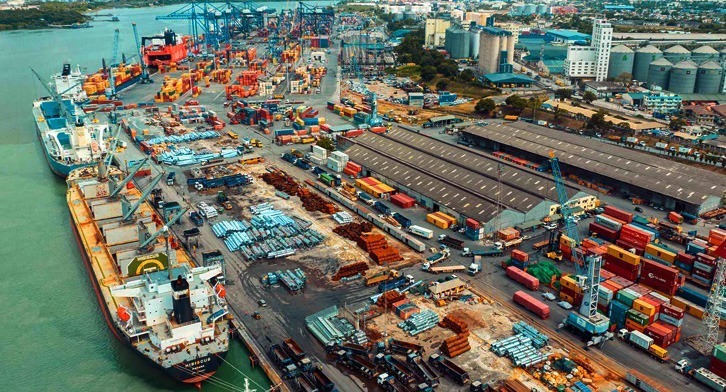
Jawaharlal Nehru Port Authority (JNPA), the crown jewel of India’s maritime infrastructure, has posted an impressive 15.52% year-on-year growth in container traffic for Q1 FY 2025-26. The port handled 1.95 million TEUs and 24.2 million tonnes of total cargo between April and June 2025—setting a new benchmark in operational efficiency and throughput.

Key Highlights (April–June 2025):

What's Driving the Growth?

JNPA attributes its continued success to:
A port authority communique emphasized that this momentum positions JNPA to achieve even higher throughput in the upcoming quarters.

Why it matters:

JNPA’s stellar performance reflects India’s growing strength in global trade logistics and its push for infrastructure modernization. With upcoming mega-projects like Vadhvan Port and increasing private partnerships, JNPA is not just keeping pace—it’s setting the pace.

VOC Port Sees 80% Surge in Limestone Handling in Q1 FY 2025-26

In a strong start to the financial year, V. O. Chidambaranar Port (VOC Port) reported a significant surge in limestone handling during Q1 FY 2025-26, reinforcing its strategic importance in India’s logistics and supply chain network.
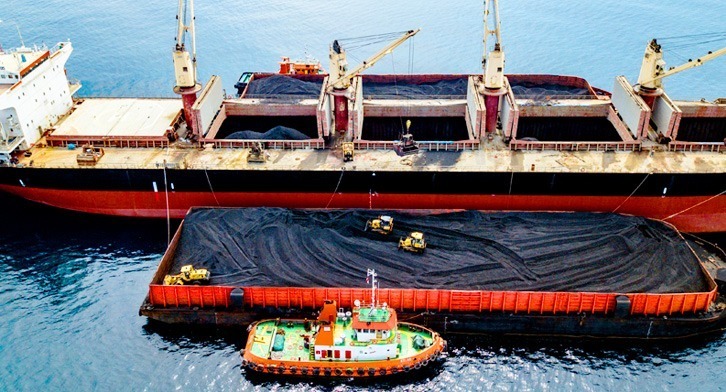
The port handled 4,93,086 tonnes of limestone, marking an impressive 80.20% increase compared to 2,73,629 tonnes during the same period last year (Q1 FY 2024-25).
This jump highlights VOC Port’s increasing operational efficiency and its growing role as a critical gateway for raw material imports, especially for India’s construction and manufacturing sectors.

Key Highlights:

India Plans 200 Gati Shakti Cargo Terminals Along Rail Freight Corridors.

In a landmark move to bolster logistics and maritime infrastructure, the Indian government is planning 200 Gati Shakti Cargo Terminals to be developed along the country’s expanding Dedicated Freight Corridors (DFCs). This initiative is part of a broader multi-modal push under the PM Gati Shakti National Master Plan aimed at integrating transport networks, streamlining freight movement, and reducing logistics costs.
In parallel, India is strengthening its maritime ambitions through a strategic partnership with South Korea’s HD Hyundai. Earlier this month, HD Korea Shipbuilding & Offshore Engineering (HD KSOE) — the intermediate shipbuilding arm of HD Hyundai — signed a comprehensive Memorandum of Understanding (MoU) with Cochin Shipyard Limited (CSL), India’s largest state-owned shipbuilder.

Key Highlights from the MoU:

Why This Matters for the Logistics Sector:

India to Mandate Green Steel in Government Projects from FY28

In a landmark step toward decarbonizing heavy industries, the Indian government is set to mandate the use of green-rated steel in all central government projects and centrally-sponsored schemes beginning FY2027–28, according to people familiar with the development.
The Ministry of Steel has already prepared a draft Cabinet note, laying the groundwork for this green procurement policy—one that could reshape steel consumption patterns in India’s public sector.

Key Highlights:

Projects involving iron and steel products worth over ₹1 crore (~$116,550) will fall under the scope of this mandate.
Public sector projects currently account for 22% of India’s steel consumption, projected to rise to 28% by FY2030. This makes government procurement a powerful lever to stimulate demand for green steel.
The policy supports India’s broader goals for industrial decarbonization and aligns with its commitments under various global climate agreements.
Officials note that since current procurement is based on lowest cost, environmental impact often goes unaccounted for. The new policy aims to balance cost with sustainability imperatives, with negligible impact on total expenditure.
The Steel Ministry has yet to formally respond to media inquiries about the proposed timeline and implementation roadmap.

Why This Matters for Logistics & Infrastructure Stakeholders:

With steel being a foundational material in port infrastructure, logistics parks, warehouses, and road/rail freight corridors, this policy could reshape procurement strategies for EPC contractors, government tenders, and public-private partnership (PPP) projects.

Why GPS Latency Is Disrupting Container Tracking in Global Shipping (And How to Fix It)

Wondering why your container tracking updates are delayed?

The answer often lies in a growing challenge in global logistics: GPS latency.

What Is GPS Latency in Shipping?

GPS latency refers to the delay between a container’s real-time movement and the time its position is updated in your tracking system. While most global carriers aim to update container locations every 6 hours, this is increasingly unreliable due to signal interference, system delays, and geopolitical disruptions.

How Often Are Container Tracking Updates Delayed?

Based on 2025 global logistics data:

When updates exceed 6 hours, they cross the tolerance threshold used by most logistics platforms, causing gaps in supply chain visibility.

Why Are GPS Container Updates Delayed?

Several major issues contribute to delayed tracking updates:

1. Electronic Warfare & GPS Spoofing

Military conflicts or strategic disruptions can manipulate or block satellite signals. In 2025, false GPS positions showed ships on land or far off course.

2. Satellite Network Congestion

Global demand for GPS accuracy is increasing. The more systems relying on satellite signals, the greater the chance of signal delays and errors.

3. Carrier System Lag

Some shipping lines experience slow internal processing or delayed updates to freight platforms due to weak data pipelines or outdated system integrations.

What Happens When Updates Exceed the 6-Hour Limit?

When containers are not updated on time, the consequences ripple through the supply chain:

How Freight Companies Can Solve the Tracking Delay Problem

Modern logistics teams must go beyond passive GPS tracking. Here’s what you can do:

1. Set Latency Alerts

Trigger warnings when a container hasn’t updated within the expected time window (e.g., 6 hours).

2. Use Predictive ETA Models

Leverage movement patterns, vessel schedules, and traffic conditions to estimate current positions during signal loss.

3. Integrate Multiple Data Sources

Pull location data from carrier platforms, port APIs, and manual checkpoints to fill visibility gaps.

4. Analyze Delay Trends

Use dashboards to track delay frequency, high-risk routes, and carrier reliability over time.

Build Resilience into Your Freight Operations

Global shipping is more unpredictable than ever, affected by everything from satellite disruptions to geopolitical instability.
Your freight systems need to be:

Improve Your Container Visibility with CargoNet

CargoNet helps logistics teams address GPS tracking gaps with:

Experiencing tracking delays in your logistics flow?

Start your upgrade to smarter container tracking with CargoNet

India’s BRICS Trade Soars to $399 Billion – But Trade Deficit Widens

India’s trade with the BRICS bloc—Brazil, Russia, India, China, and South Africa—has witnessed a dramatic expansion over the past four years, clocking a total volume of US$ 399 billion in 2024. While this signals strong economic integration, it also underscores a growing trade imbalance that could shape discussions at the ongoing 17th BRICS Summit in Rio de Janeiro, Brazil.

Prime Minister Narendra Modi is attending the summit, where energy dependence and trade asymmetry are expected to be in sharp focus.

Key Highlights

What It Means:

India’s growing BRICS trade reflects strong regional ties and strategic resource access. However, the widening trade gap and over-reliance on energy and raw materials pose long-term risks. As geopolitical and supply chain landscapes evolve, India must pivot toward boosting value-added exports and reducing vulnerability to resource-centric imports.

DPIIT Reviews Rs 36,296 Cr Infra Projects in Gujarat & Rajasthan — Focus on Renewable Power & 5G Expansion

In a major push to accelerate stalled infrastructure initiatives, the Department for Promotion of Industry and Internal Trade (DPIIT) reviewed 22 critical issues impacting 18 infrastructure projects worth Rs 36,296 crore ($4.23 billion) across Gujarat and Rajasthan.
The high-level review was led by DPIIT Secretary Amardeep Bhatia, bringing together senior officials from central ministries, state governments, and private project developers.

Key Highlights:

Major Projects Discussed:

This coordinated effort signals the government’s resolve to unblock regulatory and coordination hurdles that slow down vital infrastructure, especially in energy and digital sectors. The DPIIT’s proactive monitoring underlines the importance of fast-tracking execution to align with India’s industrial and climate goals.

Chennai Port Revives ₹8,000 Cr Outer Harbour Project to Boost Container Capacity

In a major push to expand maritime infrastructure, the Chennai Port Authority (ChPA) is reviving its long-pending outer harbour project, pegged at an estimated cost of ₹8,000 crore (₹80 billion). The development aims to significantly enhance container handling capacity and support India’s growing trade volumes.

According to ChPA Chairperson Sunil Paliwal, a techno-feasibility study will soon be initiated. The project includes a 2-kilometre-long container berth and reclamation of nearly 200 acres for supporting infrastructure. “We are constantly working to upgrade our services,” he stated on Thursday.

The outer harbour project has had a long journey — this marks its third revival attempt since the initial proposal in 2007.

Project Highlights

Strategic Significance

This project is poised to transform Chennai Port into a next-generation logistics and container hub, aligning with India’s broader push to modernize port infrastructure under the Sagarmala initiative. It could also decongest existing terminals and enable direct berthing of large vessels, reducing transshipment dependency on foreign ports.

cargonet-logo-icon
Cargonet Cargo Software Logo

Feedback & Reward program

Submit the Feedback and avail the Rewards.

1. Your satisfaction & reliability on CargoNet ?

2. Your Rating on Support & co-ordination team?

3. Satisfaction on the look and feel of CargoNet ?

4. Please specify any 2 best features that you feel more helpful in CargoNet?

5. Please specify any 2 best reports that you are taking on regular basis?

6. Are you using Copy Job option in CargoNet Software?

7. Are you using Automatic DSR (Daily Status Report) Option? It automatically sends reports to customer about the shipment status

8. Are you using Automatic Outstanding Reports option? Period Auto outstanding reminders to customer

9. Any other thoughts to improve in CargoNet? Please share.

* Join our Reward Program by recommending CargoNet (Cash Rewards Awaiting)

“Thanks for your feedback. Our goal is to create the best possible product, support & service, and your thoughts, ideas & suggestions play a major role in helping us identify opportunities to improve.”

Cut AI cost ,
not performance

discover how top Freight Forwarding companies  reduce AI-related expense and speed up operation with CargoNet AI, we will show it how
Share your information for instant access :

Get a Demo Now