India’s Green Warehousing Footprint Set to Quadruple by 2030: JLL India

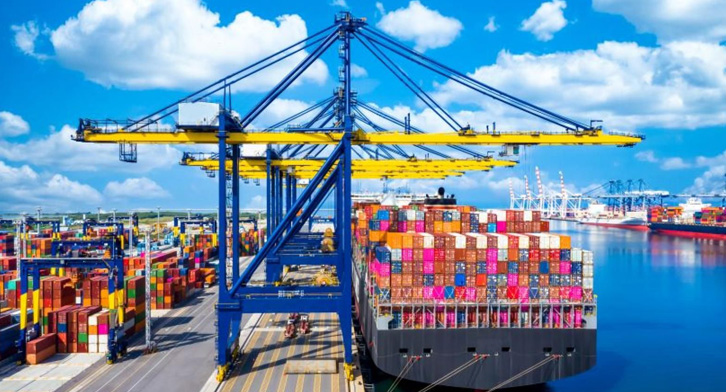
India’s warehousing sector is undergoing a green revolution, with sustainable infrastructure emerging as a core pillar of growth. According to a recent JLL India study, certified green warehouse stock is projected to quadruple to 270 million sq. ft. by 2030, up from 65 million sq. ft. in 2024—a staggering shift driven by institutional investors and the push for ESG-compliant supply chains.

Key Highlights:

Why It Matters:

The shift reflects not just demand for modern logistics infrastructure, but a deeper integration of sustainability in supply chain strategy, influenced by global ESG mandates, e-commerce growth, and regulatory pressure.

Bottom Line:

India is rapidly cementing its position as a global leader in sustainable warehousing, and this green momentum is set to redefine the future of logistics real estate.

Indian Textile Sector Attracts Investment from Japan: AEPC

India’s textile sector is stitching together stronger trade ties with Japan, as major Japanese apparel brands show serious interest in sourcing from and investing in Indian manufacturing. At the recently held India Tex Trend Fair (ITTF) 2025 in Tokyo, key meetings and collaborations unfolded between Indian exporters and Japanese buyers—ushering in a new chapter for bilateral textile trade.
“We had successful meetings with major Japanese brands like Uniqlo, Daiso, and YKK. There is real potential here to scale up sourcing and joint ventures,”
— Sudhir Sekhri, Chairman, AEPC
The Apparel Export Promotion Council (AEPC) believes India has a golden opportunity to become a leading apparel supplier to Japan—leveraging its manufacturing capabilities, growing sustainability focus, and policy support like PM MITRA Parks.

Key Highlights:

Government Push:

The Indian government is accelerating domestic textile manufacturing through schemes like the seven PM MITRA Parks, aiming to make India a preferred sourcing hub for global markets.

India Secures Long-Term Fertiliser Deal with Saudi Arabia Amid Global Supply Uncertainty

In a strategic move to strengthen agricultural resilience, India has signed a major five-year deal with Saudi Arabia’s Ma’aden for the supply of di-ammonium phosphate (DAP) fertilisers — a lifeline for Indian farmers grappling with rising prices and global supply constraints.
This partnership comes at a crucial time, as China continues to limit its fertiliser exports, shaking up international markets and prompting countries like India to diversify sourcing.

Key Highlights:

Why It Matters

This agreement is more than a trade deal — it’s part of India’s growing push to insulate itself from global supply shocks and ensure that agricultural inputs remain accessible, affordable, and stable. For the world’s largest democracy, with millions of farmers relying on predictable support, such partnerships are vital to long-term food and economic security.

India’s Renewable Energy Surge: Solar Now Cheaper Than Coal, 420% Growth in June Alone

India’s clean energy revolution hit a new milestone in June 2025, with renewable energy capacity soaring 420% year-on-year, from 1.4 GW in June 2024 to 7.3 GW this year, according to Union Minister for New and Renewable Energy Mr. Pralhad Joshi. The announcement came during the IVCA Renewable Energy Summit held in Mumbai, where leaders and investors gathered to discuss India’s green energy roadmap.
Energy Summit held in Mumbai, where leaders and investors gathered to discuss India’s green energy roadmap.

Key Highlights:

What This Means for Logistics & Infrastructure:

India’s shift to green energy is not just about environment—it’s reshaping the energy backbone of logistics and manufacturing. With lower tariffs, better energy storage, and massive public-private investments, supply chains can expect more stable, cleaner, and cheaper energy sources going forward.

India Eyes $100B in US Exports: FIEO Identifies 300+ High-Potential Products

In a strategic push to expand trade with the United States, the Federation of Indian Export Organisations (FIEO) has identified over 300 high-potential export items and is calling for tariff concessions to boost India’s competitiveness in the US market.
The move comes as India navigates a shifting global trade environment and seeks to solidify its position as a major export partner to the US — already India’s largest export destination with $86.5 billion in shipments last year.

Key Highlights:

What to Watch:

India’s next round of negotiations will be crucial in determining how many of these export items gain easier US market access — potentially unlocking billions in additional trade.

GCCs Set to Add $100–150 Billion to India’s GDP by 2030: FM Sitharaman

India’s Global Capability Centres (GCCs) are rapidly emerging as a major pillar of economic growth, with Finance Minister Nirmala Sitharaman projecting a massive contribution of $100–150 billion to India’s GDP by 2030.
Speaking at the CII GCC Summit, the Finance Minister spotlighted how India has become a global hub for innovation, research, and digital transformation through its thriving network of GCCs.
“India’s GCCs are no longer just back offices — they are the nerve centres of global innovation and leadership,” she said.

India’s Exports Rise Nearly 6% in Q1 FY2025 — Electronics Lead the Surge

India’s total exports—merchandise plus services—touched USD 210.31 billion during April–June 2025, a 5.94% year-on-year increase, reflecting resilience and growth across key sectors despite global headwinds.

Key Highlights (April–June 2025)

Top Export Performers

June 2025 Snapshot

Trade Deficit Insights

Non-Petroleum & Non-Gems and Jewellery Trade

Top Performing Commodities

Growth witnessed in:

Declines seen in imports of:

Export & Import Destinations

Top Export Destinations (June 2025):
Top Import Sources (June 2025):
Quarterly Leaders (April–June):

Insight:

The strong growth in electronics exports and services trade suggests India is gradually shifting toward a high-tech, service-driven export economy. The narrowing trade deficit in June signals improving global demand and efficient domestic production.

Vizhinjam Port Targets 40% EXIM Share in Cargo Volumes Over Next 3–5 Years

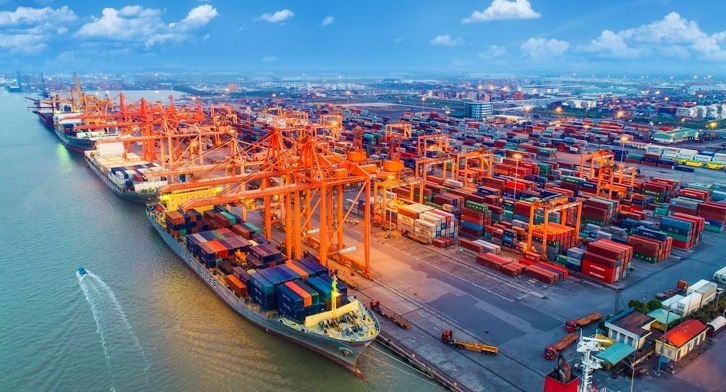
Vizhinjam International Seaport, India’s first deepwater transshipment hub, is rapidly emerging as a game changer in the maritime logistics sector. The port is now gearing up to handle direct export-import (EXIM) cargo, aiming for a 40:60 ratio between EXIM and transshipment volumes within the next 3–5 years.
“Initially, we expected only 10% EXIM share in the first year. But interest from exporters and consignees suggests we might hit 10–15% right away,” said a senior official from Adani Ports and SEZ (APSEZ).

Key Highlights:

Infrastructure Push:

Growth Milestones:

Future Investments:

Strategic Impact:

Public-Private Partnership:

Vizhinjam port is a PPP project between the Kerala government and APSEZ, India’s largest port operator.
Under the revenue-sharing model, the Kerala government will start receiving 1% of port revenue from 2035, increasing annually by 1%, capped at 40%.

India to Launch Its First Homegrown Marine Insurer — “India Club”

In a landmark move for India’s maritime sector, the Indian government is setting up its first Protection and Indemnity (P&I) insurance entity, named India Club. This initiative marks a significant step toward strengthening the country’s maritime self-reliance and reducing dependence on foreign insurance providers.

What is India Club?

India Club will serve as a domestic third-party liability insurer for ships operating in India’s coastal waters and inland waterways. The plan was disclosed by Shipping Secretary T.K. Ramachandran, who emphasized the urgent need for an Indian insurer that can support fleet owners navigating regulatory complexities and geopolitical constraints.

Key Highlights:

Why This Matters

The creation of India Club is not just an insurance play — it’s a strategic move to enhance maritime sovereignty, protect domestic fleet operators, and make India more resilient in global trade logistics.
Stay tuned for updates as this transformative initiative navigates through its next stages.

India’s Banana Export Push: Sea Freight, Hubs, and Global Market Access

India is peeling back the challenges in its banana export ecosystem and going full throttle with logistics reforms, new sea freight routes, and strategically placed export hubs. While it is the world’s largest banana producer, India still holds just a 1.2% share in global banana exports—a gap it now aims to close. According to APEDA, India’s banana export value surged tenfold, from USD 25 million in 2010 to USD 250.6 million in 2023. Yet, critical issues like fragmented farming, poor cold chain logistics, and reliance on expensive air freight continue to hinder its global potential.

Key Developments in Focus:

Logistics Opportunity:

With infrastructure upgrades and modal shift to cost-efficient sea freight, India’s banana sector could see expanded access to markets in the EU, Russia, and ASEAN, improving both margins and volumes.
cargonet-logo-icon
Cargonet Cargo Software Logo

Feedback & Reward program

Submit the Feedback and avail the Rewards.

1. Your satisfaction & reliability on CargoNet ?

2. Your Rating on Support & co-ordination team?

3. Satisfaction on the look and feel of CargoNet ?

4. Please specify any 2 best features that you feel more helpful in CargoNet?

5. Please specify any 2 best reports that you are taking on regular basis?

6. Are you using Copy Job option in CargoNet Software?

7. Are you using Automatic DSR (Daily Status Report) Option? It automatically sends reports to customer about the shipment status

8. Are you using Automatic Outstanding Reports option? Period Auto outstanding reminders to customer

9. Any other thoughts to improve in CargoNet? Please share.

* Join our Reward Program by recommending CargoNet (Cash Rewards Awaiting)

“Thanks for your feedback. Our goal is to create the best possible product, support & service, and your thoughts, ideas & suggestions play a major role in helping us identify opportunities to improve.”

Cut AI cost ,
not performance

discover how top Freight Forwarding companies  reduce AI-related expense and speed up operation with CargoNet AI, we will show it how
Share your information for instant access :

Get a Demo Now