
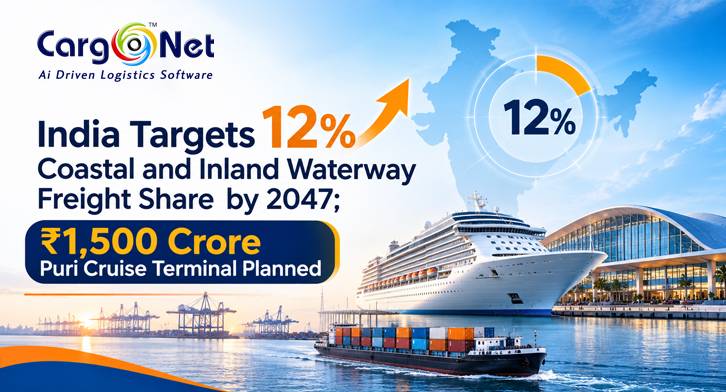
India is planning a major shift in its freight transportation strategy, aiming to double the combined share of coastal shipping and inland waterways from 6% to 12% by 2047. The initiative is expected to strengthen multimodal logistics, reduce dependence on road-based freight transportation and improve connectivity between industrial centres and major ports.
Union Minister for Ports, Shipping and Waterways Sarbananda Sonowal announced the target during a Consultative Committee meeting in Puri, Odisha, on November 3, 2026. The government intends to accelerate this transition through the proposed Coastal Cargo Promotion Scheme and the Cruise Bharat Mission, while expanding maritime infrastructure and cruise tourism.
The announcement also included plans for a ₹1,500 crore Puri International Cruise Terminal, which will be developed by the Paradip Port Authority (PPA) in partnership with the Odisha government. The developments are part of India’s broader strategy to strengthen its maritime economy and improve the efficiency of domestic cargo transportation.
Key Developments in India’s Coastal Shipping Strategy
- 12% freight target by 2047: The government aims to double the combined share of coastal and inland waterway transportation from 6% to 12%.
- ₹1,500 crore cruise terminal: A new international cruise terminal is planned in Puri, Odisha.
- 140% growth in coastal cargo: Cargo handled at Indian ports increased from 74 million metric tonnes to 177 million metric tonnes over the past 12 years.
- Coastal Cargo Promotion Scheme: Incentives are planned for cargo owners, coastal vessel operators and multimodal transport operators.
- One million cruise passengers: The Cruise Bharat Mission targets one million sea cruise passengers by March 2029.
- National Waterway 5: Odisha’s proposed waterway development will connect industrial and mineral-producing regions with Paradip and Dhamra ports.
- Employment and sustainability: The two initiatives are expected to generate more than 560,000 jobs and save approximately 16 million tonnes of carbon dioxide emissions, according to the Ministry.
Coastal Cargo Growth Strengthens India’s Maritime Logistics Sector
India’s coastal shipping industry has recorded significant growth over the last 12 years. According to figures shared by the Ministry of Ports, Shipping and Waterways, coastal cargo handled at Indian ports increased from 74 million metric tonnes to 177 million metric tonnes.
This represents approximately 140% growth, highlighting the increasing role of maritime transportation in India’s domestic freight network.
With a coastline exceeding 11,000 kilometres, India has considerable potential to move bulk commodities and industrial cargo through coastal shipping. This can create alternative transportation routes for sectors such as steel, cement, coal, petroleum and other industrial commodities.
The government’s target to increase the combined coastal and inland waterway freight share to 12% by 2047 is expected to encourage businesses to consider water-based transportation alongside road and rail networks. The Ministry of Ports, Shipping and Waterways is working on infrastructure and policy initiatives to strengthen this transportation ecosystem.
Government Introduces Coastal Cargo Promotion Scheme to Encourage Water-Based Freight
A major component of the government’s strategy is the Coastal Cargo Promotion Scheme, announced in the Union Budget 2026–27. The scheme is designed to encourage businesses to shift suitable cargo from road and rail transportation to coastal shipping and inland waterways.
Under the proposed framework, incentives will be extended to three major stakeholder groups:
- Cargo owners: Businesses moving goods through coastal shipping and inland waterways.
- Coastal vessel operators: Shipping companies involved in domestic coastal cargo transportation.
- Multimodal transport operators: Logistics providers combining waterways with road and rail transportation.
The scheme is particularly relevant for industries transporting bulk commodities over long distances. Integrating coastal shipping with road and rail networks could help businesses develop more efficient freight corridors, improve port connectivity and reduce pressure on congested highways.
For freight forwarders and logistics companies, this policy could create opportunities to develop integrated sea-road-rail transportation solutions, particularly for domestic cargo movements.
National Waterway 5 to Connect Odisha’s Industrial Centres with Major Ports
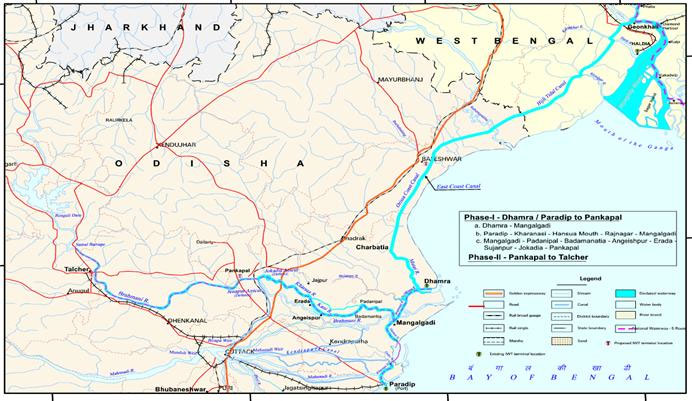
Odisha is expected to play an important role in India’s inland waterway expansion through the development of National Waterway 5 (NW-5).
The project is intended to connect mineral-rich and industrial regions, including Talcher, Angul and Kalinganagar, with eastern coastal ports such as Paradip and Dhamra. This connectivity could create an alternative transportation channel for coal, steel, iron ore and other industrial commodities.
According to the Ministry of Ports, Shipping and Waterways’ National Waterways development information, the proposed NW-5 development involves an investment of approximately ₹13,086 crore and prioritises a 332-kilometre stretch connecting the industrial hinterland with Paradip and Dhamra.
The development plan includes:
- Inland waterway terminals and cargo-handling infrastructure.
- Navigation improvements and dredging.
- Weirs and locks to support vessel movement.
- Development of barges for industrial cargo transportation.
- Improved connectivity between industrial clusters and seaports.
The Inland Waterways Authority of India (IWAI) identifies NW-5 as a 588-kilometre waterway, with 332 kilometres prioritised for initial development.
Once operational, the corridor could strengthen Odisha’s position as an important logistics and industrial transportation hub on India’s eastern coast.
Puri International Cruise Terminal: ₹1,500 Crore Investment Planned
Alongside freight transportation, the government is also focusing on expanding India’s cruise tourism infrastructure.
Sarbananda Sonowal announced that the proposed Puri International Cruise Terminal will be developed by Paradip Port Authority in partnership with the Odisha government, with an estimated investment of ₹1,500 crore.
The project is expected to support the development of Puri as a cruise tourism destination and strengthen Odisha’s maritime tourism ecosystem.
The proposed terminal also aligns with the objectives of the Cruise Bharat Mission, launched in September 2024, which aims to attract one million sea cruise passengers and generate 400,000 jobs by March 2029.
India recorded 462,661 ocean cruise passengers and 212 cruise vessel calls during FY2025–26, according to the Ministry. The passenger count represents a 5.5-fold increase compared with FY2013–14.
The government is also expanding river cruise tourism. Twenty river cruise circuits across 16 National Waterways are operational, while another 51 circuits have been identified for phased development.
Important Statistics: India’s Maritime Expansion
The following table summarises the major figures announced by the Ministry of Ports, Shipping and Waterways.
Indicator
Current / Previous figure
Government target / Plan
Coastal and inland waterway freight share
6%
12% by 2047
Coastal cargo handled
74 million tonnes
177 million tonnes achieved
Coastal cargo growth
—
Approximately 140%
India’s coastline
11,000+ km
Expansion of maritime utilisation
Sea cruise passengers
462,661 in FY2025–26
1 million by March 2029
Puri Cruise Terminal
Proposed
₹1,500 crore
National Waterway 5
332 km priority stretch
Approximately ₹13,086 crore
Operational river cruise circuits
20
51 additional circuits identified
Source: Ministry of Ports, Shipping and Waterways and official government announcements. Figures reflect reported data and proposed targets, not completed infrastructure projects.
Expected Economic and Environmental Impact
The government expects the Coastal Cargo Promotion Scheme and Cruise Bharat Mission to contribute to employment generation, maritime infrastructure development and environmental sustainability.
According to the Ministry’s announcement, the two initiatives are expected to:
- Generate more than 560,000 employment opportunities.
- Save approximately 16 million tonnes of carbon dioxide emissions.
- Encourage investment in coastal shipping and cruise infrastructure.
- Strengthen port-led industrial development.
- Improve multimodal connectivity between inland production centres and coastal ports.
However, achieving these benefits will depend on the timely development of terminals, navigable waterways, vessel availability, cargo-handling facilities and efficient connections with road and rail networks.
How the 6% to 12% Freight Shift Could Transform Logistics
Increasing the share of water-based freight transportation could influence India’s domestic logistics landscape in several ways.
Logistics segment
Potential impact
Road transportation
Reduced pressure on highways for suitable long-distance bulk cargo
Coastal shipping
Higher demand for domestic vessel capacity
Inland waterways
New cargo corridors connecting industrial regions with ports
Port infrastructure
Greater demand for terminals, cargo handling and storage
Freight forwarding
More opportunities for multimodal transportation services
Supply chain management
Greater integration of sea, road and rail networks
For freight forwarding companies, the expansion could create new opportunities in coastal cargo booking, multimodal shipment planning, inland transportation, cargo documentation and port coordination.
The development of NW-5 is particularly significant because it could connect Odisha’s mineral-producing regions directly with major eastern ports, potentially improving the movement of industrial commodities.
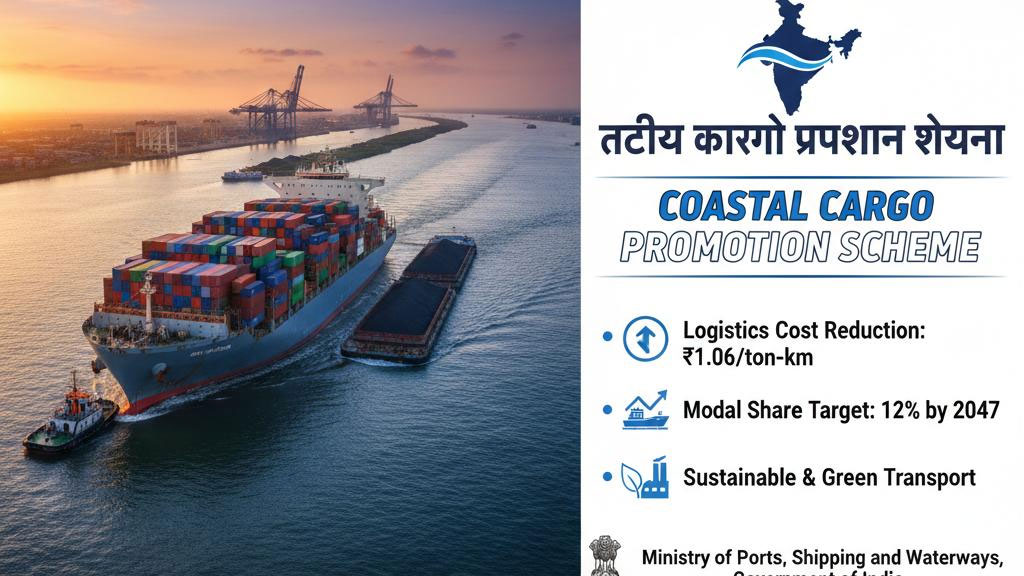
India’s Waterway Freight Expansion: Strategic Development Diagram
The following infographic highlights the government’s freight target, coastal cargo growth, major policy initiatives and planned Odisha infrastructure investments.
Challenges That Could Influence Implementation
Despite the potential benefits, increasing waterway transportation’s share will require addressing several operational challenges.
1. Infrastructure readiness
Inland terminals, navigational channels, cargo-handling facilities and supporting infrastructure need to be developed.
2. Last-mile connectivity
Waterways must connect efficiently with industrial clusters, warehouses, railway networks and road transportation systems.
3. Vessel availability
The availability of suitable vessels and barges will be important for transporting different categories of cargo.
4. Commercial viability
Freight rates, transit times, handling costs and cargo volumes will determine whether businesses adopt water-based transportation.
5. Coordination between stakeholders
Port authorities, shipping operators, state governments and logistics companies will need to coordinate infrastructure and cargo operations.
The success of India’s 2047 freight target will depend not only on new infrastructure investments but also on the ability to make waterway transportation commercially attractive for cargo owners.
Frequently Asked Questions
What is India’s target for coastal and inland waterway freight by 2047?
India aims to increase the combined share of coastal shipping and inland waterway transportation in freight movement from 6% to 12% by 2047.
What is the Coastal Cargo Promotion Scheme?
The Coastal Cargo Promotion Scheme is a government initiative announced in the Union Budget 2026–27 to encourage cargo owners, coastal vessel operators and multimodal transport operators to use water-based freight transportation.
What is the estimated cost of the Puri International Cruise Terminal?
The proposed Puri International Cruise Terminal is expected to cost approximately ₹1,500 crore. Paradip Port Authority and the Odisha government will jointly develop the project.
What is the National Waterway 5 project in Odisha?
National Waterway 5 is an inland waterway development project intended to connect industrial and mineral-producing regions such as Talcher and Angul with Paradip and Dhamra ports. Its priority development stretch covers approximately 332 kilometres.
What is the target of the Cruise Bharat Mission?
The Cruise Bharat Mission aims to attract one million sea cruise passengers and generate 400,000 jobs by March 2029.
How can increased coastal shipping benefit freight forwarders?
It could create opportunities for multimodal freight services, coastal cargo transportation, port-to-port logistics, inland waterway cargo movement and integrated road-rail-sea transportation.