
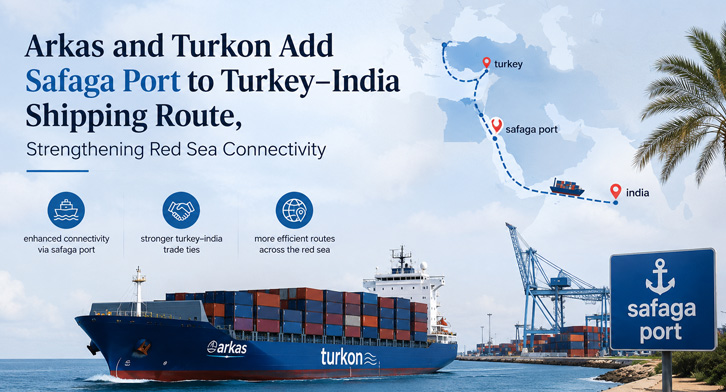
Arkas Line and Turkon Line are expanding their Turkey–India container shipping network with the addition of Safaga Port in Egypt to their service rotation. The move strengthens maritime connectivity between the Mediterranean, Red Sea and Indian subcontinent, while giving shippers another gateway for regional cargo movement.
For exporters, importers and logistics companies, the new Safaga call could provide greater routing flexibility and improve access to cargo markets across Egypt, Turkey, India and surrounding regions.
Key Highlights
- Safaga Port added to the Arkas–Turkon Turkey–India container service.
- The new call strengthens the Turkey–Red Sea–India shipping corridor.
- Egyptian and regional businesses gain another option for international container movements.
- The service can support cargo such as textiles, machinery, manufactured goods, agricultural products and consumer products.
- Additional port coverage can improve routing flexibility and cargo distribution.
- The development reinforces the strategic role of Red Sea ports as links between Europe, Africa, the Middle East and Asia.
- The route enhancement reflects a wider shipping-industry focus on network optimization and strategically positioned port calls.
Why Is Safaga Port Important for Turkey–India Trade?
Safaga’s addition gives the service a strategically positioned gateway on Egypt’s Red Sea coast. This can create additional options for businesses moving cargo between the Mediterranean region, Red Sea markets and India.
For shippers, network flexibility is increasingly important. A broader port rotation can help companies evaluate alternative cargo-routing options based on port access, transit requirements, cargo destination and supply-chain priorities.
Turkey–India Shipping Connectivity: Simplified Route

The expanded network illustrates how strategically positioned Red Sea ports can connect regional cargo flows with major Asian and Mediterranean markets.
What Could the New Service Mean for Shippers?
Area
Potential Impact
Port Connectivity
Additional access to Egypt's Red Sea region
Route Flexibility
More options for Turkey–India cargo movements
Regional Trade
Improved links between Mediterranean, Red Sea and Asian markets
Cargo Distribution
Additional gateway for regional cargo flows
Supply Chain Planning
Greater flexibility when evaluating shipping routes
Market Access
Potentially improved connectivity for exporters and importers
Commodities That Could Benefit
The expanded service network can support a broad range of containerized cargo, including:
- Manufactured goods
- Textiles and apparel
- Machinery and industrial equipment
- Agricultural products
- Consumer goods
- Intermediate manufacturing inputs
The impact will vary by commodity, origin-destination pair, shipping schedule and individual logistics requirements.
Turkey–India Trade Corridor Gains Another Connectivity Option
Trade between Turkey and India has become an increasingly important commercial corridor, supported by industrial cooperation and growing demand for dependable international transportation.
The Safaga addition adds another layer to this maritime network. Rather than relying solely on major gateway ports, carriers can strategically expand their rotations to serve regional cargo markets and improve network coverage.
For freight forwarders and supply-chain managers, this can make route planning and port selection increasingly important when balancing transit requirements, cargo availability and service reliability.
Red Sea Ports and Global Supply Chains
Red Sea ports occupy a strategically important position in global maritime trade. Their location provides connections between markets in Europe, Africa, the Middle East and Asia.
The expansion of carrier networks in the region demonstrates the continuing importance of the Red Sea in international container logistics. Strategic port additions can help shipping lines distribute cargo more efficiently while giving customers additional options for international transportation.
What Does This Mean for India's Logistics Sector?
For Indian importers and exporters, developments along the Turkey–India corridor are relevant because shipping connectivity directly influences international supply-chain planning.
Businesses trading with Turkey, Egypt and nearby markets can monitor changes in:
- Container service rotations
- Port calls and vessel schedules
- Transit-time options
- Freight rates and surcharges
- Transshipment requirements
- Port congestion
- Inland transportation availability
- Customs and documentation requirements
The addition of Safaga therefore represents more than a new port call—it is part of the broader evolution of multiregional container shipping networks.
Outlook
Arkas Line and Turkon Line’s decision to add Safaga Port highlights the continuing evolution of the Turkey–India container shipping route. The expanded rotation can strengthen Red Sea connectivity and provide shippers with additional options for moving cargo between the Mediterranean, Egypt and India.
As carriers continue to optimize their networks, strategically located ports such as Safaga could become increasingly important in supporting regional cargo distribution, international trade and supply-chain resilience.
For exporters, importers and logistics providers, the key takeaway is clear: expanded port coverage creates more opportunities to optimize international cargo routing and strengthen connections across the Turkey–Red Sea–India trade corridor.
Frequently Asked Questions
What is the latest change to the Turkey–India shipping service?
Arkas Line and Turkon Line have added Safaga Port in Egypt to their Turkey–India container service, expanding the route’s Red Sea coverage.
Where is Safaga Port located?
Safaga Port is located on Egypt’s Red Sea coast, providing maritime access to markets around the Red Sea and connecting regional trade flows with wider international shipping networks.
Why is Safaga Port important for Turkey–India shipping?
The port addition can provide additional routing flexibility and regional cargo access for businesses trading between Turkey, Egypt, India and surrounding markets.
What types of cargo can use the Turkey–India service?
The service can support various containerized commodities, including manufactured goods, textiles, machinery, agricultural products and consumer cargo.
How could the new Safaga call affect logistics companies?
Freight forwarders, exporters and importers can consider the additional port call when evaluating shipping routes, cargo distribution, port connectivity and supply-chain options.