
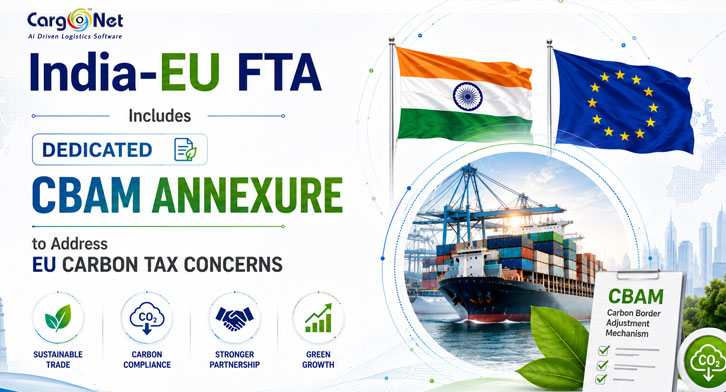
The proposed India-European Union Free Trade Agreement (India-EU FTA) includes a dedicated annexure to address concerns surrounding the European Union’s Carbon Border Adjustment Mechanism (CBAM), particularly for small and medium-sized enterprises (SMEs).
According to Darpan Jain, Additional Secretary in India’s Department of Commerce, CBAM was one of the major areas of negotiation during the India-EU trade talks. The agreement contains provisions intended to improve flexibility, compliance support and engagement between Indian and EU authorities on carbon pricing and verification.
The legal review, or “legal scrub,” of the trade agreement has been completed. The pact could be signed in 2026 and is expected to be implemented from 2027, subject to completion of the necessary procedures.
Key Highlights
- India-EU FTA negotiations concluded: The conclusion of negotiations was announced on January 27, 2026.
- Dedicated CBAM annexure: The agreement contains a separate annexure addressing issues related to the EU's carbon border mechanism.
- SME concerns addressed: Compliance, carbon-emission verification and recognition of verifiers are among the key issues covered.
- Carbon pricing: India and the EU will have mechanisms to discuss carbon prices already paid in India.
- FTA implementation: The agreement could be signed in 2026 and implemented from 2027.
- Key sectors affected by CBAM: Steel, aluminium, fertiliser and cement are among the products covered by the mechanism.
What Is CBAM and Why Does It Matter to Indian Exporters?
The Carbon Border Adjustment Mechanism (CBAM) is the European Union’s system for addressing the carbon emissions associated with certain imported goods.
For Indian exporters, CBAM creates an additional compliance requirement because businesses may need to calculate, report and verify the emissions embedded in products exported to the European market.
This is particularly important for carbon-intensive industries such as steel, aluminium, cement and fertilisers.
For smaller exporters, the challenge is not limited to the potential carbon cost. Businesses also need reliable emissions data, appropriate verification and familiarity with EU compliance requirements.
India-EU FTA Creates a Framework for CBAM Cooperation
CBAM reportedly required significant negotiating attention during the India-EU FTA discussions.
The agreement’s dedicated annexure is intended to create a framework through which India and the EU can continue engaging on CBAM-related concerns.
One important area is the possibility of recognising carbon prices already paid in India when determining the treatment of exported goods under the EU mechanism.
This could become particularly relevant for Indian manufacturers that already face domestic carbon-related costs or introduce measures to reduce the emissions intensity of their production.
- Future flexibility The agreement provides for engagement on flexibility that may become available under CBAM as the EU’s carbon-border framework evolves.
- SME compliance Smaller businesses may face difficulties in calculating embedded carbon emissions, obtaining verification and understanding EU requirements. The agreement includes provisions aimed at addressing these concerns.
- Recognition of carbon pricing India will be able to engage with EU authorities regarding carbon prices paid within India and how these may be taken into account under the EU framework.
Area
Potential Impact on Indian Businesses
Carbon emissions data
Exporters will need reliable information on embedded emissions
Verification
Businesses may need recognised verification processes
Compliance
SMEs could face additional reporting and documentation requirements
Carbon pricing
India can engage with EU authorities on carbon costs already paid domestically
Steel & aluminium
Carbon-related compliance will be particularly important
Fertiliser & cement
Exporters may need stronger emissions measurement systems
India-EU trade
Greater regulatory clarity could support long-term trade planning
FTA implementation
Expected from 2027, subject to required procedures
How CBAM Could Affect India's Logistics and Supply Chain Sector
The implications of CBAM extend beyond manufacturers and exporters.
As carbon-related documentation becomes increasingly important, freight forwarders, customs brokers, logistics providers and supply-chain technology companies may also need to support customers with better data visibility and documentation.
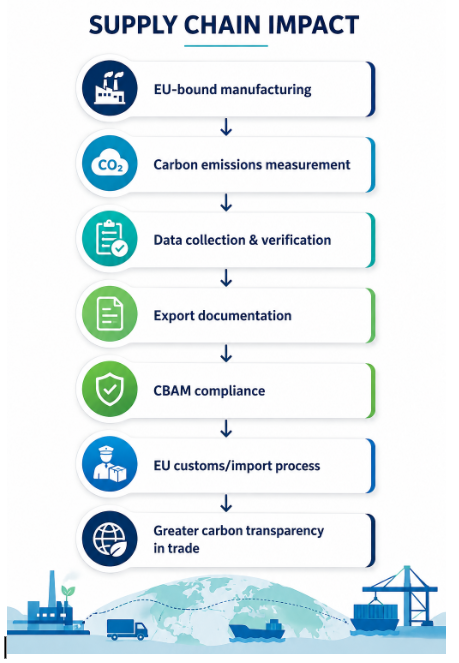
Export shipments to the EU could increasingly require information connecting:
Product → Manufacturer → Production Emissions → Carbon Data → Verification → Customs Documentation → EU Import
This creates an opportunity for logistics technology platforms to integrate carbon-related information into existing shipment and trade workflows.
Why the India-EU FTA Matters for Trade
The India-EU FTA is expected to have implications beyond tariff reduction. Regulatory cooperation could become increasingly important as international trade moves toward greater carbon transparency.
For Indian exporters, the ability to demonstrate accurate emissions data and comply with EU requirements could become an important part of maintaining competitiveness in the European market.
For SMEs in particular, early investment in digital documentation, emissions tracking, data management and compliance processes could help reduce the administrative burden associated with CBAM.
What Indian Exporters Should Prepare For
Businesses exporting carbon-intensive products to the EU should consider preparing for the changing regulatory environment rather than waiting for implementation.
- Establish systems for collecting product-level emissions data.
- Understand the carbon intensity of exported products.
- Maintain auditable documentation and supporting records.
- Identify recognised verification requirements.
- Monitor developments in EU CBAM regulations.
- Evaluate potential carbon costs within export pricing.
- Digitise trade and compliance documentation.
- Train teams handling export, customs and sustainability data.
- Work with logistics and technology partners capable of managing compliance information.
Índia-EU FTA Timeline
Date/Period
Development
January 27, 2026
India and EU announced conclusion of FTA negotiations
July 2026
Legal scrub of the agreement completed
2026
Agreement could be formally signed
2027
Expected implementation, subject to required procedures
The Bigger Picture
The India-EU FTA comes at a time when trade policy and climate policy are increasingly interconnected.
For Indian exporters, access to the European market will increasingly depend not only on price and product quality but also on the ability to demonstrate compliance with evolving environmental requirements.
The dedicated CBAM provisions in the proposed FTA could provide a platform for India and the EU to address practical challenges faced by exporters, particularly SMEs.
For the logistics industry, this also signals a broader shift toward data-driven trade compliance, where shipment information, customs documentation, carbon data and verification records increasingly need to work together.
The proposed India-EU FTA’s dedicated CBAM annexure could provide Indian exporters with greater clarity on one of the most significant emerging barriers to EU market access.
While CBAM compliance will remain an important challenge, closer India-EU engagement on carbon pricing, verification and SME support could help businesses adapt as the agreement moves toward potential implementation in 2027.
FAQs
What is the India-EU FTA?
What is CBAM?
Which Indian exports are most affected by EU CBAM?
How will the India-EU FTA address CBAM?
Why is CBAM a concern for Indian SMEs?
SMEs may face challenges in calculating embedded carbon emissions, maintaining the required data, obtaining verification and ensuring that their verification processes meet EU requirements.