Top Challenges in Freight Quoting and How CargoNet Freight Software Solves Them

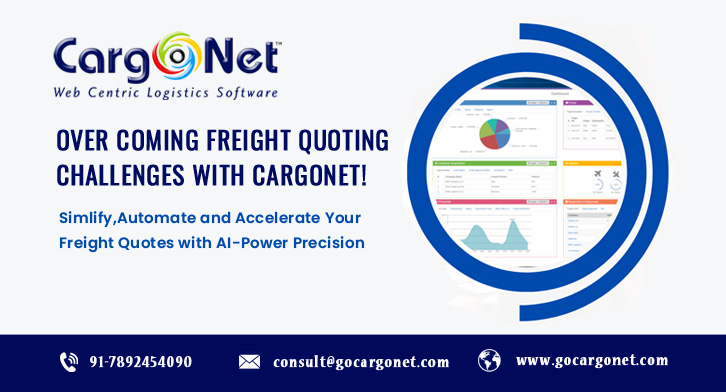
Freight quoting is an essential part of logistics. It impacts customer satisfaction, decision-making, and profits. However, traditional methods come with many challenges that slow down operations and increase costs. Let’s explore the top challenges in freight quoting and how CargoNet’s freight quote software can help solve them.

Challenge 1: Inaccurate Quotes

Getting accurate freight quotes is challenging. Fuel prices, currency exchange rates, and carrier charges change frequently, and inaccurate quotes can lead to customer losses if prices are too high or financial losses if they are too low.

How CargoNet Helps

CargoNet freight software uses real-time data from carriers, fuel prices, and market trends. This ensures quotes are always up-to-date and accurate, boosting customer trust and avoiding costly mistakes.

Challenge 2: Time-Consuming Processes

Manual freight quoting takes time. Collecting data, negotiating rates, and dealing with multiple parties can slow things down, especially when there are many requests.

How CargoNet Helps

CargoNet automates the quoting process. With just a few clicks, you can create accurate quotes in minutes, saving time and responding to customers faster.

Challenge 3: Managing Multi-Modal Shipments

Freight forwarding often involves a mix of air, sea, and land transport. Calculating quotes for these complex shipments manually is tricky and prone to errors.

How CargoNet Helps

CargoNet handles multi-modal logistics easily. It calculates costs for each part of the shipment and combines them into one clear and accurate quote. This makes managing complex shipments simpler and more reliable.

Challenge 4: No Integration with Other Tools

Freight quoting requires data from CRM, ERP, and TMS systems. When these systems don’t work together, it can cause inefficiencies and errors.

How CargoNet Helps

CargoNet integrates smoothly with your existing tools. This eliminates manual data entry, ensures accurate information flow, and saves time.

Challenge 5: Struggling to Scale with Growth

As businesses grow, quoting needs become more complex. Manual processes can’t keep up, leading to delays and inefficiencies.

How CargoNet Helps

CargoNet software grows with your business. It’s scalable and modular, allowing you to add new features as your needs change. This ensures your quoting process stays efficient, no matter how big your business gets.

Challenge 6: Poor Communication with Customers

Manually created quotes often lack transparency, leading to confusion and dissatisfaction for customers.

How CargoNet Helps

CargoNet makes communication easier. Customers receive clear, detailed quotes with full cost breakdowns. Real-time tracking and notifications keep them informed, improving trust and satisfaction.

Conclusion

Freight quoting doesn’t have to be slow or complicated. CargoNet freight quote software solves common challenges like inaccuracy, inefficiency, and scalability. By automating processes, integrating with your systems, and providing real-time data, CargoNet helps you create faster, accurate quotes that keep customers happy and boost your profits.

6G and Its Implications for Real-Time Freight Software Performance

As the logistics and freight forwarding industry continues to evolve, advancements in connectivity play a pivotal role in shaping its future. Enter 6G, the next generation of wireless technology, promising unprecedented speeds, ultra-low latency, and seamless connectivity. While 5G is still being deployed in many parts of the world, the possibilities of 6G are already sparking interest across industries, including freight and logistics. Here’s how 6G can revolutionize real-time freight software performance.

What Is 6G?

6G represents the sixth generation of mobile communication technology, anticipated to be commercially available by 2030. It aims to deliver data transfer speeds up to 100 times faster than 5G and latency as low as 1 millisecond or less. Furthermore, 6G is expected to integrate artificial intelligence (AI), edge computing, and advanced network slicing to enable intelligent and efficient communication systems. According to a report by ABI Research, 6G networks could achieve peak data rates of 1 Tbps, revolutionizing connectivity in unprecedented ways .
A study by Ericsson suggests that 6G could handle up to 10 times more devices per square kilometer compared to 5G, a critical advantage for the logistics industry

Implications of 6G for Freight Software

1. Enhanced Real-Time Data Processing

Freight software heavily relies on real-time data, such as shipment tracking, route optimization, and inventory management. With 6G, software platforms can process and transmit vast amounts of data almost instantaneously. This means:
AI thrives on data, and 6G’s capacity to handle massive datasets will empower freight software to:

2. AI-Driven Predictive Analytics

AI thrives on data, and 6G’s capacity to handle massive datasets will empower freight software to:

3. Unmatched Security and Reliability

With the freight industry being a frequent target of cyberattacks, 6G’s advanced encryption and AI-based security protocols can significantly mitigate risks. Additionally, its robust connectivity ensures minimal disruptions, even in remote areas.

Challenges to Consider

Despite its potential, adopting 6G in freight software may face challenges, including:

Preparing for the 6G Era

While 6G is still in its conceptual stages, freight companies can begin preparing by:

Conclusion

The introduction of 6G promises to redefine the logistics landscape by enabling faster, smarter, and more efficient freight software. While challenges remain, the potential benefits far outweigh the obstacles. By embracing this technological leap, freight companies can unlock new levels of performance and customer satisfaction, ensuring they remain competitive in an increasingly connected world.
CargoNet is well-positioned to adapt to these advancements, ensuring logistics businesses stay ahead in leveraging cutting-edge technologies for real-time freight software. and discover how CargoNet can future-proof your operations in the 6G era.

Your Guide to the Best Freight Forwarding Software in 2025 – CargoNet

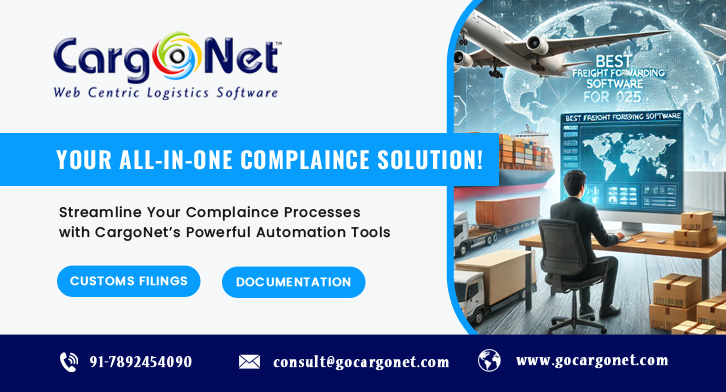
In 2025, the best freight forwarding software remains essential for managing logistics efficiently. The right software helps businesses save time, cut costs, and improve customer satisfaction. Among the many options, CargoNet stands out as the best freight forwarding software, offering smart, AI-powered features designed for modern logistics needs. Let’s explore why CargoNet is the top choice and what features you should look for in the best freight forwarding software.

Why Choose CargoNet?

CargoNet is a leader in freight forwarding software, providing powerful tools that make logistics management easier and more efficient. Here are some reasons why CargoNet is the best freight forwarding software for 2025:

Must-Have Features in the Best Freight Forwarding Software

When choosing the best freight forwarding software, it’s important to focus on features that meet your business needs. Here are key features to look for:

Conclusion

In 2025, using the best freight forwarding software is essential to staying competitive. CargoNet, with its AI-powered features and easy-to-use tools, helps businesses save time, reduce costs, and provide better service. By choosing CargoNet, you can streamline your operations and achieve your business goals.
Want to transform your logistics operations?

Low Customer Retention in Freight Forwarding: How AI-Driven Predictive Personalization Enhances Customer Experience with CargoNet

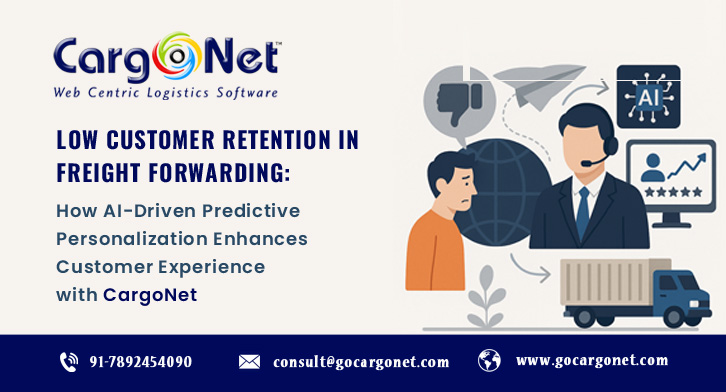
Customer retention remains a significant challenge in the freight forwarding industry. One of the primary reasons for low retention is the lack of personalized services that cater to individual customer needs. Many freight companies still rely on generic processes and outdated methods to engage clients, which fails to foster strong, long-term relationships. In today’s competitive world, personalized service is no longer just a luxury—it’s a necessity.
Losing customers isn’t just frustrating—it’s expensive. Retaining clients is far more cost-effective than acquiring new ones. However, many freight companies struggle to meet customer expectations, leading to dissatisfaction and lost business.
The solution? AI-driven predictive personalization. With smart tools like CargoNet, you can transform the customer experience by anticipating their needs and offering tailored solutions. This blog will show how CargoNet’s AI-powered software helps businesses improve customer satisfaction, loyalty, and retention.

Why Is Customer Retention So Important?

Keeping customers is vital for long-term success. Here’s why:

But why do customers leave? It’s often because they feel like just another number. Freight companies that don’t provide personalized solutions risk losing clients to competitors who do.

The Problem: Lack of Personalization

Freight forwarding is complex, involving multiple services like air cargo, sea freight, customs clearance, and warehousing. But most companies treat every customer the same, offering:
Customers want to feel valued. If your competitors can offer better, more personalized services, clients will switch.

The Solution: CargoNet’s AI-Driven Personalization

CargoNet uses artificial intelligence (AI) to analyze customer data, predict their needs, and provide personalized solutions. Here’s how it works:

1. Smart Data Analysis

CargoNet collects data from past shipments, customer preferences, and market trends. This information helps identify what each customer needs.

2. Predictive Insights

The AI predicts future needs. For example, if a customer frequently uses air freight during peak seasons, CargoNet can proactively suggest booking earlier to avoid delays.

3. Tailored Communication

Instead of generic emails, CargoNet sends personalized updates, promotions, and service suggestions. For example, it can recommend cost-saving routes based on shipment history.

4. Proactive Problem-Solving

CargoNet’s AI alerts you to potential issues, like shipment delays or route disruptions, so you can inform the customer and suggest alternatives before problems occur.

Real Results: How Companies Are Winning with CargoNet

Here’s how CargoNet’s personalization has helped freight companies:
These small changes create a big impact. Customers are more likely to stay when they feel their needs are understood and met.

How to Get Started with AI-Driven Personalization

Implementing AI might sound complex, but CargoNet makes it easy:

Why Personalized Service Matters

Customers expect more these days. They don’t want generic solutions—they want services tailored to their unique needs. Personalization is no longer optional; it’s essential. With CargoNet, you can:

Start Personalizing Today!

Ready to keep your customers happy and loyal? CargoNet’s AI-driven freight software makes it simple to offer personalized services.
Don’t let low retention hold your business back. Contact us today to learn how CargoNet can help you deliver the personalized experience your customers deserve. Let’s grow your business together

Top 10 Trends Shaping Freight Forwarding in 2025: How CargoNet Empowers Your Business

The freight forwarding industry is at a pivotal moment, driven by advancements in technology, evolving trade dynamics, and an increasing focus on sustainability. To remain competitive, businesses need to align with the latest trends and leverage tools that enable them to adapt and excel. Here’s a closer look at the top 10 trends shaping freight forwarding in 2025 and how CargoNet’s innovative freight forwarding software can help businesses lead the way.

1. AI-Driven Freight Operations

Artificial intelligence (AI) is transforming freight operations by offering predictive analytics, optimized routing, and proactive customer support. AI-powered Freight forwarding Software tools can foresee disruptions, enabling businesses to act swiftly. CargoNet integrates AI to provide real-time insights, improving efficiency and minimizing risks.

2. Digital Freight Platforms Revolution

The rise of digital freight marketplaces has simplified how shippers and carriers connect. These platforms allow real-time rate comparisons and streamline operations. CargoNet incorporates digital freight solutions, offering transparency and seamless communication between stakeholders.

3. Green Logistics and Sustainability

Environmental concerns are driving the adoption of sustainable practices in logistics. Businesses are optimizing loads, switching to alternative fuels, and tracking their carbon footprints. CargoNet’s software supports green logistics by helping companies monitor and reduce their environmental impact.

4. Shift Toward Regionalization

Global supply chain disruptions have pushed many businesses to focus on nearshoring and regional trade. This shift reduces risks, costs, and transit times. CargoNet simplifies regional logistics management with tools for local compliance and optimized route planning.

5. Navigating Complex Trade Regulations

Evolving customs regulations and trade policies demand quick adaptability. Automated compliance tools are crucial for staying on top of changes. CargoNet ensures compliance with real-time updates and automated documentation processes, saving time and reducing errors.

6. Boom in Cross-Border E-commerce

The explosive growth of global e-commerce demands efficient cross-border logistics solutions. From last-mile delivery to customs clearance, businesses need reliable systems. CargoNet’s software streamlines these processes, ensuring faster and more accurate delivery services.

7. Multimodal Transport Integration

Multimodal transport is becoming essential for cost-effective and efficient logistics. Combining road, rail, sea, and air transport optimizes delivery times and expenses. CargoNet’s software enables businesses to manage multimodal shipments seamlessly with real-time tracking and coordination tools.

8. Dynamic Pricing Models

Freight pricing models are shifting to dynamic systems influenced by real-time demand and capacity data. Businesses need flexible pricing tools to stay competitive. CargoNet offers robust solutions to manage dynamic pricing, helping businesses respond to market changes instantly.

9. Upskilling the Workforce

With increasing reliance on digital tools, workforce training is critical. Employees must be equipped to handle AI, data analytics, and automation. CargoNet offers user-friendly interfaces and training support to ensure teams adapt to new technologies effectively.

10. Customer-Centric Logistics

Customer expectations are at an all-time high, requiring forwarders to offer personalized services and proactive communication. CargoNet empowers businesses to deliver superior customer experiences with real-time updates and tailored solutions.

Why Choose CargoNet?

CargoNet is at the forefront of freight forwarding innovation, offering a comprehensive suite of solutions to address these trends. From AI-powered analytics to tools for sustainable logistics and multimodal transport, CargoNet ensures businesses can adapt and thrive in a dynamic environment.
Transform your freight forwarding operations with CargoNet. and discover how we can help you stay ahead in 2025 and beyond.

Streamline Global Operations with Multi-Carrier Shipping Software

In today’s globalized era, businesses are connecting with customers across borders faster than ever before. While global expansion brings opportunities, it also introduces logistical complexities that can overwhelm even the most experienced supply chain professionals. Enter multi-carrier shipping software—a game-changing solution for businesses navigating the intricate landscape of global shipping.

The Challenges of Global Operations

Managing international shipping involves more than just moving goods from Point A to Point B. Businesses face hurdles such as:
Without the right tools, these challenges can lead to delays, increased costs, and unsatisfied customers.

How Multi-Carrier Shipping Software Transforms Global Logistics

Multi-carrier shipping software simplifies and streamlines global shipping operations by offering key functionalities:

1. Carrier Integration

The software integrates with multiple carriers, consolidating their services into one unified platform. This eliminates the need to switch between systems, saving time and reducing errors.

2. Automated Rate Comparison

By comparing rates from various carriers in real time, businesses can choose the most cost-effective option tailored to their specific needs.

3. Centralized Shipment Management

The software provides a single dashboard to manage all shipments, regardless of the carrier or destination. Centralization enhances efficiency and minimizes administrative tasks.

4. Customs Documentation and Compliance

Advanced solutions like CargoNet ensure that all required documents are automatically prepared, reducing the risk of non-compliance penalties and delays at customs.

5. Real-Time Tracking and Notifications

With real-time updates, businesses can monitor their shipments’ progress, ensuring timely delivery and proactive problem-solving.

6. Scalability for Business Growth

As businesses expand into new markets, multi-carrier software scales effortlessly to accommodate increased shipment volumes and new carrier integrations.

Why Choose CargoNet for Global Shipping?

CargoNet’s multi-carrier shipping software is designed with global operations in mind. Here’s how it stands out:

Future-Proof Your Global Shipping Operations

Global logistics is evolving rapidly, and staying ahead requires adopting innovative solutions. Multi-carrier shipping software empowers businesses to navigate the complexities of international shipping with ease, ensuring cost-efficiency, compliance, and customer satisfaction.
Are you ready to revolutionize your global shipping operations? Discover how CargoNet’s multi-carrier shipping software can help.

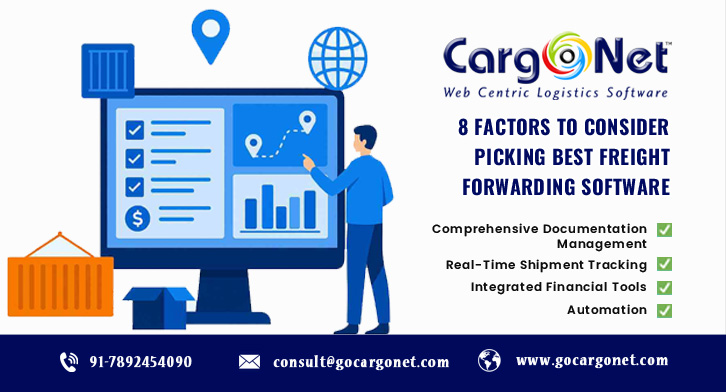
8 Factors to Consider When Picking Best Freight Forwarding Software

Are you searching for the best freight forwarding software to optimize your logistics operations? In today’s competitive landscape, the right software is essential for streamlining workflows, minimizing errors, and enhancing customer satisfaction. This guide will help you identify the features and benefits to look for in a freight forwarding solution that meets your needs.

Key Features of the Best Freight Forwarding Software

When evaluating freight forwarding software, focus on these must-have features to ensure maximum efficiency and scalability:

1. Comprehensive Documentation Management:

Ensure the software supports documentation for air, sea, and land freight while complying with global trade regulations.

2. Real-Time Shipment Tracking:

Look for real-time tracking and status updates to provide transparency and build customer trust.

3. Integrated Financial Tools:

Simplify accounting with features like automated invoicing, expense tracking, and tax calculations.

4. Automation

Opt for software that automates repetitive tasks, such as billing, rate management, and email notifications, to save time and reduce errors.

5. Customizable Modules:

Choose a solution with customizable options, including customs clearance and warehouse management, to fit your specific business requirements.

6. Global Compatibility:

For international operations, prioritize software with multilingual interfaces and multicurrency handling.

7. User-Friendly Interface:

A clean, intuitive design ensures quick adoption, reducing training time and improving productivity.

8. Cloud-Based Accessibility:

Select cloud-based software to enable secure, remote access from anywhere, anytime.

Benefits of Freight Forwarding Software

Implementing the right software can transform your freight forwarding business by:

How to Choose the Right Freight Forwarding Software

To find the best software for your business:

Conclusion: Make the Smart Choice

Investing in the right freight forwarding software is crucial for staying ahead in the logistics industry. By focusing on your business needs and the features outlined above, you can choose a solution that boosts efficiency, saves costs, and enhances customer satisfaction.
Ready to transform your operations? and see how tailored freight forwarding software can empower your logistics business.

Revolutionize Your Operations with CargoNet AI-Powered Cargo Management Software

The global logistics industry is growing at an unprecedented pace, valued at over $9.1 trillion in 2023, with an expected compound annual growth rate (CAGR) of 5% through 2030 . Yet, inefficiencies and outdated processes cost businesses billions annually. Imagine managing your cargo operations with precision, speed, and intelligence while reducing costs and errors. That’s the power of CargoNet’s AI-powered cargo management software.
Whether you handle sea freight, air cargo, or multi-modal shipments, CargoNet’s AI-driven software can be a game-changer. By leveraging artificial intelligence, businesses can streamline operations, enhance visibility, and predict outcomes, ensuring your business stays competitive in an ever-evolving market. With advanced tools and automation, you can focus on delivering exceptional service and optimizing your resources.

Key Features of CargoNet AI-Powered Cargo Management Software

Benefits of Implementing CargoNet AI-Powered Cargo Management Software

Why Choose CargoNet AI-Powered Cargo Management Software?

CargoNet stands out as a leading solution for logistics and freight companies. With AI-driven features tailored to the unique needs of the industry, CargoNet provides:

Transform Your Business Today

Investing in AI-powered cargo management software is no longer a luxury—it’s a necessity. Simplify your operations, reduce costs, and exceed customer expectations with a solution designed to meet the dynamic demands of the logistics industry.
today to discover how CargoNet can help your business thrive.

Will Air Cargo Demand Surge Lead to Higher Freight Rates for Shippers in 2025?

The air cargo market is entering a period of significant growth as businesses increasingly prioritize fast and reliable shipping solutions. According to the International Air Transport Association (IATA), global air cargo demand is expected to rise by 4.9% annually from 2023 to 2025. This surge is largely driven by the rapid expansion of e-commerce, where consumers expect quicker deliveries, and the healthcare sector, which relies on air cargo for the timely transport of medical supplies, vaccines, and other critical products. While this growth presents new opportunities for the logistics industry, it also comes with challenges. Rising demand may lead to increased air freight rates, putting pressure on shippers to manage costs while meeting customer expectations for speed and efficiency.
Understanding the reasons behind this demand and preparing with the right tools and strategies can help shippers reduce costs and stay competitive. Solutions like CargoNet can play a crucial role in optimizing air freight operations and managing rising expenses.

What’s Driving Air Cargo Demand?

1. E-Commerce Growth

The e-commerce industry is growing fast, with global online sales predicted to exceed $7.4 trillion by 2025. As customers demand faster deliveries, businesses are increasingly turning to air cargo to meet these expectations. This is particularly vital for global giants like Amazon and Alibaba, where speedy shipping plays a key role in ensuring customer satisfaction.
As more businesses shift to online platforms, air freight is becoming a preferred choice for delivering high-value and time-sensitive goods. From electronics to fashion, the need for speedy delivery is driving air cargo demand like never before.

2. Healthcare and Pharmaceuticals

The healthcare industry is also a significant driver of air cargo growth. Products like vaccines, medicines, and other temperature-sensitive items often need to be transported quickly and under strict conditions. Air freight is the most reliable option for ensuring these items reach their destinations on time and in perfect condition.
Global spending on pharmaceuticals is projected to reach $1.8 trillion by 2025, according to the World Health Organization (WHO). This increase means more reliance on air cargo to maintain cold chains and support healthcare supply chains globally.

3. Supply Chain Changes

Global supply chains are undergoing significant changes due to disruptions caused by geopolitical issues, pandemics, and trade policies. Many companies are shifting from traditional shipping methods like sea and rail to air freight for faster and more reliable delivery.
Air cargo is now the preferred option for high-priority and time-sensitive shipments. According to the International Air Transport Association (IATA), although air freight accounts for less than 1% of global trade by volume, it handles 35% of trade by value, emphasizing its importance for industries dealing with high-value goods.

Challenges for Shippers in 2025

While the demand for air cargo is growing, it comes with its share of challenges that shippers must address to stay competitive:
Rising Costs: The limited availability of cargo space, coupled with higher demand, is pushing freight rates upward. Reports from Drewry show that air cargo costs increased by 6% globally in 2023 alone. This trend is expected to persist as demand continues to rise.
Sustainability Requirements: Governments and regulators are pressing for greener logistics solutions. Airlines are investing heavily in sustainable technologies, such as fuel-efficient planes and carbon offset programs. While these changes are good for the environment, they often result in additional costs that are passed on to shippers.
Airport Congestion: The rising volume of cargo shipments can strain airport infrastructure, leading to delays and higher handling fees. This is especially true during peak seasons like holiday periods when air freight demand skyrockets.

How CargoNet Can Help

In an increasingly complex logistics environment, CargoNet offers a range of software tools to help shippers and freight forwarders overcome challenges and streamline their air freight operations.
Real-Time Tracking: Stay updated on the exact location and status of shipments throughout their journey. This allows you to quickly address potential delays and provide better service to your customers.
Freight Rate Management: Compare rates from multiple carriers and choose the most cost-effective options. This feature helps shippers avoid overpaying for freight services.
E-Invoicing: Automate the invoicing process to save time, reduce errors, and improve cash flow. Digital invoicing also makes it easier to track and manage payments.
Data Analytics: Access powerful insights into shipping trends, performance, and costs. By analyzing this data, businesses can make smarter decisions to optimize their logistics operations.
CargoNet’s cloud-based platform is designed to integrate seamlessly with existing systems, making it easy for businesses to improve efficiency and control costs in a competitive air cargo market.

Tips for Shippers to Manage Costs

1. Use Advanced Technology

Technology is a game-changer in today’s logistics landscape. Tools like CargoNet enable shippers to optimize routes, predict demand fluctuations, and avoid unnecessary expenses. By using automation and AI-driven solutions, businesses can save both time and money.

2. Plan Ahead

Booking cargo space well in advance can help secure lower rates, especially during peak seasons when demand surges. Proactive planning also allows shippers to avoid last-minute charges and unexpected delays.

3. Diversify Shipping Options

Relying solely on air freight can be costly. A smart strategy is to combine air freight with other modes of transport, such as sea or road. CargoNet’s software supports multi-modal logistics, helping businesses find the best balance between speed and cost.

Looking Ahead to 2025

By 2025, the air cargo industry is expected to handle more than 68 million tonnes of freight annually (IATA). While this represents significant growth opportunities, shippers must prepare for the challenges of rising costs and tighter competition.
Investing in advanced logistics tools like CargoNet can help businesses:
By combining smart planning, technology, and a flexible approach, shippers can thrive in the dynamic air cargo market of 2025.

Conclusion

The rising demand for air cargo presents both opportunities and challenges for shippers. While higher costs are a concern, businesses that adapt quickly and use innovative tools like CargoNet can stay competitive and meet customer expectations.
Ready to optimize your air freight operations? Discover how CargoNet can help by visiting CargoNet Official Website.

FCL vs. LCL: Which Shipping Method is Right for Your Logistics Operations?

Choosing the right shipping method—Full Container Load (FCL) or Less than Container Load (LCL)—is crucial for effective logistics operations. The decision largely depends on your shipment size, budget, and delivery urgency. This guide highlights the key differences to help you make a well-informed choice.

What is FCL (Full Container Load)?

FCL refers to using an entire shipping container exclusively for your cargo. This method is ideal for large shipments that require significant space and minimal handling.

Key Features of FCL:

Benefits of FCL:

Limitations of FCL:

LCL involves sharing container space with other shipments, making it suitable for smaller cargo or businesses shipping less frequently.

Key Features of LCL:

Benefits of LCL:

Limitations of LCL:

FCL vs. LCL: Key Differences

Factor

FCL

LCL

Space

Full container for your cargo

Shared container space

Cost

Cheaper for large shipments

Better for smaller shipments

Delivery Time

Faster, no delays

Slower, due to consolidation

Risk of Damage

Lower

Higher

Best For

Large shipments

Small to medium shipments

When to Use FCL

FCL is a great choice when:
Example: A company shipping bulk electronics overseas will benefit from FCL’s faster transit and reduced handling risks.

When to Use LCL

LCL works best in scenarios where:
Example: An online store shipping small product batches can save costs by using LCL for smaller shipments.

How to Decide Between FCL and LCL

Consider these questions:

Conclusion

The choice between FCL and LCL depends on your specific logistics needs. FCL offers speed and efficiency for large, urgent shipments, while LCL is a flexible and budget-friendly option for smaller cargo.

Ready to optimize your logistics process? CargoNet Freight Software can help you choose the ideal shipping method and manage costs effectively.

cargonet-logo-icon
Cargonet Cargo Software Logo

Feedback & Reward program

Submit the Feedback and avail the Rewards.

1. Your satisfaction & reliability on CargoNet ?

2. Your Rating on Support & co-ordination team?

3. Satisfaction on the look and feel of CargoNet ?

4. Please specify any 2 best features that you feel more helpful in CargoNet?

5. Please specify any 2 best reports that you are taking on regular basis?

6. Are you using Copy Job option in CargoNet Software?

7. Are you using Automatic DSR (Daily Status Report) Option? It automatically sends reports to customer about the shipment status

8. Are you using Automatic Outstanding Reports option? Period Auto outstanding reminders to customer

9. Any other thoughts to improve in CargoNet? Please share.

* Join our Reward Program by recommending CargoNet (Cash Rewards Awaiting)

“Thanks for your feedback. Our goal is to create the best possible product, support & service, and your thoughts, ideas & suggestions play a major role in helping us identify opportunities to improve.”

Cut AI cost ,
not performance

discover how top Freight Forwarding companies  reduce AI-related expense and speed up operation with CargoNet AI, we will show it how
Share your information for instant access :

Get a Demo Now

Get a Demo Now