India’s Engineering Exports Reach Record US$122.43 Billion, Contributing 28% of Merchandise Exports

India’s engineering exports achieved a historic milestone in FY2025-26, reaching an all-time high of US$122.43 billion and further strengthening the country’s position as a global manufacturing and export powerhouse. The record performance reflects the growing competitiveness of India’s engineering sector, supported by policy reforms, industrial expansion, and increasing global demand for high-quality manufactured products.
According to the Department of Commerce, engineering exports have grown significantly from approximately US$70 billion in FY2014-15 to the current record level, highlighting the remarkable transformation of India’s manufacturing ecosystem over the past decade.

Engineering Sector Emerges as India's Largest Export Contributor

Engineering goods have become the single largest contributor to India’s merchandise exports, accounting for nearly 28% of the country’s total export basket. The sector’s share has steadily increased from around 20% a decade ago, demonstrating its growing importance in driving export-led economic growth.
The strong performance underscores India’s ability to compete globally across a wide range of engineering products, including machinery, industrial equipment, automotive components, electrical machinery, and capital goods.

Three Consecutive Years of Record Export Growth

The latest achievement marks the third consecutive year of record-breaking engineering exports. Export earnings increased from US$109.3 billion in FY2023-24 to US$116.67 billion in FY2024-25, before reaching US$122.43 billion in FY2025-26.
This consistent growth reflects strong international demand, improved manufacturing capabilities, and the success of initiatives aimed at enhancing export competitiveness and industrial productivity.

Manufacturing Reforms Strengthen Global Competitiveness

The Commerce Ministry attributes the sector’s growth to structural reforms, infrastructure development, and targeted government initiatives that have strengthened India’s manufacturing ecosystem.
Programs supporting industrial modernization, ease of doing business, logistics improvements, and export promotion have enabled Indian manufacturers to expand their presence in global markets. These efforts have also encouraged greater investment in technology, quality standards, and production capacity.

Key Highlights:

India’s Business Reforms Boost Investor Confidence and Strengthen Ease of Doing Business

India has emerged as one of the world’s most attractive business and investment destinations through a decade of transformative reforms focused on regulatory simplification, digital governance, compliance reduction, and improved market accessibility. These initiatives have significantly enhanced the country’s business environment, strengthened investor confidence, and improved global competitiveness.
Over the past 12 years, the Government of India has implemented a series of reforms aimed at creating a transparent, efficient, and business-friendly ecosystem. The results are evident in India’s improved global rankings, growing startup ecosystem, and increasing investor interest across sectors.
The government has focused on reducing compliance burdens, simplifying regulatory procedures, and promoting trust-based governance to create a more efficient business environment for both domestic and international investors.

Digital Governance Drives Business Efficiency

India’s digital transformation has become a key pillar of economic growth and business facilitation. The country has consistently maintained its position in the highest category of the World Bank’s GovTech Maturity Index, demonstrating significant progress in digital public service delivery.
Several digital initiatives have simplified business operations and reduced administrative challenges. Platforms such as SPICe+, MCA21 Version 3, and the Udyam Registration Portal have streamlined company registration, compliance management, and MSME formalization processes.
These digital governance initiatives have improved transparency, accelerated approvals, and reduced operational costs for businesses across sectors.

Digital Payments and Market Access Create New Opportunities

India’s digital payments ecosystem continues to set global benchmarks. During FY2025-26, the Unified Payments Interface (UPI) processed transactions worth approximately ₹314 lakh crore, demonstrating the scale and maturity of the country’s digital economy.
The Government e-Marketplace (GeM) has also emerged as a powerful platform for startups and MSMEs, recording cumulative transactions exceeding ₹18.4 lakh crore. These initiatives have expanded market access, improved procurement transparency, and created new business opportunities for entrepreneurs.

Key Highlights:

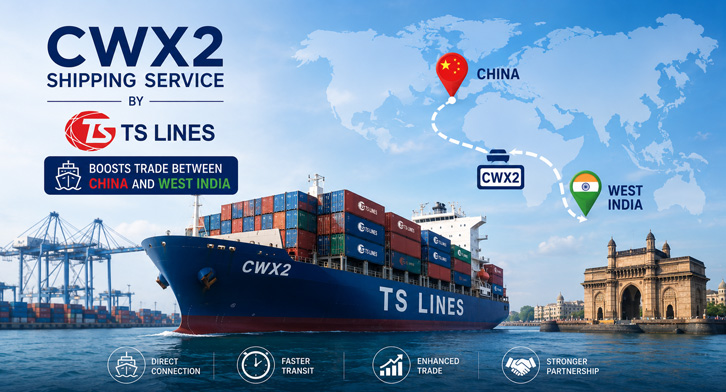
Shipping Lines Restructure Far East–India Services to Enhance Network Efficiency and Service Reliability

Major container shipping operators are reshaping their Far East–India service networks as a long-standing joint service is being divided into two separate loops. The restructuring reflects evolving market dynamics, changing cargo demand patterns, and the industry’s focus on improving operational flexibility and schedule reliability across key Asia–India trade corridors.
According to shipping industry analysts, the move highlights how carriers are adapting their service offerings to better serve customers while optimizing vessel deployment and port coverage in a competitive and rapidly changing market environment.

Gold Star Line and Global Feeder Shipping Launch Revamped NIX Service

Under the new arrangement, Gold Star Line and Global Feeder Shipping (GFS) will jointly operate an enhanced NIX service using five vessels with capacities of approximately 5,000 TEUs each.
The revised service rotation will connect major trade hubs including:
The service is designed to provide efficient cargo connectivity between China, Southeast Asia, and India’s major west coast ports, supporting growing trade flows across the region.

Shipping Lines Seek Greater Flexibility in Network Design

Industry experts note that splitting the long-running joint loop into two independent services provides carriers with greater flexibility in managing operations.
The new structure allows operators to optimize:
By operating separate service products, carriers can better respond to customer requirements and changing trade patterns while maintaining operational efficiency.

Market Conditions Drive Strategic Service Adjustments

The restructuring reflects broader trends within the container shipping industry, particularly on intra-Asia and Asia–India routes. Shipping companies are increasingly adjusting service networks to address fluctuating cargo demand, congestion risks, and evolving supply chain requirements.
Major transshipment hubs such as Port Klang and gateway ports like Nhava Sheva continue to experience varying levels of congestion and operational pressure, prompting carriers to redesign service networks for improved reliability.
These adjustments are also helping operators navigate volatile freight markets while maintaining competitive service offerings.

Key Highlights:

India Exports ₹35,000 Crore Worth of Electronics Components to China, Strengthening Its Position in Global Supply Chains

India’s electronics manufacturing industry is rapidly evolving from an assembly-led ecosystem to a component manufacturing powerhouse, marking a significant step in the country’s journey toward becoming a global electronics hub. The sector’s growing capabilities were highlighted by electronics component exports worth ₹35,000 crore (US$4.2 billion approximately) to China during the previous year, demonstrating the increasing competitiveness of India’s electronics supply chain.
Supported by government initiatives, rising investments, and expanding domestic manufacturing capacity, India is steadily strengthening its role in global electronics production and exports.

Electronics Component Manufacturing Gains Strong Momentum

India’s electronics sector is witnessing unprecedented growth as domestic companies and global manufacturers expand component production capabilities. The export of electronics components to China highlights the country’s growing expertise in producing high-value products for international markets.
To support future growth, 75 electronics component manufacturing facilities are currently under construction across the country. These investments are expected to significantly increase domestic production capacity and reduce reliance on imports.

Major Expansion Planned Across the Electronics Ecosystem

The next phase of growth is expected to be even larger, with approximately 250 additional electronics component factories projected to be established over the next two to three years.
The expansion will help create a stronger domestic supplier network, support local value addition, and improve India’s competitiveness in global electronics supply chains. Increased manufacturing capacity is also expected to create employment opportunities and attract further investments into the sector.

India Moves Beyond Assembly-Led Manufacturing

According to Union Minister for Electronics and Information Technology Mr. Ashwini Vaishnaw, India’s electronics industry has progressed significantly beyond basic assembly operations.
The country initially focused on finished-product manufacturing before advancing to module production. India is now entering the next stage of development by building capabilities in component manufacturing, which generates higher value addition and strengthens the domestic electronics ecosystem.
This transition mirrors the development path followed by leading electronics manufacturing nations such as China, South Korea, Taiwan, and Vietnam.

Government Support Accelerates Industry Growth

The Electronics Component Manufacturing Scheme (ECMS) continues to play a crucial role in attracting investments and supporting industry expansion.
In March 2026, the government approved 29 new proposals under the scheme involving projected investments of ₹7,104 crore and estimated production worth ₹84,515 crore. These projects are expected to generate 14,246 direct jobs.
The approvals follow an earlier round in which 46 applications with projected investments of ₹54,567 crore received clearance, reflecting strong industry interest and confidence in India’s electronics manufacturing sector.

Key Highlights:

India–Philippines Bilateral Trade Reaches US$3.9 Billion in FY26, Opening New Opportunities for Economic Cooperation

India and the Philippines are strengthening their economic partnership as bilateral trade reached US$3.9 billion (₹34,466 crore) in FY2025-26. The milestone reflects the growing commercial relationship between the two countries and highlights increasing opportunities for trade, investment, and sectoral collaboration.
The progress was reviewed during the 14th India-Philippines Joint Working Group on Trade and Investment (JWGTI) meeting held in Manila, where both sides discussed strategies to expand economic engagement, improve market access, and unlock new growth opportunities for businesses and investors.

Bilateral Trade Continues to Show Strong Growth

India and the Philippines have witnessed steady growth in trade and investment relations in recent years. During the JWGTI meeting, officials reviewed trade trends, investment flows, and priority sectors that could further strengthen economic cooperation.
The discussions highlighted the importance of expanding trade partnerships and creating a more favorable environment for businesses operating in both markets.

Emerging Sectors Offer New Growth Opportunities

Both countries identified several high-potential sectors for future collaboration, including energy, construction and infrastructure, Information and Communication Technology (ICT), Information Technology-Business Process Management (IT-BPM), Artificial Intelligence (AI), pharmaceuticals, and the film industry.
These sectors are expected to drive the next phase of economic cooperation by encouraging innovation, investment, technology exchange, and business expansion.
The growing digital economy and increasing demand for advanced technologies provide significant opportunities for Indian and Philippine companies to establish stronger partnerships.

Focus on Trade Facilitation and Market Access

The two countries also explored measures to improve trade facilitation and strengthen business connectivity. Discussions included enhanced customs cooperation, agricultural collaboration, and initiatives to improve market access for selected products.
Efforts to simplify trade procedures and reduce barriers are expected to support greater participation by businesses and improve bilateral trade volumes in the coming years.

Key Highlights:

India Records Strong 7.7% GDP Growth in FY26, Reinforcing Its Position as the World’s Fastest-Growing Major Economy

India has once again demonstrated its economic resilience and growth potential by recording a robust Gross Domestic Product (GDP) growth rate of 7.7% in FY2025-26. The achievement reaffirms India’s position as the world’s fastest-growing major economy and highlights the success of ongoing economic reforms, infrastructure investments, and development-focused policies.
Speaking at a public gathering in Daman, Prime Minister Narendra Modi described the latest growth figures as a reflection of the country’s strong economic foundations and its ability to maintain momentum despite global economic uncertainties. The Indian economy also expanded by 7.8% during the quarter ending March 31, 2026, underlining the sustained strength of domestic demand, investment activity, and economic productivity.

Strong Economic Performance Amid Global Challenges

India’s growth comes at a time when many major economies continue to face economic headwinds, including inflationary pressures, geopolitical uncertainties, and slower growth rates. Despite these challenges, India has maintained a strong growth trajectory supported by resilient domestic consumption, expanding industrial activity, and rising investments across key sectors.
The latest GDP figures demonstrate the effectiveness of India’s economic strategy and the growing contribution of domestic drivers to overall economic expansion. Strong performance across manufacturing, services, infrastructure, and digital sectors has helped sustain growth and strengthen investor confidence.

Infrastructure Development Continues to Fuel Growth

A major factor behind India’s economic success has been the government’s sustained focus on infrastructure development. Significant investments in highways, railways, ports, airports, renewable energy projects, and digital infrastructure have improved connectivity, increased productivity, and supported long-term economic development.
These infrastructure projects have not only generated employment opportunities but have also enhanced logistics efficiency, strengthened supply chains, and improved the movement of goods and services across the country. As India continues to modernize its infrastructure network, the benefits are expected to further support industrial growth and economic competitiveness.

Reforms and Ease of Doing Business Drive Competitiveness

Prime Minister Modi emphasized that ongoing reforms remain central to India’s development agenda. The government’s vision of “Reform, Perform and Transform” has led to initiatives aimed at simplifying regulations, attracting investments, improving governance, and enhancing ease of doing business.
These reforms have encouraged entrepreneurship, increased private sector participation, and strengthened India’s attractiveness as a global investment destination. The continued focus on improving productivity and reducing business barriers has contributed significantly to economic growth and job creation.

Key Highlights

New Tuticorin–Colombo Shuttle Feeder Service Strengthens Maritime Connectivity and EXIM Trade

Major container shipping operators are reshaping their Far East–India service networks as a long-standing joint service is being divided into two separate loops. The restructuring reflects evolving market dynamics, changing cargo demand patterns, and the industry’s focus on improving operational flexibility and schedule reliability across key Asia–India trade corridors.
According to shipping industry analysts, the move highlights how carriers are adapting their service offerings to better serve customers while optimizing vessel deployment and port coverage in a competitive and rapidly changing market environment.

Gold Star Line and Global Feeder Shipping Launch Revamped NIX Service

Under the new arrangement, Gold Star Line and Global Feeder Shipping (GFS) will jointly operate an enhanced NIX service using five vessels with capacities of approximately 5,000 TEUs each.
The revised service rotation will connect major trade hubs including:
The service is designed to provide efficient cargo connectivity between China, Southeast Asia, and India’s major west coast ports, supporting growing trade flows across the region.

Shipping Lines Seek Greater Flexibility in Network Design

Industry experts note that splitting the long-running joint loop into two independent services provides carriers with greater flexibility in managing operations.
The new structure allows operators to optimize:
By operating separate service products, carriers can better respond to customer requirements and changing trade patterns while maintaining operational efficiency.

Market Conditions Drive Strategic Service Adjustments

The restructuring reflects broader trends within the container shipping industry, particularly on intra-Asia and Asia–India routes. Shipping companies are increasingly adjusting service networks to address fluctuating cargo demand, congestion risks, and evolving supply chain requirements.
Major transshipment hubs such as Port Klang and gateway ports like Nhava Sheva continue to experience varying levels of congestion and operational pressure, prompting carriers to redesign service networks for improved reliability.
These adjustments are also helping operators navigate volatile freight markets while maintaining competitive service offerings.

Key Highlights:

VOCPA Strengthens India’s Clean Energy Ambitions with H2Global Green Hydrogen Partnership

V.O. Chidambaranar Port Authority (VOCPA), Tuticorin, has signed a Memorandum of Understanding (MoU) with H2Global, represented by the H2Global Foundation and Hintco GmbH, to explore the development of green hydrogen and clean shipping fuel trade corridors between India and Europe.
With this agreement, VOCPA becomes the first Indian port to establish a strategic partnership with H2Global, a leading European initiative focused on accelerating the global market for renewable hydrogen and its derivatives.
The collaboration marks a significant step toward positioning India as a major exporter of green energy and sustainable fuels to international markets.

Creating Green Hydrogen Trade Routes Between India and Europe

The partnership aims to facilitate the export of green hydrogen and its derivatives from India to Germany and other European markets by integrating port infrastructure, logistics systems, and clean energy supply chains.
Key products covered under the initiative include:
The proposed trade corridors are expected to support Europe’s growing demand for low-carbon fuels while creating new export opportunities for India’s renewable energy sector.

Strengthening Sustainable Shipping and Clean Fuel Ecosystems

A major focus of the collaboration will be the development of sustainable maritime fuel ecosystems that support global decarbonization efforts.
The partnership will explore:
These initiatives are expected to accelerate the adoption of alternative marine fuels and support the transition toward carbon-neutral shipping.

Supporting India's National Green Hydrogen Mission

The agreement aligns closely with India’s National Green Hydrogen Mission, which aims to establish the country as a global hub for the production, utilization, and export of green hydrogen.
By leveraging its strategic location, modern port infrastructure, and growing sustainability initiatives, VOCPA is positioned to play a critical role in facilitating large-scale clean energy exports.
The partnership is expected to contribute to:

VOCPA Emerges as a Future-Ready Green Port

The collaboration reinforces VOCPA’s vision of becoming a future-ready green port and a key gateway for clean energy exports from India.
Its strategic location on India’s southeastern coast offers strong connectivity to global shipping routes, making it well-positioned to support emerging green energy trade flows between Asia and Europe.
The initiative is also expected to attract investments in green fuel infrastructure, storage facilities, and sustainable maritime logistics.

Enhancing India–Europe Renewable Energy Cooperation

The partnership reflects the growing collaboration between India and Europe in renewable energy, sustainable shipping, and clean fuel supply chains.

As global demand for green hydrogen accelerates, India and European nations are increasingly working together to establish reliable and scalable clean energy trade networks.
The VOCPA–H2Global collaboration is expected to serve as a model for future international partnerships supporting the global energy transition.

Key Highlights:

outheast Asia–India Maritime Connectivity Strengthened with New OOCL Shipping

Orient Overseas Container Line (OOCL) has launched the Southeast Asia–Indian Subcontinent Service 2 (SIS2), a new weekly container shipping service designed to enhance direct connectivity between major Southeast Asian hubs and key ports across the Indian subcontinent.
Introduced in June 2026, the service aims to support growing trade volumes between South Asia and Southeast Asia by providing increased capacity, improved service frequency, and greater supply chain efficiency.

Enhancing Direct Container Connectivity

The SIS2 service connects important gateway and transshipment ports across Southeast Asia with major destinations in the Indian subcontinent, offering shippers a more reliable and efficient transportation solution.
The new shipping loop is expected to:
The service is designed to support both import and export cargo flows, helping businesses streamline logistics operations across one of Asia’s fastest-growing trade corridors.

Integrated Network Provides Greater Flexibility

OOCL has deployed modern, high-capacity vessels on the SIS2 route and integrated the service into its broader regional shipping network.
The integration enables customers to benefit from:
By complementing existing services on the Southeast Asia–Indian Subcontinent trade lane, SIS2 offers additional options for exporters, importers, freight forwarders, and logistics providers.

Rising Intra-Asian Trade Drives Demand

The launch comes amid strong growth in cargo demand between Southeast Asia and South Asia.
Several factors are contributing to the increasing trade volumes, including:
Manufacturing Diversification
Companies are expanding manufacturing operations across Asia, creating new sourcing and distribution patterns that require stronger regional shipping networks.
Growth in Intra-Asian Trade
Trade between Asian economies continues to increase, driving demand for more direct and reliable container services.
Expansion of E-Commerce
The rapid growth of cross-border e-commerce is generating higher cargo volumes and increasing the need for faster, more predictable shipping solutions.

Supporting Supply Chain Efficiency

OOCL expects the SIS2 service to help businesses improve inventory management and supply chain performance.
Key benefits include:
These advantages are particularly important for manufacturers, retailers, and exporters operating in highly competitive regional markets.

Commitment to Operational Reliability

OOCL stated that it will continue monitoring market conditions and trade developments to ensure capacity remains aligned with customer demand.
The company aims to maintain operational reliability while adapting its network and vessel deployment strategy to evolving cargo flows across Asia.
Customers can access detailed schedules, port rotations, and vessel information through OOCL’s official booking and service platforms.

Key Highlights:

India–UK Relations Strengthened by New Critical Minerals and Maritime Sector Initiatives

India and the United Kingdom have taken significant steps to deepen their strategic partnership with the launch of new initiatives focused on critical minerals, maritime security, trade, defence, and technology cooperation.
The announcements were made during the visit of UK Foreign Secretary Yvette Cooper to India, highlighting the growing alignment between the two countries on economic resilience, supply chain security, and regional stability.

Critical Minerals Observatory to Strengthen Supply Chain Resilience

One of the key outcomes of the visit was the launch of the Critical Minerals Global Supply Chain Observatory. The initiative is aimed at enhancing cooperation in critical minerals, strengthening supply chain resilience, and supporting secure access to essential resources required for clean energy technologies, advanced manufacturing, and strategic industries.
The observatory is expected to improve collaboration on mineral supply chains while addressing emerging global challenges related to resource security and sustainable development.

India and UK Sign Maritime Security Cooperation Agreement

India and the UK also signed a Memorandum of Understanding (MoU) to establish a Regional Maritime Security Centre of Excellence.
The proposed centre will support Indian Ocean nations in building capacity to tackle non-traditional maritime security challenges, including maritime crime, illegal activities at sea, disaster response, and emerging security threats.
The initiative reflects the growing importance of maritime cooperation in ensuring a secure and stable Indo-Pacific region.

Focus on Trade, Defence, Technology, and Clean Energy

During discussions, External Affairs Minister S. Jaishankar and UK Foreign Secretary Yvette Cooper reviewed progress across several key areas of bilateral cooperation, including:
The leaders also discussed new opportunities in artificial intelligence (AI), clean energy technologies, and critical minerals development.

Comprehensive Trade Deal and Defence Roadmap Drive Growth

India and the UK recently finalized the Comprehensive Economic and Trade Agreement (CETA), which is expected to strengthen economic cooperation, increase bilateral trade, and enhance supply chain resilience.
Alongside the trade agreement, both countries have adopted a Comprehensive Strategic Partnership and a Defence Industrial Roadmap designed to expand collaboration in defence manufacturing, innovation, and strategic technologies.
According to Jaishankar, these developments mark a transition in India–UK relations from a primarily historical connection to a future-focused partnership driven by economic growth, advanced technology, and shared strategic interests.

Vision 2035 to Guide Long-Term Partnership

The two nations continue to advance their shared Vision 2035 framework, launched to promote mutual prosperity, sustainable development, and global cooperation.
Prime Minister Narendra Modi highlighted that the deepening India–UK partnership has created unprecedented opportunities for growth and innovation and will continue to contribute to global development and stability.

Key Highlights:

cargonet-logo-icon
Cargonet Cargo Software Logo

Feedback & Reward program

Submit the Feedback and avail the Rewards.

1. Your satisfaction & reliability on CargoNet ?

2. Your Rating on Support & co-ordination team?

3. Satisfaction on the look and feel of CargoNet ?

4. Please specify any 2 best features that you feel more helpful in CargoNet?

5. Please specify any 2 best reports that you are taking on regular basis?

6. Are you using Copy Job option in CargoNet Software?

7. Are you using Automatic DSR (Daily Status Report) Option? It automatically sends reports to customer about the shipment status

8. Are you using Automatic Outstanding Reports option? Period Auto outstanding reminders to customer

9. Any other thoughts to improve in CargoNet? Please share.

* Join our Reward Program by recommending CargoNet (Cash Rewards Awaiting)

“Thanks for your feedback. Our goal is to create the best possible product, support & service, and your thoughts, ideas & suggestions play a major role in helping us identify opportunities to improve.”

Cut AI cost ,
not performance

discover how top Freight Forwarding companies  reduce AI-related expense and speed up operation with CargoNet AI, we will show it how
Share your information for instant access :

Get a Demo Now